


Gurit Guide to Composites (v5)

Gurit Guide to Composites (v5)
The document provides an overview of composite materials, focusing on their components and processing methods. It introduces basic composite theory, highlighting that composites are made of at least two elements that together offer different properties than individually. The guide primarily discusses Polymer Matrix Composites (PMCs), which use a polymer-based resin matrix and various fibers for reinforcement.
This section covers the main types of loads composites must withstand: tension, compression, shear, and flexure. It emphasizes the importance of fiber orientation and the anisotropic nature of composites, which require careful consideration of load direction during design. The section also discusses stress and strain, noting that micro-cracking in resins can occur before ultimate failure, affecting long-term performance.
Composite structures are often built by stacking plies of fiber or fabric, resulting in anisotropic properties. The 'rule of mixtures' is introduced as a method to estimate composite properties based on the contributions of each component.
This section details the selection of resin matrices and fibers, comparing properties of different resins like polyester, vinylester, and epoxy. It also covers various fiber types and fabric configurations, such as unidirectional and woven fabrics, and discusses core materials for sandwich construction.
Various processing techniques are outlined, including spray lay-up, wet lay-up, vacuum bagging, filament winding, pultrusion, and resin transfer molding. The section highlights the importance of choosing the right process to achieve desired fiber volume fractions and minimize imperfections.
This section explores the science of adhesion, pre-treatment methods, and adhesive selection, emphasizing the importance of joint design in composite structures.
Details on the curing processes are provided, which are crucial for achieving the desired mechanical properties in composites.
The document concludes with methods for non-destructive and destructive testing of composites, including visual inspection, ultrasonics, and mechanical testing, to ensure quality and performance.
The document discusses the calculation of elastic modulus in composite materials, using the Rule of Mixtures (RoM) model. It explains the calculation of elastic modulus parallel and perpendicular to the fiber direction, using analogies of springs connected in parallel and series, respectively. The document also introduces Laminate Plate Theory (LPT) for characterizing multi-layered laminates, emphasizing the importance of fiber alignment and orientation.
LPT is a complex methodology for understanding laminate deformation under external loading. The document highlights the significance of ply angle on mechanical properties and provides a reference for further reading. It also explains laminate notation, emphasizing the importance of symmetry and balance in stacking sequences to prevent bending or warping.
The document describes sandwich structures, which consist of two high-strength skins separated by a core material. This design increases stiffness without adding significant weight. The core acts like the web in an I-beam, providing separation between load-bearing flanges. The document emphasizes the importance of core shear strength and stiffness, as well as its ability to withstand compressive loading.
The document discusses resin matrices used in fiber-reinforced composites, focusing on thermoplastic and thermosetting polymers. It explains the properties and applications of polyester and vinylester resins, highlighting their chemical structures and the importance of additives like catalysts and accelerators. Polyester resins are widely used in the marine industry, while vinylester resins offer better water and chemical resistance.
Polyester resins are unsaturated thermosets that cure from a liquid or solid state. The document details the chemical reaction process and the role of styrene in cross-linking molecular chains. It also discusses the importance of careful preparation and the use of fillers to reduce costs and improve properties.
Vinylester resins have a similar structure to polyesters but with reactive sites only at the ends of molecular chains, making them tougher and more resilient. They offer better resistance to water and chemicals, making them suitable for applications like pipelines and chemical storage tanks.
Epoxy resins are high-performance materials known for their superior mechanical properties and resistance to environmental degradation. They are widely used in aircraft components and boat building due to their excellent adhesive properties and water resistance. The term 'epoxy' refers to a chemical group with an oxygen atom bonded to two carbon atoms. Epoxy resins cure with low shrinkage, minimizing internal stresses and fabric 'print-through'. They are used in various applications, including adhesives, sealants, and laminating resins.
The choice of resin system depends on adhesive properties, mechanical properties, and resistance to water degradation. Epoxy resins offer the best adhesive performance, followed by vinylester and polyester. Epoxies also exhibit superior mechanical properties, such as tensile strength and stiffness, and have minimal shrinkage during curing. In terms of water resistance, epoxies outperform polyester and vinylester resins, retaining more of their mechanical properties after water exposure.
Other specialized resin systems include phenolics, cyanate esters, silicones, polyurethanes, bismaleimides, and polyimides. Each has unique properties suited for specific applications, such as high fire resistance, excellent dielectric properties, or high-temperature stability.
The mechanical properties of composites are largely influenced by the reinforcing fibres used. Key factors include the fibre's mechanical properties, surface interaction with resin, fibre volume fraction, and fibre orientation. Common fibres include carbon, aramid, and glass, each offering different tensile strengths and moduli. The orientation of fibres in a composite creates direction-specific properties, which can be advantageous in design.
1. Fibre Strengths and Strains: The document compares the strengths and strains of various fibre types used in high-performance unidirectional epoxy prepregs, commonly found in aerospace components. The graphs illustrate the stiffness (modulus) of the composites, with steeper gradients indicating higher stiffness. Notably, fibres like aramid exhibit different properties under compression versus tension.
2. Laminate Impact Strength: Impact damage is a concern with high stiffness fibres in thin laminates. In impact-critical applications, carbon is often combined with other fibres in hybrid fabrics to enhance impact resistance.
3. Fibre Cost: The cost of fibres varies based on the type and form (woven or unidirectional). E-Glass is the most economical, while high-performance fibres like aramid and carbon are more expensive.
4. Fibre Types: Includes glass, aramid, carbon, and other fibres like polyester, polyethylene, quartz, boron, ceramics, and natural fibres, each with unique properties and applications.
5. Fibre Finishes: Surface finishes are applied to fibres to enhance handling and matrix bonding. Different fibres require specific finishes based on their application and processing methods.
6. Fabric Types: Fabrics in composites are assemblies of long fibres, categorized by fibre orientation: Unidirectional, 0/90°, Multiaxial, and Other/random. These orientations affect the mechanical properties and applications of the composite materials.
Unidirectional fabrics are designed to have more than 90% of their fiber weight in one direction, typically the 0° direction along the roll. These fabrics allow precise placement of fibers in composite components, offering high mechanical properties due to straight, uncrimped fibers. Prepreg unidirectional tapes further enhance these properties by using resin systems to hold fibers in place without secondary materials.
Methods such as weaving, stitching, and bonding are used to maintain primary fibers in position. The surface quality is influenced by the tex and thread count of primary fibers and the type of secondary fibers. Stability and surface smoothness are determined by construction style, while area weight and porosity depend on fiber tex and density.
These fabrics combine 0° and 90° fiber orientations, often produced by weaving or stitching. They are useful for applications requiring multiple fiber orientations.
Woven fabrics interlace warp (0°) and weft (90°) fibers in various patterns, affecting drape, surface smoothness, and stability. Common weave styles include plain, twill, satin, basket, leno, and mock leno, each offering different properties.
Hybrid fabrics contain more than one type of structural fiber, allowing for properties of different fibers in a single layer. Common combinations include Carbon/Aramid, Aramid/Glass, and Carbon/Glass.
These fabrics consist of multiple layers of fibers held by stitching, allowing various fiber orientations. They offer improved mechanical properties and faster component build speeds but can be costly and challenging to impregnate with resin.
Includes chopped strand mat, tissues, and braids, each with specific applications and properties.
Foam Cores: Foam cores are widely used in sandwich construction due to their versatility and range of densities. Common types include PVC, polystyrene, polyurethane, acrylic, PEI, and SAN foams, each offering different mechanical properties and resistance to environmental factors.
PVC foams are popular for high-performance sandwich structures due to their balance of static and dynamic properties, water resistance, and wide operating temperature range.
Polystyrene foams are lightweight and cost-effective but have low mechanical properties, limiting their use in high-performance applications.
Polyurethane foams have moderate mechanical properties and are prone to surface deterioration, leading to delamination.
Acrylic foams, such as Rohacell, provide high strength and stiffness but are expensive, limiting their use to aerospace applications.
SAN foams offer high toughness and elongation, making them suitable for impact absorption.
New thermoplastic foams, like PEI, offer high service temperatures and fire performance, suitable for aircraft and train interiors.
Honeycomb cores are used for lightweight, high-strength applications. They are available in materials like paper, aluminium, and Nomex, each offering different properties.
Core properties generally increase with density. However, low-density foams may absorb significant resin, increasing weight. Honeycombs offer better performance in this respect due to their structure.
When using core materials in composite structures, it is crucial to ensure a good fit to avoid excessive adhesive use. Scrim-backed foam or balsa and contour-cut foam can help cores conform to curved surfaces, but they may still require significant adhesive. Thermoformable foam cores, such as linear PVCs and SAN foams, can be pre-curved to fit molds, offering weight savings. Over-expanded honeycombs are preferred for compound curves due to their conformability.
Composite materials offer various options in resins, fibers, and cores, each with unique properties. The final properties of a composite part depend on material selection and processing methods. This section outlines several common composite production methods, highlighting their advantages, disadvantages, and typical applications.
In this method, fibers are chopped and sprayed with catalyzed resin onto a mold. It is a low-cost, quick method but results in resin-rich, heavy laminates with limited mechanical properties.
Resins are manually impregnated into fibers using rollers or brushes. This method allows for higher fiber content and longer fibers than spray lay-up but requires skilled laminators.
This extension of wet lay-up applies pressure to improve laminate consolidation. It achieves higher fiber content and lower voids but adds cost and requires skilled operators.
Used for hollow components like pipes and tanks, fibers are wound onto a mandrel after passing through a resin bath.
Fibers are pulled through a resin bath and heated die, producing constant cross-section profiles.
Dry fabrics are laid in a mold, and resin is injected, sometimes with vacuum assistance.
Similar to RTM, these processes use vacuum bagging and non-structural fabrics to aid resin flow.
Pre-impregnated fabrics are laid up and cured in an autoclave.
1. Prepreg - Out of Autoclave
Low Temperature Curing prepregs are similar to conventional autoclave prepregs but cure at 60-120°C.
Designed for thick laminates, these materials allow for air removal during curing, reducing manufacturing times.
1. Science of Adhesion: Adhesion mechanisms include mechanical interlocking, diffusion theory, electronic theory, adsorption theory, and weak boundary layers.
2. Pre-treatment Prior to Bonding: Critical for achieving durable bonds. Techniques include degreasing, mechanical abrasion, chemical cleaning, and gas phase treatments.
3. Adhesive Selection: Must be compatible with adherends and meet performance requirements.
4. Joint Design: Important to consider load transfer paths, minimize peel loads, and consider substrate stiffness.
The curing process involves the resin becoming more viscous until it reaches the gel point and continues to harden. The speed of cure is controlled by accelerators and hardeners, and can be accelerated by heat.
Catalog excerpts

1.1 Basic composite theory 4 1.2 Polymer matrix composites 4 2. Designing with composites 6
Open the catalog to page 2
5.1.4 Comparison of Resin Properties 20 5.1.5 Other Resin Systems used in Composites 23 5.2.1 Basic Properties of Fibres and Other Engineering Materials 25 5.4 Core materials for sandwich construction 40 6.7 Other Infusion Processes - SCRIMP RIFT, VARTM etc. 53 6.10 Resin Film Infusion (RFI) 56
Open the catalog to page 3
7.1.4 Weak Boundary Layers 58 7.2 Pre-treatment prior to bonding 59 7.3.1 Epoxies and toughened epoxies 60 7.3.3 Acrylics and methacrylates structural adhesives 61 7.3.6 Heat Stable adhesives: Bismaleimides, polyimides, cyanate esters 61 8. Gelation, curing & post curing 63 9.1.7 Lamb Wave Sensing 66
Open the catalog to page 4
Guide to Structural Composites Introduction To fully appreciate the role and application of composite materials to a structure, an understanding is required of the component materials themselves and of the ways in which they can be processed. This guide looks at basic composite theory, properties of materials used and then the various processing techniques commonly found for the conversion of materials into finished structures. 1.1 Basic Composite Theory In its most basic form a composite material is one, which is composed of at least two elements working together to produce material properties...
Open the catalog to page 5
It is when the resin systems are combined with reinforcing fibres such as glass, carbon and aramid, that exceptional properties can be obtained. The resin matrix spreads the load applied to the composite between each of the individual fibres and also protects the fibres from damage caused by abrasion and impact. High strengths and stiffnesses, ease of moulding complex shapes, high environmental resistance all coupled with low densities, make the resultant composite superior to metals for many applications. Since PMC’s combine a resin system and reinforcing fibres, the properties of the resulting...
Open the catalog to page 6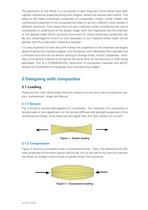
The geometry of the fibres in a composite is also important since fibres have their highest mechanical properties along their lengths, rather than across their widths. This leads to the highly anisotropic properties of composites, where, unlike metals, the mechanical properties of the composite are likely to be very different when tested in different directions. This means that it is very important when considering the use of composites to understand at the design stage, both the magnitude and the direction of the applied loads. When correctly accounted for, these anisotropic properties can be...
Open the catalog to page 7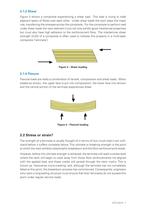
2.1.3 Shear Figure 3 shows a composite experiencing a shear load. This load is trying to slide adjacent layers of fibres over each other. Under shear loads the resin plays the major role, transferring the stresses across the composite. For the composite to perform well under shear loads the resin element must not only exhibit good mechanical properties but must also have high adhesion to the reinforcement fibre. The interlaminar shear strength (ILSS) of a composite is often used to indicate this property in a multi-layer composite (‘laminate’). Figure 3 – Shear loading 2.1.4 Flexure Flexural...
Open the catalog to page 8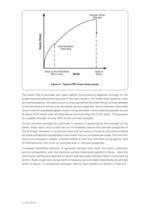
Strain to First Fibre/Resin Strain to Micro-crack Strain Failure Figure 5 -Typical FRP stress/strain graph The strain that a laminate can reach before microcracking depends strongly on the toughness and adhesive properties of the resin system. For brittle resin systems, such as most polyesters, this point occurs a long way before laminate failure, and so severely limits the strains to which such laminates can be subjected. As an example, tests have shown that for a polyester/glass woven roving laminate, micro-cracking typically occurs at about 0.2% strain with ultimate failure not occurring until...
Open the catalog to page 9
Figure 6 - Typical Resin Stress/Strain Curves (Post-Cured for 5 hrs @ 80°C It should also be noted that when a composite is loaded in tension, for the full mechanical properties of the fibre component to be achieved, the resin must be able to deform to at least the same extent as the fibre. Figure 7 gives the strain to failure for E-glass, S-glass, aramid and high-strength grade carbon fibres on their own (i.e. not in a composite form). Here it can be seen that, for example, the S-glass fibre, with an elongation to break of 5.3%, will require a resin with an elongation to break of at least this...
Open the catalog to page 10
2.3 Fibre orientation It is rare for fibres in a composite laminate to be perfectly aligned. Woven fabrics introduce a crimp to fibres which causes misalignment of load paths. Even non woven fabrics can suffer from some crimping around stitch points. The misalignment of fibres causes dramatic loss of mechanical properties, particularly in compression, due to increased likelihood of buckling. When using unidirectional fabrics, tapes or tows, it becomes critical to ensure accurate alignment of fibres during component manufacture to ensure loads are transferred efficiently and to maximize the advantages...
Open the catalog to page 11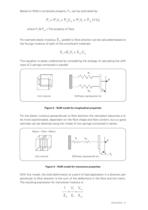
Based on RoM a composite property, Pc, can be estimated by: Pc = Pf Vf + PmVm = Pf Vf + Pm (1-Vf) where Pf & Pm = The property of fibre For example elastic modulus, E1, parallel to fibre direction can be calculated based on the Youngs modulus of each of the constituent materials: E1 =Ef Vf + Em Vm This equation is easily understood by considering the analogy of calculating the stiffness of 2 springs connected in parallel: Unit volume Stiffness representat ion Figure 8 – RoM model for longitudinal properties For the elastic modulus perpendicular to fibre direction the calculation becomes a little...
Open the catalog to page 12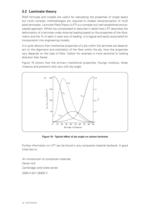
3.2 Laminate theory RoM formulae and models are useful for calculating the properties of single layers but more complex methodologies are required to enable characterisation of multi plied laminates. Laminate Plate Theory (LPT) is a complex but well established and accepted approach. Whilst too complicated to describe in detail here LPT describes the deformation of a laminate under external loading based on the properties of the fibre, matrix and the % of each in each axis of loading. It is logical and easily automated for incorporation into engineering models. It is quite obvious that mechanical...
Open the catalog to page 13All Gurit catalogs and technical brochures
 GURIT® G-PET™ FR
4 Pages
 FST Materials Brochure (v10)
7 Pages
 PREPREGS
11 Pages
 Gurit Guide to Composites
76 Pages
 EH 275 / EP 114
4 Pages
 Carbon & Glass SparPreg
5 Pages
 General Datasheet PN 901
4 Pages
 General Datasheet PN 900
4 Pages
 General Datasheet PB1000
4 Pages
 RA320H5
1 Page
 XA450
XA4501 Page
 UT-EA661
1 Page
 REA390S
1 Page
 PB1000
2 Pages
 Adhesives Brochure (v7)
5 Pages
 Core Materials Brochure (v8)
9 Pages
 GURIT PRODUCT CATALOGUE 2013/14
82 Pages
 UT-E1200
1 Page
 UT-E800
1 Page
 UT-E500
1 Page
 UT-E250
1 Page
 Carbon SparPreg (v9)
4 Pages
 RENUVO Prepreg PP (v4)
3 Pages


Archived catalogs
 Corecell P-Foam
2 Pages
- Single-component adhesive
- Metal adhesive
- Industrial adhesive
- Dispersion adhesive
- Epoxy adhesive
- Bonding adhesive
- Two-component adhesive
- Primer
- Fast curing adhesive
- Viscosity adhesive
- Wood adhesive
- Adhesive foil
- Flexible foil
- Low-viscosity adhesive
- Laminated foil
- Protective primer
- Metal paste
- Adhesive for the construction industry