


Ampreg 22 - Epoxy Laminating System (v17)

Ampreg 22 - Epoxy Laminating System (v17)
Ampreg 22 is an epoxy laminating system optimized for open-mould laminating of large structures, suitable for wet lay-up and vacuum bagging. It offers long working times, low exotherm, and low viscosity, and is designed for improved health and safety, excluding DDM. It is approved by Germanischer Lloyd.
The system operates best between 18-25°C with a maximum relative humidity of 70%. Mixing ratios vary by hardener type, and accurate measurement and thorough mixing are crucial.
Workshop Conditions: Optimal use is between 18-25°C. Lower temperatures increase viscosity, while higher temperatures reduce working time.
Mixing and Handling: Accurate measurement and thorough mixing are essential. Use a shallow tray to mix resin and hardener to reduce exothermic heat.
Mould Release: Use carnauba-based wax or PVA for complex surfaces. Test laminate is recommended.
Application: Apply using a foam roller. Use slower hardeners for initial layers in thick laminates.
Peel Ply can be applied during lay-up for a clean, textured surface for bonding. Testing is recommended to ensure proper release.
Consolidation can be achieved by hand or vacuum bags. High vacuums should not be applied until 50% into the working time. Use Slow or Extra Slow hardeners for best results.
Ambient Temperature Cure: Minimum recommended temperature is 18°C. Initial cure times vary by hardener type. Elevated temperature post-cure is recommended.
Elevated Temperature Cure: Post-curing improves mechanical properties significantly.
Details include viscosity, shelf life, and density. Working properties are outlined for different temperatures and hardener types.
Properties after room temperature and post-cure include glass transition temperature, tensile strength, and moisture absorption.
Ampreg 22 offers a versatile and safe solution for large composite structures, with guidelines for optimal use and curing.
Indicative properties of formulated products are provided, noting potential batch variations.
Wear protective gloves, clothing, and eye protection. Ensure adequate ventilation and avoid inhaling solvent vapors. Clean contaminated skin immediately and avoid using solvents on skin. A full Material Safety Data Sheet (MSDS) is available.
Specific risk and safety phrases for different hardeners are listed, indicating potential hazards and safety measures.
Store resin and hardeners in securely closed containers at a constant temperature between 10°C and 25°C. Proper storage ensures a two-year shelf life.
Gurit AG advises conducting own testing to ensure suitability for specific applications. Specifications and prices may change without notice.
Catalog excerpts
Ampreg 22 Epoxy Laminating System n Optimised for open-mould laminating of large structures n Improved health and safety n Germanischer Lloyd approved* Introduction Ampreg 22 is an established and widely used laminating system. It is intended for both wet lay-up and vacuum bagging processes and uses the most up-to-date epoxy chemistry available. Its long working time, low exotherm and low viscosity make it ideal for the manufacture of large, high performance composite structures. The Ampreg 22 system consists of a resin and a choice of five hardeners to provide a complete range of working properties. With its 14 hour hardener Ampreg 22 can provide laminate working times of over 14 hours at 20°C whilst having low exothermic reactions even when used in thick sections. The Fast hardener has such rapid through-cure at 25-30°C that it can be used to produce small mouldings that are demouldable in just a few hours. The low initial viscosity allows laminates to be produced by contact pressure, vacuum or pressure bag techniques, filament winding, or vacuum assisted resin injection. Thorough wetting of reinforcement fibres is ensured by the low viscosity and excellent air release properties of the resin / hardener mixture. This, in particular, assists with the impregnation of aramid and carbon fibres. Ampreg 22 resin is coloured bright yellow, with the hardeners having a range of different colours. This makes component identification easier and facilitates thorough mixing of resin and hardener. For example, the Extra Slow Hardener is coloured blue leading to a clearly identifiable green colour when thoroughly mixed with the resin. Ampreg 22 resin has one of the lowest diluent contents of any epoxy resin system available today. Together with the use of some unique chemistry in the hardeners, the overall system shows marked improvements in handling safety over other products. The system is formulated without DDM, which is particularly important for those using the product in open-mould, hand lay-up situations, where skin contact and exposure to vapours can be difficult to avoid completely. *High Tg Hardener excluded PDS-Ampreg 22-17-0412 1
Open the catalog to page 1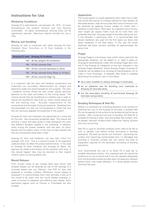
Workshop Conditions Ampreg 22 is optimised for use between 18 - 25°C. At lower temperatures the product thickens and may become unworkable. At higher temperatures working times will be significantly reduced. Maximum relative humidity for use is Ampreg 22 resin is combined with either Ampreg 22 Fast, Standard, Slow, Extra-Slow or 14 Hour hardener in the following ratio Ampreg 22 resin : Ampreg 22 hardener 100 : 33 (by volume) Standard or Slow 100 : 34 (by volume) Extra Slow or 14 Hour It is important that the resin and hardener components are measured out accurately. Measurement by weight and...
Open the catalog to page 2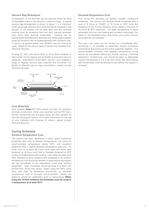
Vacuum Bag Techniques Elevated Temperature Cure Consolidation of the laminate can be obtained either by hand using paddle rollers or by vacuum or pressure bags. A typical vacuum bag arrangement is shown in figure 1. It is important when using high vacuums and using the slower hardeners that vacuum is not applied until at least 50% into the laminate working time, as excessive flow and resin starved laminates Heating can be may result (see working properties). economically and effectively achieved with either space heaters under an insulation tent or heated blankets with insulation over. If vacuum...
Open the catalog to page 3
*Hardener is not pigmented - Gardener colour stated NOTES: *Ampreg 22 with 14 Hour hardener will ideally be post cured before de-moulding. Earliest time to turn off vacuum and demould time are totally dependent on the intended post cure schedule. Please refer to Technical Services for further information on this point. For an explanation of test methods used see 'Formulated Products Technical Characteristics'. Please refer to the "Intro to Form Prds'.'pdf, which can be found in the Formulated product section on the website, www.gurit.com All figures quoted are indicative of the properties of...
Open the catalog to page 4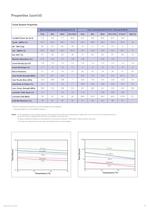
Properties (cont'd) *Ambient temperature cure alone is not recommended with this hardener ** Data generated from 16 hours @ 55°C postcure Notes: For an explanation of test methods used see 'Formulated Products Technical Characteristics'. Please refer to the "Intro to Form Prods'.'pdf, which can be found in the Formulated product section on the website, www.gurit.com All figures quoted are indicative of the properties of the product concerned. Some batch to batch variation may occur t All times are measured from when resin and hardener are first mixed together
Open the catalog to page 5
Properties (cont'd) Compressive Strength of RE300 Glass Laminate Fast Std. Slow Extra Fast Std. Slow Extra 14** Slow Hour Tensile Properties of Castings Slow Hour ■ Tensile Strength ■ Tensile Modulus Interlaminar Shear Strength of RE300 Glass Laminate Fast Std. Slow Extra Fast Std. Slow Extra 14*" Slow Hour Strain to Failure of Castings Slow Hour *Data generated from 16 hours @ 55°C Postcure NOTES: For an explanation of test methods used see 'Formulated Products Technical Characteristics' All figures quoted are indicative of the properties of the product concerned Some batch to batch variation...
Open the catalog to page 6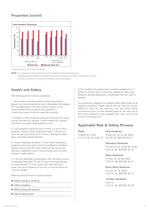
Properties (cont'd) Glass Transition Temperature Fast Std. Slow Extra Peak Tanc Slow Hour I Ultimate Peak TanS **Data generated from 16 hours @ 55°C Postcure NOTES: For an explanation of test methods used see 'Formulated Products Technical Characteristics' All figures quoted are indicative of the properties of the product concerned Some batch to batch variation may occur tAII times are measured from when resin and hardener are first mixed together The following points must be considered 1. Skin contact must be avoided by wearing protective gloves. Gurit recommends the use of disposable nitrile...
Open the catalog to page 7
Transport & Storage The resin and hardeners should be kept in securely closed containers during transport and storage. Any accidental spillage should be soaked up with sand, sawdust, cotton waste or any other absorbent material. The area should then be washed clean (see appropriate Safety Data Sheet). Adequate long term storage conditions will result in a shelf life of two years for both the resin and hardeners. Storage should be in a warm dry place out of direct sunlight and protected from frost. The storage temperature should be kept constant between 10°C and 25°C, cyclic fluctuations in temperature...
Open the catalog to page 8All Gurit catalogs and technical brochures
 GURIT® G-PET™ FR
4 Pages
 FST Materials Brochure (v10)
7 Pages
 PREPREGS
11 Pages
 Gurit Guide to Composites
76 Pages
 EH 275 / EP 114
4 Pages
 Carbon & Glass SparPreg
5 Pages
 General Datasheet PN 901
4 Pages
 General Datasheet PN 900
4 Pages
 General Datasheet PB1000
4 Pages
 RA320H5
1 Page
 XA450
XA4501 Page
 UT-EA661
1 Page
 REA390S
1 Page
 PB1000
2 Pages
 Adhesives Brochure (v7)
5 Pages
 Core Materials Brochure (v8)
9 Pages
 GURIT PRODUCT CATALOGUE 2013/14
82 Pages
 UT-E1200
1 Page
 UT-E800
1 Page
 UT-E500
1 Page
 UT-E250
1 Page
 Carbon SparPreg (v9)
4 Pages
 RENUVO Prepreg PP (v4)
3 Pages
 Gurit Guide to Composites (v5)
73 Pages


Archived catalogs
 Corecell P-Foam
2 Pages
- Profile
- Single-component adhesive
- Metal adhesive
- Industrial adhesive
- Dispersion adhesive
- Epoxy adhesive
- Bonding adhesive
- Two-component adhesive
- Primer
- Fast curing adhesive
- Viscosity adhesive
- Wood adhesive
- Adhesive foil
- Flexible foil
- Low-viscosity adhesive
- Laminated foil
- Protective primer
- Metal paste
- Adhesive for the construction industry