
- Catalogs
- Guangdong Bell Experiment Equipment Co., Ltd
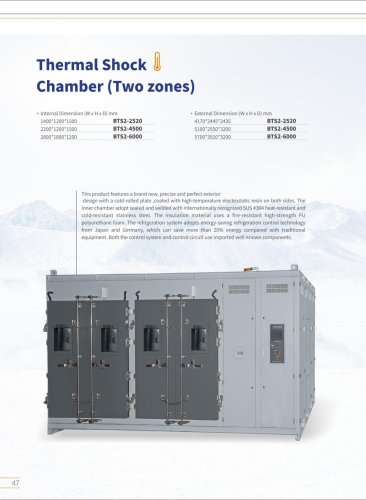
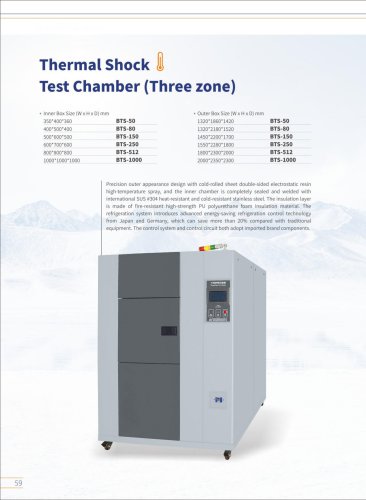
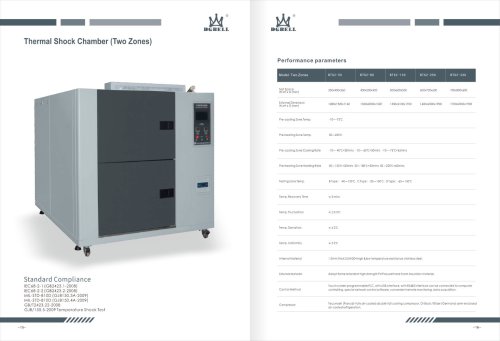
- Vehicle Lithium Battery Cell Pack Module Two Zones Thermal Shock Chamber


- Company
- Products
- Catalogs
- News & Trends
- Exhibitions
Vehicle Lithium Battery Cell Pack Module Two Zones Thermal Shock Chamber
1 / 2 PagesView full catalog
Vehicle Lithium Battery Cell Pack Module Two Zones Thermal Shock Chamber
Product catalog summary
Overview
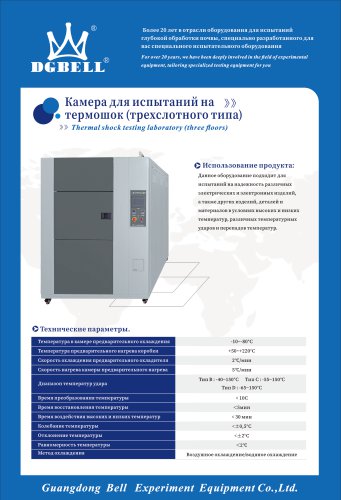
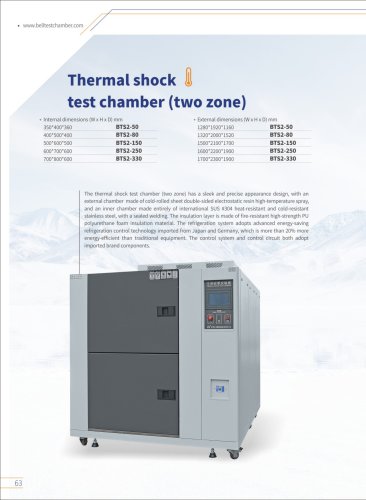
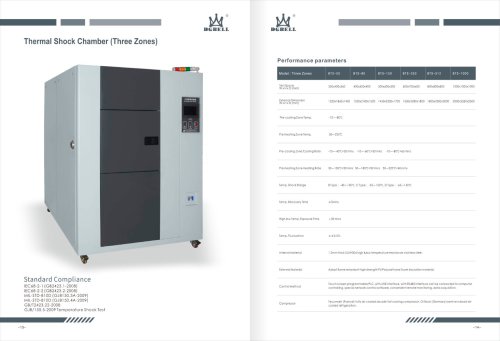
The document describes a Two Zones Thermal Shock Chamber designed to test materials and components under rapid temperature changes. This equipment is essential for evaluating product durability and performance when subjected to extreme thermal cycling.
Main Sections
Specifications
- Temperature Range: Typically from -70°C to +180°C, allowing for a wide range of thermal shock conditions.
- Zones: Two distinct temperature zones (cold and hot) that enable rapid transfer of test samples between them.
- Temperature Transition Time: Rapid switching capability, often within seconds, to simulate sudden temperature changes.
- Chamber Size: Varies depending on model, designed to accommodate different sample sizes.
- Control System: Advanced programmable controllers for precise temperature regulation and cycling.
Operating Procedures
- Preconditioning samples to baseline temperature before testing.
- Programming temperature cycles according to test standards or customer requirements.
- Ensuring proper sample placement for uniform exposure.
- Monitoring temperature profiles and chamber conditions throughout the test.
Standards and Compliance
- Designed to meet international standards such as MIL-STD-810, IEC 60068-2-14, and JESD22-A104 for thermal shock testing.
- Compliance ensures reliability and repeatability of test results.
Recommendations and Best Practices
- Regular calibration of temperature sensors and controllers to maintain accuracy.
- Routine maintenance of refrigeration and heating systems to prevent downtime.
- Use of appropriate safety measures when handling extreme temperatures.
- Documentation of test parameters and results for quality assurance.
Summary of Key Data
The chamber's rapid temperature transition capability is critical for simulating real-world thermal shocks. The dual-zone design allows for efficient cycling between hot and cold environments, ensuring comprehensive testing. Adherence to recognized standards guarantees that the test outcomes are valid and comparable across different applications.
See more
Catalog excerpts
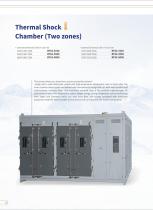
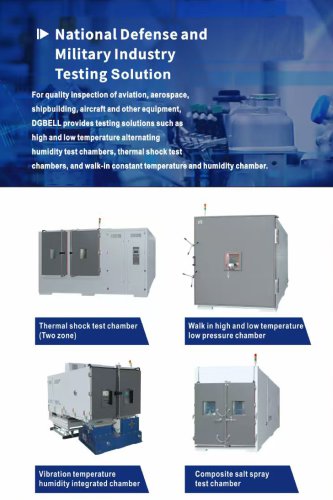
Two Zones Thermal Shock Chamber
Open the catalog to page 1All Guangdong Bell Experiment Equipment Co., Ltd catalogs and technical brochures
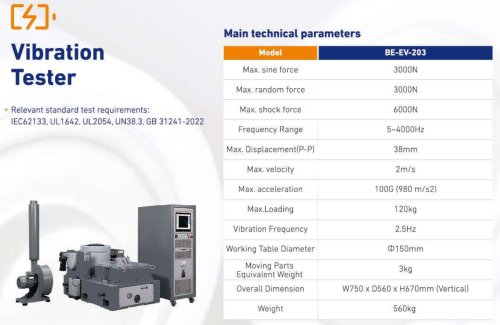 GDBELL Vibration Tester
1 Page
 Battery Safety Test Chamber C
28 Pages
 Environmental Test Chamber C
14 Pages
 climate test chambers
1 Page
 Leak testing machine
1 Page
 Drop tester BE-8206-1500
1 Page
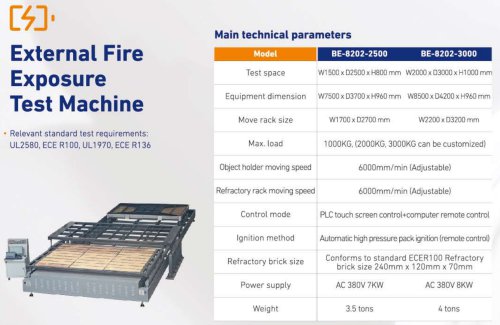
















Archived catalogs


Related Searches
- Kiln
- Test machine
- Chamber kiln
- Electric furnace
- Heat treatment kiln
- Test cabinet
- Chiller
- Automated testing machine
- Material test machine
- Temperature test chamber
- Liquid recirculation chiller
- Climatic test cabinet
- Quality control test cell
- Computer-controlled test machine
- Drying kiln
- Humidity test cabinet
- Environmental test chamber
- Digital tester
- Laboratory kiln
- Industrial testing machine
*Prices are pre-tax. They exclude delivery charges and customs duties and do not include additional charges for installation or activation options. Prices are indicative only and may vary by country, with changes to the cost of raw materials and exchange rates.
About DirectIndustry
DirectIndustry is a marketplace that offers B2B players a complete experience, from product sourcing to purchase. DirectIndustry is an entity of VirtualExpo Group.
Are you a buyer?
Are you a supplier?