
- Catalogs
- Guangdong Bell Experiment Equipment Co., Ltd
- Vehicle Lithium Battery Cell Pack Module Drive Walk IN Temperature Humidity Test Chamber


- Company
- Products
- Catalogs
- News & Trends
- Exhibitions
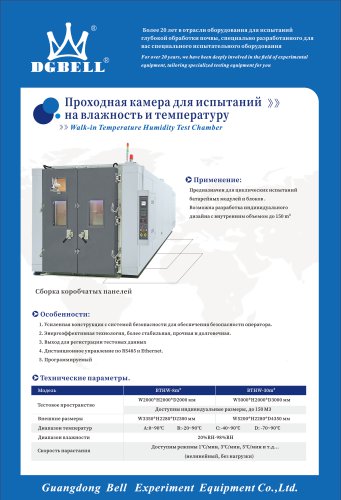
Vehicle Lithium Battery Cell Pack Module Drive Walk IN Temperature Humidity Test Chamber
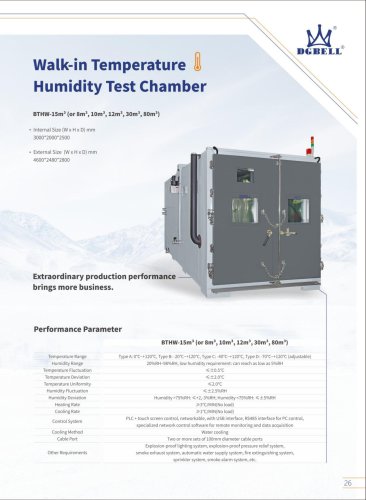
1 / 1 PageView full catalog
Vehicle Lithium Battery Cell Pack Module Drive Walk IN Temperature Humidity Test Chamber
Product catalog summary
Introduction
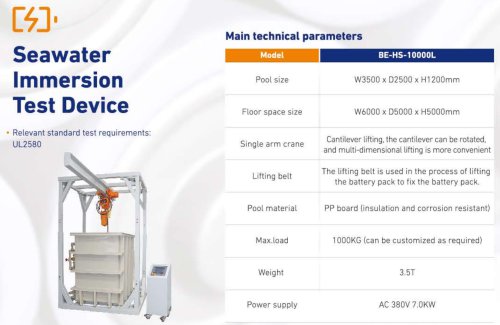
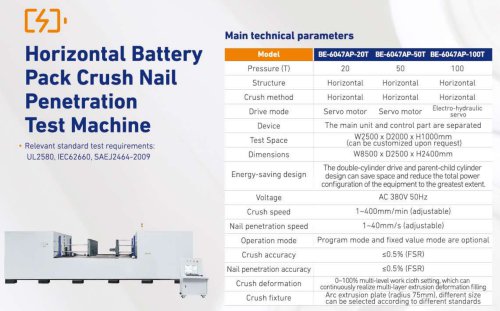
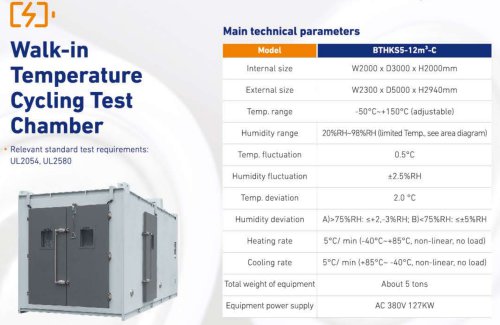
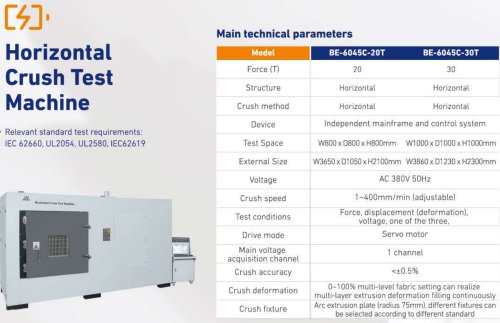
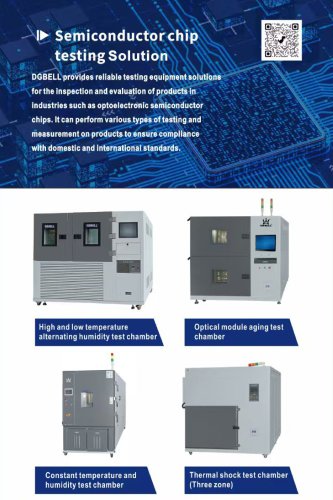
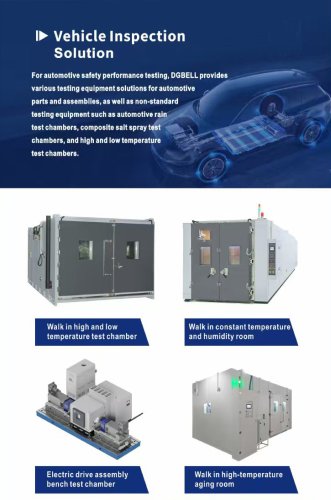
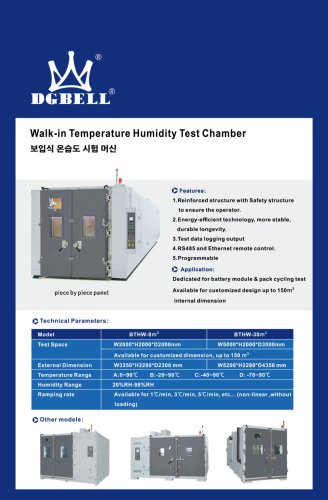
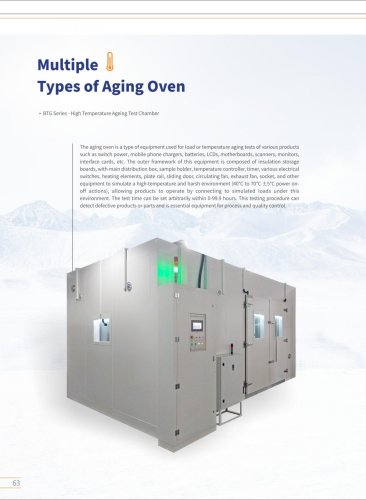
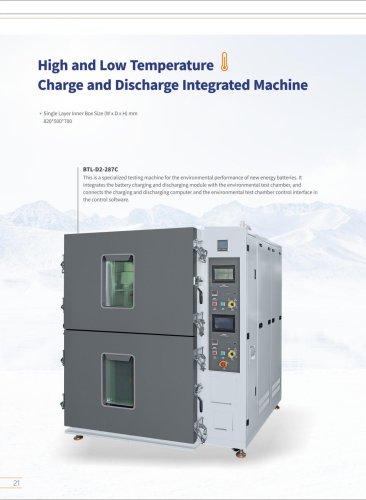
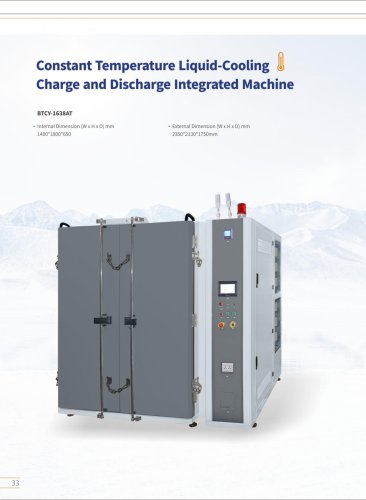
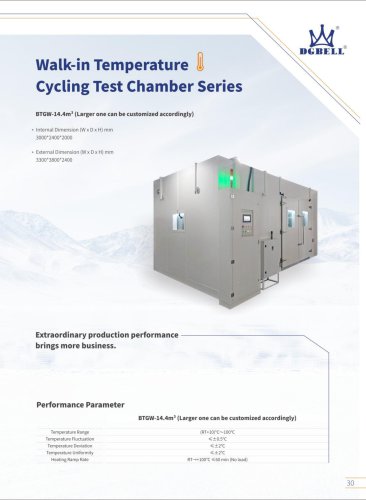
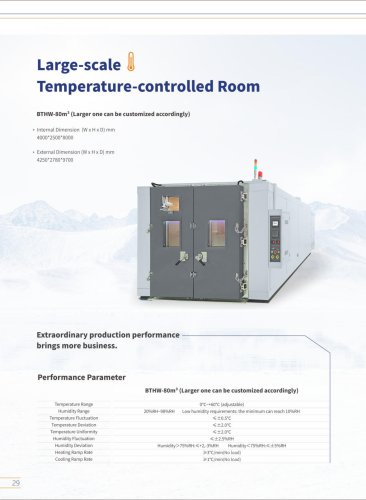
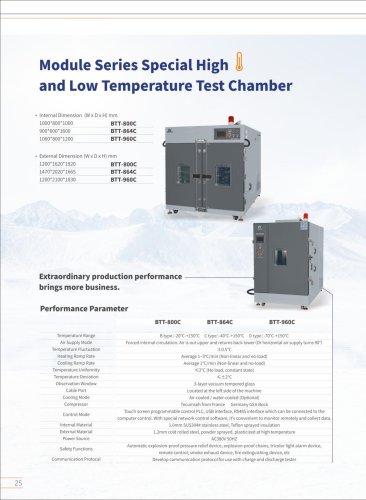
This document provides a comprehensive overview of the Vehicle Lithium Battery Module Walk-In Temperature Humidity Test Chamber, detailing its specifications, procedures, standards, and recommendations for use.
Specifications
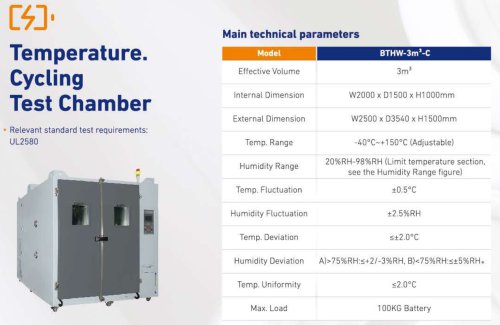
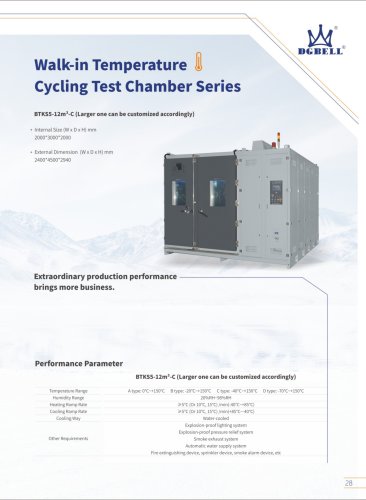
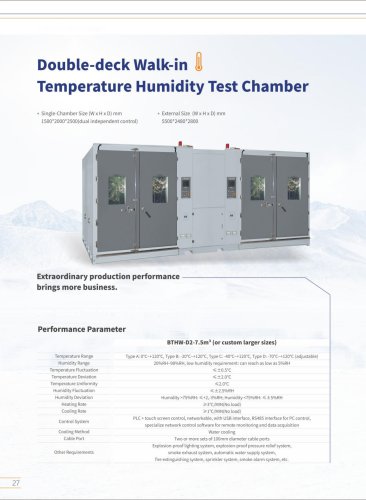
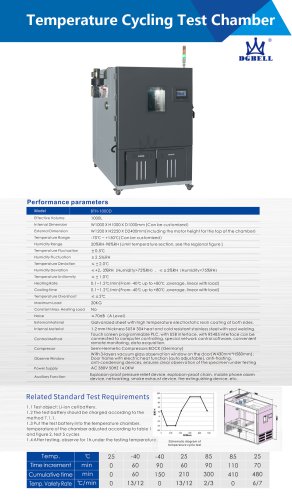
The test chamber is designed to simulate various environmental conditions to test the durability and performance of lithium battery modules. Key specifications include temperature range, humidity control, chamber size, and safety features. The chamber can operate within a temperature range of -40°C to 85°C and a humidity range of 10% to 98% RH.
Procedures
The document outlines the step-by-step procedures for setting up and conducting tests. This includes pre-test calibration, sample placement, test execution, and post-test analysis. Emphasis is placed on ensuring accurate data collection and maintaining safety protocols.
Standards
The test chamber complies with international standards such as IEC 60068 and ISO 16750, ensuring reliability and consistency in test results. These standards dictate the environmental conditions and testing methodologies to be used.
Recommendations
Recommendations for optimal use include regular maintenance of the chamber, calibration of sensors, and adherence to safety guidelines. It is advised to conduct periodic reviews of test procedures to align with technological advancements and regulatory changes.
Data Interpretation
The document includes tables and graphs illustrating typical test results, highlighting key performance indicators such as battery efficiency, thermal stability, and degradation rates. These visual aids are crucial for understanding the impact of environmental conditions on battery performance.
Conclusion
The Vehicle Lithium Battery Module Walk-In Temperature Humidity Test Chamber is an essential tool for ensuring the reliability and safety of lithium battery modules in automotive applications. By adhering to the outlined specifications and procedures, users can achieve accurate and meaningful test results.
This document provides a comprehensive overview of the Vehicle Lithium Battery Module Walk-In Temperature Humidity Test Chamber, detailing its specifications, procedures, standards, and recommendations for use.
Specifications
The test chamber is designed to simulate various environmental conditions to test the durability and performance of lithium battery modules. Key specifications include temperature range, humidity control, chamber size, and safety features. The chamber can operate within a temperature range of -40°C to 85°C and a humidity range of 10% to 98% RH.
Procedures
The document outlines the step-by-step procedures for setting up and conducting tests. This includes pre-test calibration, sample placement, test execution, and post-test analysis. Emphasis is placed on ensuring accurate data collection and maintaining safety protocols.
Standards
The test chamber complies with international standards such as IEC 60068 and ISO 16750, ensuring reliability and consistency in test results. These standards dictate the environmental conditions and testing methodologies to be used.
Recommendations
Recommendations for optimal use include regular maintenance of the chamber, calibration of sensors, and adherence to safety guidelines. It is advised to conduct periodic reviews of test procedures to align with technological advancements and regulatory changes.
Data Interpretation
The document includes tables and graphs illustrating typical test results, highlighting key performance indicators such as battery efficiency, thermal stability, and degradation rates. These visual aids are crucial for understanding the impact of environmental conditions on battery performance.
Conclusion
The Vehicle Lithium Battery Module Walk-In Temperature Humidity Test Chamber is an essential tool for ensuring the reliability and safety of lithium battery modules in automotive applications. By adhering to the outlined specifications and procedures, users can achieve accurate and meaningful test results.
See more
Catalog excerpts
Vehicle Lithium Battery Module Walk IN Temperature Humidity Test Chamber
Open the catalog to page 1All Guangdong Bell Experiment Equipment Co., Ltd catalogs and technical brochures
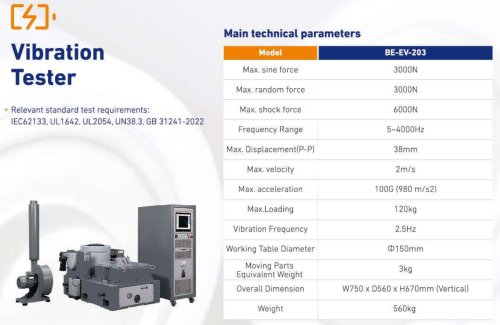 GDBELL Vibration Tester
1 Page
 Battery Safety Test Chamber C
28 Pages
 Environmental Test Chamber C
14 Pages
 climate test chambers
1 Page
 Leak testing machine
1 Page
 Drop tester BE-8206-1500
1 Page
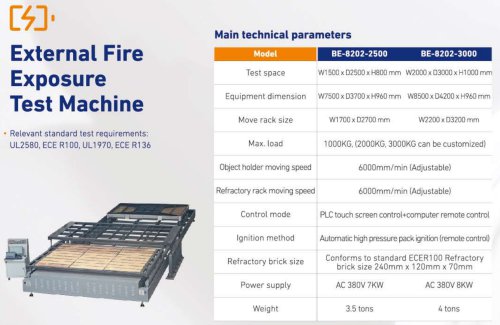















Archived catalogs


Related Searches
- Kiln
- Test machine
- Chamber kiln
- Electric furnace
- Heat treatment kiln
- Chiller
- Temperature test chamber
- Automated testing machine
- Material test machine
- Climatic test cabinet
- Quality control test cell
- Liquid recirculation chiller
- Computer-controlled test machine
- Drying kiln
- Environmental test chamber
- Digital tester
- Laboratory kiln
- Industrial testing machine
*Prices are pre-tax. They exclude delivery charges and customs duties and do not include additional charges for installation or activation options. Prices are indicative only and may vary by country, with changes to the cost of raw materials and exchange rates.
About DirectIndustry
DirectIndustry is a marketplace that offers B2B players a complete experience, from product sourcing to purchase. DirectIndustry is an entity of VirtualExpo Group.
Are you a buyer?
Are you a supplier?