
- Catalogs
- GfG - Gesellschaft für Gerätebau mbH
- Transmitter IR22 D


Transmitter IR22 D
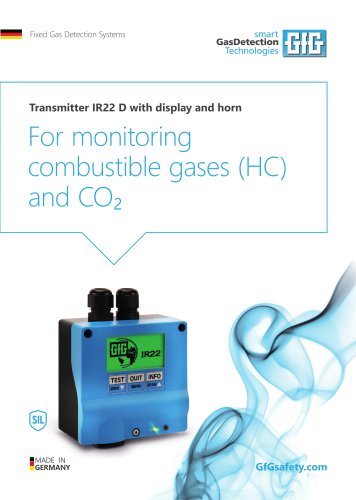
Transmitter IR22 D
- Gases and Ranges: CO₂ (0 to 50% by volume), Methane (0 to 100% LEL), Difluormethane (0 to 14% by volume), Propane (0 to 2% by volume).
- Measuring Principle: Infrared (IR).
- Response Time: t90 < 50 s.
- Temperature Range: -25 to +50 °C.
- Humidity: 0 to 95% r.h. (non-condensing).
- Power Supply: 12 to 30 V DC.
- Dimensions: 96 x 123 x 49 mm.
- Weight: 170 - 195 g.
- Certifications: Functional Safety (SIL) DIN EN 61508-2: 2011.
Catalog excerpts

Fixed Gas Detection Systems Transmitter IR22 D with display and horn For monitoring combustible gases (HC) and CO₂
Open the catalog to page 1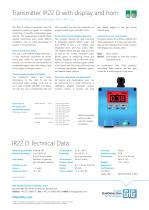
Transmitter IR22 D with display and horn For monitoring combustible gases (HC) and CO₂ The IR22 D infrared transmitter uses the adsorption spectra of gases for targeted monitoring of specific combustible gases and CO2. The measurement method allows reliable monitoring even under difficult conditions, such as a low percentage of oxygen in the ambient air. Selective and insensitive Not only is the method highly selective, it is also extremely insensitive to sensor toxins and, unlike for example catalytic sensors, can monitor the concentration of combustible gases even when there is little or no...
Open the catalog to page 2All GfG - Gesellschaft für Gerätebau mbH catalogs and technical brochures
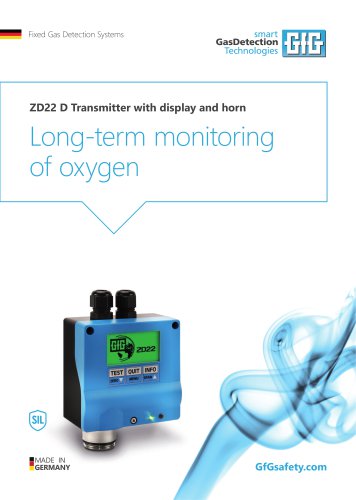 Transmitter ZD22 D
2 Pages
 Transmitter ZD22
2 Pages
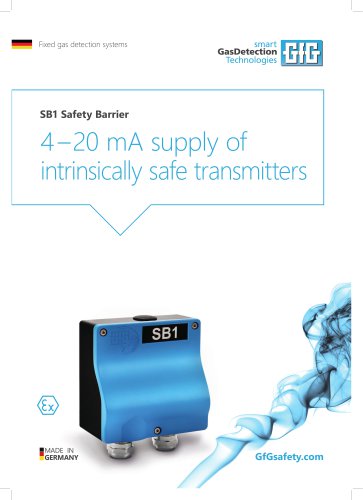 Transmitter SB1
1 Page
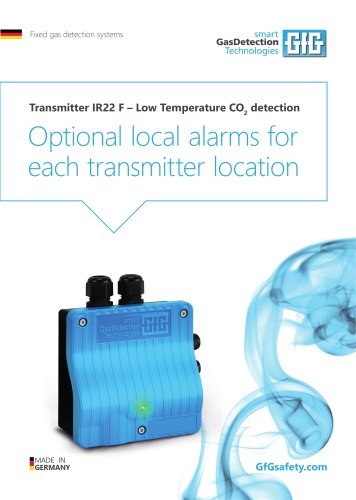 Transmitter IR22 F
2 Pages
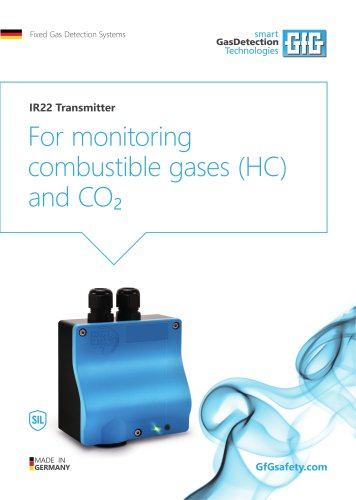 Transmitter IR22
2 Pages
 Transmitter EC28 i
2 Pages
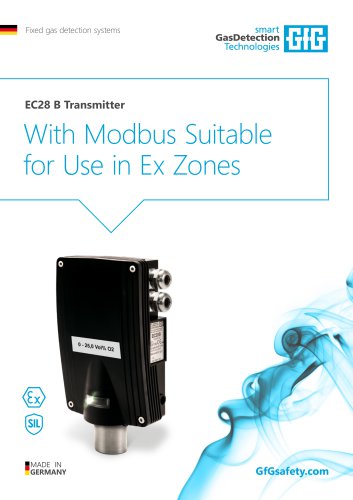 Transmitter EC28 B
2 Pages
 Transmitter EC28 Di
2 Pages
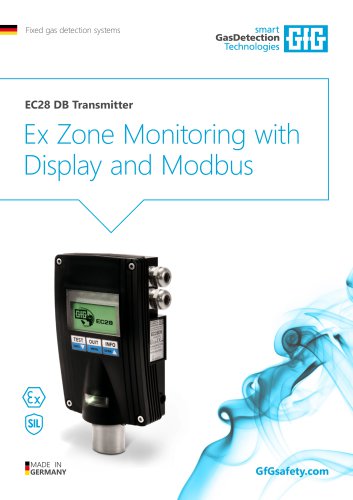 Transmitter EC28 DB
2 Pages
 Transmitter EC28 DAR
2 Pages
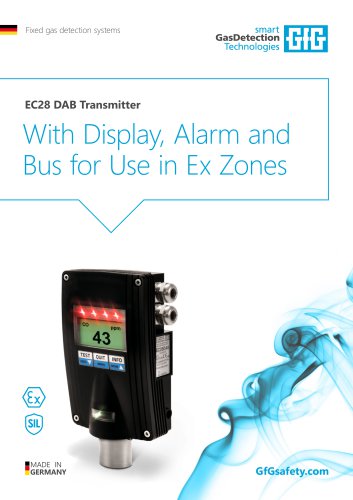 Transmitter EC28 DAB
2 Pages
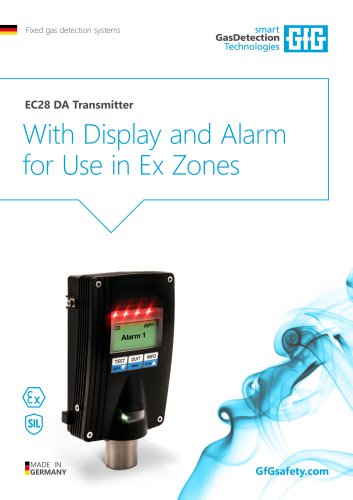 Transmitter EC28 DA
2 Pages
 Transmitter EC28 D
2 Pages
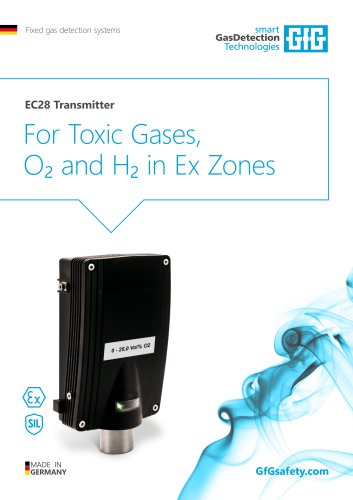 Transmitter EC28
2 Pages
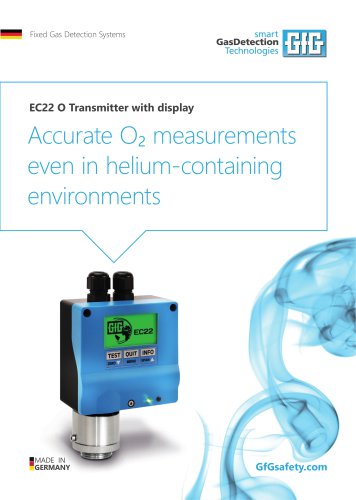 Transmitter EC22 O Display
2 Pages
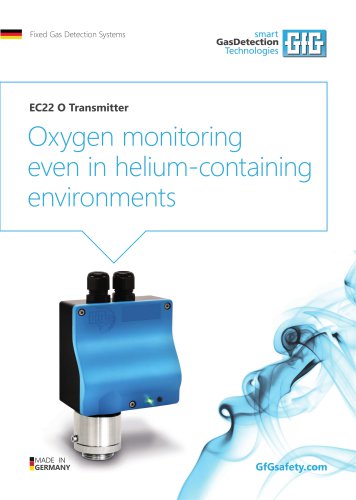 Transmitter EC22 O
2 Pages
 Transmitter EC22 DS
2 Pages
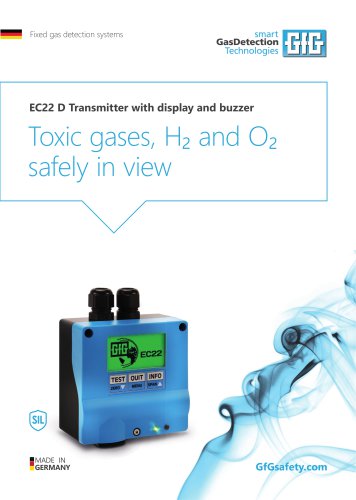 Transmitter EC22 D
2 Pages
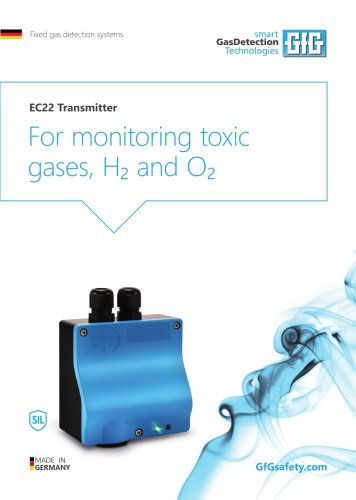 Transmitter EC22
2 Pages
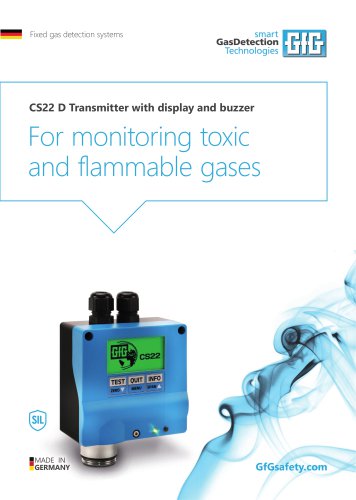 Transmitter CS22 D
2 Pages
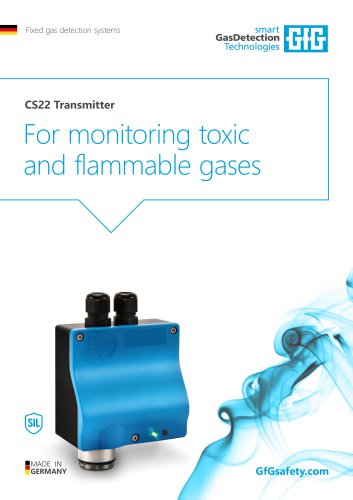 Transmitter CS22
2 Pages
 Transmitter CC33
2 Pages
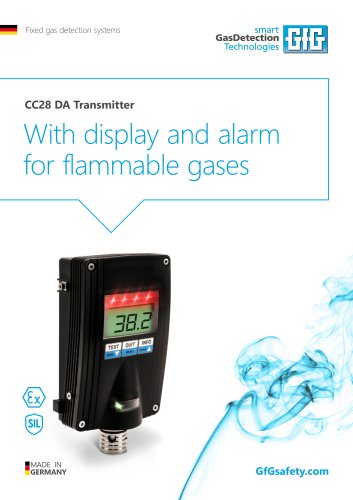 Transmitter CC28 DA
2 Pages
 Transmitter CC28 D
2 Pages
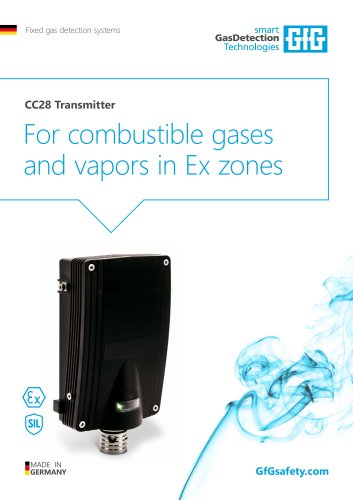 Transmitter CC28
2 Pages
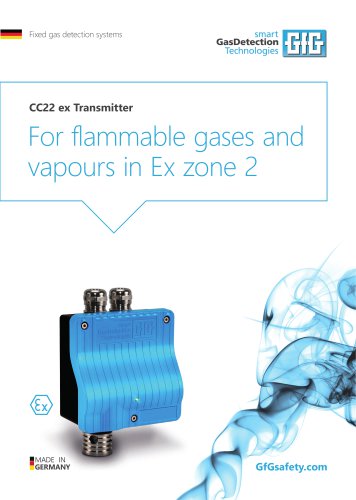 Transmitter CC22 ex
2 Pages
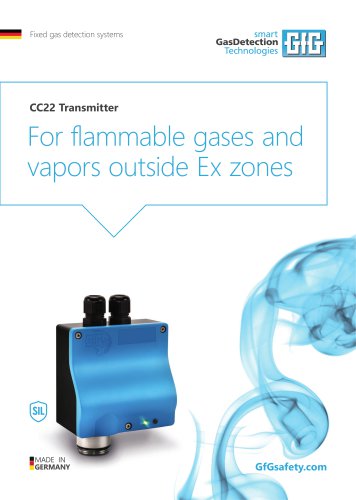 Transmitter CC22
2 Pages
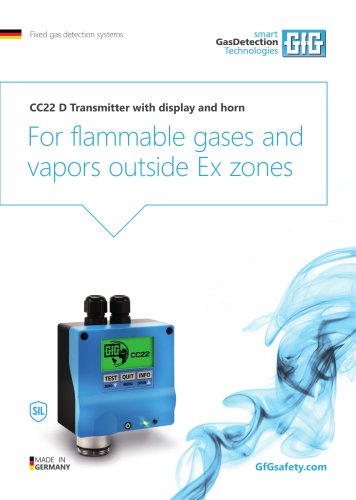 Transmitter CC22 D
2 Pages
 Controller GMA22
4 Pages
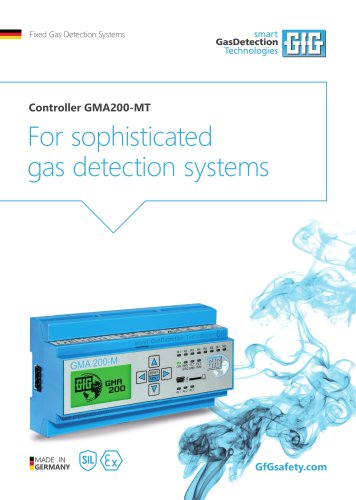 Controller GMA200-MT
8 Pages
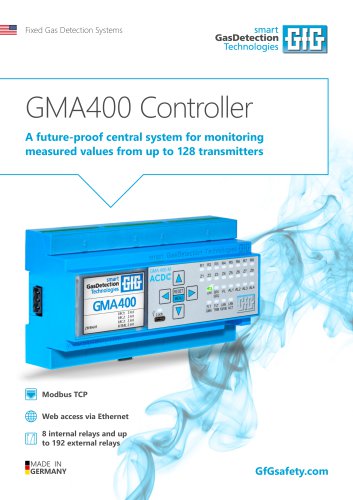 Controller GMA400
8 Pages
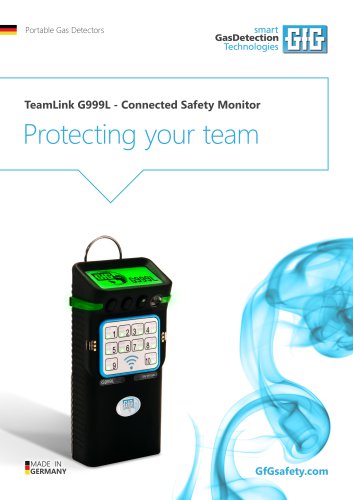 TeamLink G999L
4 Pages
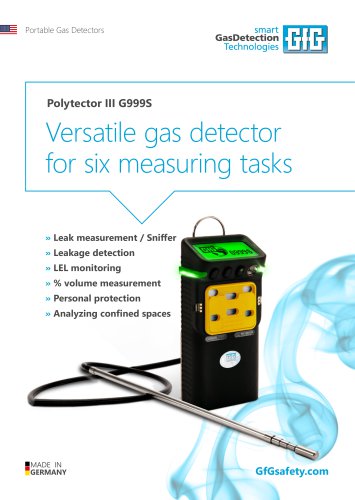 Polytector III G999S
6 Pages
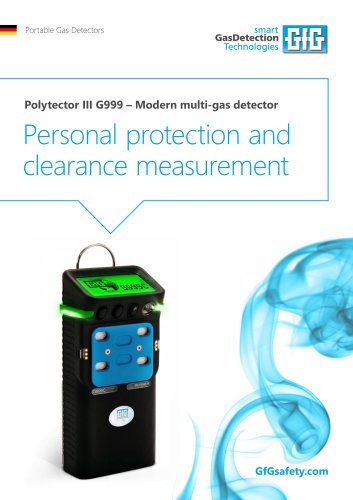 Polytector III G999
8 Pages
 Microtector III G888
8 Pages
 Micro V G222E
4 Pages

- Measuring device
- TFT display module
- Color display panel
- Touch screen display panel
- GfG gas detector
- Digital gauge
- Industrial detector
- Monitoring detector
- Portable detector
- Infrared detector
- Carbon monoxide detector
- Compact detector
- Measuring instrument with display
- Relay module
- Oxygen detector
- Analog detector
- Explosion-proof detector
- GfG electrochemical detector
- Process detector