- Catalogs
- Fr. Sauter AG
- EGE 112: Duct transducer, enthalpy

EGE 112: Duct transducer, enthalpy

EGE 112: Duct transducer, enthalpy
- Measures enthalpy and temperature in air ducts using a fast capacitive measuring element.
- Active measuring element unaffected by flow speeds and normal contamination.
- Includes a mounting flange for easy installation.
- Power Supply: 15...24 V= (±10%) or 24 V~ (±10%)
- Power Consumption: Max. 0.4 W (24 V=) | 0.8 VA (24 V~)
- Output Signal: 2 x 0...10 V (min. load 10 kΩ)
- Flow Speed: Min. 3 m/s, Max. 10 m/s
- Time Constant: 3 minutes in moving air (3 m/s)
- Enthalpy Range: 0...100 kJ/kg, Accuracy: 3.5 kJ/kg (typ. at 21 °C)
- Temperature Range: -20...80 °C, Accuracy: ±0.5 °C (typ. at 25 °C)
- Ambient Temperature: -20...70 °C
- Connection terminals: Screw terminal, max. 1.5 mm²
- Cable inlet: M20 for cable Ø min. 5.8 mm, max. 6 mm
- Housing: Yellow/black, Material: PA6
- Filter unit material: Stainless steel, wire mesh
- Sensor tube diameter: 19.5 mm, length: 140 mm
- Weight: 120 g
- Type of protection: IP65 (EN 60529)
- CE conformity: EMC Directive 2014/30/EU EN 60730-1
- RoHS Directive 2011/65/EU EN 50581
- Installation should be performed by a qualified electrician.
- Electrical interference can affect measurements; shielded cables are recommended in high-interference environments.
- Ensure signal receivers do not enter a dangerous state due to faulty signals.
- Consider power loss in temperature sensors when measuring ambient air temperature.
Catalog excerpts

Product data sheet EGE 112: Duct transducer, enthalpy How energy efficiency is improved Precise measuring of enthalpy and temperature for energy-efficient control of HVAC installations and monitoring energy consumption Features • Measures the enthalpy and temperature in air ducts • Measurement by means of fast capacitive measuring element • Active measuring element • Unaffected by flow speeds and normal contamination • Mounting flange supplied Technical data Power supply Power supply 15...24 V= (±10%) or 24 V~ (±10%) Power consumption Max. 0.4 W (24 V=) | 0.8 VA (24 V~) Output signal Time characteristic Enthalpy Flow speed Min. 3 m/s Max. 10 m/s Time constant in moving air (3 m/s) 3 minutes Measuring range 0...100 kJ/kg Measuring accuracy 3.5 kJ/kg (typ. at 21 °C) Ambient conditions Construction Connection terminals Screw terminal, max. 1.5 mm2 Cable inlet M20 for cable 0 min. 5.8 mm, max. Filter unit material Stainless steel, wire mesh Sensor tube diameter 19.5 mm Sensor tube length 140 mm Type of protection Instrument head: IP65 (EN 60529) EMC Directive 2014/30/EU EN 60730-1 (mode of operation 1, residential premises) RoHS Directive 2011/65/EU EN 50581 Overview of types Type EGE112F031 Description of operation Duct transducer for measuring the enthalpy in gaseous media in heating, ventilation and air conditioning systems (e.g. in supply air/return air ducts). The relative humidity is captured using a quick, capacitive measuring element. The humidity and temperature values are used to calculate the enthalpy and converted to the standard signal 0...10 V. Description Duct transducer, enthalpy and temperature, 2 x 0-10 V ^ SAUTER Right of amendment reserved © 2016 Fr. Sauter AG
Open the catalog to page 1
Product data sheet Intended use This product is only suitable for the purpose intended by the manufacturer, as described in the “Description of operation” section. All related product regulations must also be adhered to. Changing or converting the product is not admissible. Engineering and fitting notes CAUTION! Damage to device! ►Electrical devices may only be installed and fitted by a qualified electrician! Electrical connection When you are running the cables, note that electrical interference can affect the measurements. These effects increase the longer the cable and the smaller the conductor...
Open the catalog to page 2
Product data sheet Disposal When disposing of the product, observe the currently applicable local laws. More information on materials can be found in the Declaration on materials and the environment for this product. Connection diagram Fr. Sauter AG Im Surinam 55 CH-4016 Basel Tel. +41 61 - 695 55 55 www.sauter-controls.com SAUTER Right of amendment reserved © 2016 Fr. Sauter AG
Open the catalog to page 3All Fr. Sauter AG catalogs and technical brochures
 SAUTER Catalogue
551 Pages
 HSC 120: Room humidistat
3 Pages
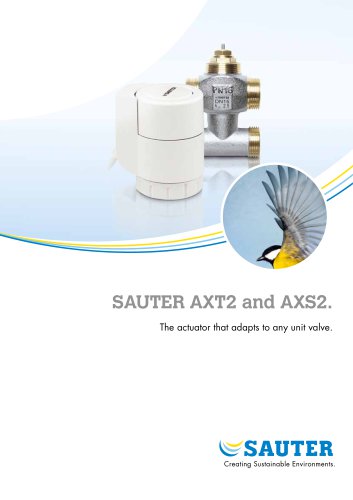 SAUTER AXT2 and AXS2.
8 Pages
 Ball valve and actuator.
6 Pages
 SAUTER Valveco compact
8 Pages
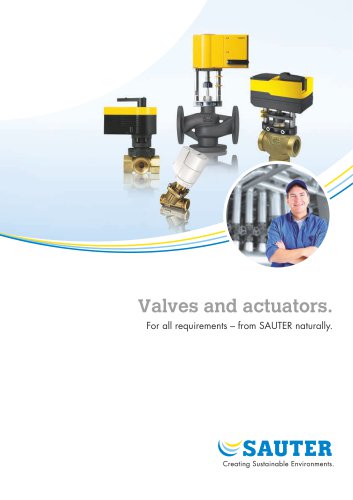 Valves and actuators.
32 Pages
 SAUTER vialoq AVM 100
2 Pages
 ASM 134: Damper actuator
4 Pages
 SAUTER flexotron ® 400
4 Pages
 EXG: Active potentiometer
2 Pages
 flexotron ® 2000
2 Pages
 SAUTER flexotron800
8 Pages
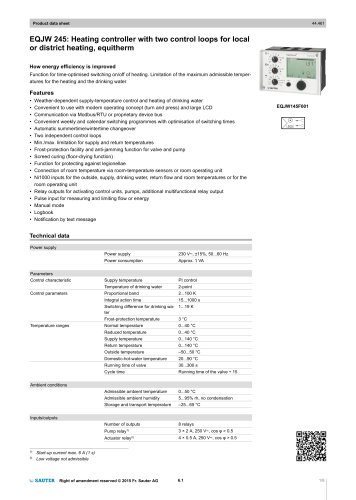 EQJW 24
8 Pages
 NRT 101
8 Pages
 Thermowells
6 Pages
 Indoor air quality
8 Pages
 SAUTER EGQ
4 Pages
 SAUTER equiflex ® NRT300
4 Pages
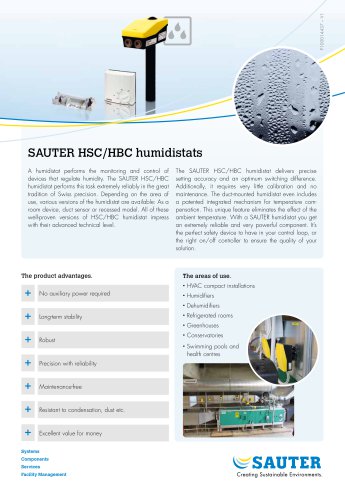 SAUTER HSC/HBC humidistats
2 Pages
 DSA: Pressure switch
4 Pages
 TFL 201
3 Pages
 TUC: Universal thermostat
5 Pages
 TLC
TLC2 Pages
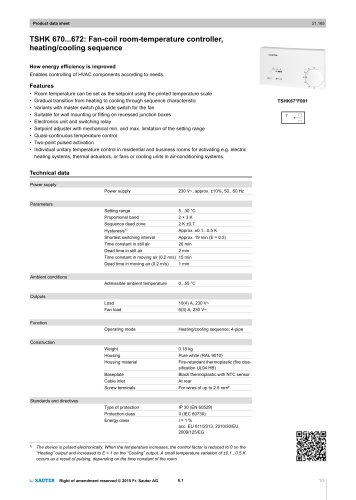 TSHK 670...67
3 Pages
 TSHK 621...643
4 Pages
 TSO, TSH: Room thermostat
4 Pages
 RAK: Universal thermostat
5 Pages
 SAUTER FACTS
28 Pages
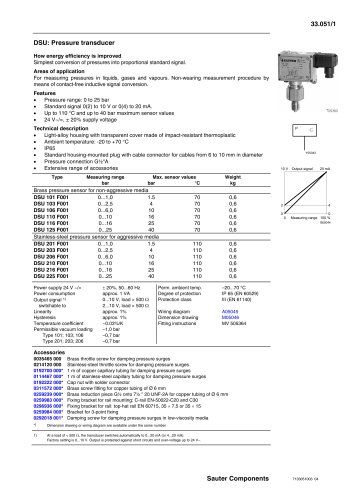 Pressure transducer
3 Pages
 Air-flow transducer
2 Pages