


- Products
- Catalogs
- News & Trends
- Exhibitions
High Temp

High Temp
Catalog excerpts
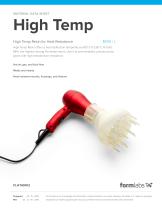
MATERIAL DATA SHEET High Temp High Temp Resin for Heat Resistance High Temp Resin offers a heat deflection temperature (HDT) of 238 °C @ 0.45 MPa, the highest among Formlabs resins. Use it to print detailed, precise prototypes with high temperature resistance. Hot air, gas, and fluid flow Molds and inserts Heat resistant mounts, housings, and fixtures To the best of our knowledge the information contained herein is accurate. However, Formlabs, Inc. makes no warranty, expressed or implied, regarding the accuracy of these results to be obtained from the use thereof.
Open the catalog to page 1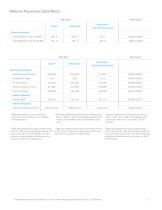
1 Material properties can vary with part geometry, print orientation, print settings, and temperature. 4 Data was obtained from parts printed using a Form 2, 100 micron, High Temp settings, and post-cured with Form Cure at 80 °C for 120 minutes plus an additional thermal cure in a lab oven at 160 °C for 180 minutes. 2 Data was obtained from green parts, printed using Form 2, 100 gm, High Temp settings, washed for 5 minutes in Form Wash and air dried without post cure. 5 Data was obtained from parts printed using a Form 2, 100 micron, High Temp settings, and post-cured with Form Cure at 60 °C...
Open the catalog to page 2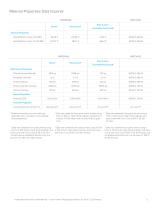
1 Material properties can vary with part geometry, print orientation, print settings, and temperature. 4 Data was obtained from parts printed using a Form 2, 100 micron, High Temp settings, and post-cured with Form Cure at 80 °C for 120 minutes plus an additional thermal cure in a lab oven at 160 °C for 180 minutes. 2 Data was obtained from green parts, printed using Form 2, 100 gm, High Temp settings, washed for 5 minutes in Form Wash and air dried without post cure. 5 Data was obtained from parts printed using a Form 2, 100 micron, High Temp settings, and post-cured with Form Cure at 60 °C...
Open the catalog to page 3
FORMLABS MATERIAL PROPERTIES - HIGH TEMP: Photopolymer Resin for Form 2 3D Printers
Open the catalog to page 4All Formlabs catalogs and technical brochures
 Ceramic
2 Pages
 Castable Wax
11 Pages
 Denture Base and Teeth
2 Pages
 Draft Resin
2 Pages
 MATERIAL DATA SHEET Durable
2 Pages
 Elastic
2 Pages
 MATERIAL DATA SHEET Flexible
2 Pages
 Grey Pro
2 Pages
 Standard
3 Pages
 Rigid
Rigid2 Pages
 Tough
Tough2 Pages
 WHITE
WHITE15 Pages
 DURABLE
3 Pages
 DENTAL MODEL
3 Pages
 Castable
8 Pages
 BLACK
BLACK11 Pages
 Solvent Compatibility
1 Page
 Flexible
2 Pages


Archived catalogs
 Dental LT Clear
2 Pages
 Dental LT Clear 2017
2 Pages
- Chamber kiln
- Electric furnace
- Curing furnace
- Industrial 3D printer
- Automatic kiln
- Programmable oven
- Plastic additive manufacturing machine
- Prototyping 3D printing machine
- Recuperator
- High-performance 3D printer
- Large-format 3D printer
- High-speed 3D printer
- Benchtop oven
- Formlabs 3D printing resin
- Resin 3D printer
- Desktop 3D printer
- Medical 3D printing machine
- Dental additive manufacturing machine