
- Catalogs
- Forbo Siegling GmbH
- Compendium FLAT BELTS


- Company
- Products
- Catalogs
- News & Trends
- Exhibitions
Compendium FLAT BELTS

Compendium FLAT BELTS
Forbo Movement Systems, a division of Forbo Holding AG, specializes in high-quality conveyor and processing belts, plastic modular belts, and power transmission belts. The company operates globally, serving industries such as food processing, logistics, industrial production, and more.
Company and Group
Forbo Movement Systems is headquartered in Baar, Switzerland, and is a leading provider of belting solutions worldwide. The company employs over 2300 people and has a presence in more than 80 countries.
Products and Markets
The company's products are crucial in various sectors, including food, logistics, industrial production, raw materials, textiles, paper, printing, sports, and tobacco. Their belts are designed to optimize power transmission and production processes.
Siegling Extremultus Flat Belts
- History: Flat belts have evolved from simple transmission belts used in the industrial revolution to high-tech products today.
- Design and Materials: Modern flat belts are made from multi-layered materials, including polyamide and chrome leather, offering high efficiency and durability.
- Electrostatic and Food Properties: Specific belts are designed for electrostatic discharge areas and food processing applications.
- Special Strengths: These belts are known for their robustness and efficiency in heavy-duty applications.
Chemical Resistance
The document provides detailed information on the chemical resistance of various belt materials, ensuring suitability for different industrial environments.
Belt Selection
Guidelines for selecting the appropriate belt based on tension members, coating materials, and application requirements are provided.
Handling Flat Belts
Instructions on storage, machinery condition, fitting, tensioning, and maintenance are outlined to ensure optimal belt performance.
Splicing and Fabrication Technology
Details on splicing types and fabrication options are included to enhance belt customization and application.
Pulleys
Information on pulley geometries, dimensions, and the use of crowned pulleys is provided to complement belt systems.
Calculation of Power Transmission Belts
Methods for calculating power transmission, including terminology and examples, are detailed to assist in system design.
Troubleshooting
Common issues such as installation problems, noise generation, and wear are addressed with solutions to maintain belt efficiency.
Glossary and Legal Notes
A glossary of terms and legal notes are included for reference and compliance.
Specifications and Materials
The document discusses the construction and materials used in Siegling Extremultus flat belts. These belts are designed with tension members made from materials such as polyamide, polyester, and aramide, which retain tension without the need for re-tensioning or maintenance. The tensile strength of these belts has significantly improved, allowing for more compact and cost-effective belt drives. The maximum belt speed has also increased, with modern constructions reaching up to 200 m/s.
Tension Member Design
The design of the tension member is crucial for the belt's technical properties. Different materials like aramide, polyester, polyamide, and polyurethane are used, each offering unique benefits such as flexibility, strength, and damping capabilities. The document outlines typical combinations of tension members and coatings, emphasizing the importance of selecting the right material for specific applications.
Electrostatic Properties
Static electricity is a concern in power transmission and conveyor belts. The document highlights the importance of controlled discharge of static electricity to prevent disruptions, contamination, electric shocks, and potential fires. Siegling Extremultus flat belts come with antistatic features, and some are designed with special electrostatic properties for specific applications.
Food Properties
The document advises on the use of Siegling Extremultus flat belts in the food industry, ensuring compliance with regional laws and regulations. Belts with FDA and HACCP designations are suitable for contact with unpacked food, offering excellent release properties for sticky products.
Nomenclature and Datasheet
The nomenclature of Siegling Extremultus flat belts provides insight into their structure and properties. The document includes a table with examples of typical belt configurations, detailing their coating, tension member material, thickness, electrostatic properties, and more. The datasheet provides comprehensive information about the belts, including their physical properties, fabrication details, and order information.
Specifications
The document provides detailed specifications for Siegling Extremultus flat belts, including material composition, technical data, and performance characteristics. The belts are made with a mixed fabric tension member and have a total thickness of 1.35 mm. They are designed to operate within a temperature range of -20 to 70°C and have a high friction coefficient of 1.6 against steel panels.
Technical Data
Key technical parameters include a weight of 1.4 kg/m², elongation at break of 15%, and a nominal effective pull of 3 N/mm. The belts are highly flexible and designed for efficient power transmission with minimal slip and high efficiency.
Force-Fit Belt Drives
The document explains the mechanics of force-fit belt drives, highlighting their simplicity, cost-effectiveness, and low maintenance requirements. It discusses the phenomenon of slip and creep, which can affect power transmission and belt lifespan.
Comparison of Belt Types
A comparison is made between flat belts, V-belts, and V-ribbed belts, noting differences in efficiency, friction losses, and application suitability. Flat belts are noted for their high efficiency (>98%) and low noise levels.
Special Strengths of Flat Belts
Flat belts are praised for their versatility, long lifetimes, and wide range of applications. They are particularly suitable for high-speed, high-power transmission and are used in various industrial processes, including electronics and food production.
Application Groups
The document categorizes Siegling Extremultus belts into various application groups, such as Power Transmission Belts, Live Roller Belts, Tangential Belts, and more. Each group is designed for specific industrial tasks, offering unique properties like high abrasion resistance, energy efficiency, and food safety compliance.
Overview
The document provides detailed information on Siegling Extremultus machine tapes, focusing on their specifications, chemical resistance, belt selection, and manufacturing data. These tapes are essential components in various industrial applications due to their superior properties and adaptability.
Specifications
Siegling Extremultus tapes are designed for use in industrial machinery, offering features such as abrasion-resistant coatings, low elongation, and suitability for small drum diameters. They are available in different coating combinations, such as polyurethane and elastomer, to meet specific application needs.
Chemical Resistance
The document outlines the chemical resistance of Siegling Extremultus coatings, emphasizing their resistance to oils, greases, and most solvents. However, they are not resistant to acids. The resistance is crucial for applications involving direct contact with food, pharmaceuticals, and cleaning agents.
Belt Selection
The selection process involves determining the conditions of use, tension member series, and coating materials. The document highlights the importance of considering factors like elongation, shaft load, and climate resistance when selecting a belt.
Product Finder and B_Rex Calculator
The Extremultus Product Finder is an e-tool for selecting belts based on technical data and application requirements. The B_Rex Calculator allows users to simulate conveyor systems and optimize belt configurations, providing a comprehensive tool for system design.
Manufacturing Data
Manufacturing tolerances for Siegling Extremultus belts are specified, including length, width, and thickness tolerances. These tolerances ensure the belts meet precise specifications for various industrial applications.
Specifications
- Material Tolerances: The document outlines the dimensional tolerances for various materials such as Polyester, Aramide, Polyamide, and Polyurethane lines in both fabric and cord forms. Tolerances vary based on the length of the material, with specific percentage deviations allowed for different length ranges.
- Delivery Dimensions: Siegling Extremultus flat belts are available in various forms: open as roll material, prepared for on-site installation, or endless and ready to install. Specific preparation methods include cutting at angles and making the belts endless on one or both sides.
Procedures
- Order Length Measurement: Instructions are provided for measuring the order length of flat belts, emphasizing the importance of measuring inside the belt and adjusting machinery take-up units to determine the correct length.
- Fitting and Tensioning: Proper fitting and tensioning are crucial to avoid damage and ensure the longevity of the belts. The document advises using qualified professionals for installation and provides guidelines for tensioning, including the use of measuring marks and various tools to achieve the correct elongation.
Standards and Recommendations
- Storage Conditions: Belts should be stored under specific ambient conditions to prevent deformation, with recommendations to avoid direct sunlight and to store belts in airtight bags until ready for use.
- Machinery Condition: The condition of machinery is critical for the service life of the belts. Recommendations include cleaning pulleys, checking shaft alignment, and ensuring smooth operation of all components.
Handling and Maintenance
- Running-in Behavior: The document explains the running-in behavior of plastic tension members, highlighting the importance of accounting for initial high shaft loads and the need for a running-in period before full load operation.
- Tensioning Techniques: Various methods for tensioning are discussed, including the use of mechanical and electronic devices to measure elongation and ensure proper tensioning.
Critical Information
The document emphasizes the importance of correct installation and maintenance to prevent premature failure and ensure optimal performance of the flat belts. Specific elongation percentages are recommended for different applications and tension member designs, with detailed tables provided for reference.
Two-Stage Tensioning Method
Forbo Movement Systems recommends a two-stage tensioning method for the Siegling Extremultus flat belt to prevent exceeding the permissible maximum shaft load. Initially, tension the belt to 50-70% of the required elongation and operate the machinery at low load and moderate speed. After approximately 150,000 bending cycles, tension the belt to the full required elongation and run it for another 50,000 cycles. This method avoids exceeding the maximum shaft load and does not affect the belt's power transmission capabilities.
Fitting and Tensioning
When re-fitting used flat belts, ensure they have the same elongation as before. Use measuring marks or an electronic vibration meter to restore the original tension. Allow a minimum of 24 hours between removing and re-fitting the belts to allow them to slacken.
Maintenance and Handling
Most Siegling Extremultus flat belts are maintenance-free. However, the chrome leather layer should be checked every two to three weeks. If the leather surface is hard or dry, apply Siegling Extremultus spray paste. Cleanliness around the machinery should be maintained, and permissible operating temperatures should be adhered to as per the product data sheets.
Splicing and Fabrication Technology
Precise endless splicing is crucial for the longevity and tracking properties of flat belts. Splicing types include wedge splice, Z-splice, butt splice, and overlap splice, each with specific preparation and bonding or melting processes. Mechanical fasteners are an alternative but are generally used only as a special solution.
Splice Types
- Wedge Splice: Involves grinding the belt ends into a wedge shape and bonding them.
- Z-Splice: Uses a Z-shaped punch and is suitable for thermoplastic materials.
- Butt Splice: Involves aligning and melting the belt ends, suitable for minimal force applications.
- Overlap Splice: Involves overlapping the belt ends and melting them, suitable for polyurethane belts.
Mechanical Fasteners
These are wire clamps or hinge designs used to join flat belts, typically as a special solution.
Splicing Instructions Overview
These instructions provide detailed guidance on preparing and executing splices for Siegling Extremultus flat belts. The document emphasizes the importance of following specific procedures to avoid errors during the splicing process.
Preparing for Heating
- Close and tighten the heating clamp using the star grip screw to apply the necessary pressure.
- In some cases, a torque wrench may be required, with specifications available in the splice data sheet.
Adjusting and Affixing Ends of the Splice
- Align the belt ends in the splice guide, ensuring the correct distance as per the splice data sheet.
- Secure the belt ends with clamps, either at a 0 mm distance or by marking and adjusting for distances greater than 0 mm.
Inserting the Splice Guide
- Ensure the splice guide is centered in the heating clamp for optimal contact.
Splicing Procedure
- Follow the splicing instructions and data sheets for precise heating parameters, including time and temperature.
- Use the appropriate tools and accessories, ensuring they are in good condition.
- Prepare the belt material accurately, including cutting and grinding the splicing area.
Fabrication Options
- Additional features such as profiles, perforations, and labeling can be added to the belts.
- Contact Forbo Movement Systems for special requests or technical feasibility.
Pulley Specifications
- Use cylindrical or crowned pulleys as recommended by Forbo Movement Systems.
- Avoid sharp edges and excessive crowning to ensure belt durability.
- Follow ISO 22 standards for pulley dimensions and quality.
Conclusion
Forbo Movement Systems provides comprehensive support for splicing and fabricating Siegling Extremultus flat belts. Users are encouraged to contact their local representative for assistance and to ensure compliance with technical specifications.
Specifications
- Elongation Limits: For aramide line belts, elongation at fitting should not exceed 1%. For polyamide line belts, elongation at fitting should not exceed 3%.
Procedures
- Vibration Calculations: It is recommended to perform vibration calculations for longitudinal vibrations, especially for specific machinery like piston compressors and water turbines. Resonance should be avoided by ensuring the exciter frequency differs from the eigenfrequency by at least 30% for longitudinal and 20% for transversal vibrations.
- Bending Frequency: High bending frequencies can shorten belt life and increase noise. For frequencies above 30 Hz, consultation with Forbo Movement Systems is advised.
Norms and Recommendations
- Contact for High Speeds: For belt speeds over 60 m/s, contact Forbo Movement Systems for support.
- Design Recommendations: Use B_Rex software for designing live roller drive belts. Essential machine parameters should be considered for design calculations.
Calculation Examples
- Power Transmission: Example calculations are provided for determining effective pull, belt width, and elongation at fitting. The transmission of power at the drive pulley is calculated based on transmission capacity and contact surface.
Key Data from Tables
- Effective Pull Calculations: Effective pull is calculated from various factors including load, incline, and inertia. The required total effective pull is the sum of these elements.
- Material Properties: Transmission capacity values are provided for different tension member materials: Aramide (0.15 N/mm²), Polyamide (0.08 N/mm²), Polyester (0.10 N/mm²).
Calculation Method
The document outlines the method for calculating the arc of contact on conveying rollers and the engagement depth of the belt. The engagement depth y is determined geometrically once the required arc of contact α is known. The infeed x of the pressure rollers is calculated by subtracting the belt thickness s from the engagement depth y. A formula is provided for designing a live roller belt, with a recommendation to have calculations checked by experts before finalizing orders.
Troubleshooting
The document provides a detailed troubleshooting guide for various issues related to flat belts, including installation problems, splice openings, noise generation, poor belt tracking, and wear.
- Installation: Issues such as incorrect belt length measurement and ambient temperature affecting belt stiffness are addressed with solutions like warming the belt or re-measuring the length.
- Splice Opening: Problems with splicing, such as faulty splicing or mechanical influences, are discussed with recommendations to replace the belt and check machinery.
- Noise Generation: Causes of noises like whistling or squeaking are identified, with solutions including changing machinery geometry or roughening surfaces.
- Poor Belt Tracking: Misalignment of pulleys and incorrect tensioning are common issues, with solutions involving realignment and tension adjustments.
- Wear: Normal wear and tear, as well as excessive wear due to misalignment or incorrect tension, are discussed with preventive measures like regular maintenance and proper alignment.
Recommendations
The document emphasizes the importance of correct measurements, proper tensioning, and regular maintenance to ensure the longevity and efficiency of flat belts. It also suggests consulting with Forbo Movement Systems for specific issues or calculations.
Specifications and Procedures
- Flat Belt Maintenance: Replace flat belts with sawn edges for longer service life. Ensure pulley diameters meet minimum requirements to prevent ply separation.
- Mechanical Influences: Check machinery for stalled parts and sharp edges to avoid quick belt failure.
- Bonding Strength: Contact Forbo Movement Systems if ply separation occurs despite meeting pulley diameter specifications.
Wear and Degradation
- Rubber Surface Cracking: No countermeasure for ageing rubber; examine chemicals and temperatures for degradation.
- UV Protection: Use UV-resistant belts to prevent brittleness and discoloration.
- Climatic Conditions: Control temperature and humidity to maintain belt performance.
Glossary Highlights
- Abrasion: Loss of material due to mechanical stress.
- Antistatic: Property to discharge electrostatic charges.
- Elongation: Change in belt length due to external force.
- Minimum Pulley Diameter: Ensures no damage from excessive compression or elongation.
Recommendations
- Avoid flanged pulleys unless necessary; align and check crowning if used.
- Use suitable flat belts for specific environmental conditions and applications.
- Regularly inspect machinery and belts to prevent premature wear and failure.
Overview
This document is a technical compendium for Siegling Extremultus flat belts, providing detailed explanations of terms, specifications, and procedures related to their use and manufacturing. It includes information on materials, splicing techniques, and operational factors affecting belt performance.
Key Sections
- Specifications: The document outlines various materials used in the construction of flat belts, such as polyamide, polyester, and polyurethane, highlighting their properties like strength, resilience, and chemical resistance.
- Procedures: Detailed instructions are provided for determining order length, splicing techniques (overlap, wedge, and Z-splice), and tensioning methods. The document emphasizes the importance of proper splicing and tensioning for optimal belt performance.
- Operating Factors: Factors such as operating noise, slip, and shaft load are discussed. The document explains how these factors impact belt performance and provides guidelines for monitoring and adjusting them.
- Standards and Recommendations: The document references ISO standards for quality and environmental management, indicating the company's commitment to maintaining high product standards and environmental protection.
- Glossary: A comprehensive glossary defines technical terms related to flat belts, such as operating factor, relaxation, and transmission capacity, providing clarity on their meanings and implications.
- Legal Notes: The document includes a disclaimer stating that the provided guidelines are general and that users should conduct their own tests to ensure proper machinery function.
Critical Information
The document stresses the importance of understanding the mechanical and material properties of flat belts to ensure efficient power transmission and longevity. It also highlights the need for regular monitoring and maintenance to prevent operational issues.
Catalog excerpts

siegling extremultus flat belts COMPENDIUM FLAT BELTS Siegling - total belting solutions MOVEMENT SYSTEMS
Open the catalog to page 1
total belting solutions. . . . . . . . . . . . . . . 5 1.1 Company and group. . . . . . . . . . . . . . . . . . . . . . . . . . . . . . 6 1.2 Products and markets. . . . . . . . . . . . . . . . . . . . . . . . . . . . . 7 2 Siegling Extremultus flat belts . . . . . . . 9 2.1 History of flat belts. . . . . . . . . . . . . . . . . . . . . . . . . . . . . . . 10 2.2 Design and materials. . . . . . . . . . . . . . . . . . . . . . . . . . . . . 16 2.3 Electrostatic properties. . . . . . . . . . . . . . . . . . . . . . . . . . . 20 2.4 Food properties. . . . . . . . . . . . . . . . . . . . . . . ....
Open the catalog to page 2
6 Handling flat belts . . . . . . . . . . . . . . . . . . 53 10 alculation of Live Roller Belts . . . . . . . 99 C 11 Troubleshooting . . . . . . . . . . . . . . . . . . . 107 7 Splicing and fabrication technology . 65 . . 11.4 Poor belt tracking. . . . . . . . . . . . . . . . . . . . . . . . . . . . . . . . 111 11.5 Wear. . . . . . . . . . . . . . . . . . . . . . . . . . . . . . . . . . . . . . . . . . . . 113 11.6 Changes in properties. . . . . . . . . . . . . . . . . . . . . . . . . . . 115 D 8.2 imensions and quality of pulleys . . . . . . . . . . . . . . . . . 78 8.3 Use of crowned pulleys....
Open the catalog to page 3
Not always visible, yet present everywhere, Forbo Movement Systems makes sure that your logistics and production workflow run smoothly and optimally. Our solutions are characterized by a high level of efficiency, precision and reliability. We are in global demand as an expert partner in the development of industry-specific and future-oriented solutions for drives, conveyor systems and manufacturing.
Open the catalog to page 4
1 Siegling – Total belting solutions 1.1 Company and group 1.2 Products and markets
Open the catalog to page 5
Forbo Movement Systems is a division of Forbo Holding AG. The company’s headquarters is located in Baar, Switzerand, l in the Canton of Zug. The company is listed on the SIX Swiss Exchange. Forbo is a global player whose two divisions, Forbo Flooring Systems and Forbo Movement Systems, serve a wide variety of industries and markets. The Movement Systems division has risen to a leading posi tion worldwide as a provider of high-quality conveyor and processing belts, plastic modular belts, first-class power transmission belts and both toothed and flat belts made of synthetic materials. These belts...
Open the catalog to page 6
The increasing globalization of markets requires an innovative approach to production, materials flow and logistics; conveyor belts, processing belts and power transmission belts often play a key role in this process. We keep the world running with these products. conveyor and processing belts siegling transtex conveyor belts siegling extremultus flat belts siegling prolink modular belts are multi-layered, fabric-based belts or belts made from homogenous materials. They ensure efficient material flow and economical process flows in all areas of light materials handling. are multi-layered, fabric-based...
Open the catalog to page 7
2 Siegling Extremultus FLAT BELTS 2.1 History of flat belts 2.2 Design and materials 2.3 Electrostatic properties 2.4 Food properties 2.5 Nomenclature and Datasheet 2.6 General properties of force-fit belt drives 2.7 Force-fit belt drives in comparison 2.8 Special strengths of flat belts 2.9 Application groups
Open the catalog to page 9
2.1 History of flat belts The industrial revolution In pre-industrial times, the forces of nature were harnessed using axles, gears and drive mechanisms like chains and ropes. Normally, a con nection was established between the generator and a single consumer: from the windmill vane to the grind stone, from the draft animal to the scoop wheel, from the water wheel to the forging hammer. This principle endured for thousands of years – until, completely independent of wind energy or hydropower, the steam engine offered such great mechanical power on demand that many consumers could be supplied...
Open the catalog to page 10
Production building 1906. Each of the processing machines is driven by a central transmission shaft underneath the building’s ceiling. Siegling shapes flat belt development In 1919 Ernst Siegling founded a transmission belt factory in his name in Hanover and shortly thereafter began producing flat belts made of leather. At the start of the 1920s, he helped with the breakthrough of a new flat belt design: the upright chrome leather belt. Upright leather belts were con nected crossways to the direction of movement using rivet pins. This made the belt particularly robust, even and efficient. With...
Open the catalog to page 11
2.1 History of flat belts However, the disadvantages of natural leather were still evident: leather stretches over time which means that the belts have to be shortened at regular intervals. On top of that, the belts were not particularly dimension ally stable and were sensitive to mois ture. At the same time, industrial buy ers were becoming more demanding in terms of their technical require ments. The advent of motors increas ingly suppressed energy distribution via transmissions and single drive tool machines became the norm. Flat belts were now in stiff com etition with p other transmission...
Open the catalog to page 12
Ernst Siegling died in 1954, whereupon his son Hellmut Siegling took over the company and successfully carried on the concept of the multi-layered flat belt. In addition to the tried and true polyamide band, a variety of other fabric tension members came into use. The chrome leather coating also underwent numerous changes. Diversification led to the creation of new products that have since become indispensable to a variety of industrial sectors. Even the development of a fabric-based plastic conveyor for internal materials flow (Transilon) in the 1960s, groundbreaking at the time, was based on...
Open the catalog to page 13
2.1 History of flat belts In 1994, the Forbo Beteiligungs GmbH took over the shares previously owned by the family. The company continued on its path to globalism, adding new production and assembly sites in countries including China. Rigorous research and development work drove the development of flat belts that perfectly supported produc tion processes while performing their function as drive elements. Siegling Extremultus flat belts are prime exam ples of this, boasting outstanding grip for converting paper and cardboard (Grip Star™) as well as belts for electro static discharge (ESD) areas...
Open the catalog to page 14All Forbo Siegling GmbH catalogs and technical brochures
 Wood based panels manufacture
12 Pages
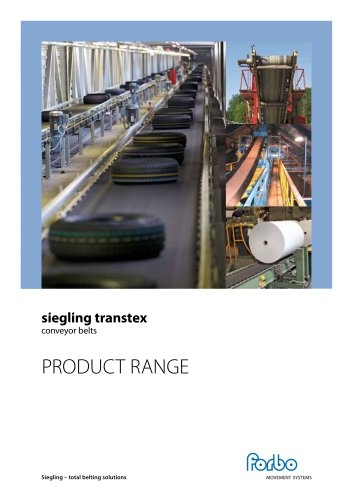 siegling transtex (2025)
12 Pages
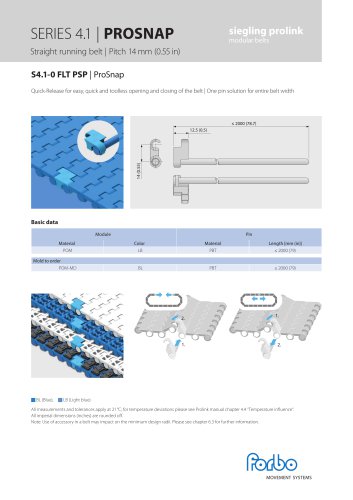 S4.1-0 FLT PSP
1 Page
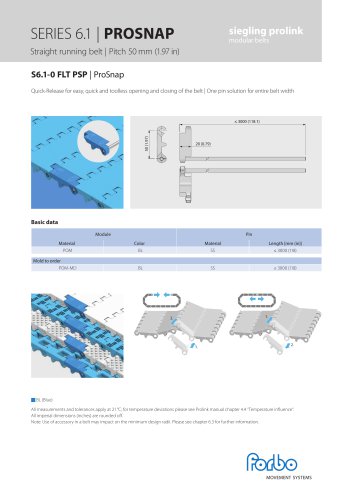 S6.1-0 FLT PSP
1 Page
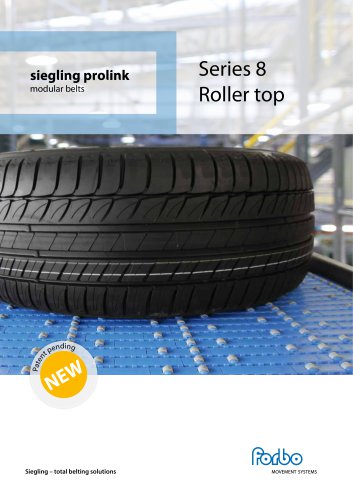 Series 8 Roller top 2025
2 Pages
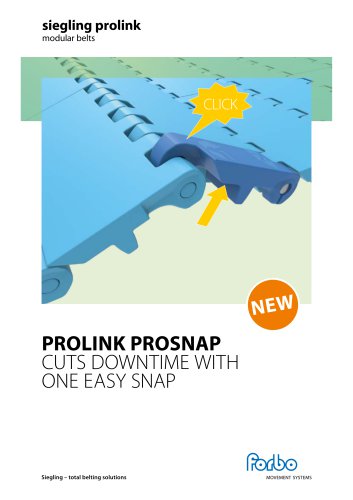
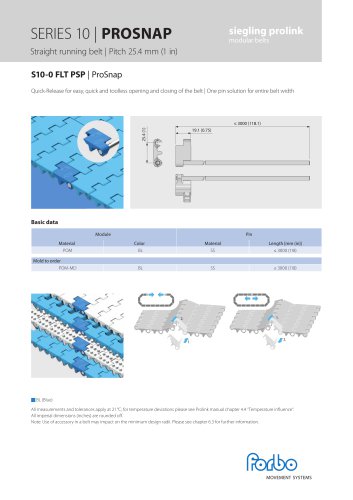 SERIES 10 | PROSNAP
1 Page
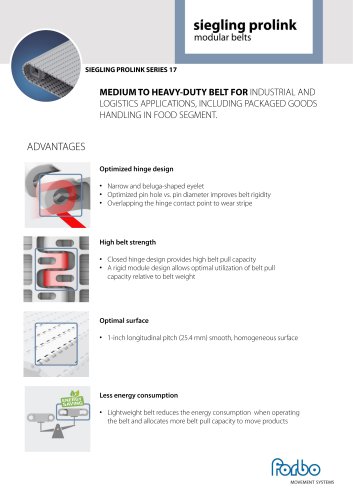 SIEGLING PROLINK SERIES 17
2 Pages
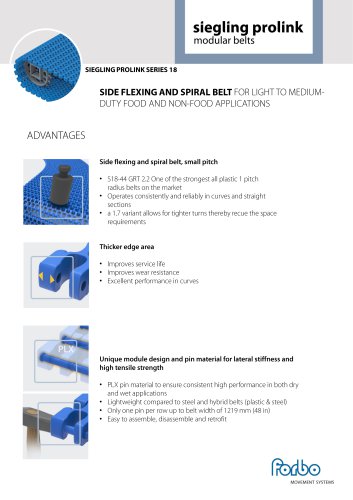 SIEGLING PROLINK SERIES 18
2 Pages
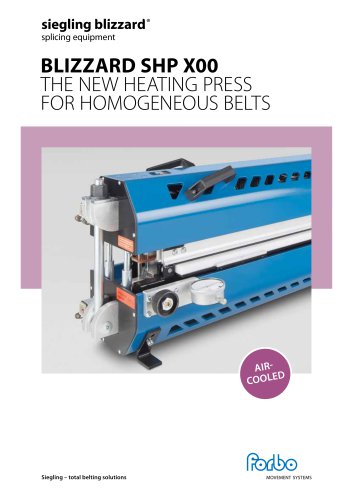 BLIZZARD SHP X00
8 Pages
 FLIGHTS AND SIDEWALLS
6 Pages
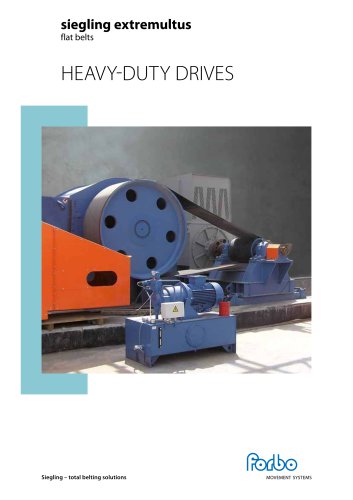 Heavy-duty drive 2025
4 Pages
 Compendium FLAT BELTS 2025
128 Pages
 TRANSILON ECOFIBER
2 Pages
 Series 11
10 Pages
 Series 10
14 Pages
 Series 9
11 Pages
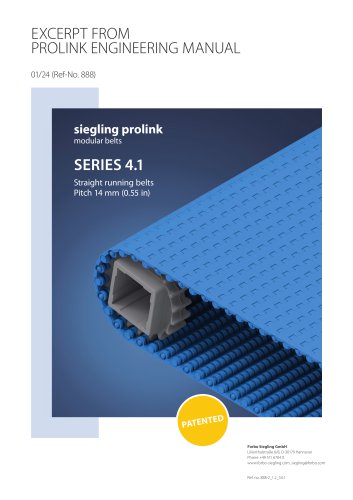 Series 4.1
10 Pages
 Series 5
24 Pages
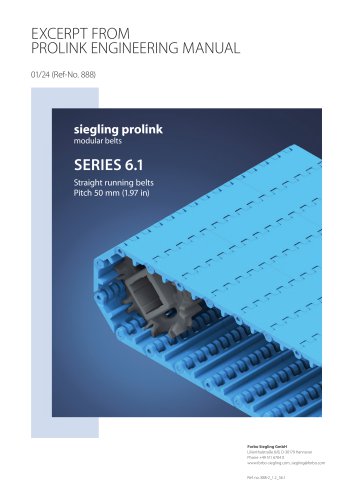 SERIES 6.1
19 Pages
 Series 7
13 Pages
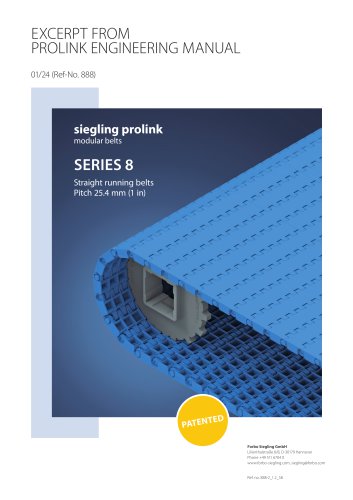 SERIES 8
19 Pages
 ECOFIBER
2 Pages
 AMP MISER
8 Pages
 Datasheet 900006
4 Pages
 Siegling Belting – Meshbelts
2 Pages
 timing belts
16 Pages
 Liver roller belts
2 Pages
 Heavy-duty drive
4 Pages
 Modular Belts
28 Pages
 Conveyor and processing belts
16 Pages
 Siegling total belting solutions
12 Pages
 Series 8 Roller top
2 Pages
 Marmoleum Tile 2.0 and 2.5mm
51 Pages
 MARMOLEUM STRIATO AND WALTON
48 Pages
 Marmoleum 2.0 and 2.5 mm
54 Pages
 Marmoleum Decibel
44 Pages
 Siegling Belting – Sports
4 Pages
 Siegling Belting – Automotive
12 Pages
 Siegling Belting – Wood
12 Pages
 Siegling Belting – Tobacco
8 Pages
 Siegling Belting – Airports
12 Pages
 Siegling Belting – Food
32 Pages
 Siegling Belting – Logistics
20 Pages
 Siegling Belting – Tire Industry
12 Pages
 Serie 14
5 Pages
 Serie 13
6 Pages
 Serie 8
16 Pages
 Serie 6.1
16 Pages
 Serie 4.1
10 Pages


Archived catalogs
 Series 3
10 Pages
 Series 2
12 Pages
 Prolink Engineering Manual
282 Pages
 Standard Product Range
16 Pages
 Series 1
11 Pages
 Round Belts
6 Pages
 siegling transtex
20 Pages
- Industrial press
- Transport rail conveyor
- Belt conveyor
- Horizontal conveyor
- Forbo industrial belt
- Forbo plastic conveyor belt
- Rubber strip
- Electric drive conveyor
- Inclined conveyor
- Work conveyor
- Forbo industrial conveyor belt
- Electric press
- Forbo flush grid conveyor belt
- Forbo industrial belt
- Modular conveyor
- Forbo plastic belt
- Forbo modular conveyor belt