

QCSL

QCSL
QCSL Sliding Locks are designed for slotted holes and are available in orange and black colors. The locks are made from SUS304 stainless steel, with a weight of 80 grams. The body knob is die-cast zinc with chrome plating, and the shafts and wedge plunger are made from stainless steel and polyacetal.
Riser Plates:
Riser plates are available for use with sliding locks, made from SUS304 stainless steel. They come in different thicknesses to accommodate various steel bar thicknesses. The plates are not furnished with the locks and must be ordered separately.
Features and Usage:
The sliding locks allow the steel bar to slide when in the "OFF" position and lock it in place when in the "ON" position. The knob clicks at both positions to ensure secure locking and unlocking. It is crucial to mount the sliding locks when the knob is in the "OFF" position to avoid damage.
Materials and Machining:
The locks are compatible with flat bars made of SS400, S45C, or SUS304. The recommended tolerance for the slotted hole is specified to prevent chattering, and burrs around the hole should be removed for secure locking.
Performance and Technical Information:
The locks can withstand a rated load of up to 500N and are heat resistant up to 90°C. Displacement of the steel bar can occur with excess shock, vibration, or the presence of oil or foreign substances. Guides or supports may be necessary if the bar slips or chatters under load.
Notes:
Using an aluminum flat bar may result in surface scratches or dents due to applied load.
Catalog excerpts

SLIDING LOCKS FOR SLOTTED HOLE Shafts / Wedge Plunger Die-cast zinc Polyamide Stainless steel Chrome plated (glass-fiber reinforced) (Black) 2- Plunger EBPJ4 (For smooth sliding when unlocked.) Part Number Orange RISER PLATES FOR SLIDING LOCK Body SUS304 stainless steel Part Number
Open the catalog to page 1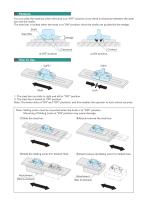
Features You can slide the steel bar when the knob is at "OFF" position since there is clearance between the steel bar and the shafts. The steel bar is locked when the knob is at "ON" position since the shafts are pushed by the wedge. Shaft Steel Bar 1. The steel bar can slide to right and left at "OFF" position. 2. The steel bar is locked at "ON" position. Note: The knob clicks at "ON" and "OFF" positions, and this enables the operator to lock/unlock securely. Note: Sliding Locks must be mounted when the knob is at "OFF" position. Mounting of Sliding Locks at "ON" position may cause damage....
Open the catalog to page 2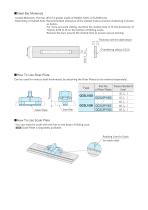
■Steel Bar Materials ・Usable Materials: Flat bar (JIS h14 grade) made of SS400, S45C or SUS304 etc. ・Machining of slotted hole: Recommended tolerance of the slotted hole to prevent chattering is shown as below. For more accurate sliding, machine the slotted hole to fit the dimension of 10mm(-0.05 to 0) on the bottom of Sliding Locks. Remove the burr around the slotted hole to ensure secure locking. Thickness (see the table below) ■How To Use Riser Plate Can be used for various steel thicknesses by attaching the Riser Plates (to be ordered separately). Riser Plate Part No. Thickness of Steel Bar(h14)...
Open the catalog to page 3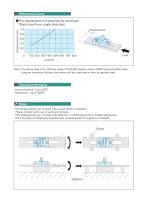
Performance Curve ■The displacement of steel bar by axial load (Static load from single direction) 1.0 Note: The above data is for a flat bar made of SUS304 stainless steel, SS400 steel and S45C steel. Using an aluminum flat bar, the surface will be scratched or dent by applied load. Technical Information ・Heat resistance : Up to 90℃ ・Rated load : Up to 500N Notes ・The displacement will increase with excess shock or vibration. Please contact us for use in such environment. ・The displacement can increase with adhesion or immersing of oil or foreign substances. ・If the bar slips or chatters by...
Open the catalog to page 4All Fixtureworks catalogs and technical brochures
 Sliding Locks
41 Pages
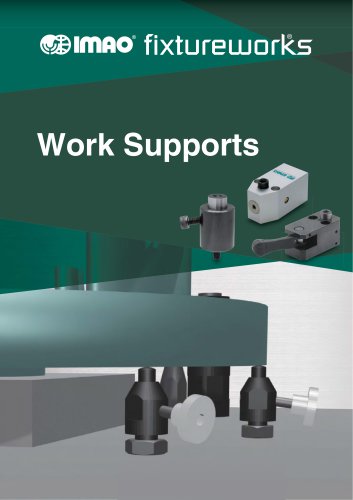 Work Supports
24 Pages
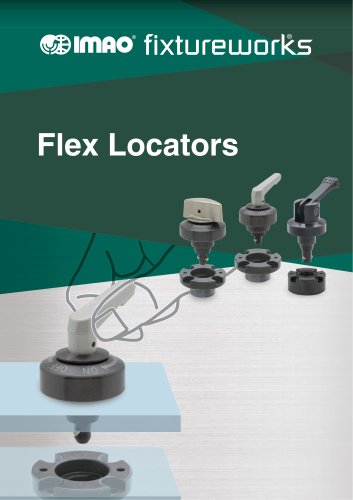 Flex Locators
41 Pages
 Spring Clamps
24 Pages
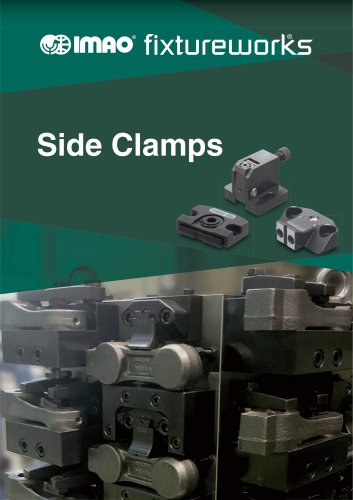 Side Clamps
27 Pages
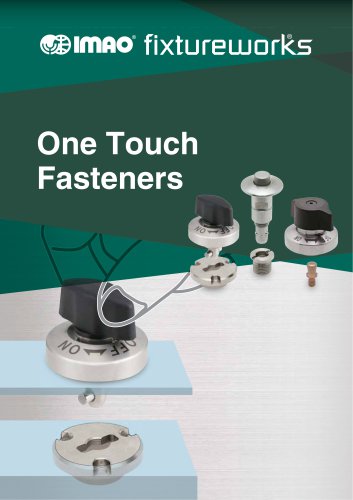 One Touch Fasteners
138 Pages
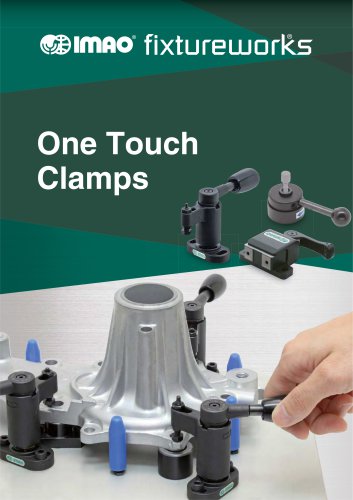 One Touch Clamps
68 Pages
 QCTH / QCTHL / QCTHH
4 Pages
 QSC
QSC2 Pages
 QCPC
QCPC4 Pages
 QCTH-N / QCTH-B
2 Pages
 Fixtureworks catalog
572 Pages
 ROLLERS
30 Pages
 INDEXING PLUNGERS
13 Pages
 CMM_Inspection
10 Pages
 BUMPERS
14 Pages
 TRIMAX VISES
40 Pages
 SPRING & BALL PLUNGERS
16 Pages
 KNOBS
KNOBS27 Pages
 ADJUSTABLE HANDLES & LEVERS
37 Pages
 CLAMPS
72 Pages
 QUICK RELEASE BALL LOCK PINS
62 Pages
 Pull Handles
9 Pages
 MACHINE ACCESSORIES
8 Pages
 HAND WHEELS & CRANK HANDLES
25 Pages


