


- Company
- Products
- Catalogs
- News & Trends
- Exhibitions
PP-H
PP-H
Polypropylene Homopolymer (PP-H) is a thermoplastic resin known for its high chemical resistance, excellent thermal stability, and resistance to aging. It is suitable for use in piping systems with operating temperatures up to 95°C. The PP-H line includes pipes, fittings, and valves for industrial fluid conveyance.
PP-H components adhere to international standards such as ISO 9001 for quality management and ISO 14001 for environmental management. Specific standards include ANSI B16.5 for pipe flanges, ASTM D 4101 for polypropylene materials, and DIN 8077-8078 for PP-H pipe dimensions.
PP-H products are certified by organizations like DIBt for industrial processes, RINA for marine applications, and NIZP for drinking water conveyance.
PP-H offers thermal resistance, low surface roughness, chemical resistance, abrasion resistance, and ease of jointing, contributing to low installation and operating costs.
Socket welding involves fusing pipe and fitting surfaces using heating devices, with a welding temperature between 250°C and 270°C. Butt welding joins elements by heating their surfaces, requiring ambient temperatures between +5°C and +40°C, with a fusion temperature between 200°C and 220°C.
Instructions are provided for installing threaded and flanged joints, ensuring proper alignment and sealing.
The catalogue includes a wide range of valves and fittings, such as DUAL BLOCK® ball valves, butterfly valves, diaphragm valves, and check valves.
The document outlines the cleaning process for welding surfaces, emphasizing the use of specific detergents and ensuring alignment and removal of oxide films.
The procedure involves steps like equalizing, pre-heating, and cooling, with specific pressure and time requirements.
Welded joints should be inspected visually and through tests to ensure uniformity and absence of defects.
The document discusses the compatibility of PP-H components with PPR and PPB, emphasizing matching wall thickness and diameter ratios.
Specifications for PP-H pressure pipes and fittings focus on pressure variations according to temperature for water and non-hazardous fluids.
Detailed dimensions for pipes with different nominal pressures are provided, conforming to DIN 8077/8078 standards.
Specifications for pipe clips and distance plates are included, with guidelines for installation based on DVS 2210-1.
Various fittings for socket welding are described, with specifications for dimensions, pressure ratings, and materials.
Emphasizes the importance of proper installation by qualified personnel and adherence to international standards.
Details on additional components like O-rings, blind flanges, and gaskets are provided.
The document provides specifications and instructions for VKD DUAL BLOCK® 2-way ball valves, designed for industrial applications.
The valves are available in different sizes and are made from PP-H material with EPDM or FKM seals, designed for a nominal pressure of PN 10.
The valves consist of multiple components including a handle, stem, ball seat, and union nuts.
Instructions are provided for the disassembly and assembly of the valves, emphasizing proper alignment and lubrication.
Various accessories are available for the valves, enhancing functionality and ease of installation.
The document advises against using mineral oils for lubrication and recommends contacting the service center when using volatile liquids.
Includes pressure variation graphs, Kv100 flow coefficients, and operating torque information.
The document details various types of valves, including the TKD valve series, SR ball check valve, and FK butterfly valve.
Provides detailed disassembly and assembly instructions for the valves.
The valves adhere to various international standards, and the document advises against using mineral oils for lubricating rubber seals.
Includes tables and graphs illustrating dimensions, pressure variations, and flow coefficients.
Emphasizes the need for proper alignment of pipes and the use of appropriate tools for assembly.
The document outlines specifications for various diaphragm valves, including the DK, VM, and CM series.
Detailed procedures for disassembly and assembly of the valves are provided.
The valves comply with various international standards.
It is recommended to support all valves adequately and use specific mounting plates for wall installations.
Includes features like a handwheel locking system and high flow coefficient.
Technical specifications include size ranges, nominal pressures, and temperature ranges for each valve series.
Valves can be installed in any position and direction, with specific instructions for ensuring no leaks.
The document provides specifications for various check valves, including VRIM, VRUFM, and others.
The valves consist of several components including the body, piston, bonnet, and O-rings.
Detailed instructions are provided for assembling and disassembling the valves.
Outlines installation requirements, including the orientation of the valve and ensuring the correct flow direction.
Includes pressure variation data according to temperature and Kv100 flow coefficients.
Advises against using compressed air for testing thermoplastic lines and provides maintenance guidelines.
Explains terms like ABS, EPDM, FKM, and others related to materials and specifications.
Catalog excerpts

Manual valves, pipe and fittings in PP-H
Open the catalog to page 1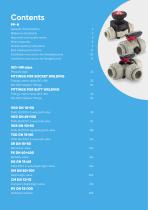
General characteristics Reference standards Approvals and quality marks Main properties Socket welding instructions Butt welding instructions Installation instructions for threaded joints Installation instructions for flanged joints ISO-UNI pipe Pressure pipe FITTINGS FOR SOCKET WELDING Fittings, metric series ISO-UNI ISO-BSP adaptor fittings FITTINGS FOR BUTT WELDING Fittings, metric series ISO-UNI ISO-BSP adaptor fittings DUAL BLOCK® 2-way ball valve 98 DUAL BLOCK® 2-way ball valve 114 DUAL BLOCK® regulating ball valve 128 DUAL BLOCK® 3-way ball valve 142 Ball check valve 156 DIALOCK® 2-way...
Open the catalog to page 3
Check valve Wafer check valve 242
Open the catalog to page 4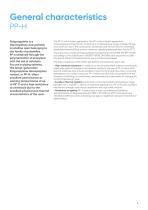
Polypropylene is a thermoplastic and partially crystalline resin belonging to the family of polyolefins. PP is obtained through the polymerization of propylene with the aid of catalysts. For use in piping systems, the latest-generation Polypropylene Homopolymer variant, or PP-H, offers excellent performance at working temperatures of up to 95° C and a high resistance to chemicals due to the excellent physical and thermal characteristics of the resin. The PP-H line in latest-generation The PP-H line in latest-generation Polypropylene Homopolymer consists of a comprehensive range of pipes, fittings...
Open the catalog to page 5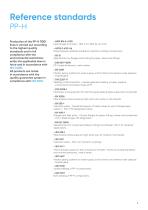
Production of the PP-H (100) lines is carried out according to the highest quality standards and in full compliance with the environmental restrictions setby the applicable laws in force and in accordance with ISO 14001. All products are made in accordance with the quality guarantee system in compliance with ISO 9001. Pipe flanges and stubs - NPS 1/2 to NPS 24 mm/inch Polypropylene materials suitable for injection molding and extrusion Specification for flanges and bolting for pipes, valves and fittings PP-H pipe dimensions, metric series Plastics piping systems for water supply, and for drains...
Open the catalog to page 7
Imperfections in thermoplastic welds -classification Thermoplastic piping systems for fluids under pressure -flange adapters and loose backing flanges- Mating dimensions Fittings with pressure-tight threaded joints Thermoplastics valves - pressure test methods and requirements Industrial valves - Ball valves of thermoplastic material Industrial valves - Butterfly valves of thermoplastic material Industrial valves - Check valves of thermoplastic material Industrial valves - Diaphragm valves of thermoplastic material
Open the catalog to page 8
FIP PP-H valves and pipe have been tested and certified by DIBt (Deutsches Institut fur Bautechnik) • RINA FIP PP-H valves have been recongnised as suitable for conveying, treating domestic and air conditioning waters on board ships and other units classified by RINA. FIP fittings and valves are certified in accordance with Ukrainian Health, Safety and Quality standards FIP PP-H fittings and valves have been recognised as suitable for conveying drinking water by the NIZP (National Institute of Public Health - Poland)
Open the catalog to page 9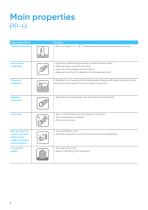
Properties of PP-HThermal resistance • Service range 0 °C - 95 °C (see pressure/temperature regression curves) • High flow coefficients (extremely smooth internal walls) • Pressure drop constant over time • Low risk of stoppages due to scaling • Reduced transfer of material to the transported fluid • Suitable for conveying chemicals (excellent results with saline solutions, acids, alkalis, alcohols, water and many organic solvents.) Abrasion resistance Extremely low operating costs due to its long service life Insulating • Non-conductive (immune to galvanic corrosion) • Minimum heat loss Easy...
Open the catalog to page 10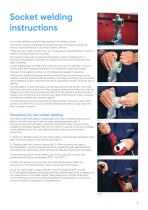
Socket welding instructions Hot socket welding involves fusing the pipe in the fitting’s socket. The joint is made by simultaneously fusing the male and female surfaces by means of special manual or automatic heating devices. These devices, in their simplest form, are composed of a heating plate on which a series of heating bushes are mounted. The devices comes with an appropriate heating system complete with an automatic temperature controller. No additional materials are required for this type of welding. Socket welding does not affect the chemical resistance of the PVDF, nor does it influence...
Open the catalog to page 11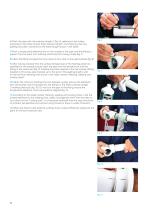
6) Mark the pipe with the insertion length L1 (fig. 6), referring to the values indicated in the table named “Pipe insertion length” and checking that any peeling has been machined to the entire length shown in the table. 7) Mark a longitudinal reference line on the outside of the pipe and the fitting to prevent the two parts from rotating while the joint is being made (fig. 7). 8) Clean the fitting and pipe from any traces of oil or dust on the weld surfaces (fig. 8). 9) After having checked that the surface temperature of the heating plate has stabilized at the required value, insert the pipe...
Open the catalog to page 12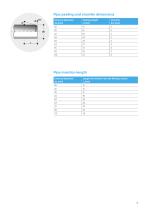
Pipe insertion length External diameter de (mm)
Open the catalog to page 13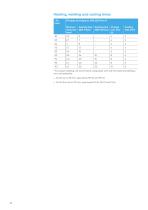
• For proper welding, we recommend using pipes with wall thickness exceeding 2 mm, and precisely: • for De from 63 to 110 mm: pipe series PN 16, PN 10 and PN 6.
Open the catalog to page 14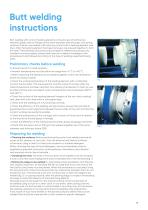
Butt welding with contact heating elements is the process of jointing two elements (pipes and/or fittings) of the same diameter and thickness, the joining surfaces of which are heated until fusion by contact with a heating element and then, after the heating element has been removed, are pressed together to form the weld. The following instructions are provided for reference purposes only. Installers must be properly trained and have an in-depth knowledge of the procedures to be followed according to the type of welding equipment being used. Preliminary checks before welding To ensure the joint...
Open the catalog to page 15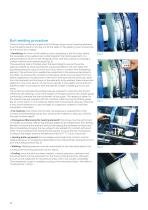
The butt fusion welding of pipes and/or fittings using contact heating elements must be performed by carrying out all the steps in the welding cycle, and picture at the end of this chapter. • Equalizing: As shown in the welding cycle, equalizing is the first step, where the twoedges to be welded are located against the heating element at a pressureequal to p1+pt, for the necessary time, with the purpose of creating a uniform internal and external bead (fig. 3). This equalizing step is finished when the bead heights around the entire pipecircumference have reached the values specified in the next...
Open the catalog to page 16All FIP - Formatura Iniezione Polimeri catalogs and technical brochures
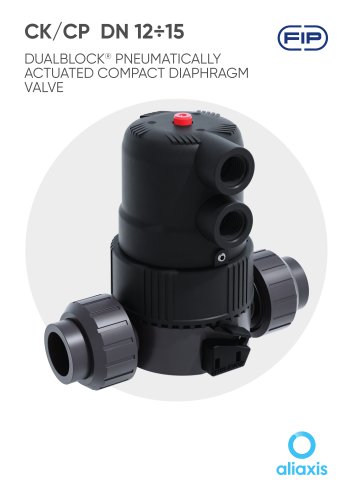 CK/CP DN 12÷15
17 Pages
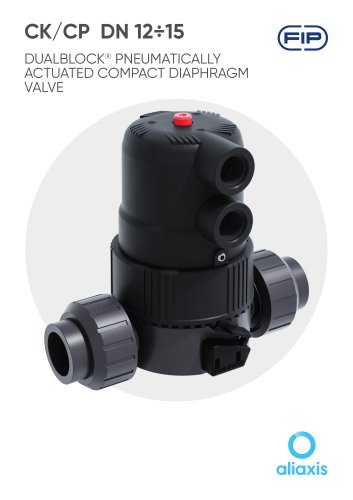 CK/CP DN 12÷15
17 Pages
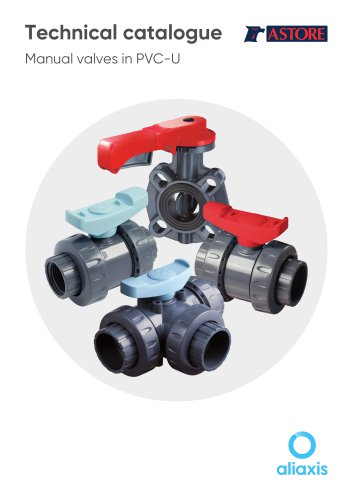 Manual valves in PVC-U
81 Pages
 PIPE ISO-UNI
10 Pages
 FLS
FLS228 Pages
 PVC-U
PVC-U460 Pages
 PVC-U Fittings
114 Pages
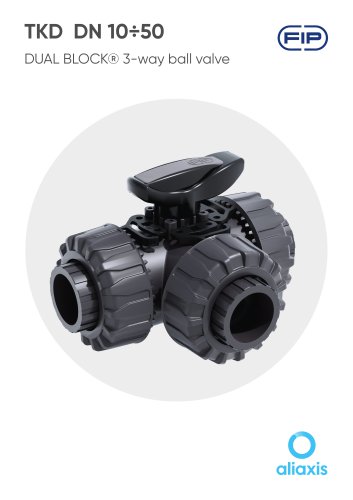 TKD DN 10÷50
19 Pages
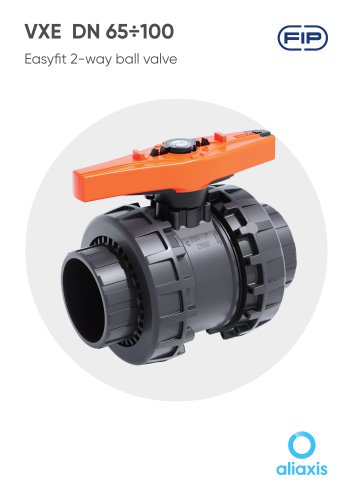 VXE DN 65÷100
13 Pages
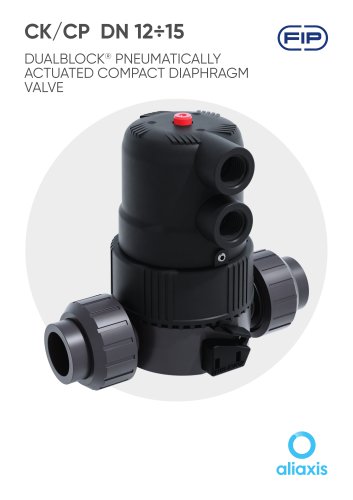 CK/CP DN 12÷15
17 Pages
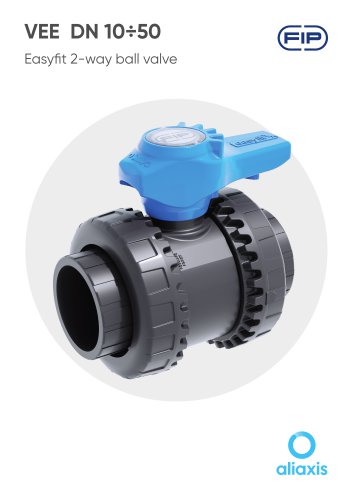 VEE DN 10÷50
15 Pages
Archived catalogs
 PVC-U PRESSURE PIPE
6 Pages
 SXE-SSE 2024
13 Pages
 SXE-SSE DN 10÷50
17 Pages
 VM/RM DN 8÷15
6 Pages
 DK DN
DK DN16 Pages
 VXE EASYFIT DN 65-100
20 Pages
 VEE EASYFIT DN 65-100
16 Pages
 Corporate presentations
12 Pages
 VKD DN 10÷50
16 Pages
 FE DN 40÷200
14 Pages
 Swimming Pool&Spa Solutions
28 Pages
 Chemical Industry Solutions
28 Pages
 Water Treatment solutions
28 Pages
 DK DN 15÷65
16 Pages
 DK/CP DN 15÷20
20 Pages
 SXE-SSE
24 Pages
 VKD Dual Block
6 Pages
 VEE Easyfit Promotional Brochure
16 Pages
 FKOV/FM D355 - D400 ISO-DIN
2 Pages
 VXE Easyfit Promotional Brochur
16 Pages
 PVC-U Manual Valves
246 Pages
 New VKD Ball Valve Dual Block
14 Pages
 PP-H (100) System
198 Pages
 C-PVC TemperFIP 100 System
165 Pages
 PVDF System
141 Pages
 Variable Area Flowmeters
14 Pages
 MAGNUM System and Clamp Saddles
12 Pages
 DK DIALOCK 2017
12 Pages

