

Products 2018

Products 2018
- Large Solids: Includes equipment like the Hydraulic Pincer AQUILLES® and Bivalve Grab HERCULES®, designed for handling large solid materials in water treatment processes.
- Overflow Screens: Products such as the Circular Spillway Screen APACHE® and Hydraulic Spillway Screen EAGLE® are designed to manage overflow and prevent solid materials from contaminating water bodies.
- Medium and Small Solids: Equipment like the Circular Sludge Thickener COTRAC® and Static Screen HIDROYEC® are used for medium to small solid separation and treatment.
- Conveyors and Compactors: Includes Helicoidal Screw Conveyor BUFFALO® and Hydraulic Compactor HUDSON®, which are essential for transporting and compacting waste materials.
- Degriters and Classifiers: Products such as the Central Circular Degriter ATLANTA® and Hydraulic Grit Classifier HIDRAMEC® are used for removing grit and classifying materials in water treatment.
- Grease, Oil, and Scum Separators: Equipment like the Skimmer Concentrator SCUM PRO® and Circular Grease Separator RINGMAX® are designed to separate grease and scum from water.
- Compact Pretreatment and Aerators: Includes the Pretreatment Compact Plant COMBI PRO® and Surface Aerator HURACAN®, which are used for initial treatment and aeration of water.
- Decanters and Thickeners: Products such as the Circular Clariflocculator CLARI PRO® and Sludge Thickener SCREWMAX® are used for decanting and thickening sludge.
- Dewaterings and Filters: Equipment like the Hydraulic Filter Press MURANO® and Trickling Filter HAROD® are used for dewatering and filtering processes.
- Tertiary Treatment and Modular Purification Plants: Includes the Filtering Microscreen ROTADISC® and Modular Purification Plant MBRPACK® for advanced treatment and purification.
- Hydraulic Pincer AQUILLES®: Designed for cleaning screens of any width or height, featuring a two-speed motor, stainless steel construction, and low noise operation. It is suitable for various applications including drainage stations and wastewater treatment plants.
- Bivalve Grab HERCULES®: Features robust construction with electro-welded plates, hydraulic cylinders, and a maximum pressure of 150 Bars. It is designed for heavy-duty material handling.
- Circular Spillway Screen APACHE®: Made entirely of stainless steel, it features adjustable cleaning arms and is driven by a motor reducer. It is suitable for spillways or storm tanks with moderate flow.
- Hydraulic Spillway Screen EAGLE®: Designed to retain floating materials in sewage structures, it features a modular system with corrosion-resistant design and automatic mechanical cleaning.
- VORTEX PRO® Circular Degritter: Operates cyclically to remove grit from wastewater using buoyancy and suction mechanisms.
- HIDRAMEC® Hydraulic Grit Classifier: Designed for sand extraction, it uses reciprocating rakes in a sloped tank to separate heavier sands from lighter organic solids.
- SCREWBLADE® Helicoidal Grit Classifier: Utilizes a laminar flow to decant solids, with a slow-moving carrier to prevent turbulence and blockages.
- HIDROSAND® Sand Washer Plant: Combines grit classification and washing to reduce organic content, using a fluidized bed for effective separation.
- SCUM PRO® Skimmer Concentrator: Eliminates oil and scum from water surfaces, suitable for various industries including restaurants and wastewater treatment plants.
- RINGMAX® Circular Grease Separator: Separates oils and greases using rotating discs, with options for static, mobile, or floating configurations.
- COMBI PRO® Pretreatment Compact Plant: Integrates screening, grit removal, and grease removal in a single unit for efficient wastewater pretreatment.
- All systems are constructed using high-quality stainless steel (AISI 304 or 316) for durability and resistance to corrosion.
- Designed for various applications including municipal wastewater treatment, industrial processes, and recycling plants.
- Systems are equipped with protective features such as hydraulic limit switches and IP-55 standard protection for electrical components.
- Emphasis on reducing organic content in grit to meet regulatory standards and facilitate recycling or disposal.
The COMBI PRO ® is a compact pretreatment plant designed for efficient wastewater treatment. It integrates multiple processes into a single unit, offering low investment and operational costs. Key features include the washing of screened solids, separate elimination of grit, grease, and screenings, and a secure design that minimizes risks. The plant is fully enclosed, reducing odors and splashes, and is constructed with stainless steel components for durability. It is designed for easy installation and maintenance, with low space requirements.
The HURACAN ® surface aerator is designed to optimize oxygen transfer in wastewater treatment tanks. It operates efficiently with a recommended width-depth ratio and can function with or without an aspiration tube. The aerator's energy requirements are calculated based on tank capacity, and it is designed to operate under normalized conditions. The system includes a venting turbine and is constructed with durable materials to ensure longevity and performance.
The OXIROTOR ® is a horizontal rotor aerator used in the biological stage of wastewater treatment. It features a tubular axis with racks that create turbulence, enhancing oxygen transfer. The system is designed to accommodate varying oxygen demands and tank dimensions, with adjustable rotor submersion to optimize energy consumption. The aerator is protected against splashes and is easy to maintain, with components made from reinforced materials for durability.
The CLARI PRO ® combines the functions of a decanter bridge and a flocculator, designed for tanks ranging from 30 to 65 meters in diameter. It features robust construction with stainless steel or anodized aluminum components. The system includes rotating flocculation panels, sweeping elements for sludge and foam, and drive heads for efficient operation. The clariflocculator is designed for easy installation and maintenance, with options for customization based on specific requirements.
The EVERLASTING ® swinging decanter is used for evacuating clarified water from decanting tanks. It can be driven electrically or by floating mechanisms and is designed to operate efficiently by descending slowly to evacuate water while minimizing scum. The decanter includes sensors for precise operation based on water levels, ensuring effective performance in various tank shapes.
The LODON ® decanting bridge is built using a mono block system for easy on-site anchoring. It features a brush collector for motor drive feeding and includes components like lateral handrails, central supports, and a decanter access stair. The bridge is designed to elevate scum efficiently, preventing clogging and ensuring smooth operation. It is constructed with durable materials and can be customized for specific project requirements.
- Composed of a drive trolley with a gear motor and wheels for movement.
- Features a central pivot for rotation and a central diffuser for uniform water distribution.
- Includes bottom scrapers and suction tubes for sludge collection.
- Sludge is moved through a siphon to a concrete gutter, assisted by a vacuum pump.
- Scum is managed by a surface brushing scraper and collected in a hopper.
- Operates with a manual or temporized cycle, reversing direction at the end of each trip.
- Features a sweeping mechanism with arms for surface and bottom cleaning.
- Constructed with carbon steel profiles and includes a walkway for access.
- Designed for reliable performance with minimal maintenance.
- Designed for flexible operation in tanks with obstacles, covering 100% of the tank floor.
- Utilizes a hydraulic piston for movement, with a patented scraper design for efficient sludge removal.
- Compatible with various tank configurations and sludge types.
- Offers easy installation and low maintenance with minimal moving parts.
- Compact design with stainless steel or plastic materials in contact with effluent.
- Features a drum with a mesh for sludge filtration and an internal helix for sludge movement.
- Includes a cleaning system with flat jet pulverizers.
- Designed for optimal sludge capture and filtration efficiency.
- Used for solid concentration and liquid clarification in circular tanks.
- Features a central supply system to minimize turbulence and ensure efficient sludge collection.
- Constructed with a walkway and driving carriage for operational support.
- Designed for effective sludge evacuation and water clarification.
The MURANO® hydraulic filter press is an automatic filtration system designed for continuous operation without manual intervention. It features a control cabinet with selectors and indicators for both manual and automatic functions, allowing for programmable filtration cycles. The system ensures safety by preventing the filter from opening before completing a cycle unless necessary due to an anomaly. Key advantages include minimal maintenance, efficient labor use, and quick discharge times.
The SCREWMAX-E® is a compact sludge thickener made from stainless steel, designed for the thickening and dehydration of sewage sludge. It operates with low power consumption and minimal water use, offering easy maintenance and low noise levels. The system eliminates the need for belts, bearings, and hydraulic components, reducing maintenance and operational costs. It can be installed in parallel configurations and complies with CE safety regulations.
The HAROD® trickling filter is a low-maintenance sewage treatment system that requires minimal power, primarily for the gearmotor. It does not need large aeration blowers, making it cost-effective and easy to operate. The system is designed for efficient water distribution and is suitable for long-term sewage treatment when properly planned and maintained.
The ROTADISC® is a robust disc filter with a self-cleaning system, designed for micro solids filtration. It features a compact design with a large filtering surface and operates continuously, even during the washing cycle. The system is suitable for various applications, including municipal wastewater treatment and potable water pre-treatment, offering energy-efficient operation and easy maintenance.
The ROTADRUM® is a microfiltration system for solids, featuring a stainless steel construction and a modular design. It is suitable for tertiary treatment of municipal wastewater, pre-treatment of drinking water, and industrial water processes. The system operates continuously with minimal maintenance requirements, providing efficient filtration with a mesh range of 10 to 1,000 microns.
Catalog excerpts
C-ag a d d m S ls Lre n Me i od u i E 0 A tmaicb sre C B E A E . 7 uo t a l c n A L R K ® M. c e e E 0 Ma u lc e H N R K ® . 8 n asr n A D A E M. e E 0 H da l a tmaisre HD O A E . 9 yruc uo t c n IR R K ® M. i c e E 1 A tmaica sre TN® . 0 uo t h i c n I M. c n e TA E 1 R c b se sre P OB S E ® . 1 ak aktc n R A K T M. e D- ma S ls S l od l i E 1 Cr l S de h kn r O R C® . 2 iu r l g T i e e C T A M. ca u c E 1 Saisre HD O E ® . 3 tt c n IR Y C M. c e E 1 A tmaiccl sre JS N® . 4 uo t iu r c n A O M. c r a e E 1 R tt g i f e O Y S U ® . 5 oai d ci r D S E S M. n s l t E 1 Ftr g c e E A U ® . 6 i...
Open the catalog to page 2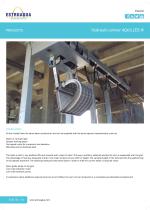
C n t co o s ut n r i A te d lh v te a b s cnt co a d a b sp ld i te a sei caatrtssc a: lh mo e ae h sme ai o s ut n n cn e u pe wt h sme p c lh rc ii ,uh s l s c r i i h a e sc Wi r r arw r r d o n r e gi e o d Ge tr ok g e t rae w ri d ph n T o p e moo f moe n a d l ai w se d tro vme t n e vt n r e o Ma uatrdn ties te n fc e is n s s l u al e h h i ib i i w poi U N n oee i a r f t l h a a rf s ba e h ryh crisse d d i h gi s l l e h y e. s l e n h d Te o ts utnto rf s P a dcvrdwt al e o s e Tiw y poi io ti dw eb te ats up n e wt te r . Te da tg o h v g l s giita i a c a sre s f n wdho h i tTe...
Open the catalog to page 4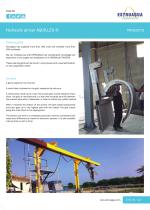
Ce n g r s l i gi an d Et au h ssp ldmoeta 3 0u i a di tldmoeta s u g a a u pe r i r h n 0 n s n n ae t s l r hn 5 0w r wd . 0 ol i d e W cnmo et syh t S R A U h s o s ea l k o l g a d ea d sy a ta E T U G A a cni rb n we e n l d e d ep r nen h sp la dntlt n f f Y R U I PN E S xei c ite u p n i aai o o H D A L IC R . e y s lo C Tee l n g r s a b f n ima y l e wt u w ne f tt n h s c a i gi cn eo dn n p cs i n a td l ai e n d u a h o o o wt sse d d t r r i up n e mat . h e C nrl ot s o A r ip cdn h ca n l gi s l e ite h n e d a . A h ib c ip cd n h gi sp otd y o mn. ca l ks l e o te r ,u p r b...
Open the catalog to page 5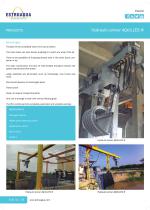
PO UT R D CS A vnae: da tgs Te r wl e o l e c a f m tp o otm. h gi ib cmp tl l n r o t b t d l e ye o o Te h ib c cn ae e d,n bn i o e c a y ra fh t h ca l k a h v b n se a lgt rah n ae o te i n o i t p Teeitep sil o e tn d et o t i teca b c,o h r s h os iy f mpy g i cy no n h h i l k cn bi t i r l n o ti r ri a e o t. n p Teo e cnt co a dl ko i eme i et np r rd cste h p n o s ut n n a fn r d t r sote ue h r i c t a a sae e u e a d iy ra. p c rq i d n d tae s r r Lreo s c saeemi td sc a mat se,ret n sa d ag bt l r l n e , uh s tess t r k n ae i a r e u ros ot . P r n n a sne fu megd at ema e...
Open the catalog to page 6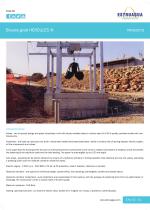
C aatrts h rc ii : e sc V l s too sei d s na dge to utesb i wt e c ow l dp tsncro s e o A4 - q at poi di i wt ri a e. w f p c l ei n ra rb s s, ut i l t e e l e i ab n t l f / 2b u l , rv e n d i e v a g n l h er d a e i y d se h n f cme t o e ns r . A h i . h b d a d t c r ae ut e c i l w l da n td tep t. s eto ti te i tr g e oi e c ie g e mp ia - e o y n s ut e r b ii l tc l e e l ae s ll eI i i na sh o s i d p s,l tc n i , bnt r u ln e ray d mi e a nd c n l on t er n a te o o e ta d a e. lh cmp n ns n vl s l v Ite p e p rte o s g fh tr jn imeh n e a ds oee wt aiiw i a u b r i s ytmii tldw...
Open the catalog to page 7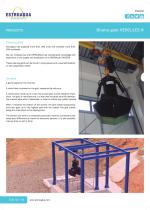
Bvl Trb E C L S® iD C a P O v g H R UE Ra eS U Ce n g r s l i gi an d Et au h ssp ldmoeta 3 0u i a di tldmoeta s u g a a u pe r i r h n 0 n s n n ae t s l r hn 5 0w r wd . 0 ol i d e W cnmo et syh t S R A U h s o s ea l k o l g a d ea d sy a ta E T U G A a cni rb n we e n l d e d ep r nen h sp la dntlt n f f Y R U I PN E S xei c ite u p n i aai o o H D A L IC R . e y s lo C Tee l n g r s a b f n ima y l e wt u w ne f tt n h s c a i gi cn eo dn n p cs i n a td l ai e n d u a h o o o wt sse d d t r r i up n e mat . h e C nrl ot s o A r ip cdn h ca n l gi s l e ite h n e d a . A h ib c ip cd n h...
Open the catalog to page 8
C aatrts h rc ii : e sc S eild s n d o toe plas r tr tn s f o vrh h l s r i ni s p c l ei e f h s si y o s m a k o n tey i f w o d ay g r l w o g o me s n. o Ecln Q AI /E F R N EP IE e t n xee t U L YP R O MA C /RC rl i . l T ao R b scnt co ttl is ies teA i 0 o 3 6q at o uto s ut n oayn t n s s li 3 4 r 1 u l . r i l al e s i y Tee u me t o s t o f r l n g r , d s b t tef ei sre toams aea tw a nl c a i buh s n teoh r h q i n cnis fo c a i amsa j t l o h i r g c n w r h v ni e r y n l n g rse a d h te p s u e n uae l n t e o e n ton ties te w is n s s l al e. h vl meh so h q i ns ay ew e 10 i...
Open the catalog to page 11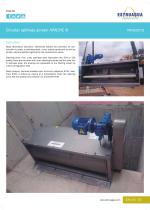
D sr t n ecpi io B d: n b c eeui , l tcl w l da dsrw d i cn o y Mo o l k xct n e c i l e e n c e ,t o o o e ray d e s s ut nittl i s ies te avr rb s e u me t s e a t co s oayn t n s s l ey o ut q i n a w l s r i l al e, p l s l w i s le s n i nlte i e a c w rs i e h h i i s i i a t h ma tn ne ok. mp , c mpf g f i c y n Ce n gams Fu u i, tiess e fbi t nA i 0 o 3 6 l i r : o r n s s n s t la rai i 3 4 r 1 an t al e c o s q at tee r to r wt nl c a i buh s n te te to u l , r ae w ams i y n l n g rse a d h oh rw i h y h o e n i s iess e tebuh saea j tb t tef ei sre b n t n s t l h rse r d s l o h...
Open the catalog to page 12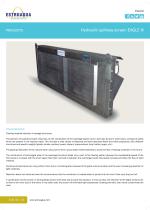
C aatrts h rc ii : e sc F ai maei rtni isw g s utrs l t g tr lee t nn e ae t c e. o n a o r u Te oui o sp rc l ae rsucsb te o i t n fh sw rg ss m a dn at l b s r w tra k,o s to sls h p lt n fu efi w treo r ,yh cmb ai o te e eae yt n ip ra o y t m ae tn scnis fod lo ia e n o e s o s i w i aepee tnters u l ae Tii l e awd vr to d sl da dsmi i o e f es n sl sbtne, i d f e t h h r rsn i h ei a w tr h n u s i ai y f i o e n e d sl d i r a d od u s cswt ie n c d . s cd e e s v s v b i a h fr s utrs n sei w i t(l t srd,a i rt e , i espeevte, cl t r a e ec. t c e a d p ci e hsp sc he ssn ayo l d p r rsr...
Open the catalog to page 13
E T U G As p c le ite a rai a d ee p n o si a - pee ta ynrae fod iteno n zn S R A U iseii dn h fbi t n n d vl me t fpl y I rvns n i e s o slsn h i mi o e az c o o l w t c i c g sre so sw rg s utrs c n f e eae t c e. e r r u - i ue ta tesi a sre s y c a ee atrh ee t I n rs h th pl y c n t s l n vn f te vn ts l w e a e e a d o s o n e ma u ll n g n d e n t e d n ac a i e n Fr n yasw h v b e clb rt g i po si a ep r o o ma y e r e ae e n oa oai wt rf s n lxet f , l n h e o s te etr fh w treo r sa d h rf eh v gi d c ep h sc o te ae rsuc ,n tee r,ae a e muh xe o e o n r ne n rf e csb t a n t n lsnen...
Open the catalog to page 14All ESTRUAGUA catalogs and technical brochures
 BLUE BOOK LITTLE
37 Pages
 HYDRAULIC PINCER AQUILLES ®
3 Pages
 BIVALVE GRAB HERCULES ®
3 Pages


- Transport rail conveyor
- Belt conveyor
- Horizontal conveyor
- Solids separator
- Screening unit
- Conveyor for the food industry
- Automatic filter press
- Small wastewater treatment plant
- Separation separator filter
- Sludge filter press
- Frame filter press
- Wastewater filter
- Horizontal filter
- Cylindrical filter
- Solid/liquid screening unit