
- Catalogs
- ERICHSEN GmbH & Co. KG
- Technical Description SledCutter 295 XVII

Technical Description SledCutter 295 XVII
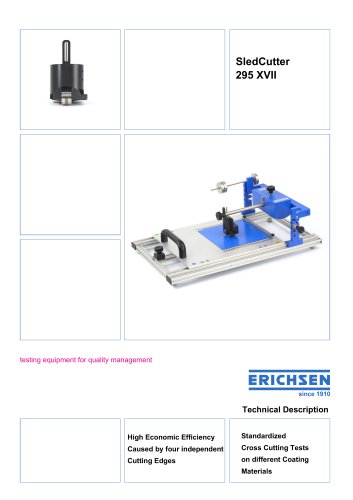
Technical Description SledCutter 295 XVII
The SledCutter 295 XVII is a device designed for high economic efficiency in testing the adhesion of coatings on various substrates. It features four independent cutting edges and is used for standardized cross-cutting tests on different coating materials.
Principle of Testing
The adhesion of a coating is crucial for corrosion protection. The cross-cut test is a widely used method to assess adhesion quality. The SledCutter allows for precise application of cross-cut grids on coated test panels, overcoming limitations of manual tools.
Purpose and Application
The device is manually operated but provides consistent cutting force and accurate angles. It includes a multi-cut adapter and multi-blade cutter with adjustable cutting force (2-40 N, up to 60 N with additional weight). The SledCutter is a tabletop device with a linear guide and height-adjustable load arm.
Test Principle
After setting the desired force, the multi-blade cutter is applied to the test panel. The process involves pulling the carriage evenly, rotating the panel 180° for a second cut, and evaluating the resulting pattern visually against standards.
Technical Data
Dimensions: 600 x 400 x 240 mm
Weight: 18 kg
Scratching force: 2-40 N (60 N with additional weight)
Max. scratch length: 220 mm
Max. test panel dimensions: 300 x 200 x 20 mm
Order Information
Product includes the SledCutter, multi-cut adapter, one cutter of choice, adjustable support weight, tare weights, spirit level, and Allen key.
Standards and Classifications
The device complies with various standards such as ISO 2409, ASTM D 3359, and VDA 621-411. It provides classifications based on the appearance of cuts, ranging from 0 (no loss) to 5 (significant loss).
Additional Information
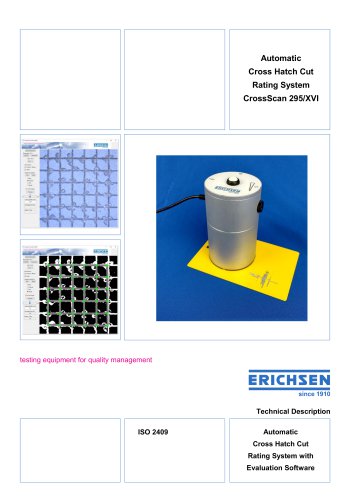
For further evaluation, the CrossScan 295 XVI system with software is available for automatic assessment of coating material loss.
Catalog excerpts
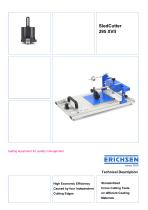
SledCutter 295 XVII testing equipment for quality management
Open the catalog to page 1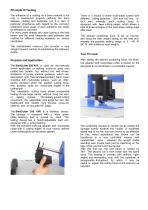
Principle of Testing The adhesion of a coating on a base material is not only a mechanical property defining the bond between coating and substrate, but it is also of particular importance with regard to the corrosion protection, since areas of poor adhesion can easily be affected by corrosion. For many years already the cross cutting is the best known and the most frequently used adhesion test method for different coating materials on various substrates! The standardised cross-cut test provides a very straight forward method of establishing the adhesion quality. Purpose and Application The SledCutter...
Open the catalog to page 2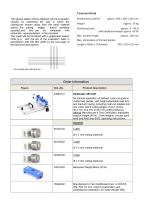
Technical Data The square pattern that is obtained can be evaluated visually by examining the way in which the coating has broken away from the base material (along the cutting edges and/or complete squares),and this can be compared with schematic representations in the standard. The result will be furnished with a judgement scale’s code (e.g. with the aid of the evaluation table in accordance with EN ISO 2409 on the last page of Dimensions (LxWxH) approx. 600 x 400 x 240 mm Scratching force approx. 2 - 40 N (with additional weight approx. 60 N) Max. scratch length approx. 220 mm Max. dimensions...
Open the catalog to page 3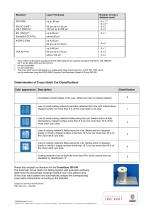
11 Since 1994, the European standard EN ISO 2409 replaces the national standards DIN 53151, BS 3900:E6, NF T 30-38, NEN 5337 and SIS 184172. 4) The cross hatch test is intensified by a subsequent deep drawing test acc. to EN ISO 1520, which can be performed using the ERIChSeN Cupping Test Machines, Models 200 and 202 EM Determination of Cross Hatch Cut Classifications Cuts’ appearance Please also request our literature for the CrossScan 295 XVI. The Automatic Cross Hatch Cut Rating System with evaluation software determines the percentage (coating) material loss in the defined area of the cross...
Open the catalog to page 4All ERICHSEN GmbH & Co. KG catalogs and technical brochures
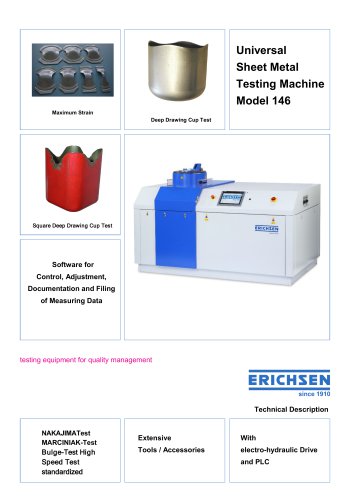 Technical Description Model 146
12 Pages
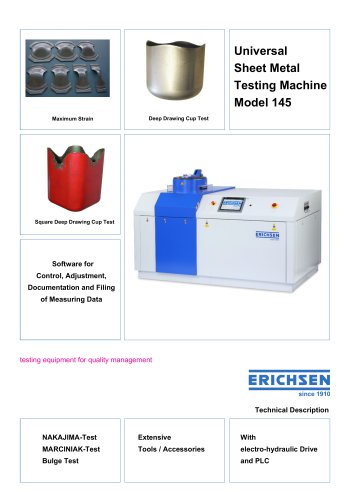 Technical Description Model 145
12 Pages
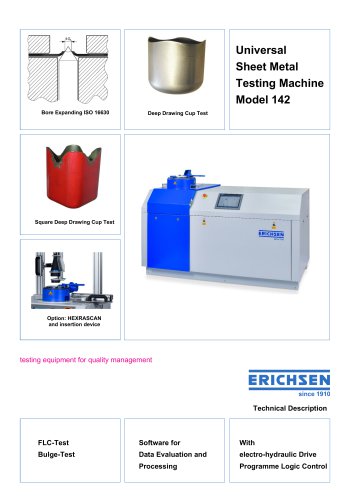 Technical Description Model 142
11 Pages
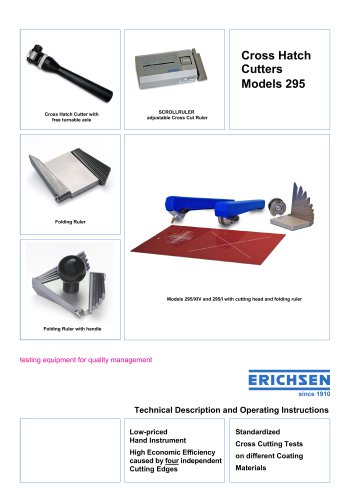 Technical Description Model 295
8 Pages

- Kiln
- ERICHSEN testing machine
- Force sensor
- Measuring device
- ERICHSEN test chamber
- Electric furnace
- Test stand
- Tension/compression force transducer
- ERICHSEN temperature test chamber
- Steel load cell
- ERICHSEN automatic testing machine
- ERICHSEN material testing machine
- Strain gauge force sensor
- ERICHSEN hardness tester
- ERICHSEN climate chamber
- ERICHSEN quality control test chamber
- Computer-controlled test machine
- Stainless steel force transducer
- ERICHSEN portable tester
- ERICHSEN humidity test chamber