
- Catalogs
- ERICHSEN GmbH & Co. KG
- Technical Description Model 426 / 427 / 428 / 463 / 463-Pro


Technical Description Model 426 / 427 / 428 / 463 / 463-Pro
Technical Description Model 426 / 427 / 428 / 463 / 463-Pro
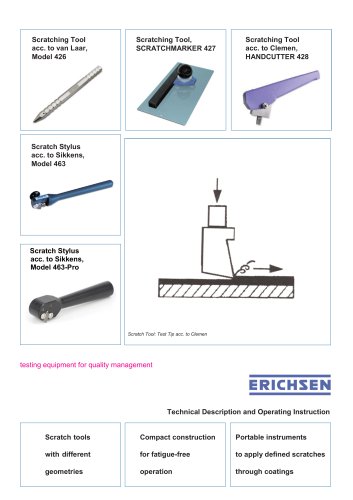
- SCRATCHMARKER 427: Includes a tungsten carbide scratch tool and a calibrating device for adjusting scratch depth. It is designed for fatigue-free operation and precise scratch application.
- HANDCUTTER 428: Utilizes a test tip according to Clemen for creating linear scratches. It is suitable for various corrosion tests and can be equipped with different test tips.
- Scratch Stylus acc. to Sikkens, Model 463/463-Pro: Used for producing defined damages on coated panels. It features a Sikkens cutting edge and can be used freehand or with a ruler.
Catalog excerpts
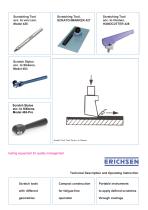
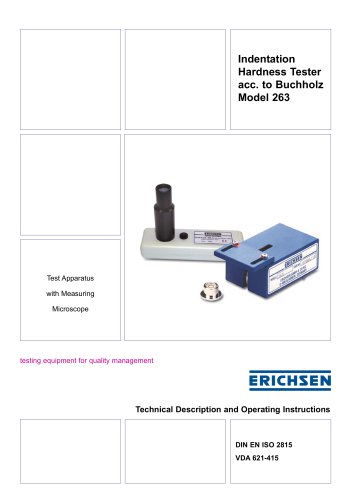
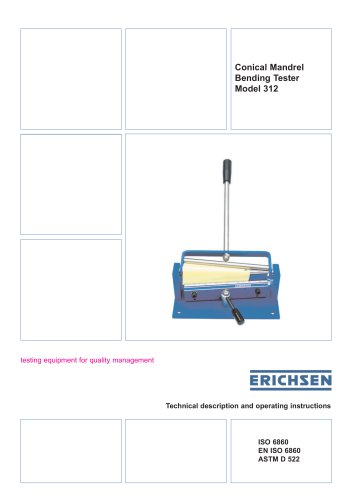
Scratching Tool acc. to van Laar, Model 426 Scratching Tool, SCRATCHMARKER 427 Scratching Tool acc. to Clemen, HANDCUTTER 428 Scratch Stylus acc. to Sikkens, Model 463 Scratch Stylus acc. to Sikkens, Model 463-Pro Scratch Tool: Test Tip acc. to Clemen testing equipment for quality management Technical Description and Operating Instruction Scratch tools Compact construction Portable instruments with different to apply defined scratches through coatings
Open the catalog to page 1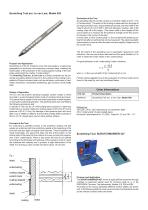
Order Informations Purpose and Application Scratching-in of the St, Andrew's cross into test panels is a well-known preparation for short-term and endurance corrosion tests, enabling the examination of the protection of the coating against rusting of the substrate underneath the coating ("underrusting"), The Sratching Tool acc. to van Laar is a handy universal tool: for producing accurately defined incisions on the surface of the coating in preparation of forced corrosion tests, such as salt spray, continuous or intermittent immersion, accelerated weathering, gas corrosion and humidtiy tests,...
Open the catalog to page 2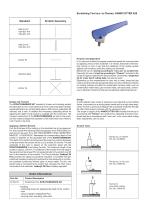
Purpose and Application It is a common method to prepare coated test panels for corrosion tests by applying various linear scratches in a vertical, horizontal or intersecting manner in such a way that the resistance of the coating system against rust formation under the coating can be tested. Beside the use of a test tip according to "van Laar" as scratch tool, frequently the use of a test tip according to "Clemen" (included in the scope of supply) is specified for this procedure. Sometimes a single test tip for cross hatch cutting tests may also be used. Depending on the requirements the user...
Open the catalog to page 3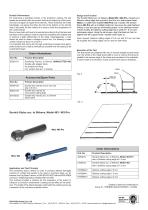
Accessories/Spare Parts Scratch Performance For producing a specified incision in the protective coating, the test panels are scratched with the scratch tools at the beginning of the corrosion test and again at regular time intervals. These scratches are made horizontally, one above the other, the first at the bottom on the shorter side of the panel. By this method it is easy to study the progression of the "underrusting". More or less strain will have to be exerted according to the thickness and hardness of the coating in order to reach the substrate with certainty and to produce a slight deformation...
Open the catalog to page 4All ERICHSEN GmbH & Co. KG catalogs and technical brochures
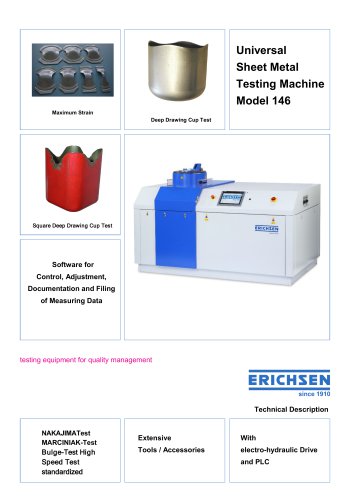 Technical Description Model 146
12 Pages
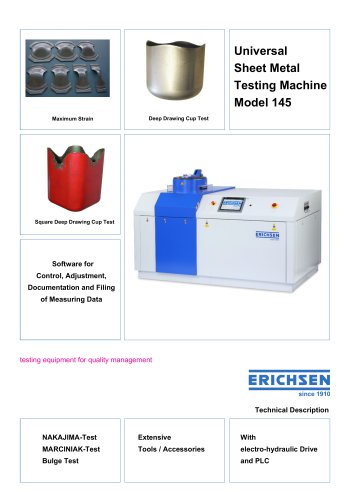 Technical Description Model 145
12 Pages
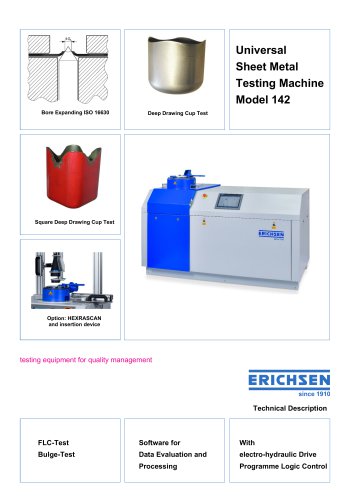 Technical Description Model 142
11 Pages
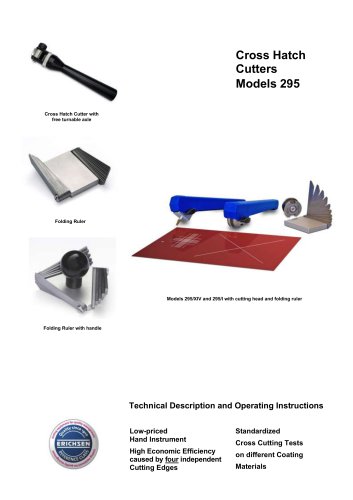 Technical Description Model 295
9 Pages



- Kiln
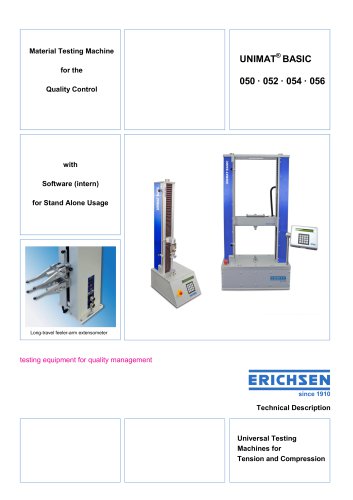
- ERICHSEN testing machine
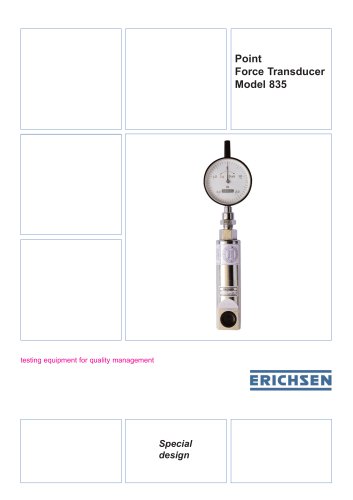
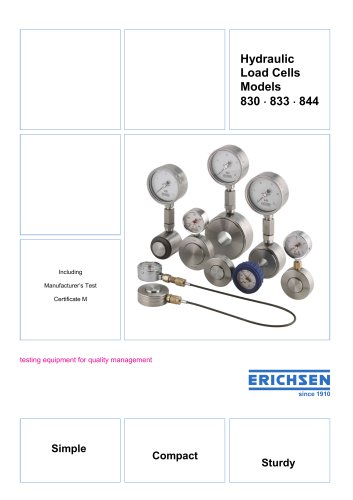
- Force sensor
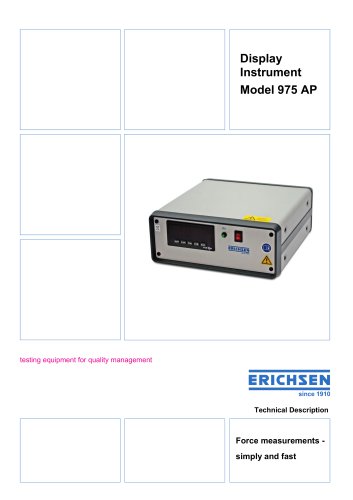
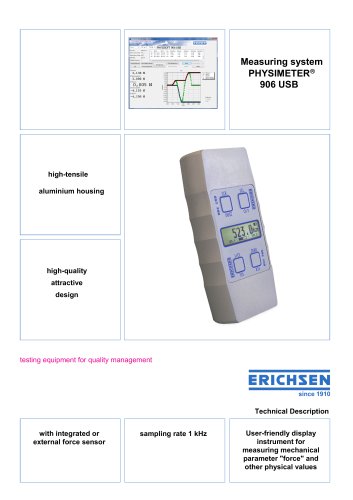
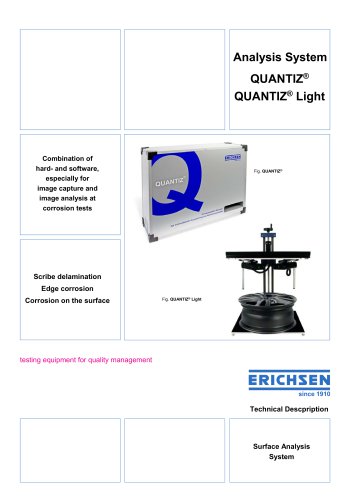
- Measuring device
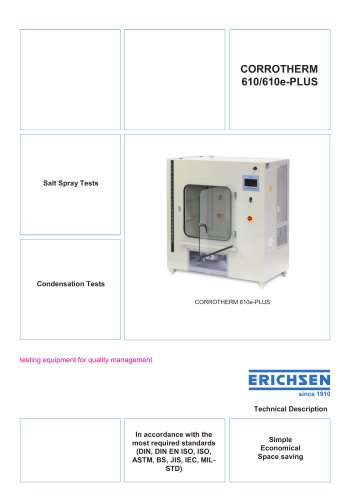
- ERICHSEN test chamber
- Electric furnace
- Test stand
- Tension/compression force transducer
- ERICHSEN temperature test chamber
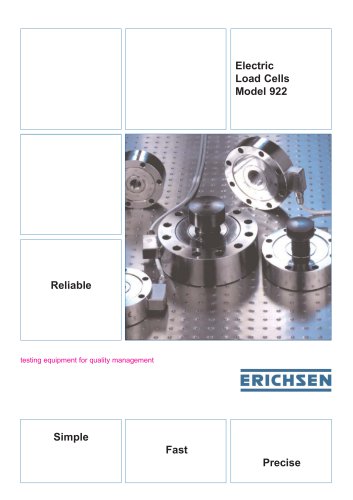
- Steel load cell
- ERICHSEN material testing machine
- ERICHSEN automatic testing machine
- Strain gauge force sensor
- ERICHSEN hardness tester
- ERICHSEN climate chamber
- ERICHSEN quality control test chamber
- Computer-controlled test machine
- Stainless steel force transducer
- ERICHSEN portable tester
- ERICHSEN humidity test chamber