
- Catalogs
- Equipos Lagos
- Lagos Bluebook - Paint defects and corrections


Lagos Bluebook - Paint defects and corrections

Lagos Bluebook - Paint defects and corrections
Equipos Lagos, with over 30 years of experience in surface treatment and coating equipment, provides this guide to help professionals achieve flawless finishes. The guide focuses on sharing knowledge and solutions for common paint defects to ensure continuous improvement and customer satisfaction.
Water Blisters
Definition: Small blisters on the paint surface due to excess moisture.
Causes: Humidity in compressed air, moisture in the substrate, inadequate drying.
Prevention: Avoid painting in wet conditions, ensure proper drying, maintain equipment.
Solution: Sand and repaint the affected area.
Lack of Adherence
Definition: Paint detaches easily, especially at edges.
Causes: Poor surface preparation, inadequate primer.
Prevention: Clean and sand surfaces, use appropriate primer.
Solution: Strip, sand, and repaint.
Orange Peel
Definition: Rough surface due to poor paint leveling.
Causes: High viscosity, improper application distance.
Prevention: Adjust paint dilution and application equipment.
Solution: Sand and refinish.
Crackings
Definition: Small cracks on the paint surface.
Causes: Incorrect surface preparation, painting on wet layers.
Prevention: Proper cleaning and application as per specifications.
Solution: Sand and repaint.
Silicones
Definition: Surface depressions due to contaminants.
Causes: Presence of oil, grease, or silicone.
Prevention: Thorough cleaning and maintenance of equipment.
Solution: Sand and repaint.
Solvent Bubbles
Definition: Bubbles forming during drying.
Causes: Fast solvents, thick paint layers.
Prevention: Use suitable solvents and regulate equipment.
Solution: Sand and repaint.
Sink Marks
Definition: Areas with different textures or gloss.
Causes: Incorrect filler preparation.
Prevention: Apply filler as per specifications.
Solution: Sand and refinish.
Wrinklings
Definition: Surface wrinkles due to shrinkage.
Causes: Unsuitable solvents, non-uniform drying.
Prevention: Use compatible products and follow instructions.
Solution: Sand and refinish.
Blurrings
Definition: Dullness due to humidity condensation.
Causes: Fast solvents, high humidity.
Prevention: Use suitable solvents and maintain air exchange.
Solution: Sand and refinish.
Saggings
Definition: Drops or runoffs due to high fluidity.
Causes: Low viscosity, thick layers.
Prevention: Adjust viscosity and application technique.
Solution: Sand and refinish.
Lack of Cover
Definition: Transparencies where background is visible.
Causes: Low viscosity, insufficient layers.
Prevention: Adjust viscosity and application.
Solution: Sand and repaint.
Dirt and Particles
Definition: Particles adhering to wet paint.
Causes: Insufficient cleaning, dirty environment.
Prevention: Clean surfaces and maintain equipment.
Solution: Sand and refinish.
Bleedings
Definition: Color variations due to soluble pigments.
Causes: Excess peroxide in fillers, pigment migration.
Prevention: Use sealers and prepare mixtures correctly.
Solution: Sand, seal, and repaint.
Dry Sprays or Aerosols
Aspect: Areas with lack of gloss and a grainy look, sometimes rough to the touch.
Prevention: Follow manufacturer's paint application guidelines, select suitable solvents, adjust gun distance and cabin temperature.
Solution: For minor defects, polish after fine sanding; for severe defects, sand and refinish.
Causes: Excessive paint viscosity, high application pressure, elevated distance, fast solvents, high ambient temperature.
Water Spots
Aspect: Whitish circular marks on the paint surface.
Prevention: Adhere to drying instructions, keep pieces in the cabin post-drying, dry surfaces if not fully hardened.
Solution: Polish after fine sanding for minor defects; sand and refinish for severe cases.
Causes: Exposure to humid environments, water splashes or rain on uncured surfaces.
Sanding Marks
Aspect: Striations or grooves in the paint.
Prevention: Respect drying times for putty/filler, choose appropriate abrasive grain, refine sanded surfaces.
Solution: Superficial sanding and repainting.
Causes: Inadequate drying/hardening, inappropriate abrasive grain, insufficient product to cover marks, poor undercoat preparation.
Catalog excerpts

paint defects experience & solutions
Open the catalog to page 1
BLUE BOOK - Orange peel or loosenings 6 Solvent bubbles or boilings 12 Sink marks, collapses or depressions 14 Lack of cover or transparencies 22 Dirt, dust or particles 24 PAINT DEFECTS AND CORRECTIONS Dear professional, Equipos Lagos has been producing surface treatment and coating equipment for over 30 years. Professionals we have met along the more than 13,000 installations and over 7000 customers have shown us some of their knowledge, secrets and problems regarding the use of our equipment which has been the key to its continuous improvement. From Lagos we have always wanted to be next to...
Open the catalog to page 2
paint defects and corrections blue book Water blisters Causes Humidity in compressed air. Moisture absorbed by the substrate. Condensation due to sudden changes in temperature. Paint Application in wet environments. Debris on the surface that act as a sponge absorbing moisture, resulting in blisters when heat is applied. Insufficient drying of the substrate or background of the surface before applying the paint. Water paint sanding or polyester base caulking, not leaving enough evaporation or drying time. Inadequate regulation of the application equipment. Perform a complete sanding job on the...
Open the catalog to page 3
paint defects and corrections blue book Lack or loss of adherence Aspect Incorrect preparation of the painted surface, presenting grease, dust, dirt or moisture. Incorrect surface sanding. Inadequate primer. Prepare the surface correctly. Clean, degrease and / or sand. Consult the paint manufacturer about the adequate primer. Apply thin layers to ease the adhesion of the paint to the substrate. Solution Strip and sand the affected area until you reach the layer that presents the defect and repainting it. The paint layer lifts easily like fish scales. Definition Absence or loss of attachment between...
Open the catalog to page 4
paint defects and corrections blue book Orange peel or loosening Causes High viscosity paint. Too much distance between the spray gun and the painted piece. Fast solvents. Insufficient amount of paint. Low humidity or high temperature in the cabin. Increase the dilution of the paint to avoid high viscosity. Adjust the application equipment and its distance to the piece. Select a suitable solvent for the ambient conditions of the area. Adjust the temperature as indicated in the instructions manual delivered by Lagos and keep the material in the cabin for a few minutes before starting the painting...
Open the catalog to page 5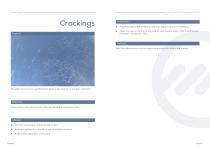
paint defects and corrections blue book Crackings Aspects Properly prepare the surface by cleaning, degreasing and / or sanding. Apply the paint according to the product specification sheet of the manufacturer (thickness, drying time, etc.). Solution Sand the affected area until the layer that presents the defect and repaint. Pequeñas fisuras en la superficie de la pintura que alcanzan a una gran extensión. Definition Small cracks in the paint surface. They can expand to the whole piece. Incorrect preparation of the painted surface. Paint was applyed on a humid, or not completely dry layer. Inadequate...
Open the catalog to page 6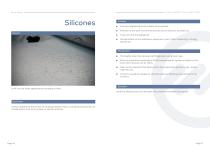
paint defects and corrections blue book Causes Incorrect degreasing of the surface to be painted. Pollution of the work environment by the use of silicones, aerosols, etc. Contamination of the application equipment, paint, hose, measuring or mixing vessels, etc. Perform preventive maintenance of the compressed air system as shown in the instruction manual. Use air filters. Clean all the elements that takes park in the preparation process: cups, measuring rules, etc. Small circular holes appearing on the paint surface. Thoroughly clean the substrate with degreaser, using clean rags. Check if it...
Open the catalog to page 7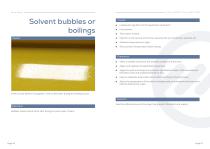
paint defects and corrections blue book Solvent bubbles or boilings Causes Inadequate regulation of the application equipment. Fast solvents. Thick layers of paint. Pollution in the work environment caused by the use of silicones, aerosols, etc. Ambient temperature too high. Short period of evaporation before drying. Select a suitable solvent for the ambient conditions of the area. Adjust and regulate the application equipment. Apply the paint according to the product specification sheet of the manufacturer (thickness, time and drying temperature, etc.). Keep an adequate evaporation time before...
Open the catalog to page 8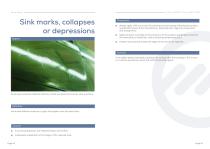
paint defects and corrections blue book Sink marks, collapses or depressions Always apply a filler as a basis for painting and decorating, following the product specification sheet of the manufacturer, especially with regard to evaporation and drying times. Apply the paint according to the provisions of the product specifications sheet of the manufacturer (thickness, time and drying temperature, etc.). Prepare and properly isolate the edges of the area to be repaired. Solution If the defect barely noticeable, polishing the surface after fine sanding it. If it is severe, it will be necessary to...
Open the catalog to page 9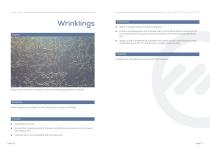
paint defects and corrections blue book Select a suitable solvent conditions painted. Prepare and apply paint and the base coat in accordance with the provisions of the manufacturer instruction manual (thickness, time and drying temperature, etc.). Apply a surface treatment according to the manufacturer’s specifications using compatible products. If in doubt use a suitable sealant primer. Solution Carefully sand the affected area and refinish the piece. Areas with wrinkles in the surface of the paint during application or drying. Definition Defect appears as wrinkles on the surface due to a layer...
Open the catalog to page 10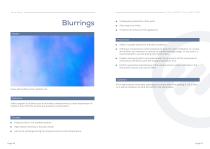
paint defects and corrections blue book Inadequate preparation of the paint. Paint layers too think. Presence of moisture in the applyed air. Select a suitable solvent for the paint conditions. If drying is conducted at room temperature, keep the cabin ventilation on, so that air turnover and moisture is reduced to suitable working ranges. In any case it is recommended to use the drying cycle of the cabin. Prepare and apply paint in accordance with the provisions of the manufacturer instructions (thickness, time and drying temperature, etc.). Perform preventive maintenance of the compressed air...
Open the catalog to page 11All Equipos Lagos catalogs and technical brochures
 Railway Solutions
4 Pages
 Clean Air. Air Purifier
3 Pages


