- Catalogs
- EOGB energy products ltd
- BTG 28 ME

BTG 28 ME

BTG 28 ME
- Complies with Gas Directive 90/396/CEE, E.M.C. Directive 89/336/CEE, and L.V. Directive 73/23/CEE.
- Reference standard: EN676.
- Two-stage progressive output operation with optional output modulation via RWF40 regulator.
- Air-gas mixing at blast-pipe for optimal combustion values.
- Low NOx emissions achieved through partial recycle of combusting gas (Class II, EN676).
- Automatic closing gate to prevent heat loss during pauses.
- Easy maintenance with removable mixing unit.
- Equipped with valve tightness control and connectors for electrical and thermostat connections.
- Includes air intake with butterfly gate and sliding boiler coupling flange.
- Features a flame viewer and air pressure switch.
- Electronic control box compliant with EN298, suitable for eBus connection.
- Flame presence checked by ionisation electrode.
- Electrical protection rating of IP40 and sound-proof plastic cover.
- Gas train with butterfly valve, monoblock valve, pressure switch, valve tightness control, pressure regulator, and gas filter available separately.
- Modulation kit (RWF40) available for purchase.
- Thermal output range: 80 to 280 kW.
- Electrical supply: 1N AC 50Hz/60Hz 230V.
- Weight: 18 kg.
- Minimum gas train inlet pressure required for maximum burner power.
- Net calorific value: Natural gas HI 35.8 MJ/m3, LPG HI 92 MJ/m3.
- Pressure drop and thermal output graphs provided for natural gas and LPG versions.
- CE gas train version complies with EN676; EXP version for extra-European markets.
Catalog excerpts

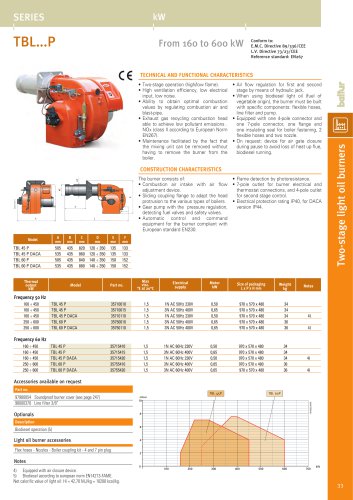
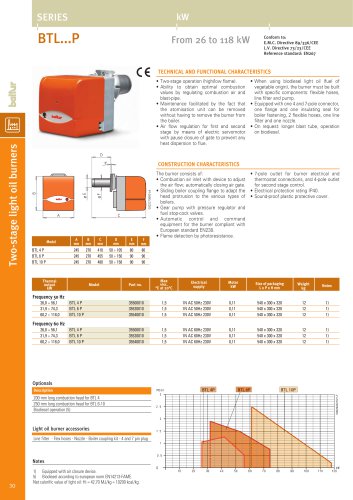
TECHNICAL AND FUNCTIONAL CHARACTERISTICS • Two-stage progressive output operation. european norm EN676). • Ability to operate with output modulation • Capacity regulation of the combusting air by means of automatic RWF40 regulator with automatic closing gate during pause mounted on the control panel (to be to avoid heat losses at the chimney. ordered separately with the modulation • Maintenance facilitated by the fact that kit). the mixing unit can be removed without • Air-gas mixing at blast-pipe. having to remove the burner from the • Ability to obtain optimal combustion boiler. values by regulating combustion air and • With valve tightness control. blast-pipe. • Equipped with one flange and one • Combustion head at partial recycle of insulating seal for boiler fastening, combusting gas which allow to achieve one 4-pole connector and one 7-pole low NOx emissions (Class II of the connector. CONSTRUCTION CHARACTERISTICS Electrical supply sequence and error code in the event of a lockout. • Flame presence check by ionisation electrode with connector for milliammeter. • 7-pole outlet for burner electrical and thermostat connections, and 4-pole outlet for second stage control. or of the capacity electronic regulator. • Electrical protection rating IP40. • Sound-proof plastic protective cover. To be ordered separately: • Gas train made up of a butterfly valve controlled by an electric pitch-pitch servomotor, by a monoblock valve which include an operating and safety valve, min.pressure switch, valve tightness control, pressure regulator and gas filter. The burner consists of: • Air intake with butterfly gate for the regulation of the air combusting flow rate. • Sliding boiler coupling flange to adapt the head protrusion to the various types of boilers. • Flame viewer. • Air pressure switch to ensure the presence of combustion air. • Regulation of the air combusting flow rate by means of an electric pitch-pitch servomotor. • Electronic control box compliant with standard EN298, with microprocessor (electronic cam), integrated valves’ tightness control; suitable for eBus connection. Display for operating Modulating mode Part.no 98000052 Kit RWF 40 - Modulation kit (see page 230). Two-stage progressive/modulating gas burners with electronic cam Conform to: Gas Directive 90/396/CEE E.M.C. Directive 89/336/CEE L.V. Directive 73/23/CEE Reference standard: EN676 Gas burner accessories Boiler coupling kit, 4 and 7 pin plug. 4) Equipped with air closure device. 13) Equipped with valve tightness control. *) Minimum gas train inlet pressure needed to obtain maximum burner power with a combustion chamber backpressure of zero. **) Maximum gas inlet pressure at pressure regulator in CE version, at gas train for EXP version. Net calorific value at reference conditions of 0°C, 1013mbar: Natural gas HI 35,8MJ/m3 = 8550 kcal/m3 LPG HI 92MJ/m3 = 22000 kcal/m3
Open the catalog to page 1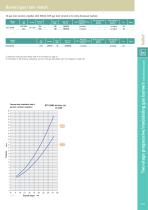
Burner/gas train match CE gas train version complies with EN676, EXP gas train version is for extra-European markets Burner model P.Max** mbar Regulator with incorporated filter Part no. Included Included Burner/gas train adapter Part no. Valve tightness control kit Part no. Included Included P.Min* mbar Regulator with incorporated filter Part no. Burner/gas train adapter Part no. Valve tightness control kit Part no. Burner model Pressurecarico (combustion head + Perdite di drop (testa di combustione + regulator) gas train + pressure rampa BTG 28ME Natural gas metano CE/EXP Two-stage progressive/modulating...
Open the catalog to page 2All EOGB energy products ltd catalogs and technical brochures
 TBG 140 LX PN
2 Pages
 TBG 80 LX PN
2 Pages
 SparkGas 30 LX
2 Pages
 GI 510 DSPGN
2 Pages
 GI 350 DSPGN
2 Pages
 TBG 45 P
2 Pages
 TBG 35 P
2 Pages
 SparkGas 35 P
2 Pages
 SparkGas 30 P
2 Pages
 TBG 45
2 Pages
 TBG 60
2 Pages
 TBG 35
2 Pages
 SparkGas 35 (BGS 35)
2 Pages
 SparkGas 30 (BGS 30)
2 Pages
 BTG
BTG8 Pages
 GI 1000 DSPG
1 Page
 GI
GI1 Page
 Low NOx models
1 Page
 BT
BT2 Pages
 Spark 35 DSG
1 Page
 XSeries Burners
2 Pages