

AQMS Air quality Monitoring Systems Catalogue
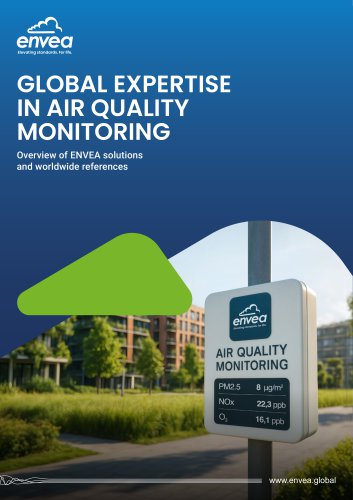
AQMS Air quality Monitoring Systems Catalogue
ENVEA offers comprehensive air quality monitoring solutions to tackle urban pollution, measuring pollutants such as PM, NOx, O3, CO, and VOCs with high precision to support public health and policy-making.
Air quality monitoring networks are crucial for environmental health, using fixed and mobile stations to measure pollutants like PM10, PM2.5, NOx, O3, CO, SO2, VOCs, and greenhouse gases. These networks help ensure compliance with air quality standards and identify pollution sources.
Monitoring involves data validation, aggregation, and processing to ensure accuracy. Public information and alerts are provided through air quality indices and forecasts, aiding preventive actions and policy-making. Monitoring data also supports scientific research and policy development.
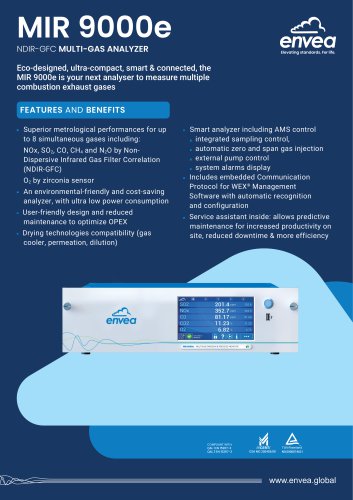
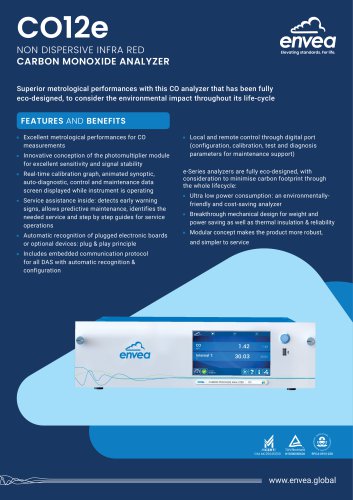
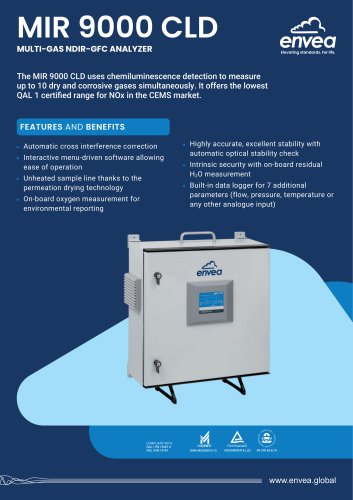
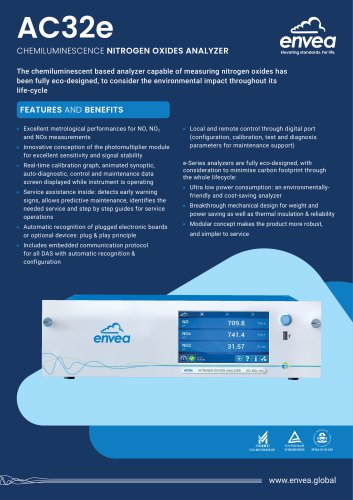
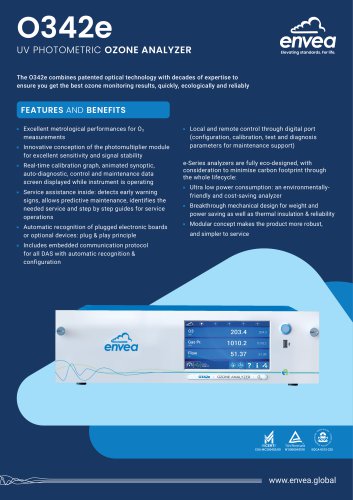
- Standard Gas Analyzers: Continuous monitoring of SO2, NOx, CO, and O3 with real-time data, complying with international standards.
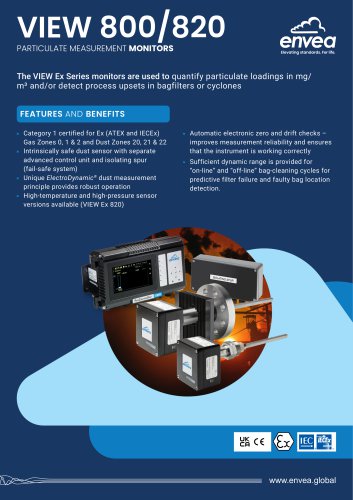
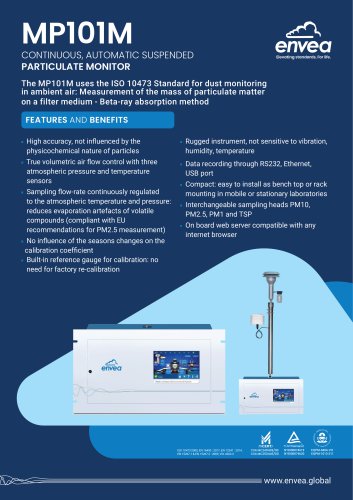
- Particulate Matter Analyzers: Real-time monitoring of PM fractions for various applications, including regulatory monitoring.
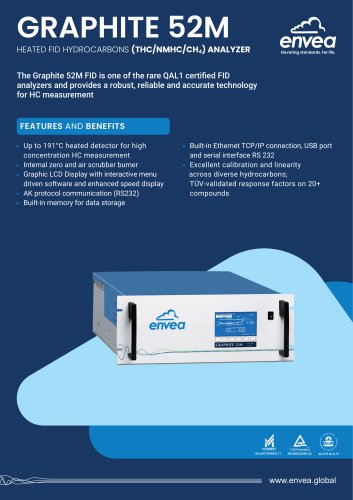
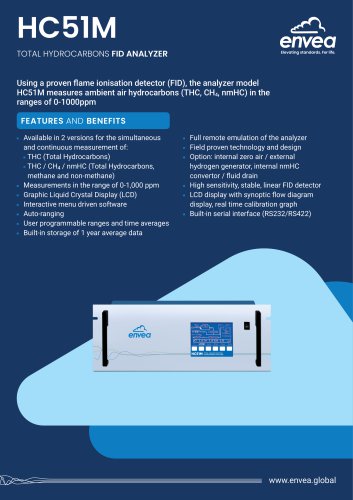
- Other Gas Analyzers: Instruments for specialized gases like THC, VOCs, TRS, and NH3, offering high sensitivity and compliance with standards.
- Ultra-fine Particulate Analyzers: Airmodus instruments detect ultrafine particles with high sensitivity, suitable for scientific and regulatory applications.
ENVEA's solutions include standard AQMS shelters, roadside compact stations, solar-powered stations, mobile laboratories, and sensor networks, demonstrating versatility and adaptability.
ENVEA's air quality monitoring solutions are strategic tools for environmental and health protection, supporting urban planning, regulatory compliance, and public awareness through reliable data and advanced analytics.
ENVEA provides robust solutions including gas dilutors and zero air generators, featuring high-quality zero air generation, accurate dilution ratios, remote control, and programmable routines.
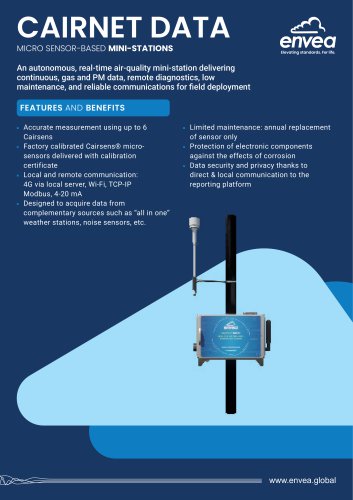
ENVEA's Cairnet® and Cairsense® systems offer compact, cost-effective solutions for air quality and odor monitoring with real-time monitoring and easy deployment.
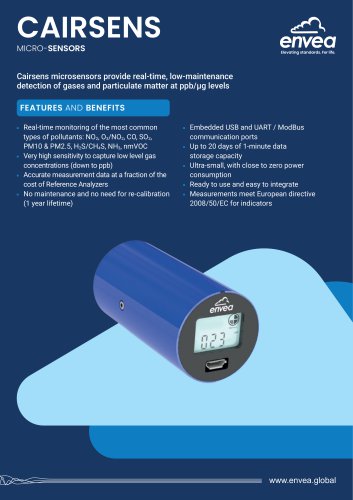
Cairsense models measure various gases with compliance to EC standards, integrating data logging and connectivity for comprehensive monitoring.
The XR software suite offers centralized data management, real-time monitoring, data validation, and reporting, supporting multiple devices with web-based access.
5.1 Standard AQMS Shelter: Energy-efficient and space-saving, allowing more analyzers in existing or smaller shelters.
5.2 Roadside Compact Stations: Designed for traffic monitoring with compact and energy-efficient products.
5.3 Solar Powered AQMS Station: Low-energy analyzers enable solar-powered stations with flexible setups.
5.4 AQMS Trailbox: Transportable system for monitoring campaigns with compact and efficient analyzers.
5.5 AQMS Mobile Laboratory: Ideal for mobile labs due to compact size and low energy consumption.
Catalog excerpts
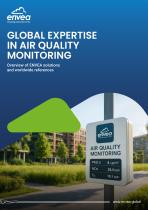
GLOBAL EXPERTISE IN AIR QUALITY MONITORING Overview of ENVEA solutions and worldwide references
Open the catalog to page 1
3. Air quality monitoring principles 06 4. Ambient air monitoring products review 10 4.2 Particulate matter analyzers 11 4.4 Ultra-fine particulate analyzers 13 4.7 Data management solutions 18
Open the catalog to page 2
envea 5. Use case application review 20 5.1 Standard AQMS shelter 20 5.2 Roadside compact stations 22 5.3 Solar powered AQMS station 24 5.5 AQMS mobile laboratory 28 5.7 AQMS hybrid network 32
Open the catalog to page 3
As cities continue to grow, air pollution remains a pressing public health and environmental concern. Vehicle emissions, industrial activities, and urban heating contribute to elevated levels of particulate matter (PM2.5), nitrogen dioxide (NO2), ozone (O3), and other harmful pollutants. Monitoring urban air quality is essential to protect citizens, guide policies, and promote sustainable development. ENVEA provides a comprehensive range of air quality monitoring solutions, from high-precision analyzers and compact sensors to advanced data acquisition systems. Our equipment measures key pollutants...
Open the catalog to page 4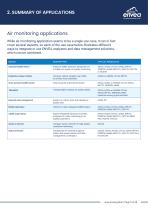
While air monitoring application seems to be a single use case, it can in fact cover several aspects, so each of the use case below illustrates different ways to integrate or use ENVEA analyzers and data management solutions, which can be combined. DEVICE DESCRIPTION TYPICAL PRODUCT(S) Standard AQMS shelter Range of AQMS analyzers integrated into AF22e, AC32e, CO12e, O342e, MP101, a shelter for regular air quality monitoring OPM250, eSAM, MGC101, ZAG710, VOC72e Roadside compact station Compact station installed near traffic AC32e or AS32M, CO12e, MP101 to monitor local conditions Solar-powered...
Open the catalog to page 5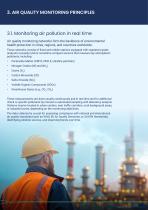
3. AIR QUALITY MONITORING PRINCIPLES These networks consist of fixed and mobile stations equipped with regulatory-grade analyzers (usually) and/or sometime compact sensors that measure key atmospheric pollutants, including: • Particulate Matter (PM10, PM2.5, ultrafine particles) • Volatile Organic Compounds (VOCs) These measurements are done usually continuously and in real time and for additional check or specific pollutants by manual or automated sampling with laboratory analysis. Stations may be located in urban centers, near traffic corridors, rural background areas, or industrial zones,...
Open the catalog to page 6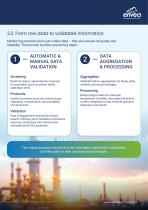
3.2. From raw data to validated information Monitoring networks don’t just collect data – they also ensure its quality and reliability. The process involves several key steps: AUTOMATIC & MANUAL DATA VALIDATION DATA AGGREGATION & PROCESSING Real-time data is automatically screened for anomalies (such as sensor faults, calibration drift). Validated data is aggregated into hourly, daily, monthly, and annual averages. Protocols Quality assurance protocols ensure proper calibration, maintenance, and traceability of instruments. Processing Meteorological data (for example: temperature, humidity, wind...
Open the catalog to page 7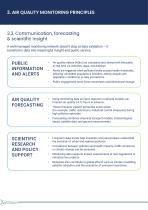
3. AIR QUALITY MONITORING PRINCIPLES 3.3. Communication, forecasting & scientific insight A well-managed monitoring network doesn’t stop at data validation – it transforms data into meaningful insight and public service. PUBLIC INFORMATION AND ALERTS SCIENTIFIC RESEARCH AND POLICY SUPPORT Air quality indices (AQIs) are calculated and shared with the public in real time via websites, apps, and displays. Alerts are triggered when pollutant levels exceed health thresholds, allowing vulnerable populations (children, elderly, people with respiratory conditions) to take precautions. Public engagement...
Open the catalog to page 8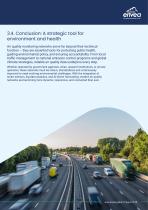
3.4. Conclusion: A strategic tool for environment and health Air quality monitoring networks serve far beyond their technical function – they are essential tools for protecting public health, guiding environmental policy, and ensuring accountability. From local traffic management to national emission control programs and global climate strategies, reliable air quality data underpins every step. Whether operated by government agencies, cities, research institutions, or private operators, these networks must be robust, standardized, and continuously improved to meet evolving environmental challenges....
Open the catalog to page 9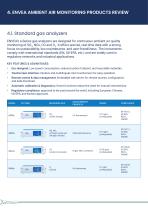
4. ENVEA AMBIENT AIR MONITORING PRODUCTS REVIEW 4.1. Standard gas analyzers ENVEA’s e-Series gas analyzers are designed for continuous ambient air quality monitoring of SO2, NOx, CO and O3. It offers precise, real-time data with a strong focus on sustainability, low maintenance, and user-friendliness. The instruments comply with international standards (EN, US-EPA, etc.) and are widely used in regulatory networks and industrial applications. KEY FEATURES & ADVANTAGES: • Eco-designed: Low power consumption, reduced carbon footprint, and recyclable materials. Touchscreen interface: Intuitive and...
Open the catalog to page 10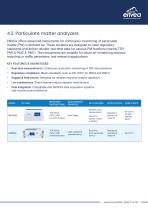
envea 4.2. Particulate matter analyzers ENVEA offers advanced instruments for continuous monitoring of particulate matter (PM) in ambient air. These systems are designed to meet regulatory standards and deliver reliable, real-time data for various PM fractions (mainly TSP, PM10, PM2.5, PM1). The instruments are suitable for urban air monitoring stations, industrial or traffic perimeters, and research applications. • Real-time measurements: Continuous, automatic monitoring of PM concentrations. • Regulatory compliance: Meets standards such as EN 12341 for PM10 and PM2.5. • Rugged & field-proven:...
Open the catalog to page 11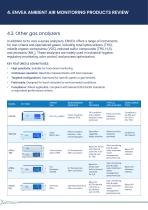
4. ENVEA AMBIENT AIR MONITORING PRODUCTS REVIEW 4.3. Other gas analyzers In addition to its core e-series analyzers, ENVEA offers a range of instruments for non-criteria and specialized gases, including total hydrocarbons (THC), volatile organic compounds (VOC), reduced sulfur compounds (TRS, H2S), and ammonia (NH3). These analyzers are widely used in industrial hygiene, regulatory monitoring, odor control, and process optimization. KEY FEATURES & ADVANTAGES: • High sensitivity: Suitable for trace-level monitoring. Continuous operation: Real-time measurements with fast response. Targeted configurations:...
Open the catalog to page 12All ENVEA catalogs and technical brochures
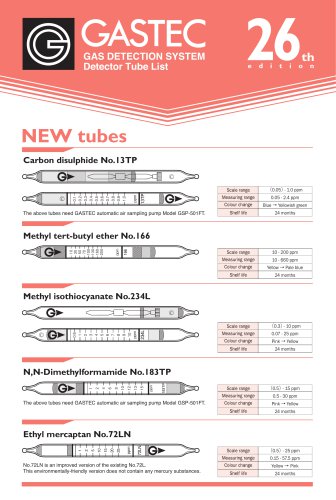 GASTEC Detector Tube Listing
52 Pages
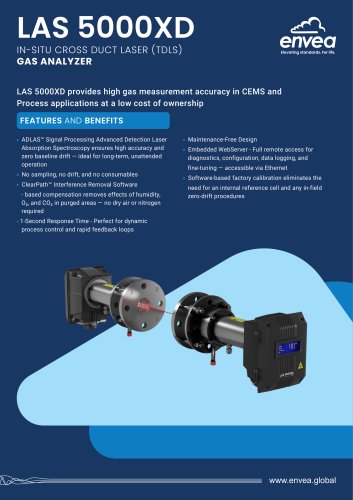 LAS 5000XD_Process_Gas_TLD
2 Pages
 Amesa-M Mercury Sampler (Hg)
2 Pages
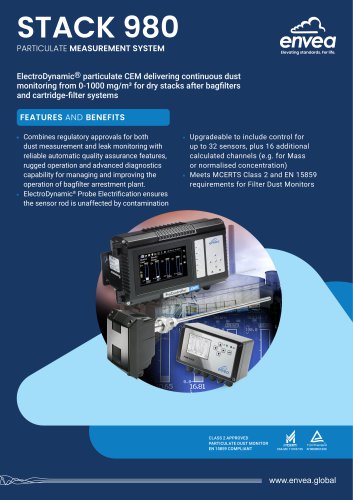 STACK 980
2 Pages
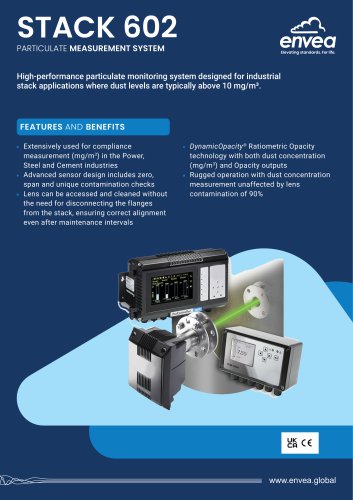 STACK 602
2 Pages
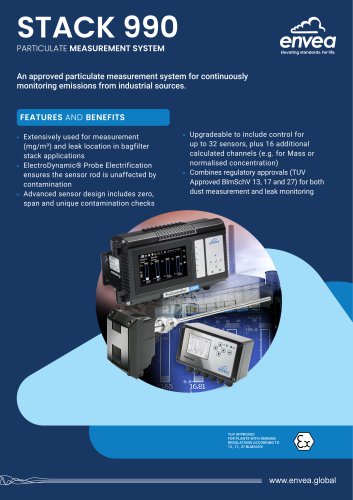 STACK 990
3 Pages
 MGC101- Multi-Gas Calibrator
2 Pages
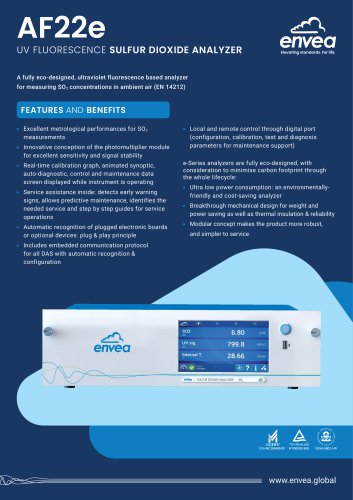 E-Series - AF22E SO2 monitor
2 Pages
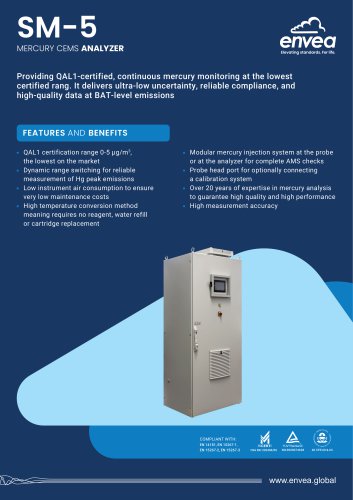
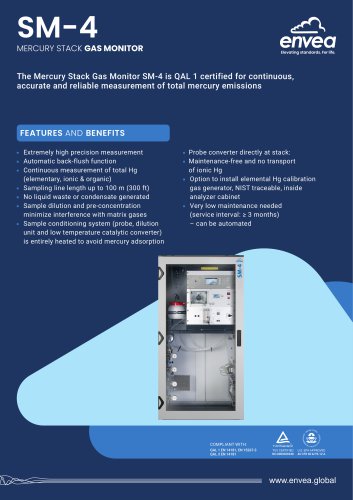
 SM-4 CEMS Mercury Monitor
2 Pages













- Flowmeter
- Volume flow monitor
- ENVEA concentration analyzer
- Management software solution
- ENVEA monitoring analyzer
- Analysis software solution
- ENVEA liquids analyzer
- ENVEA automatic analyzer
- Real-time software
- Windows software
- Calibration system
- Cloud-based software
- Waterproof flow meter
- Gas flow monitor
- Level probe
- ENVEA benchtop analyzer
- ENVEA solids analyzer
- Stainless steel flow monitor
- Spectrometer