
- Catalogs
- EmCom Technology Inc.
- CAN to CAN Galvanic Isolator

- Company
- Products
- Catalogs
- News & Trends
- Exhibitions
CAN to CAN Galvanic Isolator
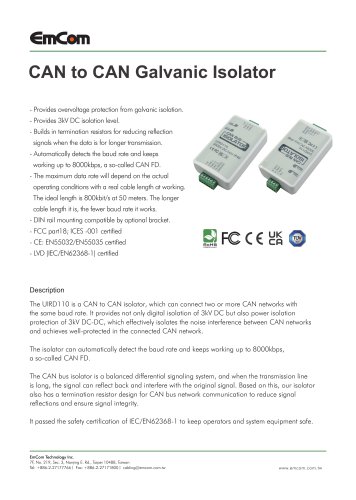
CAN to CAN Galvanic Isolator
- Overvoltage protection with galvanic isolation.
- 3kV DC isolation level.
- Built-in termination resistors to reduce signal reflection in long transmissions.
- Automatic baud rate detection, supporting up to 8000kbps (CAN FD).
- DIN rail mounting compatibility with optional bracket.
- Operating temperature range: -10°C to +70°C.
- Storage temperature range: -40°C to +85°C.
- Input voltage range: +10 VDC to +30 VDC.
- Power consumption: 0.45W.
- Data rate: CAN bus 5k ~ 800 kbps; CAN FD arbitration rate up to 1000 kbps, data rate up to 8000 kbps.
- ESD protection: Contact 8kV, Air 15kV.
- IP 40 protection against water and solid substances.
- FCC part 18
- ICES-001
- CE: EN55032/EN55035
- LVD: IEC/EN62368-1
Catalog excerpts
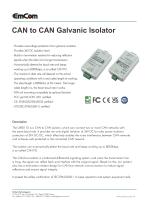
CAN to CAN Galvanic Isolator - Provides overvoltage protection from galvanic isolation. - Provides 3kV DC isolation level. - Builds in termination resistors for reducing reflection signals when the data is for longer transmission. - Automatically detects the baud rate and keeps working up to 8000kbps, a so-called CAN FD. - The maximum data rate will depend on the actual operating conditions with a real cable length at working. The ideal length is 800kbit/s at 50 meters. The longer cable length it is, the fewer baud rate it works. - DIN rail mounting compatible by optional bracket. - FCC part18; ICES -001 certified - CE: EN55032/EN55035 certified - LVD (IEC/EN62368-1) certified Description The UIRD110 is a CAN to CAN isolator, which can connect two or more CAN networks with the same baud rate. It provides not only digital isolation of 3kV DC but also power isolation protection of 3kV DC-DC, which effectively isolates the noise interference between CAN networks and achieves well-protected in the connected CAN network. The isolator can automatically detect the baud rate and keeps working up to 8000kbps, a so-called CAN FD. The CAN bus isolator is a balanced differential signaling system, and when the transmission line is long, the signal can reflect back and interfere with the original signal. Based on this, our isolator also has a termination resistor design for CAN bus network communication to reduce signal reflections and ensure signal integrity. It passed the safety certification of IEC/EN62368-1 to keep operators and system equipment safe. EmCom Technology Inc. 7F, No. 219, Sec. 3, Nanjing E. Rd., Taipei 10488, Taiwan Tel: +886-2-27177766| Fax: +886-2-27171800| [email protected]
Open the catalog to page 1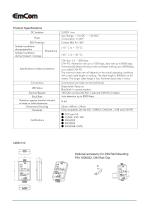
Product Specifications 3,000V 1min Input Range: +10 VDC ~ +30 VDC Consumption: 0.45W DC Isolation Power ESD Protection Ambient conditions during operation Ambient conditions during transport / storage Specifications of data connections Connections LED Status Terminal Resistor Baud Rate Protection against harmful intrusion of water or solid substances Dimensions (Housing) Standards (-40 ° C to + 85 °C) CAN bus: 5 k ~ 800 kbps. CAN FD: Arbitration rate up to 1000 kbps, data rate up to 8000 kbps. Automatically detects the baud rate and keeps working up to 8000kbps, a so-called CAN FD. The maximum...
Open the catalog to page 2All EmCom Technology Inc. catalogs and technical brochures
 USB Galvanic Isolator
2 Pages
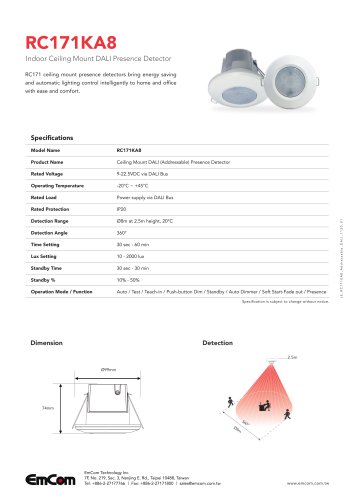 RC171KA8
1 Page
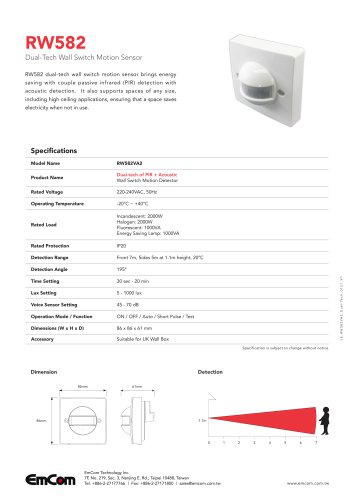 RW582
RW5821 Page
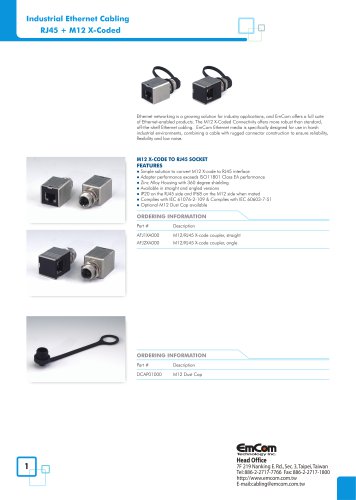 M12/RJ45 Data Networking
1 Page
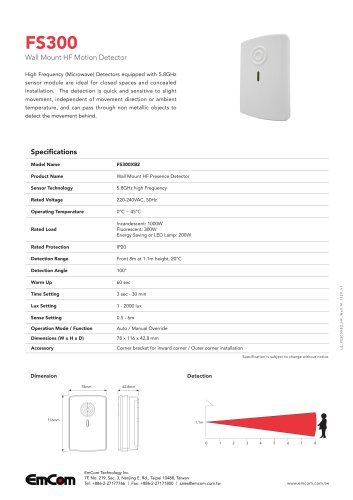 FS300
FS3001 Page
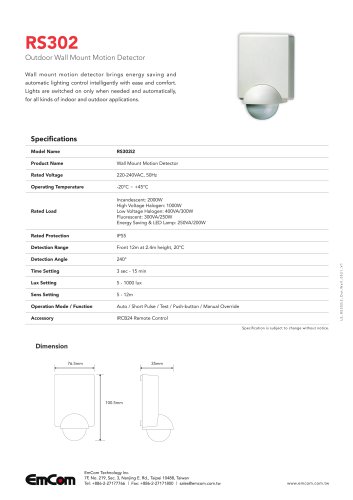 RS302
RS3021 Page
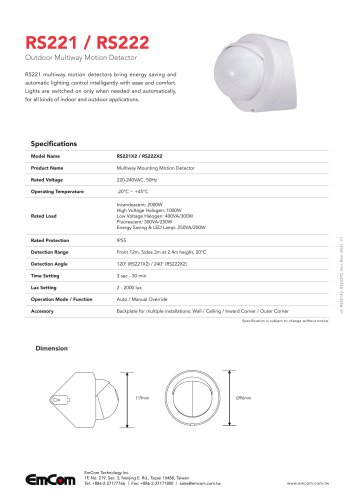 RS221
RS2211 Page
 RS97
RS971 Page
 RS100
RS1001 Page
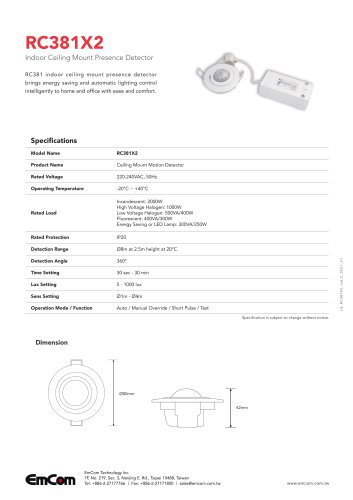 RC381X2
1 Page
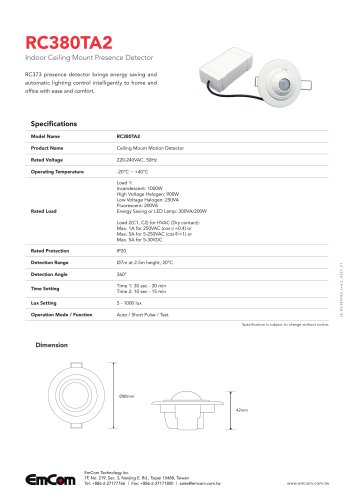 RC380TA2
1 Page
 RC123
RC1231 Page
 RC122
RC1221 Page
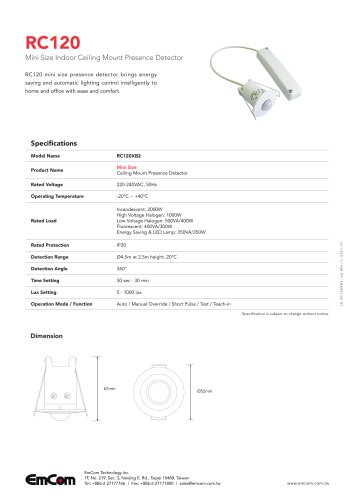 RC120
RC1201 Page
 RC110
RC1101 Page
 RC373X2
1 Page
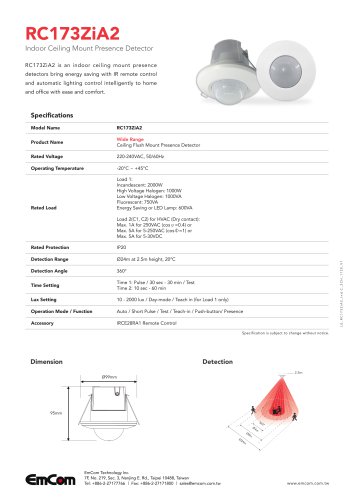 RC173ZiA2
1 Page
 RC172ZiA2
1 Page
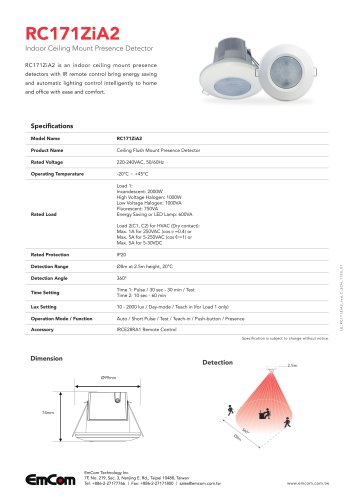 RC171ZiA2
1 Page
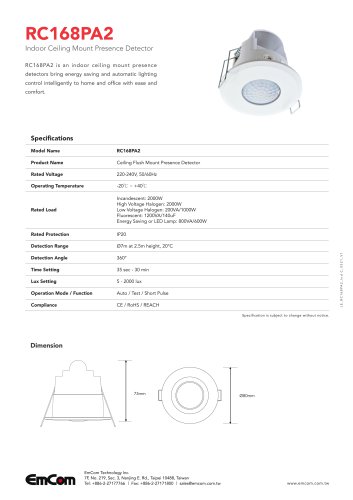 RC168PA2
1 Page
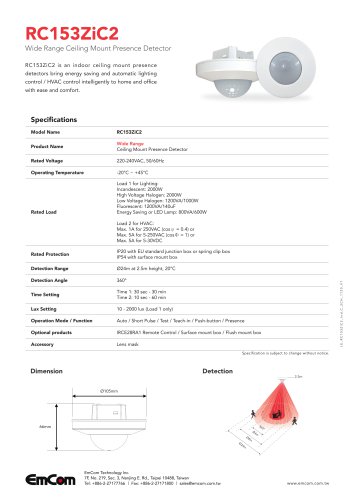 RC153ZiC2
1 Page
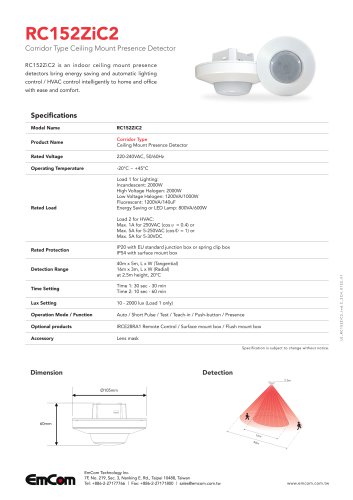 RC152ZiC2
1 Page
 RC151HiC2
1 Page
 RC151ZiC2
1 Page




- EmCom connector
- Power supply unit
- EmCom data connector
- EmCom rectangular enclosure
- Metal connector
- EmCom LED lighting
- Polymer connector
- EmCom plastic enclosure
- Wall-mount box
- EmCom female connector
- EmCom industrial connector
- EmCom industrial enclosure
- Male connector
- EmCom round cap
- Wireless remote control
- Remote control with buttons
- Cable connector
- EmCom straight connector
- EmCom protection enclosure
- EmCom ABS enclosure