
- Catalogs
- Eltex-Elektrostatik-GmbH
- Brochure Discharging

Brochure Discharging

Brochure Discharging
Introduction
Eltex specializes in electrostatic discharge systems that enhance production processes across various industries by neutralizing or utilizing electrostatic energy effectively.
Industries and Applications
Electrostatic systems are widely used in industries such as plastics, printing, packaging, chemicals, IT, automotive, electronics, ceramics, glass, textiles, metals, and wood. These systems help prevent quality defects, improve processes, and optimize production efficiency.
Physical Basics of Electrostatics
Electrostatic energy originates from atomic structures, where electrons and protons create charges. Charging occurs when electrons transfer between materials, often due to contact and separation.
Preventing and Controlling Discharges
Uncontrolled discharges can occur in low humidity environments or with materials that have high insulation. Controlled discharges are achieved using active discharge electrodes to neutralize charges and prevent spontaneous discharges.
Electrostatic Energy Utilization
Electrostatic energy can be harnessed creatively, such as in the plastics industry to prevent 'neck-in' or in printing to enhance moisture retention in paper. Proper management of electrostatic charges is crucial to avoid production faults and delays.
Eltex Discharging Technology
Eltex offers advanced discharging systems that meet high accuracy demands in fast-paced industrial processes. Their technology is effective across various distances and speeds, suitable for industries like printing, plastics, and packaging.
Why Choose Eltex?
Eltex provides solutions for companies facing electrostatic interference or seeking to improve production efficiency. They offer systems and expertise for mechanical engineering, plant design, and process development.
Collaboration and Contact
Eltex emphasizes collaboration to identify and solve electrostatic-related problems. They offer consultation services and have a global presence to assist clients in optimizing their production processes.
Catalog excerpts
electrostatic innovations Trouble-free processes through powerful discharge
Open the catalog to page 1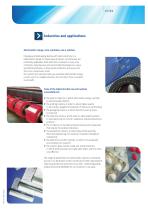
Electrostatic energy: once a problem, now a solution. Charging and discharging bodies with static electricity is a phenomenon based on simple laws of physics. As these laws are universally applicable, static electricity is present in every area of industry. Spontaneous and uncontrolled discharges can cause substantial problems, as they impair production processes and thus incur unnecessary costs. Our systems and concepts help you neutralize electrostatic energy or even use it in a targeted manner, thus turning it from a nuisance to a benefit. Some of the industries that use such systems successfully...
Open the catalog to page 2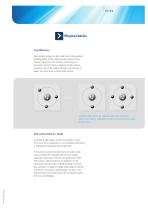
Physical basics Tiny differences Electrostatic energy can be traced back to the smallest building blocks of the material world: atoms. These consist of protons in the nucleus and electrons in the cloud. Electrons have a negative charge, protons a positive one. If the number of these two particles is equal, the entire atom is electrically neutral. Charging takes place, for example, when two boundary layers are suddenly separated, if electrons jump from one body to the other. Only contact results in a charge A contact charge always involves two bodies. One of them must form a capacitor, i.e. an...
Open the catalog to page 3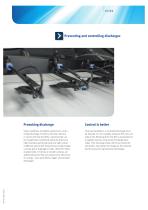
Preventing and controlling discharges Some conditions are highly conducive to uncontrolled discharge. Products with low moisture or rooms with low humidity, materials that can be charged electrostatically (because they have high insulation performance) and a high contact coefficient ensure that frequent and strong charges can take place. Slippage on webs, dielectric fluids at pipe bends or friction at smooth surfaces are additional factors that are conducive to electrostatic energy – and, quite likely, trigger uncontrolled discharges. Provoking discharge To prevent problems, a controlled discharge...
Open the catalog to page 4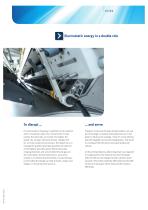
Electrostatic energy in a double role For electrostatic charging, in addition to the material and its insulation value, the critical factor is how quickly the materials are moved. The higher the speed, the stronger the electrostatic charges will be. In most production processes, the objective is to manage the greatest possible quantities of material at the highest possible speed. Electrostatically clinging materials and uncontrolled discharges are thus inevitable. As described above, unless the charge is controlled and eliminated, its spontaneous, uncontrolled discharge can lead to faults, delays...
Open the catalog to page 5
□ The optimum choice for many applications The Eltex discharging technology is suitable for a wide variety of discharging tasks in many industries, e.g. in printing, plastics, optical and packaging for: > separating and fanning paper and film piles > the production, processing and converting of plastics and textiles > cleaning moving and non-moving surfaces (e.g. optical lenses) Top-Class Discharging Ever faster manufacturing cycles and industrial processes require the highest possible accuracy. Discharging static electricity plays a key function in meeting today’s productivity and safety demands....
Open the catalog to page 6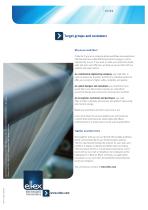
Target groups and customers Why do you need Eltex? Primarily if you are a company whose workflows may experience interference from unidentified electrostatic energy or can be improved by its use. If you want to make your production faster, safer and more cost-effective, we help you do just that with our systems and expert advice. As a mechanical engineering company, you need Eltex in order to equip your products with factory-installed systems to offer your customers higher safety, reliability and quality. As a plant designer and consultant, you need Eltex if you would like to use Electrostatic...
Open the catalog to page 7All Eltex-Elektrostatik-GmbH catalogs and technical brochures
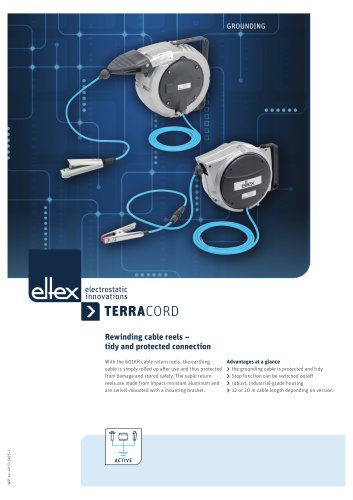 Brochure Cable reels
2 Pages
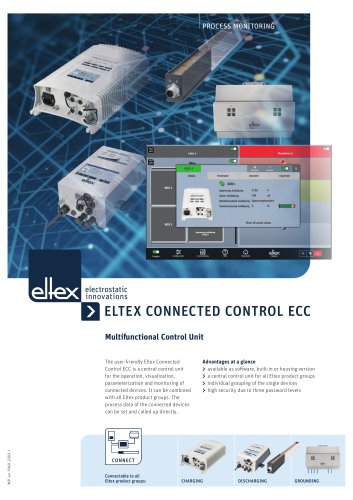 ELTEX CONNECTED CONTROL ECC
3 Pages
 Technical information GNH63
56 Pages
 Brochure ESA
15 Pages
 Operating Manual TERRALIGHT
36 Pages
 Brochure TERRALIGHT
3 Pages
 Brochure Power Charger
5 Pages
 POWER IONIZER - power supply
8 Pages
 Technical information SDS
4 Pages
 Brochure SDS
4 Pages
 Technical information EXR5C
2 Pages
 Technical information R45
2 Pages
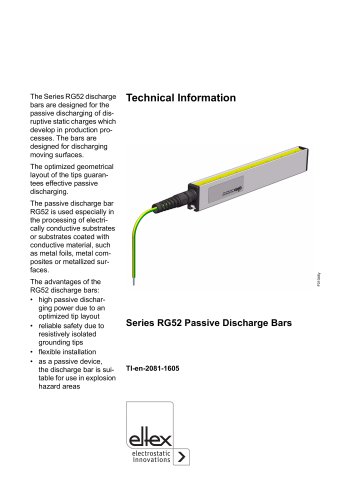 Technical information RG52
4 Pages
 Brochure flexION
4 Pages
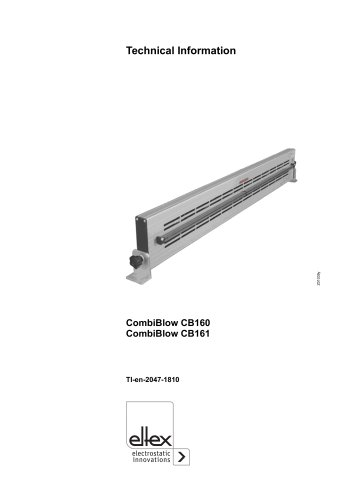 Technical information CB
4 Pages
 Brochure STATICJET RX22
3 Pages
 Technical information RX3
4 Pages
 Brochure RX3
3 Pages
 Technical information ES24
4 Pages
 Technical information WM3000
12 Pages
 Brochure WM3000
15 Pages
 Technical information SCC
3 Pages
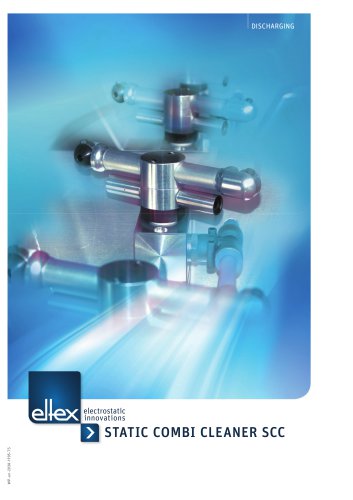 Brochure SCC
3 Pages
 Technical information DM1500
8 Pages
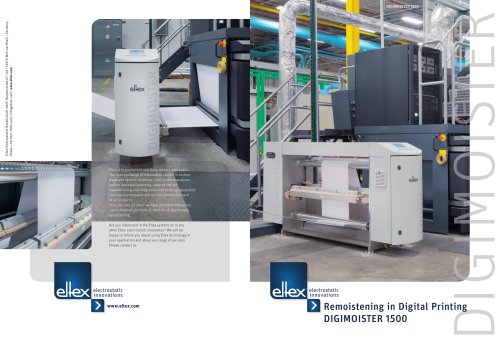 Brochure DM1500
2 Pages
 Brochure RX11
3 Pages
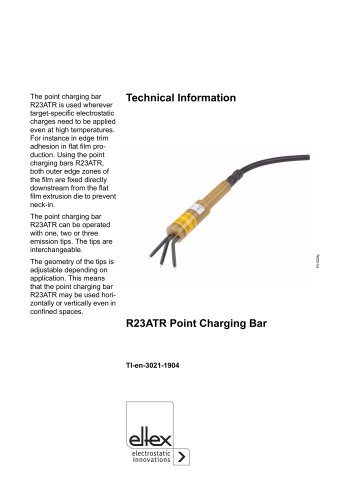 Technical information R23ATR
8 Pages
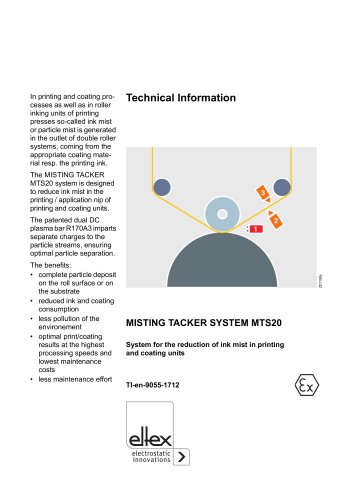 Technical information MTS
12 Pages
 Brochure MTS
3 Pages
 Brochure Grounding General
4 Pages
 Technical information PGT120
4 Pages
 Technical information GHH36
20 Pages
 Brochure GHH36
2 Pages
 Technical information ES53
4 Pages
 Technical information ES51
4 Pages
 Technical information R36
8 Pages
 Brochure Terrapharm General
2 Pages
 Brochure Terracap General
2 Pages
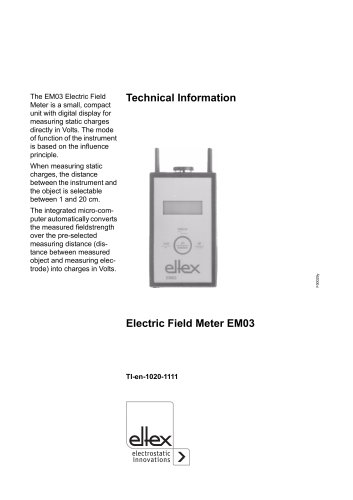 Technical information EM03
2 Pages
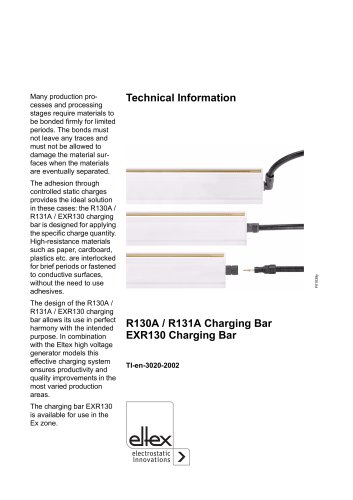
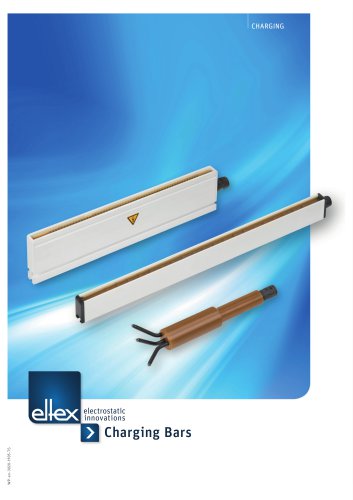 Brochure Charging bars
5 Pages
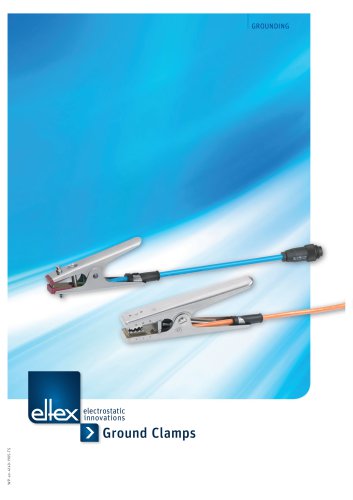 Brochure Ground clamps
4 Pages






Archived catalogs
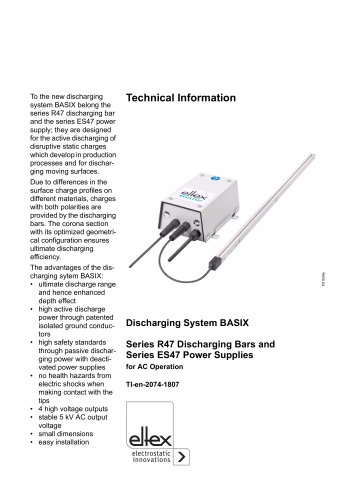
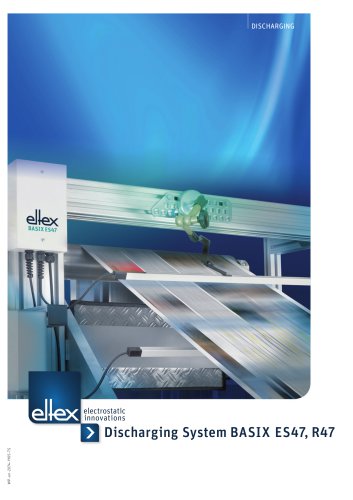 Brochure BASIX ES47,R47
4 Pages
 Technical information R55
8 Pages
 Brochure Ion Blower
5 Pages

- Power supply unit
- Display module
- DC power supply
- Electrical cable
- AC/DC power supply
- Power cable
- Touch screen display panel
- Compact power supply
- Control display system
- Tabletop power supply
- Cleaning nozzle
- Air nozzle
- High-voltage power supply
- Air gun
- Stabilized power supply
- Rewinder-winder
- Blow-off nozzle
- Antistatic bar
- Cleaning air blow gun
- Hermetic electrical cable