
- +++foj_breadcrumb_home_catalogs+++ Catalogs
- Ekin Industrial
- HEAT TRANSFER GENERAL CATALOGUE


- +++fo_headerStand_company_tab+++ Company
- +++fo_headerStand_product_tab+++ Products
- +++fo_headerStand_catalogs_tab+++ Catalogs
- +++Fo_Layout_Header_TrendsTab+++ News & Trends
- +++fo_headerStand_salon_tab+++ Exhibitions
HEAT TRANSFER GENERAL CATALOGUE

HEAT TRANSFER GENERAL CATALOGUE
Ekin Endüstriyel is a prominent player in Turkey's heat exchanger sector, known for its focus on customer satisfaction and innovation. The company has evolved from importing to manufacturing plate heat exchangers under the "MIT" brand, complying with ISO Quality Management standards.
Ekin offers a diverse range of products, including plate heat exchangers, accumulation tanks, and water heater tanks, catering to various sectors and providing competitive advantages in the global mechanical installation industry.
Working Principle: These devices enable heat transfer between two fluids separated by plates, with ports for fluid entry and exit. They can be customized for multiple heating fluids.
Components: Include front and rear bodies, carrying shafts, flow plates, and end plates, with labels indicating model, capacity, temperature, and pressure.
Models vary in dimensions, operating pressures, and connection types, using materials like AISI 316, titanium, and Hastelloy for plates, and various gasket materials such as EPDM and VITON.
HVAC Systems: Used for hot water, localized heating, and floor heating systems, offering hygienic, efficient, and compact solutions.
Pressure Reduction: Manage system pressure in high-rise buildings, reducing installation costs.
Pool Heating: Efficiently maintain desired pool temperatures.
Central Heating Systems: Promoted by new energy efficiency laws.
Heat Energy Recovery: MIT exchangers prevent energy waste, crucial as energy costs rise.
Geothermal Heating: Effective for domestic heating in Turkey.
Electricity Generation: Used in thermal plants for efficient water cooling and heating.
Solar Energy: Enhance system efficiency and longevity in solar setups.
Chiller Group Circuit: Protects sensitive chiller systems by separating circuits.
Cooling of Rolled Oil: Maintains optimal oil temperature for performance.
Boron Oil Cooling: Ensures efficiency in metal cutting by maintaining oil temperature.
Cooling Group Circuit: Prevents contamination from open cooling towers.
Waste Heat Recovery: Utilizes waste heat from industrial processes for other heating needs, enhancing energy efficiency.
MIT brazed plate heat exchangers are detailed with dimensions, pressure ratings, and connection types. They operate at a maximum pressure of 30 bar, with a test pressure of 45 bar, and a temperature range from -196°C to +200°C. Plates are made from AISI 316L, with connections from AISI 304, using copper or stainless steel as the braze material.
Available in different plate types (H, L, M) to optimize heat transfer and pressure drop. Benefits include high efficiency and reduced operating costs.
Tube heat exchangers are manufactured following standards like ASME, API, and TEMA, using high-quality materials and certified welding processes for reliability and compliance.
MIT ensures quality through rigorous testing and documentation, using advanced software for equipment design and 3D modeling to detect potential errors before production.
Composed of components like fixed head channels and floating head flanges, allowing design flexibility and ease of maintenance.
- Operate at high pressures and temperatures.
- Resistant to thermal shocks with no size limitations.
- Minimal pressure losses and easy maintenance.
- Flexible design for changes in pipe dimensions and arrangements.
Designed for specific processes, can be isolated to minimize heat losses, and grouped to increase capacity, suitable for high-capacity facilities like petrochemical and power plants.
Used in high-temperature and pressure applications, especially in food and chemical industries, designed for hygienic processes with rigorous quality control.
Used in food and sludge processes, made from stainless materials, designed to prevent fluid mixing through a double-walled design.
Includes oil coolers and grooved copper tube oil heat exchangers, enhancing heat transfer efficiency with various models available.
Feature flap heating surfaces to increase heat transfer efficiency, used in various industrial applications.
Designed for pool heating systems, offering high heat transfer efficiency, made from durable materials like stainless steel and titanium, suitable for a wide range of applications.
Maintain pool health by preventing harmful materials from entering the system, adaptable to solar and boiler systems, ensuring even heating of pool water.
Describes horizontal and vertical installation methods for pool heat exchangers, detailing the flow of warm water from the boiler to the pool and vice versa.
BE type evaporators offer capacities up to 1500 kW, compatible with HFC and HCFC refrigerants, used in cooling groups, ice machines, and the marine industry.
BC tubular type condensers suitable for various refrigerants, used in heating pumps, cooling groups, and the maritime industry.
Used in sectors like textiles and air conditioning, designed to enhance heat transfer efficiency and reduce oxidation.
Includes tables with detailed specifications for each product type, highlighting the importance of proper installation and maintenance for optimal performance.
Feature a spiral pattern to enhance thermal expansion without compromising durability, used in heat exchangers for air conditioning and cooling.
Customizable in size and capacity, using aluminum or copper materials, tested for pressure, and equipped with purifiers.
Classified by fluid type and serpentine structure, used in various heating and cooling applications, made from materials like carbon steel, stainless steel, and copper.
Recover waste heat from flue gases to produce hot water or air, enhancing energy efficiency in industries like textiles.
Improve combustion efficiency in diesel engines by cooling charged air, designed with curved wing surfaces for effective heat transfer.
Regular cleaning and maintenance are crucial for the longevity of tube heat exchangers, emphasizing the use of original spare parts.
YS1 series features compact, high-performance designs suitable for various mobile applications, made from aluminum with plastic components.
Designed for mobile applications like agricultural machinery and construction equipment, featuring a compact design with a brazed aluminum core.
Suitable for cooling various fluids, used in industrial and mobile hydraulic systems, featuring a bar and plate brazed aluminum core.
Designed for industrial applications, operating at a maximum pressure of 60 bar and ambient temperatures up to 35°C.
Used in hydraulic oil, engine oil, and transmission oil applications, featuring a brazed aluminum core.
Designed for high heat transfer, available with electric or hydraulic motors.
Provides training and development programs to enhance employee skills and contribute to societal value through social responsibility projects.
Focuses on customer satisfaction and loyalty, adhering to ethical values and information security standards, offering technical support and system design assistance.
+++fo_catalog_detail_extractsFromCatalogTitle+++ Catalog excerpts

HEAT TRANSFER GENERAL CATALOGUE
+++foj_catalog_detail_pageCatalogLinkLabel+++ Open the catalog to page 1
www.facebook.com/ekinendustriyeltr www.youtube.com/Ekin Endustriyel
+++foj_catalog_detail_pageCatalogLinkLabel+++ Open the catalog to page 2
Sustainable Innovation, Quality Standardization and Dynamism Ekin has entered Turkey's sector of the imported plate heat exchanger, with their customer-focused vision and dynamic. Ekin has expanded into new and upcoming investments. One of the main steps was gaining the identity of being a producer. Ekin has started the production of plate heat exchangers with the brand of "MIT". We have grown in the philosophy of quality through initially adapting to ISO Quality Management. MIT plate heat exchangers have now become a solution to engineering problems in the world market and have grown through...
+++foj_catalog_detail_pageCatalogLinkLabel+++ Open the catalog to page 3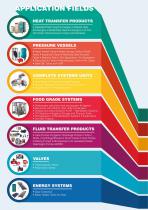
Thermoplastic Valves Plastomatic Valves
+++foj_catalog_detail_pageCatalogLinkLabel+++ Open the catalog to page 4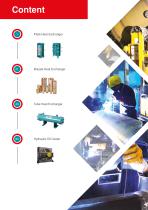
Plate Heat Exchanger Brazed Heat Exchanger Tube Heat Exchanger
+++foj_catalog_detail_pageCatalogLinkLabel+++ Open the catalog to page 5
PLATE HEAT EXCHANGER
+++foj_catalog_detail_pageCatalogLinkLabel+++ Open the catalog to page 7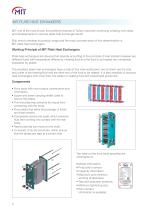
MIT PLATE HEAT EXHANGERS MIT, one of the most known and preferred brands of Turkey, has been continuing creating new ideas and developments to improve plate heat exchanger sector. Ekin aims to develop its product range and the most concrete proof of this determination is MIT plate heat exchangers. Working Principle of MIT Plate Heat Exchangers Plate heat exchangers are devices that operate according to the principle of heat transfer between two different fluids with temperature difference. Heating fluid and the fluid to be heated are completely separated by plates. The standard plate heat exchangers...
+++foj_catalog_detail_pageCatalogLinkLabel+++ Open the catalog to page 8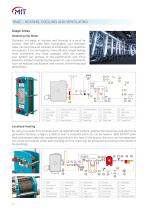
Usage Areas Obtaining Hot Water Domestic hot water in industry and housing is a must for comfort. With MIT plate heat exchangers, your domestic water can be produced centrally or individually. Compared to old systems, it is more hygienic, more efficient, longer lasting, more economical and more compact. With this system, your system can achieve its old performance with minor revisions, instead of replacing the system in case of problems such as residual calcification and excess chlorine-induced deformation. Localized Heating By using hot water from sources such as regional heat centers, geothermal...
+++foj_catalog_detail_pageCatalogLinkLabel+++ Open the catalog to page 10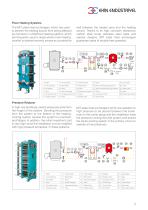
Floor Heating Systems The MIT plate heat exchangers, which are used to prevent the heating source from being affected by corrosion in underfloor heating systems, which are frequently used in areas where more heating comfort is desired recently serves as a protective wall between the heated area and the heating source. Thanks to its high corrosion resistance, carbon steel body stainless steel plate and special designs, MIT plate heat exchangers guarantee years of trouble-free operation. Pressure Reducer In high-rise buildings, severe pressures arise from the height of the system. Sending this...
+++foj_catalog_detail_pageCatalogLinkLabel+++ Open the catalog to page 11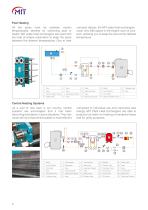
Pool Heating All the pools must be between certain temperatures, whether for swimming pool or health. MIT plate heat exchangers are used with the help of simple automation to keep the pools between the desired temperatures. Due to their compact design, the MIT plate heat exchangers cover very little space in the engine room of your pool, allowing you to keep the pool at the desired temperature. Central Heating Systems As a part of new laws in our country, central systems are encouraged and it has been becoming mandatory in some situations. The main cause oft his is that central system is more...
+++foj_catalog_detail_pageCatalogLinkLabel+++ Open the catalog to page 12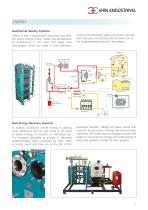
ENERGY Geothermal Heating Systems Turkey is rich in geothermal resources and after the recent energy crisis, Turkey has accelerated its investments in this field. MIT plate heat exchangers, which are used in both domestic heating and domestic water production, proved their success in the sector and became one of the most preferred brands in this regard. City Heating Residence Radiator Electricity Generation ‘Binary’ Circuit Hot Water Usage Area Dry Ice and CO2 Genaration Heat Exchanger Cooling Tower Heat Exchanger Flow Control Valve Domestic Water Thermal Treatment Heat Exchanger Thermal Plants...
+++foj_catalog_detail_pageCatalogLinkLabel+++ Open the catalog to page 13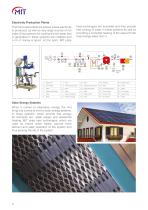
Electricity Production Plants Thermal power plants are places where electricity is produced, as well as very large sources of hot water. Extra systems for cooling the hot water that is generated in these systems are installed and a lot of money is spent. At this point, MIT plate heat exchangers are activated and they provide free cooling of water in these systems as well as providing a complete heating of the area with the heat energy taken from it. When it comes to alternative energy the first thing that comes to mind is solar energy systems. In these systems, which provide free energy for domestic...
+++foj_catalog_detail_pageCatalogLinkLabel+++ Open the catalog to page 14
Cooling of Rolled Oil The oil used in the rolling mills becomes hot as a result of the process and the lubricating properties are reduced; as a result, operating performance isreduced. MIT plate heat exchangers are used to keep the rolling oil at optimum temperature. With the cooling tower and the chiller circuit connected to the secondary circuit of the heat exchanger, and a simple automation, your rolling oil remains constant at the desired temperatures and your plant operates at maximum performance. Boron Oil Cooling Boron oil, one of the cornerstones of industry is the lifeblood especially...
+++foj_catalog_detail_pageCatalogLinkLabel+++ Open the catalog to page 15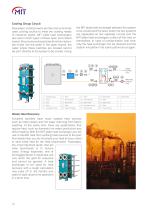
Cooling Group Circuit Nowadays, cooling towers are the most commonly used cooling source to meet the cooling needs of industrial plants. MIT plate heat exchangers are used in both types of these open and closed towers. Since some solid particles from the medium are mixed into the water in the open towers, the water where these particles are located cannot be sent. Directly to the system to be cooled. Using the MIT plate heat exchanger between the system to be cooled and the open tower, the two systems are separated as two separate circuits and the MIT plate heat exchangers collect all the risks...
+++foj_catalog_detail_pageCatalogLinkLabel+++ Open the catalog to page 16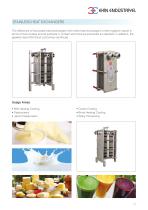
The difference of food plate heat exchangers from other heat exchangers is their hygienic nature in terms of their bodies and all surfaces in contact with food are produced as stainless. In addition, the gaskets have FDA (food conformity) certificate. Usage Areas • Milk Heating Cooling • Pasteurisers • JJuice Pasteurisers • Cream Cooling • Brine Heating Cooling • Whey Processing
+++foj_catalog_detail_pageCatalogLinkLabel+++ Open the catalog to page 17+++foj_catalog_stand_metaTitle+++ All Ekin Industrial catalogs and technical brochures
 General Product Catalogue
48 +++fo_common_label_pages+++ Pages
 CERTIFICATES CATALOGUE
82 +++fo_common_label_pages+++ Pages
 SEPARATORS PRODUCT CATALOGUE
22 +++fo_common_label_pages+++ Pages
 HYDRAULIC OIL COOLER PRODUCT CATALOGUE
24 +++fo_common_label_pages+++ Pages
 BRAZED HEAT EXCHANGER PRODUCT CATALOGUE
32 +++fo_common_label_pages+++ Pages
 TWIN SCREW HYGIENIC PUMPS PRODUCT CATALOGUE
24 +++fo_common_label_pages+++ Pages
 PRESSURE VESSELS GENERAL CATALOGUE
60 +++fo_common_label_pages+++ Pages
 BOILER -ACCUMULATION-BUFFER TANK PRODUCT CATALOGUE
28 +++fo_common_label_pages+++ Pages
 EXPANSION TANK PRODUCT CATALOGUE
20 +++fo_common_label_pages+++ Pages
 AIR TANK PRODUCT CATALOGUE
16 +++fo_common_label_pages+++ Pages
 STAINLESS PROCESS TANKS PRODUCT CATALOGUE
20 +++fo_common_label_pages+++ Pages
 FOOD GRADE SYSTEMS GENERAL CATALOGUE
48 +++fo_common_label_pages+++ Pages
 TUBE HEAT EXCHANGER PRODUCT CATALOGUE
50 +++fo_common_label_pages+++ Pages
 PLATE HEAT EXCHANGER PRODUCT CATALOGUE
30 +++fo_common_label_pages+++ Pages
 THERMOREGULATOR PRODUCT CATALOGUE
14 +++fo_common_label_pages+++ Pages
 COMPLETE SYSTEM UNITS GENERAL CATALOGUE
40 +++fo_common_label_pages+++ Pages
 SUBSTATIONS PRODUCT CATALOGUE
20 +++fo_common_label_pages+++ Pages
 HEAT STATIONS PRODUCT CATALOGUE
28 +++fo_common_label_pages+++ Pages
 ENERGY SYSTEMS GENERAL CATALOGUE
80 +++fo_common_label_pages+++ Pages
 SOLAR COLLECTORS PRODUCT CATALOGUE
20 +++fo_common_label_pages+++ Pages
 WATER HEATER TANKS FOR SOLAR PRODUCT CATALOGUE
18 +++fo_common_label_pages+++ Pages
 BOILER PRODUCT CATALOGUE
60 +++fo_common_label_pages+++ Pages
 FLUID TRANSFER GENERAL CATALOGUE
78 +++fo_common_label_pages+++ Pages
 AIR DIAPHRAGM PUMP PRODUCT CATALOGUE
20 +++fo_common_label_pages+++ Pages
 DINO DRUM PUMP PRODUCT CATALOGUE
18 +++fo_common_label_pages+++ Pages
 INJECTA DOSING PUMP PRODUCT CATALOGUE
18 +++fo_common_label_pages+++ Pages
 LOBE PUMP PRODUCT CATALOGUE
18 +++fo_common_label_pages+++ Pages
 NOVA ROTORS MONO PUMP PRODUCT CATALOGUE
20 +++fo_common_label_pages+++ Pages
 MIT BLOWER PODUCT CATALOGUE
16 +++fo_common_label_pages+++ Pages
 HYGIENIC CENTRIFUGAL PUMP PRODUCT CATALOGUE
16 +++fo_common_label_pages+++ Pages
 AIROO ROOTS BLOWER PRODUCT CATALOGUE
20 +++fo_common_label_pages+++ Pages
 VALVE GENERAL CATALOGUE
16 +++fo_common_label_pages+++ Pages
+++fo_stand_catalog_archivedcatalog+++ Archived catalogs
 GENERAL PRODUCT CATALOGUE 2021
262 +++fo_common_label_pages+++ Pages
 MAGNETO ACID PUMP PRODUCT CATALOGUE
34 +++fo_common_label_pages+++ Pages