Introduction: The document provides a comprehensive overview of ECOSAFE's product offerings, focusing on safety cabinets and ductless fume hoods for hazardous materials. It highlights the company's history, product specifications, compliance with standards, and the values guiding their manufacturing processes.
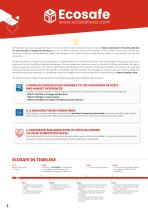
Company Timeline and Achievements: ECOSAFE has a rich history of innovation in safety cabinets, with milestones including the development of fire-resistant cabinets and participation in European standardization committees. Key achievements include the introduction of cabinets with varying fire resistance times and the expansion of manufacturing and logistics services.
Product Specifications: ECOSAFE offers a range of products including fire-resistant cabinets, ductless fume hoods, and cabinets for storing flammable, corrosive, and toxic materials. The products comply with standards such as EN 14470-1, NF X 15-211, and ISO 9001.
Manufacturing Values: The company emphasizes manufacturing in accordance with current standards, maintaining European partnerships, and cost management to offer competitive pricing. These principles are reflected in their product offerings.
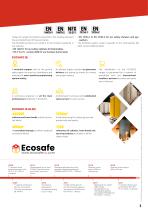
Product Range and Standards: ECOSAFE's products are designed to meet strict safety standards. Fire-resistant cabinets are available with resistance times of 30, 60, and 90 minutes, while other products comply with international standards like FM 6050.
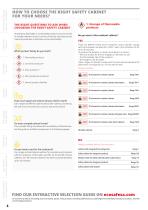
Choosing the Right Safety Cabinet: The document provides guidance on selecting appropriate safety cabinets based on product type (flammable, corrosive, toxic, etc.), space requirements, and the need for fire resistance. It emphasizes the importance of proper storage solutions to ensure safety.
Conclusion: ECOSAFE is committed to providing high-quality safety solutions for hazardous material storage, supported by a robust network of distributors and a focus on innovation and compliance with international standards.
Fire Resistant Cabinets: Cabinets comply with European standard EN 14470-1, offering fire resistance of 30 or 90 minutes, chosen based on fire brigade response time, product flammability, and budget. Other cabinets meet FM 6050 standard with a 10-minute fire test. Available ranges include multirisk cabinets, document cabinets, medicine cabinets, and more, with some designed for aggressive acids storage.
Non-Fire Resistant Cabinets: Includes modular multi-risk safety cabinets, under-cabinet safety cabinets, and safety
cabinets with drawers for dangerous products.
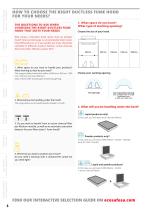
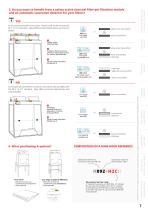
Fume Hoods: Class 1 and Class 2 fume hoods conform to NF X 15-211 standard. Options include active charcoal filters, HEPA filters, and various configurations for handling liquids, powders, or both. Selection depends on space, product type, and desired features like containment sumps and lighting.
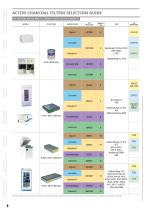
Filtration and Ventilation: Active charcoal filters are available for various applications, including corrosive, organic, and ammonia vapors. Filtration boxes and filtering ventilation cabinets are offered in different sizes and configurations.
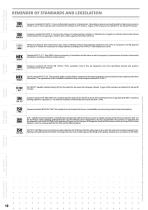
Standards and Legislation: Key standards include EN 14470-1 for flammable products, EN 14470-2 for gas cylinders, FM approval for fire resistance, NF X 15-211 for fume hoods, and others for first aid equipment and fire blankets. The GHS system is used for chemical classification and labeling.
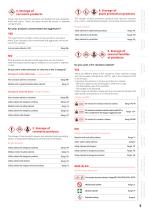
Standards and Specifications: - ISO 7010 / ISO 3864: These standards dictate the design and use of safety signs for accident prevention and hazard information.
- NF X 15-211: This standard is crucial for ductless fume hoods, ensuring enhanced safety through rigorous testing and classification based on filtration capabilities.
- ISO 9001: Labopur® fume hoods are manufactured according to this quality standard, ensuring reliability and efficiency.
Safety Recommendations: - Store chemicals in appropriate cabinets to prevent reactions between incompatible products.
- Use mechanical ventilation to avoid vapor containment and ensure air renewal.
- Consult safety officers or chemical suppliers before storing products.
Equipment Features: - Protective Caps and Transparent Walls: Enhance safety and visibility during operations.
- Filtralarme 5 Interface: Monitors airflow and filter saturation, providing alerts for maintenance.
- Optional Equipment: Includes chemical sensors and specialized worktops for enhanced protection.
Specifications: The fume hoods are constructed from 15/10th steel with epoxy paint, reinforced glass walls, and are available in various sizes (600 mm, 900 mm, 1200 mm, 1500 mm). They feature a touch screen interface, automatic air flow regulation, and an hour meter. The hoods are equipped with active charcoal filters for different types of vapors and optional HEPA filters.
Procedures: The document outlines the use of a manual pump and reagent tubes to check the saturation of active charcoal filters, which is crucial for maintaining air quality and safety. It also describes the process for cleaning the containment sump in case of spills.
Standards and Certifications: The fume hoods comply with NF X 15-211 standards and have CE certification. They are designed to contain and eliminate vapors and powders effectively.
Recommendations: It is recommended to use the appropriate active charcoal filters based on the type of vapors handled. The document also suggests using a containment sump with a melamine or laminated glass worktop for handling acids.
Key Features: The hoods offer automatic filter saturation detection, ergonomic design for ease of use, and energy efficiency by recirculating air. They are delivered ready to use, requiring only electrical connection, and do not need additional ventilation or civil engineering solutions.
Optional Accessories: Options include LED lighting, various types of worktops, and tables for different operational needs. The document also lists specific part numbers and configurations for different models and sizes.
Specifications: The fume hoods are designed to contain and eliminate vapors and powders through molecular or HEPA filters. They are constructed from 15/10th steel with epoxy paint and reinforced glass walls. The average air speed is 0.5 m/s, with a voltage requirement of 220-240 volts and a power consumption of 35 W per ventilation column.
Standard Equipment: Each unit includes a touch screen, automatic air flow control, hour meter, sampling port, and reinforced transparent walls. The FILTRALARME 5 interface manages operational aspects, and the system supports multiple languages.
Options: Optional features include removable containment sumps, LED lighting, manual pumps for filter saturation checks, and reagent tubes for specific applications. Various worktops and tables are also available as additional accessories.
Advantages: The fume hoods offer optimal user protection, time and energy savings, and comfortable usage. They are CE certified and approved to NF X 15-211 standards, ensuring reliable containment and filtration of hazardous substances.
Technical Characteristics: The units are equipped with quiet electric fans, a control window for filter checks, and easy filter replacement mechanisms. They are designed for both liquid and powder applications, with specific filters required for each use case.
Additional Accessories: A range of tables, containment sumps, and lighting options are available to enhance the functionality and safety of the fume hoods.
Specifications: The document lists several ranges of equipment, such as the RANGE H+ series, with varying dimensions and weights. Each model is designed for specific uses, such as handling liquids or powders, and requires specific filters like active charcoal filters for organic vapors or HEPA filters for powder handling.
Filter Options: For liquid use, active charcoal filters are mandatory, with options for organic, corrosive, formaldehyde, and ammonia vapors. For powder applications, HEPA filters and holders are required. The document specifies that all filters must be of the same type for a given application.
Additional Accessories: The document details optional accessories such as containment sumps with different worktops, integrated lighting, and various types of tables and trolleys. These accessories enhance the functionality and safety of the equipment.
Construction and Design: The equipment is constructed from 15/10th steel with a white epoxy paint finish, ensuring chemical resistance. Transparent walls and ergonomic designs are emphasized for optimal lighting and safe handling.
Ventilation and Safety Features: Fume hoods are designed to connect to external ventilation systems for the safe discharge of toxic fumes. The document highlights the importance of using a ventilation box and connection kits for proper installation.
Compliance and Standards: The document notes that no model complies with the NF X 15-211 standard as of May 2009, emphasizing the need for proper installation and use according to guidelines.
Manufacturer's Rights: ECOSAFE reserves the right to discontinue or change specifications or designs at any time without notice or obligation.
Filter Options and Accessories: Various filters are available for different vapors, including formaldehyde and ammonia. Depending on the hood's motor and class, multiple active charcoal filters may be required. Additional accessories include a containment sump and optional integrated lighting.
Safety Cabinet/Table: Constructed from steel with epoxy paint, these cabinets feature automatic locking doors, standardized warning labels, adjustable shelves, and ventilation holes. They are designed to connect to hoods using a specific kit.
Vertical Laminar Flow Hoods: These hoods provide product protection with a maintained airflow of 0.40 m/s. They comply with several European directives and standards, offering advantages like low noise, easy cleaning, and efficient filter replacement. Technical features include a microprocessor control system, HEPA filters, and integrated lighting.
Microbiological Safety Cabinets - Class II: Designed for handling hazardous microorganisms, these cabinets maintain an airflow of 0.45 m/s and comply with European directives. They offer features like ergonomic design, easy filter replacement, and multiple alarms for safety.
Mini-Hoods with Air Recirculation: These hoods use Labopur® technology for vapor containment and elimination. They are easy to place and operate, with features like an active charcoal filter and built-in containment sump.
Filtering Ventilation Cabinets: These cabinets are designed for hazardous material storage, offering separate compartments for different product types. They feature active charcoal filters and adjustable shelves, with options for ventilation systems.
Compliance: - Active charcoal filters and filtration systems are tested to NF X 15-211 standards (May 2009).
- Standardized warning labels comply with ISO 3864, NF X08.003, and European directive 92/58/EEC.
- Conforms to the public health code (articles R5132-66 and R5132-68) and CE specifications for electric fans.
Advantages: - Utilizes Labopur® technology and is delivered ready to use.
- Self-contained cabinets eliminate hazardous fumes without requiring connections or civil engineering solutions.
- Features include perforated shelves, light indicators for ventilation, and easy filter replacement.
- High-efficiency active charcoal filters are specialized and tested to NF X 15-211 standards.
Technical Characteristics: - Constructed with 15/10th steel and double-walled doors, with large polycarbonate glass doors and key locks.
- Ventilation system includes a silent fan with a flow rate of 202 m3/hour and a sound level of 49 dB(A).
- Options include additional shelves and active charcoal filters, with a requirement to change filters at least once a year.
Options and Accessories: - Additional shelves and active charcoal filters are available, with specific models compatible with different filter types.
- Filter saturation can be monitored using reactive tubes and a manual pump.
- Absorbent mats and containment sumps are available for added safety.
Models and Specifications: - Various models are available with different dimensions, storage capacities, and weights.
- Active charcoal filters are available for different types of vapors, including organic and formaldehyde.
- HEPA filter holders and powder filters are also available for specific applications.
Specifications: The document provides detailed specifications for various filtering ventilation cabinets and accessories. The cabinets are designed for different storage capacities and containment needs, with dimensions and weights specified for each model. Active charcoal filters are available for different types of vapors, including corrosive, organic, and formaldehyde vapors. Additional accessories include manual pumps, reagent tubes, and containment shelves.
Procedures: The document outlines the operating process for labopur® recirculating air boxes, which use an electric fan to extract and purify harmful vapors through active charcoal filters. The process is designed to be environmentally friendly, releasing purified air into the atmosphere.
Compliance and Standards: The filtration systems are tested and approved to NF X 15-211 standards, and the electrical fans conform to CE specifications. The document emphasizes the importance of changing filters at least once a year to maintain compliance and efficiency.
Recommendations: Recommendations for safe storage of lithium-ion batteries are provided, highlighting the risks associated with thermal runaway, full discharge, and mechanical damage. Storage guidelines vary based on battery capacity, with specific instructions for low, medium, and high-capacity batteries.
Key Data from Tables: The tables in the document provide dimensions, storage capacities, and weights for various cabinets and filters. For example, the AF34 cabinet has an external dimension of 2210 x 605 x 550 mm and a storage capacity of 130 liters. Active charcoal filters like the CORG51 are specified for their adsorption capabilities and recommended replacement intervals.
Critical Information: The document stresses the importance of using the correct filters for specific applications and ensuring regular maintenance to prevent safety hazards. It also highlights the potential dangers of lithium-ion batteries and the need for proper storage solutions to mitigate risks.
Introduction: This document provides detailed specifications and recommendations for the storage of lithium-ion batteries, particularly focusing on safety cabinets designed to mitigate risks associated with thermal runaway and fire hazards.
Specifications: The safety cabinets are constructed with double-walled steel and thermal insulation to provide fire resistance for up to 105 minutes, as per the EN14470-1 European standard. They are equipped with perforated shelves capable of supporting 100 kg per level and containment sumps to manage electrolyte leaks.
Safety Features: Optional safety features include internal fire extinguishers, visual and audible alarms, smoke detectors, and control boxes. Cabinets are designed to prevent fire spread through localized sprinkler systems and confined storage environments.
Usage Recommendations: Four main usage scenarios are outlined: simple storage, storage with charging capabilities, storage with advanced protection systems, and combined storage and charging with advanced protection. Each scenario includes specific equipment configurations to enhance safety.
Compliance and Construction: The cabinets comply with ISO 3864, ISO 7010, and European Directive 92/58/EEC standards. They feature steel construction with epoxy paint, thermal insulation, and standardized warning labels.
Ventilation: All models include ventilation holes for connection to external systems, with forced ventilation recommended to prevent heat build-up and vapor stagnation.
Accessories: Available accessories include additional shelves, containment sumps, electrical outlet racks, and security systems. These can be tailored to specific storage needs and safety requirements.
Conclusion: The document emphasizes the importance of tailored safety measures for lithium-ion battery storage, highlighting the need for robust construction, compliance with safety standards, and the availability of customizable safety features.
Specifications and Features: The document outlines the specifications of safety cabinets designed for storing and recharging lithium-ion batteries. These cabinets offer exceptional fire resistance, with a 105-minute rating under European tests. Optional safety features include internal fire extinguishers and comprehensive safety sets with alarms and smoke detectors.
Usage Types: - Simple Battery Storage: Equipped with perforated shelves and a containment sump.
- Storage and Charging: Includes electrical outlet racks.
- Advanced Protection: Offers additional safety systems like fire extinguishers and alarms.
- Combined Storage and Charging with Advanced Protection: Integrates all features for maximum safety.
Safety and Compliance: Polluting liquids must be stored in tanks with specific retention capacities. The containment sump must be tight and resistant to the materials stored. Cabinets should not be moved during a fire except by professionals.
Risks and Safety Recommendations for Lithium-Ion Batteries: Li-ion batteries pose fire risks due to thermal runaway, full discharge, or mechanical damage. Safe storage recommendations vary by battery capacity, with larger batteries requiring more stringent safety measures.
Standards and Regulations: The document references European standards EN 14470-1 and EN 14470-2 for the storage of flammable products and gas cylinders, respectively. It also mentions FM 6050 approval for fire protection equipment and specific regulations for storing polluting liquids.
Main Requirements: - Protection Against Fire: Cabinets must prevent contents from contributing to fire risk for at least 15 minutes. Four classes are defined based on fire resistance: 15, 30, 60, and 90 minutes.
- Fire Tests: Cabinets are tested according to EN 14470-1 (2004) or EN 14470-2 (2006) by a COFRAC-accredited laboratory.
- Containment Volume: Spill containment must hold at least 110% of the largest container's volume or 10% of total stored volume.
- Construction: Self-closing doors, identical wall construction, and fire resistance according to ISO 834-1 and EN 1363-1 are required.
- Labelling: Cabinets must have standardized warning labels per ISO 3864, indicating flammable materials, fire resistance, and usage instructions.
- Ventilation: Cabinets must have self-closing air inlets and outlets for connection to a ventilation system, ensuring air exchange at least 10 times the cabinet volume per hour.
Compliance and Advantages: - Cabinets comply with EN 14470-1 and EN 1363-1 standards.
- Fire resistance of 105 minutes according to ISO 834.
- Ergonomic design with full-height handles and easy movement features.
Passive and Active Safety Features: - Double-wall construction with thermal insulation.
- Removable containment sump and standardized labeling.
- Ventilation holes and thermo-expanding door seals.
- Self-closing doors with key locks and automatic closing systems.
Options and Accessories: - Additional shelves, perforated cover plates, and ventilation boxes.
- Refrigeration systems for temperature control.
- Colored doors and digital code locks available.
Choosing the Right Cabinet: Cabinets are recommended based on the flammability level of stored products, with specific ranges for different flash points.
Pre-equipped Cabinets and Accessories: Various models with different storage capacities and configurations are available, including under-bench and tall cabinets with drawers. Accessories include retention shelves, containment sumps, and perforated cover plates.
Fire Safety Features: The document outlines the fire safety features of various safety cabinets, including automatic door closing at 47°C and intumescent systems for isolating contents during a fire. The cabinets are designed with double-wall construction and thermal insulation to limit thermal bridges, ensuring fire resistance for up to 105 minutes according to ISO 834 standards.
Liquid Waste Recovery System: The system includes a roof opening for waste pipe passage, a funnel with a removable grid, and jerrycans with a 10-liter capacity. An electronic level sensor and audible/visual alarms are included for monitoring.
Compliance and Standards: The cabinets comply with EN 14470-1, EN 1363-1, and FM 6050 standards, featuring standardized warning labels as per ISO 3864, ISO 7010, and Directive 92/58/EEC.
Passive Safety Features: These include double-wall construction with outer steel walls and internal melamine walls, heat-expanding door seals, and adjustable retention shelves. The cabinets also have ventilation ducts with thermo-fuse systems and non-slip mats for marine environments.
Active Safety Features: Ventilation holes with a 100 mm diameter outlet are provided for possible connection. The cabinets feature self-closing doors with a hold-open system that automatically closes at 47°C.
Options and Accessories: Additional shelves, perforated cover plates, sliding drawers, and ventilation or filtration boxes are available. Cabinets can be equipped with digital code locks and are available in various colors.
Product Range and Specifications: The document lists various cabinet models with specifications such as dimensions, storage capacity, and weight. Accessories like retention shelves, containment sumps, and perforated cover plates are detailed with their dimensions and weights.
Overview: This document provides detailed specifications and compliance information for various safety cabinets designed for storing flammable products, gas cylinders, and drums. The cabinets are tested and approved according to European and international standards, ensuring fire resistance and safety in hazardous environments.
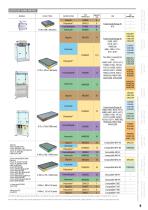
Specifications: - Dimensions and Capacity: The document lists multiple cabinet models with varying dimensions, internal capacities, and weights. For example, the 3036UE model is a tall cabinet with external dimensions of 1731 x 864 x 864 mm and a weight of 228 kg.
- Containment Accessories: Various containment shelves and sumps are available for different cabinet models, each with specific dimensions and retention capacities.
Compliance: - Cabinets are tested and approved to standards such as EN 14470-1, EN 1363-1, and FM 6050, ensuring they meet fire resistance and safety requirements.
- Standardized warning labels comply with ISO 3864, ISO 7010, and Directive 92/58/EEC.
Advantages: - Fire resistance of 30 to 90 minutes, depending on the model, according to the ISO 834 standard curve.
- Self-closing doors with thermofuses that activate at 47°C, ensuring automatic closure in case of fire.
- Ventilation systems with thermofusible components to isolate contents during a fire.
Safety Features: - Passive Safety: Insulated panel construction offers high resistance to chemical attacks. Cabinets feature standardized symbols and labeling for easy identification.
- Active Safety: Includes ventilation holes for connection, thermo-expanding door seals, and a non-sparking locking system.
Options: - Additional drawers, shelves, and containment sumps are available to enhance storage capacity and safety.
- Ventilation or filtration boxes can be added for improved air quality and safety.
Conclusion: The document outlines a comprehensive range of safety cabinets designed to store hazardous materials safely. Each model is equipped with features to ensure compliance with safety standards, offering both passive and active safety measures to protect against fire and chemical exposure.
Overview: This document provides detailed specifications and guidelines for safety cabinets designed to store flammable and explosive products. It includes information on various cabinet models, their compliance with safety standards, and recommendations for use in different sectors.
Specifications: The document lists several cabinet models with their dimensions, weight, storage capacity, and specific features such as automatic extinguishing systems and containment sumps. For example, the AMS series includes models like AMS10 and AMS200, each with specific dimensions and storage capacities.
Safety Features: The cabinets are designed with both passive and active safety features. Passive features include double-walled steel construction, epoxy paint, and containment sumps. Active features include CO2 extinguishers, automatic door closing mechanisms, and ventilation systems with flame arrestors.
Standardization and Compliance: The cabinets comply with various international standards such as CNPP FSE 98-006, FM 6050, and NF EN ISO 1182. They are also compliant with NFPA, OSHA, and Factory Mutual specifications, ensuring high levels of fire resistance and safety.
Recommendations: The document advises selecting cabinets based on the flammability level of stored products and the specific sector of activity. It also recommends connecting cabinets to a forced ventilation system to enhance safety and longevity.
Options and Accessories: Additional shelves, absorbent mats, and ventilation or filtration boxes are available as options. Some models can be equipped with labopur® technology for enhanced filtration and safety.
Conclusion: The document emphasizes the importance of proper storage solutions for flammable products to prevent fire hazards and ensure safety in various environments such as laboratories and industrial settings.
Specifications and Accessories: This document outlines various safety equipment and accessories, including PVC and steel containment sumps, thermo-regulated locks, and recirculating air boxes. Specific models and their dimensions are listed, such as the EP03 and EP06 PVC over-shelves and GL03 and GL06 steel containment sumps.
Labopur® Recirculating Air Box: The Labopur® technology is designed to extract harmful vapors from cabinets using an electric fan and active charcoal filters. It complies with NF X 15-211 standards and CE specifications. Key features include adaptability to any cabinet, easy filter replacement, and an indicator light for system operation.
Safety Cabinets for Corrosive Products: Corrosive products must be stored in safety cabinets to prevent leakage or breakage. Cabinets are available in steel or high-density polyethylene for different levels of corrosiveness. Forced ventilation is recommended to extend the service life of
metal cabinets.
Compliance and Standards: The document references several standards, including FM, NFPA, OSHA, and NF X 15-211, ensuring the safety and compliance of the equipment. It emphasizes the importance of separating incompatible chemicals and using containment sumps for polluting products.
Ventilation and Filtration: Ventilation or filtration boxes are recommended to optimize cabinet security by adsorbing vapors and renewing air. Options include active charcoal filters and connection kits for easy cabinet integration.
Corrosion Resistant Safety Cabinets: These cabinets are designed for acids and bases, featuring cellular PVC construction for resistance to corrosive vapors. They include compartmentalized storage for separating acids and bases, with options for additional shelves and ventilation systems.
Specifications and Compliance: The document outlines specifications for various safety cabinets designed for storing hazardous materials such as acids, bases, toxic, and flammable products. Compliance with ISO 3864, ISO 7010, NF X 08.003 standards, and European directive 92/58/EEC is emphasized. The cabinets are designed to meet the recommendations of the I.N.R.S. and adhere to public health codes for storing toxic and incompatible products separately.
Product Features and Advantages: The cabinets are constructed from melamine for resistance to vapors and corrosive liquids, with compartmentalized designs for separating acids and bases. They include passive safety features like standardized symbols and sliding shelves with stoppers. Active safety features include ventilation holes and lockable doors. The labopur® technology offers air recirculation with active charcoal filters tested to NF X 15-211 standards.
Safety and Storage Recommendations: For safety, hazardous products must be stored in specific, locked locations. The document provides guidance on storing incompatible products separately and highlights the need for containment areas for polluting products. It also recommends specific cabinet series for highly corrosive products.
Technical Characteristics: The cabinets feature steel construction with epoxy paint, integrated electric fans, and adjustable shelves. Options include additional shelves, PVC retention shelves, and pull-out drawers. The labopur® air box offers adaptable solutions for any cabinet with easy filter replacement and efficiency monitoring.
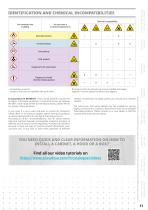
Product Range and Options: The document lists various cabinet models with dimensions, storage capacities, and load capacities. Options for customization include additional shelves, containment sumps, and absorbent mats. The document also provides a simplified diagram of chemical incompatibilities to guide safe storage practices.
Overview: This document provides detailed specifications and safety features for various safety cabinets designed for storing pesticides and other hazardous materials. It includes information on different models, their dimensions, capacities, safety features, compliance standards, and optional accessories.
Specifications: - Models include APK153, APK303, AC150, AC300, and others, each with specific external and internal dimensions, containment capacities, and load capacities per shelf.
- Cabinets are constructed from steel with epoxy paint finishes, available in various colors depending on the model.
- Containment sumps and adjustable shelves are standard features, with additional options for perforated cover plates and absorbent mats.
Safety Features: - Passive Safety: Includes robust steel construction, standardized labeling for toxic products, and adjustable containment sumps.
- Active Safety: Features ventilation holes, hinged doors with key locks, and options for forced ventilation systems.
Compliance: - Cabinets comply with various standards such as NF EN ISO 1182, ISO 3864, ISO 7010, and European Directive 92/58/EEC.
- Specific models are designed to meet the recommendations of the I.N.R.S. and articles of the Public Health Code.
Advantages: - Provides safe and compliant storage solutions for hazardous products.
- Economical options available for different storage needs.
- Models are designed for easy integration and can be connected for storing different types of chemicals together.
Recommendations: - Some models are not suitable for highly corrosive products and should be connected to a forced ventilation system for enhanced durability.
- Users are advised to refer to chemical incompatibility tables to ensure proper cabinet configuration.
Options and Accessories: - Additional shelves, containment sumps, and absorbent mats are available for customization.
- Ventilation systems and control boxes can be integrated for enhanced safety.
Overview: This document provides detailed specifications and compliance information for various types of safety cabinets designed for storing hazardous materials. It includes modular multirisk security cabinets, 30-minute multirisk cabinets, and 105-minute fire-resistant cabinets, along with their compliance standards, advantages, safety features, and optional accessories.
Specifications: - Cabinets are available in various configurations, including single and double-door models, with multiple compartments and varying storage capacities.
- Load capacities per shelf range from 30 kg to 50 kg, depending on the model.
- Dimensions and weights vary across models, with detailed measurements provided for each type.
Compliance: - All cabinets comply with relevant safety standards, including EN 14470-1, EN 1363-1, ISO 3864, ISO 7010, and European Directive 92/58/EEC.
- They adhere to articles R.5132-66 and R.5132-68 of the Public Health Code and recommendations from the I.N.R.S.
Advantages: - Fire resistance is tested and approved for 30 or 105 minutes, depending on the model.
- Cabinets feature self-closing doors with thermo-fuses and are designed for easy movement by pallet truck.
- They offer modular solutions for the separation and storage of hazardous products by family.
Safety Features: - Passive safety includes steel construction, thermal insulation, and standardized warning labels.
- Active safety features include ventilation systems, self-closing mechanisms, and key locks with anti-spark features.
Options and Accessories: - Additional shelves, containment sumps, and absorbent mats are available as options.
- Ventilation or filtration boxes and PVC covers can be added for enhanced safety and functionality.
Key Models: - AB56: Ventilated under-bench cabinet with electric fan, not suitable for flammable products.
- 3035M22: Tall cabinet with multiple compartments, offering significant storage and containment capacity.
- 795+M11: Tall cabinet with high fire resistance and multiple compartments for hazardous material storage.
Specifications: The document outlines various safety cabinets designed for storing hazardous materials, including flammable, corrosive, toxic, and infectious waste. Each cabinet type is described with its dimensions, storage capacity, and specific features such as ventilation systems, locking mechanisms, and construction materials. The cabinets comply with several standards, including EN 14470-1 and ISO 3864.
Procedures: Instructions are provided for the safe storage and handling of hazardous materials. This includes the use of retention shelves and containment sumps to prevent spills, as well as the importance of separating incompatible chemicals. The document also emphasizes the need for proper ventilation and the use of standardized warning labels.
Standards and Compliance: The cabinets meet various international standards and directives, such as EN 14470-1 for fire resistance and ISO 7010 for safety labeling. Compliance with public health codes and environmental regulations is also highlighted, ensuring safe storage and disposal of hazardous waste.
Recommendations: Recommendations include using cabinets with appropriate fire resistance ratings, ensuring proper ventilation, and adhering to chemical compatibility guidelines. The document advises on the use of additional accessories like perforated cover plates and connection kits for enhanced safety.
Key Data from Tables and Diagrams: The document includes detailed tables listing cabinet models, dimensions, storage capacities, and compliance features. It also provides diagrams illustrating the ventilation systems and optional accessories available for each cabinet type.
Critical Information: Key requirements include ensuring that all stored chemicals are above a spill containment area, adhering to specific retention capacities, and using UN-approved containers for transporting hazardous materials. The document stresses the importance of maintaining compliance with safety regulations to prevent accidents and environmental contamination.
Safety Cans for Flammables: - Specifications: Available in capacities of 1, 2, and 5 liters with polished precision spouts or matte threaded caps. Dimensions and weights vary by model.
- Compliance: TÜV regulations and UN approval for certain models.
- Advantages: Safe handling of flammable liquids, long service life, chemical resistance, and compatibility with all transport means.
- Technical Features: Explosion protection, dosing spout, automatic closure, stainless steel construction, and PTFE seals.
Safety Canisters: - Specifications: Available in capacities from 5 to 50 liters with features like metering devices, precision spouts, and separate ventilation.
- Advantages: Maximizes storage space, self-closing taps, stackable models, and secure storage of large quantities.
- Technical Features: Stainless steel handle, PTFE seals, and level gauges in PFA.
Safety Bottles and Dual-Purpose Containers: - Advantages: No leakage, automatic closing, precise dosing, and robust construction.
- Technical Characteristics: Aluminium body, plastic valve, nitrile-rubber sealing ring, and options for VITON or EPDM O-rings.
- Compliance: UN approved.
Fire Protection Equipment: - Safe for Documents: Equipped with thermal insulators, compliant with NT FIRE 017 and ISO 1182 standards.
- Fire Blankets: Compliant with EN 1869-1997, made of non-combustible fibreglass, and resistant to over 900°C.
- Foot Operated Oily Waste Bins: Compliant with FM, UL, and TÜV specifications, featuring easy foot pedal opening and natural ventilation.
Fireproof Ashtrays: - Compliance: FM and ADA compliant.
- Benefits: Designed to reduce fire risk, low maintenance, and high impact resistance.
- Technical Characteristics: Fire retardant HDPE construction, galvanized steel collection bucket, and moulded fasteners for floor fixing.
Secure Cabinets for Mobile Phones: - Specifications: Available with 20 or 35 lockers, designed for secure storage in educational settings.
Smartphone Storage Cabinets: - Designed for storing smartphones in individual lockers, available in configurations of 20 or 35 lockers.
- Each locker comes with two keys and a separate lock.
- Compliance with Article L. 511-5, prohibiting mobile phone use in schools unless expressly authorized.
- Advantages include wall-mounting capability, individual locks, label holders, and reinforced doors with sound absorbers.
- Technical features include robust steel construction with grey epoxy paint and blue hinged doors.
Document Safes - Range AD4: - Fire retardant and burglar-proof cabinets with thermal insulation and a 2-point locking system.
- Compliant with EN ISO 1182 for non-flammable insulating boards.
- Features include double hinged doors, chrome-plated handles, and adjustable shelves with a load capacity of 75 kg.
- Options for additional shelves and hanging file systems.
Document Safes - Range AD3: - Fire-resistant cabinets with thermal insulation and burglary resistance, featuring a 5-point door locking system.
- Compliant with NF EN ISO 1182 for non-flammable insulating boards.
- Constructed with double-walled steel and epoxy paint, with adjustable shelves supporting 70 kg.
- Options for additional shelves and hanging file systems.
Fireproof Cabinets for Paper Documents: - Provides 30 minutes to 1.5 hours of fire resistance, tested to NT Fire 017 standards.
- Features include anti-spark locks, adjustable shelves, and ergonomic handles for easy movement.
- Options for additional shelves, hanging file systems, and numeric code locks.
Labopur® Recirculating Air Box: - Technology for extracting and purifying harmful vapors using active charcoal filters.
- Compliant with NF X 15-211 for adsorption capacity and CE specifications for the electrical fan.
- Advantages include adaptability to any cabinet, indicator lights, and easy filter replacement.
- Technical features include a silent electric fan and options for various active charcoal filters.
Main Information: Safety showers and
eyewash stations are crucial in environments with risks of exposure to hazardous substances. They are recommended for industries such as chemical, pharmaceutical, food, automotive, and various laboratories, as well as educational institutions, hospitals, and water treatment facilities. These installations should be near danger zones, easily accessible, and clearly marked.
Regulations: According to Article R. 4224-14 of the Labour Code, workplaces must have appropriate first aid equipment. ISO 3864 and European directive 92/58/EEC govern the signage of such equipment. French standard NF X 15-221 and European standard EN 15154-1 outline requirements for body showers, while EN 15154-2 applies to eyewash stations. Key requirements include specific water flow rates, duration, and installation guidelines.
Installation Recommendations: First aid equipment should be installed within 10 seconds or 30 meters of danger zones, be free of obstacles, and clearly identified. Regular operation and maintenance are advised, including weekly checks for water system-connected equipment. Thermostatic mixing valves and heating cables are recommended to maintain appropriate water temperatures and prevent freezing.
Product Specifications: The document provides detailed specifications for various models of safety showers and eyewash stations, including flow rates, materials, and compliance with standards EN 15154-1, EN 15154-2, and NF X 15-221. It also includes installation and operational guidelines for different environments, such as indoor, outdoor, wall-mounted, and pedestal-mounted setups.
Insurance Obligations: - Customer Obligations: The customer must have a comprehensive insurance policy covering liability, fire, and electrical damage.
- Provider Obligations: The provider must have an insurance policy covering civil liability related to the contract.
End of Contract: - For sales contracts, the contract ends when the sale is completed and paid.
- For maintenance contracts, a final inventory is conducted at the customer's expense if not renewed.
Contract Interpretation and Litigation: - The contract is governed by French law.
- Parties should seek an amicable resolution before litigation.
- The competent court is the one at the company's head office.
Privacy Policy: - ECOSAFE handles personal data according to French and European laws.
- Data collected includes name, address, contact details, and company information.
- Data is used for service provision and contract execution.
- Data may be shared with partners for product delivery.
- Data retention is for the necessary duration, up to 10 years.
- Users have rights to access, rectify, delete, and oppose data processing.
Intellectual Property: - All content in ECOSAFE's documentation is owned by ECOSAFE.
- Trademarks and logos are registered and owned by their respective owners.
Overview: The document provides information on various types of cabinets and safety equipment offered by ECOSAFE, including lithium-ion, flammable, corrosive, toxic cabinets, and multirisk containment solutions. It also mentions anti-fire equipment, showers, and first-aid equipment.
Specifications: The document highlights the specifications of the RANGE H+ ductless fume hood labopur®, which complies with the NF X 15-211 standard (May 2009, Class 1 & 2). These fume hoods are designed for handling liquid chemicals using activated carbon filters and powders using HEPA filters.
Class Differences: - Class 1: Suitable for both occasional and frequent handling. Equipped with a safety active charcoal filter and a second safety reserve filter. Requires an automatic filter saturation detector.
- Class 2: Used for occasional handling of small quantities. Equipped with a safety active charcoal filter. Requires manual filter saturation testing every 60 hours of use.
Trade Fairs: ECOSAFE participated in several trade fairs, including events in Korea, Paris, Frankfurt, Lyon, and Shanghai, between 2021 and 2022.
Contact Information: ECOSAFE has offices in Switzerland and Hong Kong, with contact details provided for both locations.
Disclaimer: ECOSAFE reserves the right to discontinue or change specifications or designs at any time without notice or obligations.