

- Company
- Products
- Catalogs
- News & Trends
- Exhibitions
ANALYTICAL AND PREPARATIVE CHROMATOGRAPHY COLUMNS
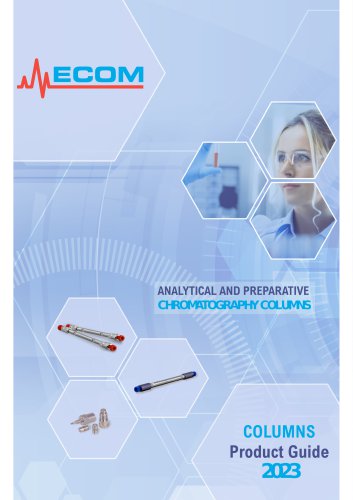
ANALYTICAL AND PREPARATIVE CHROMATOGRAPHY COLUMNS
This document serves as a product guide for analytical and preparative chromatography columns, highlighting the latest innovations and applications in chromatography for 2023. It introduces new products and enhancements in the ARION® and ASTRA® column ranges, as well as sample preparation kits.
- ARION® BIO and Biphenyl: New SAX and SCX columns for ion-exchange chromatography and expanded reversed phases with Biphenyl for diverse selectivities.
- ARION® Preparative Guard Cartridges: Protection for 21.2 mm ID columns.
- ASTRA® 2 µm HPLC Columns: High-end capped C18 phase and unique DM phase with dual modification, including C18-AQ for aqueous mobile phases.
- SpeExtra™ SPE Columns: New range for sample preparation, suitable for environmental and toxicology applications.
- MetAmino™ Sample Preparation Kit: Developed for LC/MS or GC/MS analysis in collaboration with Biology Centre CAS.
The document details the selectivity of HPLC columns, which is crucial for separating analytes. Selectivity is influenced by the structure, metal content, and chemical bonding of the silica gel. Tanaka plots are used for comparing different phases to select the best HPLC columns.
ARION® columns are highlighted for their strict quality control, narrow particle size distribution, and high reproducibility. They offer good stability at higher temperatures and are characterized by their spherical particle shape, ensuring high separation power.
The guide provides detailed applications of ARION® columns in food analysis, including monitoring xanthine derivatives in chocolate, analyzing non-nutritive sweeteners, detecting preservatives, analyzing organic acids, and monitoring vitamins A and E.
The document emphasizes the advanced technology and applications of ARION® and ASTRA® chromatography columns, highlighting their importance in various analytical and preparative processes, particularly in the food industry.
Denatonium benzoate is analyzed using an ARION® Plus C18 column with isocratic elution and UV detection at 230 nm. The mobile phase consists of acetonitrile and 0.5% H3PO4 in water.
HMF is analyzed in food products using an ARION® Plus C18 column with methanol and water as the mobile phase. Detection is at 285 nm.
This analysis uses an ARION® NH2 column with acetonitrile and water, analyzing fructose, sorbitol, glucose, sucrose, maltose, and lactose.
Chlorophylls and carotenoids are quantified using an ARION® C8 column with a methanol, acetonitrile, and pyridine mobile phase. Detection is at 450 nm.
Alpha-bitter acids in hops are analyzed using an ARION® Plus C18 column with methanol, water, and phosphoric acid. Detection is at 314 nm.
Aflatoxins are analyzed using an ARION® Plus C18 column with a gradient elution of ammonium formate and methanol, including specific MRM transitions for each aflatoxin.
Vitamin D forms are separated using an ARION® Polar C18 column with a gradient of water and methanol. Detection is at 280 nm.
Various drugs, including penicillin, ibuprofen, and ipidacrine, are analyzed using ARION® Plus C18 columns with different mobile phases and detection methods.
Tiamulin and trimethoprim are analyzed using ARION® Plus C18 columns with proprietary mobile phases.
Furans in transformer oil are analyzed using an ARION® Plus C18 column with ammonium acetate and acetonitrile. Detection is at 220 and 275 nm.
DNPH derivatives are analyzed using an ARION® Plus C18 column with methanol and water. Detection is at 360 nm.
The document provides detailed specifications for ARION® and ASTRA® HPLC columns, including particle sizes, pore sizes, and surface areas. It highlights the carbon load, pH stability, and endcapping features of various phases.
It outlines procedures for using ARION® BIO columns for protein, polypeptide, and peptide characterization and purification, including gradient elution methods for lactoferrin analysis.
The document recommends using ARION® Guard cartridges with specific holders for optimal performance, emphasizing the importance of selecting the appropriate guard cartridge based on the application.
Comprehensive ordering information is provided for various ARION® and ASTRA® columns, including part numbers and dimensions.
The document includes tables listing the composition of ARION® column test mixtures and their concentrations, with graphs comparing the performance of ARION® Guard systems with competitors.
ARION® Guard System is highlighted for its universal compatibility and minimal influence on retention times. The document also discusses the unique features of ASTRA® columns.
Applications in pharmaceutical analysis are discussed, including the use of ASTRA® columns for beta-blocker separation and API glucuronide analysis by LC/MS.
The FGS in-line filter holder is designed for easy installation and use, minimizing dead volume and supporting pressure ratings up to 1375 bar. It is compatible with 1/16 inch column connections from all manufacturers.
SpeExtra™ offers a range of SPE columns for sample preparation, suitable for environmental and toxicology applications.
MetAmino™ kits simplify sample preparation for LC/MS or GC/MS analysis, supporting the analysis of 76 amino acids, polyamines, biogen amines, and coenzymes in 25 minutes.
The document includes chromatograms comparing SpeExtra™ with Waters Oasis® HLB cartridges and detailed data on amino acids analyzed using MetAmino™ kits.
- MetAmino™ Sample Preparation Kits: Available for LC/MS and GC/MS, these kits include derivatization reagents and clean-up accessories.
- Various stationary phases are listed with their composition and maximum temperature limits.
- These columns offer a broad range of stationary phases and flexibility in capillary dimensions.
- Non-intentionally Added Substances (NIAS): Analysis using LION™ LN-5 MS column for detecting degradation products in food simulants.
- The document emphasizes the versatility and high performance of LION™ columns in various analytical applications.
- The analysis is conducted using a LION™ LN-WAX MS GC capillary column.
- Various types of vials are described, including 2ml crimp vials, screw vials, and headspace vials.
- Manual and high-power electronic crimping tools are available.
- The document includes an index of applications and keywords related to various analytical techniques and substances.
Catalog excerpts

ANALYTICAL AND PREPARATIVE CHROMATOGRAPHY COLUMNS COLUMNS Product Guide
Open the catalog to page 1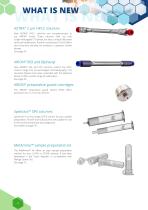
WHAT IS NEW ASTRA® 2 µm HPLC columns New ASTRA® HPLC columns are complementary to our ARION® brand. These columns offer not only a high-endcapped C18 phase, but also a unique DM phase with dual modification. Another novel phase C18-AQ offers dual chemistry bonding for analyses in aqueous mobile phases. See page 54. ARION® BIO and Biphenyl New ARION® SAX and SCX columns extend the HPLC column range into ion-exchanged chromatography. The reversed phases have been extended with the Biphenyl phase to offer a wider range of selectivities. See page 46. ARION® preparative guard cartridges The ARION®...
Open the catalog to page 2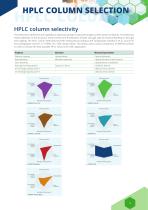
HPLC COLUMN SELECTION HPLC COLUMN SEL HPLC column selectivity The selectivity is defined as the capability of stationary phases to separate analytes under certain conditions. The selectivity mainly depends on the structure, metal content and modification of base silica gel, type of chemical bonding or silica gel end-capping. The HPLC column selectivity has been measured according to the Tanaka plots (Tanaka, N. et al., Journal of Chromatographic Science, 27 (1989), 721–728), shown below. This allows users a quick comparison of different phases in order to choose the best possible HPLC columns...
Open the catalog to page 3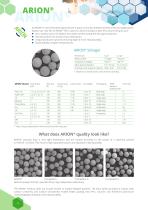
As ARION® is one of the latest objects found in space, so it is also the best workhorse for your applications. Explore our new line of ARION® HPLC columns. What innovations does this column bring to you? • Strict quality control of alkaline and metal content during the silica gel production. • Narrow particle size and pore size distribution. • Unique production process ensuring high lot-to-lot reproducibility. • Good stability at higher temperatures. ARION® Silicagel Particle size 5 pm 2.2 pm Mean particle diameter 5.3 ± 0.9 pm 2.5 ± 0.5 pm Proximity to the shape of a sphere 0.96 ± 0.04 0.97...
Open the catalog to page 4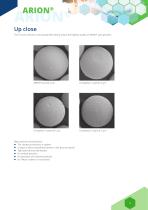
The 5-micron electron microscope field clearly shows the highest quality of ARION® 5µm particles. Main particle characteristics: zz The closest proximity to a sphere. zz Unique surface smoothness shown in the pictures above. zz Tight particle size distribution. zz No broken particles. zz No presence of clustered particles. zz No “Moon craters or mounta
Open the catalog to page 5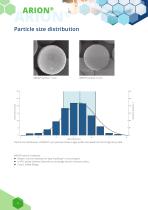
Particle size distribution Particle size distribution of ARION® 5 µm particles shows a tight profile calculated from ferret figures by SEM. ARION® column hardware: zz Modern column hardware for easy handling in a narrow space. zz UHPLC grade Stainless Steel with an amazingly smooth internal surface. zz Colour coded fittings. Particle size fraction [%] ARION® partic
Open the catalog to page 6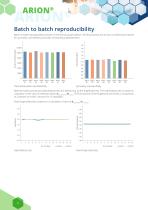
Batch to batch reproducibility Batch-to-batch reproducibility is shown in the two bar graphs below. The silica batches are strictly controlled and checked for symmetry, and efficiency (number of theoretical plates/meter). 2.0 1.8 Peak symmetry factor Number of theoretical plates Theoretical plates reproducibility Symmetry reproducibility Both the silanol activity and hydrofobicity tests are defined e.g. by the Engelhardt test. The hydrofobicity test is based on calculation of the ratio of retention factors kethylbenzene /ktoluene. The first picture of the Engelhardt test shows a comparison of...
Open the catalog to page 8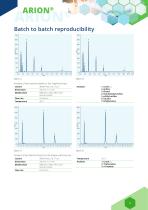
Batch to batch reproducibility 790 Analysis of two batches based on the Engelhardt test. Column Mobile phase Methanol : water 49/51 (v/v) Isocratic elution Flow rate Analysis of two batches based on the Shape selectivity test. Column Mobile phase Methanol : water 79/21 (v/v) Isocratic elution Flow rate
Open the catalog to page 9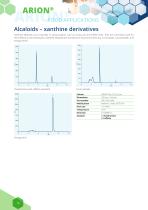
FOOD APPLICATIONS Alcaloids – xanthine derivatives Xanthine alkaloids occur naturally in various plants, such as cocoa, tea and coffee trees. They are commonly used for their effects as mild stimulants. Xanthine alkaloids are monitored in food and drinks, e.g. in chocolate, cocoa powder, and energy drinks. 400 Theobromine and caffeine standard 1400 1200 Energy drink Part number Mobile phase Flow rate
Open the catalog to page 10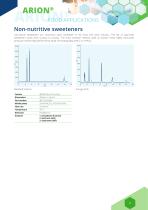
ARION® FOOD Non-nutritive sweeteners Low-calorie sweeteners are commonly used worldwide in the food and drink industry. The list of approved sweeteners varies from country to country. The most common method used to monitor these highly consumed products involves high performance liquid chromatography (HPLC or UHPLC). Standard mixture Flow rate 2.0 ml/min Analytes 1. Acesulfame-K (ACS-K)
Open the catalog to page 11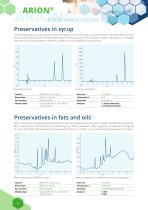
FOOD APPLICATIONS Sodium and potassium salts of benzoic acid and sorbic acid are well-known food preservatives. The permitted amount in food is strictly regulated with the level depending on the food group. As an example, European regulation EC 1333/2008 sets the rules on food additives: definitions, conditions of use, labelling and procedures. 450 100 Standard mixture Fruit syrup sample Flow rate Part number Mobile phase Citrate buffer pH 4.1 : ACN : MeOH 70/20/10 (v/v/v) 1. Sodium benzoate 2. Potassium sorbate Preservatives in fats and oils BHA is used as an antioxidant and preservative in...
Open the catalog to page 12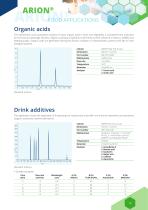
Organic acids The identification and quantitative analysis of major organic acids in fruits and vegetables is considered very important for the food and beverage industry. Organic acids play a significant role thanks to their influence on flavour, stability and keeping quality. Organic acids are generated during the aerobic oxidation of carbohydrates, proteins and fats in most biological systems. Column ARION® Polar C18, 5.0 pm Flow rate 1.0 ml/min Analytes 1. Formic acid Standard mixture Drink additives This application shows the separation of three groups of compounds in parallel: non-nutritive...
Open the catalog to page 13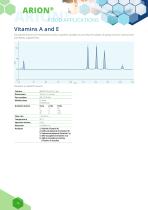
m, ARION FOOD APPLICATIONS Standard on ARION® column Column_ARION® Plus C18, 3 pm_ Mobile phase A: Water Gradient elution Time A (%) B (%) Flow rate 1.0 ml/min Analytes 1. Retinol (Vitamin A) 5. Alpha-Tocopheryl acetate (Vitamin E acetate)
Open the catalog to page 14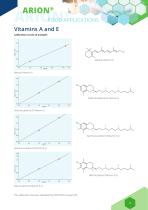
FOOD APPLICATIONS Vitamins A and E Calibration curves of analytes This application has been developed by WESSLING Hunga
Open the catalog to page 15All ECOM catalogs and technical brochures
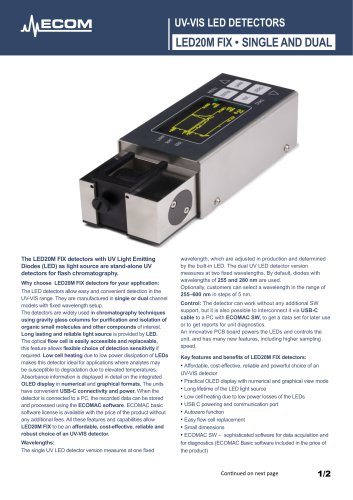 LED20M FIX • SINGLE AND DUAL
2 Pages
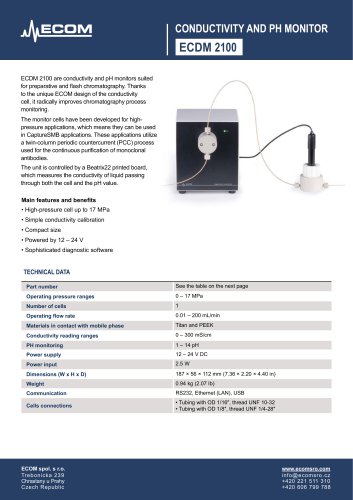 ECDM 2100
2 Pages
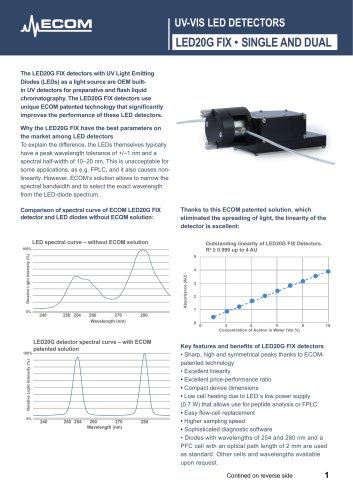 LED20G FIX • SINGLE AND DUAL
2 Pages
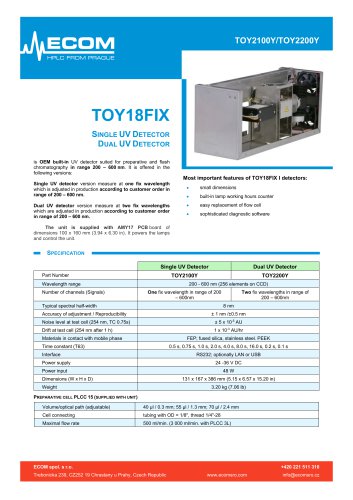 TOY18FIX
1 Page
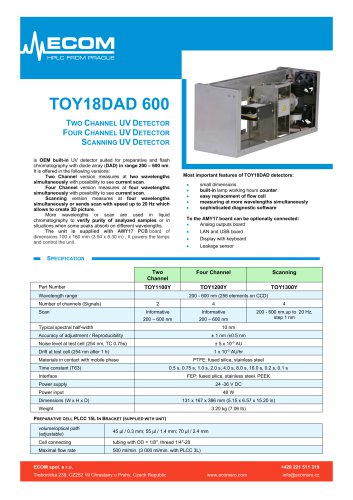 TOY18DAD 600
1 Page
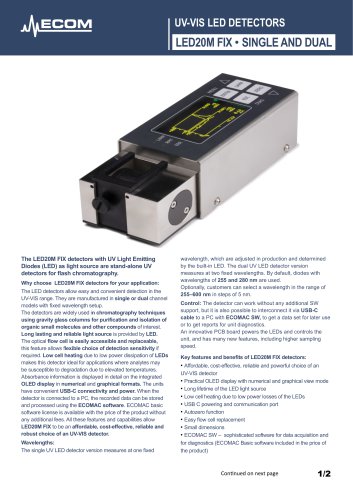 UV-VIS LED DETECTORS
2 Pages
 ECD2600
1 Page
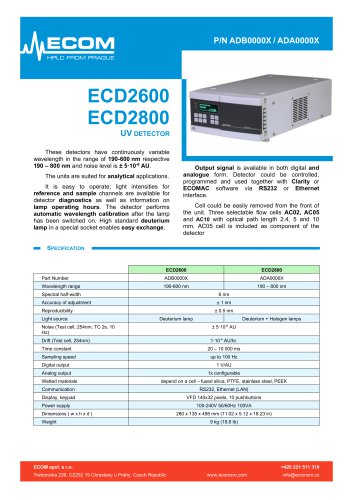 ECD2600 ECD2800
1 Page
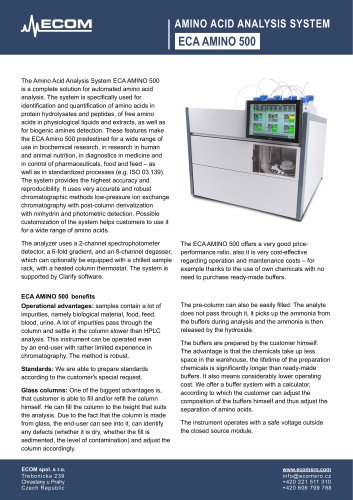 ECA AMINO 500
2 Pages
 ECS03
ECS031 Page
 ECS02
ECS021 Page
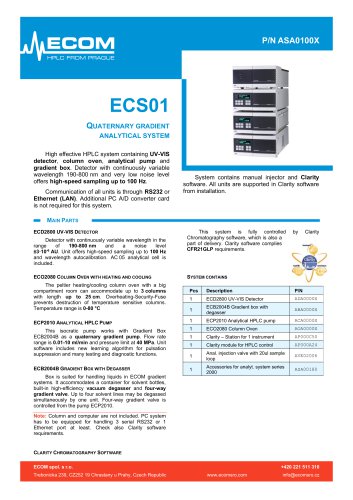 ECS01
ECS011 Page
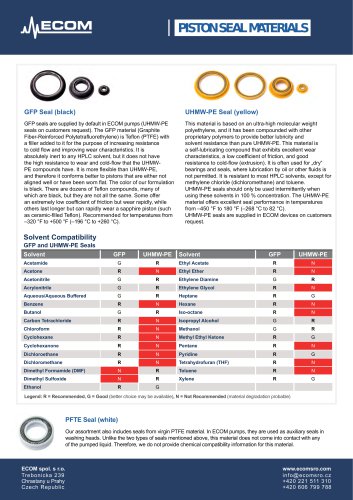 GFP Seal
1 Page
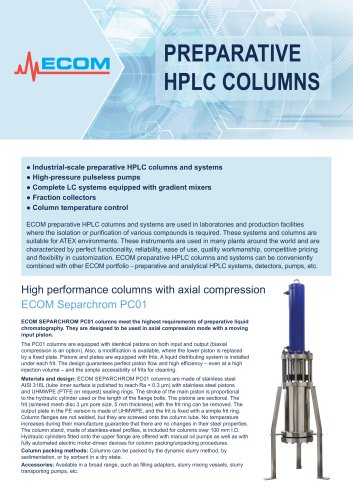 PREPARATIVE HPLC COLUMNS
4 Pages
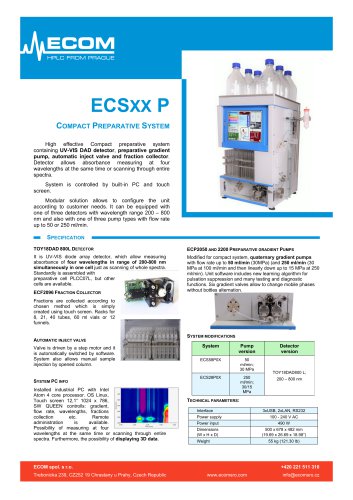 ECSXX P
1 Page
 ECOM Product & Company Catalog
24 Pages
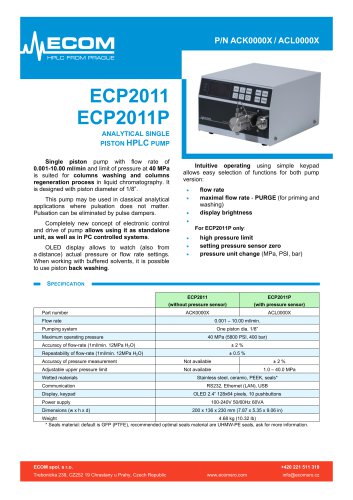 ACK0000X / ACL0000X
1 Page
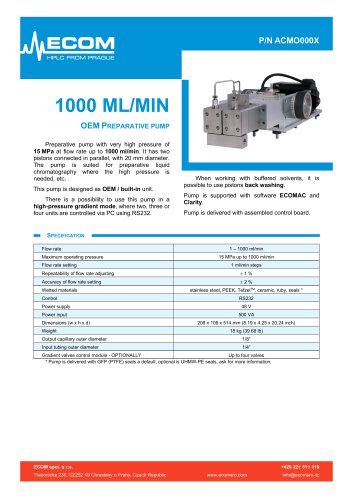 ACMO000X
1 Page
 TCO series
2 Pages
 TRI-CLAMP FLOW CELLS
1 Page
- Pump
- Industrial pump
- Valve
- Pump with electric motor
- Stationary pump
- Seawater pump
- Manual valve
- Self-priming pump
- Chemical pump
- Stainless valve
- Control valve
- Kiln
- Stainless steel pump
- Suction pump
- Pump for the chemical industry
- Electric furnace
- Automation software solution
- Analysis software solution
- High-speed pump
- Piston pump