
- Catalogs
- DKK-TOA CORPORATION
- BPM-2000


BPM-2000

BPM-2000
- Stainless steel flask for easy cleaning and maintenance.
- TIIS fd2G4 certified explosion-proof construction.
- 10-inch color touch panel for intuitive control and display of distillation-temperature curves.
- Calculates Initial Boiling Point (IBP) and Final Boiling Point (FBP) based on the distillation curve.
- Measurement Range: 0 to 400˚C.
- Measurement Cycle: 20 to 40 minutes, depending on the sample.
- Repeatability: ± 2%FS or less.
- Temperature Sensor: Metal-sheathed resistance thermometer (pt100).
- Level Sensor: 894 element Si linear array sensor.
- Dimensions: Main body - 400(W)x1020(H)x311(D)mm; Terminal box - 200(W)x354(H)x160(D)mm.
- Weight: Main body approx. 75 kg; Terminal box approx. 11 kg.
- Operating Conditions: Ambient temperature -5 to 45˚C, humidity 85% RH or less.
- Supply Pressure: 0.4 to 1 Mpa.
- Discharge Pressure: Ambient pressure.
- Flow Rate: 0.2 to 0.4 L/min.
- Sample Temperature: Must be lower than the sample IBP.
- Viscosity: Maximum 6 mPa•S at 30˚C for gas oil and kerosene.
- Moisture Content: Max. 500 ppm.
- Power Source: Various voltage options available.
- Cooling Water: Flow rate of 0.4 L/min, temperature lower than 5˚C for naphtha and gasoline.
- Communication: MODBUS communication available.
- Measure 50 mL of the sample and transfer to the flask.
- Heat the sample gradually using a heater.
- Distill the sample and measure vapor temperature with a platinum resistance sensor.
- Determine distillation temperature at each capacity level %.
- Discharge samples and repeat the process.
Catalog excerpts
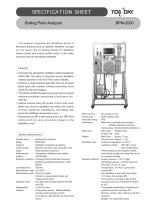
SPECIFICATION SHEET Boiling Point Analyzer TO/pOI«BPM-2000 This analyzer measures the distillation points of petroleum products such as naphtha, kerosene, and gas oil. It is used in the oil refining industry for distillation column control and product quality control. It also helps boost the yield of intermediate distillates. Features O Automates the atmospheric distillation method specified in ASTM D86. The option of using the vacuum distillation method specified in ASTM D1160 is also available. O Features a tough stainless steel flask that can be easily taken apart and cleaned, thereby preventing errors caused by dirt and clogging. O TIIS fd2G4 certified flameproof and prssurized enclosure explosion-protected construction.(Certification No.: T65146) O Intuitive controls using the on-site 10-inch color touch panel help improve operability and reduce the number of hours needed for maintenance. The display also shows the distillation-temperature curve. O Determines the IBP (initial boiling point) and FBP (final boiling point) by using calculations based on the distillation curve. Warm-up time Construction Protection rating Dimensions Standard Specifications Product name Model Analyzer measurement object Measurement method Explosion protection Certification No. Measurement range Measurement cycle Detection point Repeatability Detector Boiling Point Analyzer BPM-2000 Distillation properties of naphtha, gasoline, kerosene, gas oil, jet fuel, and other petroleum products. Atmospheric distillation test method (ASTM D86) Flameproof and prssurized enclosure explosion-protected construction (TIIS fd2G4) T65146 0 to 400°C 20 to 40 minutes (Varies by measurement object and measurement point) Can freely set 8 points between the IBP and FBP ± 2%FS or less Temperature sensor ; Metal-sheathed resistance thermometer (pt100) Level sensor ; 894 element Si linear array sensor Paint color Weight Installation site Sample conditions : 60 minutes or less : Self-sustained rack : IP55 : Main body (controller and analyzer) 400(W)x1020(H)x311(D)mm Terminal box 200(W)x354(H)x160(D)mm : Main body Metallic silver Analyzer lid Gold : Main body Approx. 75 kg Terminal box Approx. 11 kg : Ambient temperature -5 to 45°C Ambient humidity 85% RH or less (No condensation) *When setting up the analyzer outside, avoid direct sunlight and install the device in a rainproof shelter. : Supply pressure ; 0.4 to 1 Mpa Discharge pressure ; Ambient pressure Flow rate ; 0.2 to 0.4 L/min Temperature ; 0 to 45°C (Lower than sample IBP) • No deposition of wax. Must be at least 10°C lower than sample IBP. • The maximum viscosity of gas oil and kerosene can be no more than 6 mPa^S at 30°C. • The sample temperature of naphtha and gasoline must be lower than 5°C. Moisture content ; Max. 500 ppm (No free moisture) Sludge ; No suspended solids
Open the catalog to page 1
Distillation at reduced pressure Special coating flask Explosion-proof (sample) cooler MODBUS communication Stabilized power-supply Sample preconditioner unit Sample recovery unit : Power source ; Rated voltage AC 100/ 110/120/200/220/240 Frequency ; 50 or 60 Hz Voltage fluctuation range ; ±10% of rated voltage Power consumption ; Max 700 VA Instrument air ; Pressure"43.4 Mpa or more Flow rate^Purge 50 L/min Running 20 L/min Cooling water ; Flow rate"43.4 L/min (Normal use) Temperature^Normal • Lower than 5°C for naphtha and gasoline Piping connection : Sample inlet ; Rc 1/2 Sample outlet:...
Open the catalog to page 2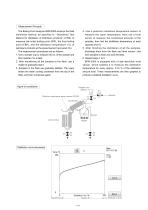
Measurement Principle The Boiling Point Analyzer BPM-2000 employs the flask distillation method, as specified in “Standared Test Method for Distillation of Petroleum products” of D86, to measure the initial boiling point (IBP), the final boiling point (FBP), and the distillation temperature (˚C) of petroleum products at the preset percent recovered (%). The measurement procedures are as follows: 1. Use a sample cup to measure 50 mL of the sample and then transfer it to a flask. 2. After transferring all the samples to the flask, use a heater to gradually heat it. 3. Samples in the flask are gradually...
Open the catalog to page 3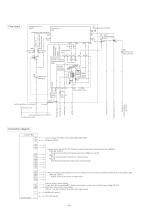
Flow chart Atmospheric vent A1 A2 Analyzer box (include an internal pressure protector) d2G4 power supply (operating) signal (Communication) purge line internal pressure protection line platinum resistance thermometer HEATER power supply Level sensor Sample in (Light kerosene, gasoline) Instrumentation air Exhaust non-hazardous area hazardous area power signal supply Connection diagram Junction Box 90 analog output signal:DC 4∼20mA(insulation type/Load resistance less than 600Ω) 70A,B∼77A,B Percent recovered,Distilling temperature,LOSS(can set it) 78A,B Percent recovered(Fixation,for maintenance)...
Open the catalog to page 4
decompression unit power supply connection mouth 1140±2 (foundation bolt position) 1200
Open the catalog to page 5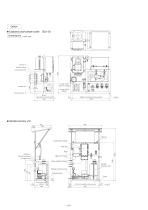
proof sample cooler sample in Sample return coolant entrance wiring mouth (power supply) coolant exit 65 wiring mouth (signal) Instrument Air in 410±2 (foundation bolt position) 70 550 1040±2 (foundation bolt position) 1100 TAG No. combination starter relay box Rack sample in feed air entrance air signal exit signal line mouth power supply entrance Sample recovery pump Sample return Drain 100 Sample recovery tank 700 1140 ±2 (foundation bolt position)
Open the catalog to page 6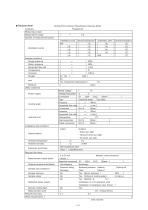
Boiling Point Analyzer Specification Request Sheet Prepared by Date prepared:
Open the catalog to page 7
DKK-TOA CORPORATION /h CAUTION consulting instruction manual.
Open the catalog to page 8All DKK-TOA CORPORATION catalogs and technical brochures
 Xseries
12 Pages
 HC-G65
1 Page
 HBM-100B / HBM-102B
4 Pages
 HBM-160B/HBM-162B
4 Pages
 MM-42DP
8 Pages
 ICA-7000
8 Pages
 MWB4-70
8 Pages
 CGP-31
2 Pages
 x-series
12 Pages
 SWBM-161
8 Pages
 WQC-30
4 Pages
 WB4-70 Compact City-Water An
8 Pages
 ICA-2000 Series
4 Pages
 IA-300
2 Pages
 R Series brochure.
20 Pages
 flash point test set
4 Pages
 RESIDUAL CHLORINE ANALYZER
4 Pages


- Gas analyzer
- Concentration analyzer
- Monitoring analyzer
- Liquids analyzer
- Automatic analyser
- Calibration system
- Benchtop analyser
- Solids analyser
- Process analyzer
- Portable analyzer
- Continuous analyzer
- Water analyzer
- Real-time analyzer
- Integration analyzer
- Laboratory analyzer
- Compact analyzer
- Infrared analyser
- Calibration analyzer
- Waterproof analyzer
- Temperature analyzer