
- Catalogs
- DISAB Vacuum Technology
- CEMENT CASE STORY


CEMENT CASE STORY

CEMENT CASE STORY
H&T Labour and Vacuumation Services, based near Rugby, specializes in vacuumation services within cement plants using DISAB units. Their unique approach includes not only vacuuming spillages but also using the blowing facility to reintegrate materials back into the process, minimizing on-site tipping and preventing dust escape.
H&T operates a fleet of DISAB Centurion LN200 8-1812 machines and a DISAB-Tella SDW 3.5 tonne ‘Big-Bag’ machine. These machines are noted for their superior performance and versatility compared to other truck-mounted machines. The DISA FLOW coupling system is also utilized for its lightweight and efficient design, enhancing material movement and reducing build-up.
H&T addressed a dust leakage issue at a major cement plant in Rugby by vacuuming dust from a large storage silo. The operation involved setting up a vacuum line vertically and horizontally around the silo, demonstrating the DISAB's powerful suction capabilities over long distances.
H&T's DISAB units handle typical tasks such as sucking up cement spillages, recycling approximately 2,000 tonnes of material annually for a single plant. The ability to blow materials back into the process supports recycling efforts for materials like sand, coal, and clay.
H&T also performs specialist waste removal, including hazardous materials. Techniques such as adding water to coal dust to prevent explosions are employed, with the DISAB's rapid vacuum capabilities being crucial. The company also engages in waste-to-energy work, cleaning up shredded fuel and ash from combustion chambers.
The DISAB units can operate with hoses up to 120 meters long, showcasing their powerful suction capabilities. This flexibility allows for efficient vacuum transfer even at unusual distances, emphasizing the importance of operator experience and the correct air-to-material mix.
Catalog excerpts
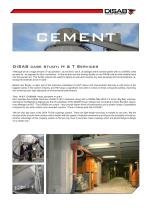
CEMENT DISAB case study: H & T Services “Although we do a huge amount of ‘vacuumation’, as we like to call it, of spillages within cement plants with our DISABs, what we also do - as opposed to other contractors - is that we then use the blowing facility on our DISAB units to blow material back into the process etc. This facility reduces the need for tipping on-site and prevents any dust escaping into the atmosphere- allowing the materials to be re-used.” Based near Rugby, a major part of the business undertaken by H&T Labour and Vacuumation Services is with some of the biggest names in the cement industry, and H&T plays a significant role when it comes to these companies setting, improving and achieving very high standards of environmental performance. The H&T DISAB Vacloader fleet H&T operates five DISAB Centurion LN200 8-1812 machines, along with a DISAB-Tella SDW 3.5 tonne ‘Big-Bag’ machine, identical to the BagVACs deployed by the UK subsidiary of the DISAB Group, Gotland Ltd. According to Dave Blundell, Operations Manager at H&T: “The DISABs are unique – they provide higher levels of performance and a greater range of capabilities compared to any other similar truck-mounted machine. There’s nothing quite like a DISAB.” “We are also big users of the DISA FLOW couplings system. These are light-weight and easy to handle by one man. We like the idea of the smooth inner surface which assists with the speed of material movement and reduces the possibility of build-up. Another advantage of this coupling system is that we only have to purchase male couplings which are joined flange-to-flange
Open the catalog to page 1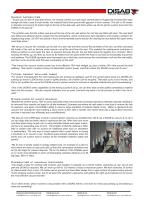
Unique capabilities “To give you an idea of what that means, we recently carried out a job major cement plant in Rugby that involved their large storage silo that’s used to hold clinker, the material that’s then ground with gypsum to form cement. This silo is 50 metres in diameter and around 45 metres high to the top of the side wall, and that’s where we had to get the suction hose from the DISAB on the ground.” “The problem was that the rubber seal around the top of the silo wall where the roof sat was filled with dust. The seal itself was failing and allowing dust to escape into the atmosphere,...
Open the catalog to page 2All DISAB Vacuum Technology catalogs and technical brochures
 CENTURION P10
2 Pages
 CENTURION P30
2 Pages
 CENTURION P20
2 Pages
 VACTURION DL14
2 Pages
 VACTURION DL 10
2 Pages
 CENTURION LN20
2 Pages
 DISAB CENTURION™ LN14
2 Pages
 CENTURION LN10
2 Pages
 DISAB Futurion™ Q20
2 Pages
 DISAB Futurion™ Q
2 Pages
 Vacuum Truck SDC 200
2 Pages
 Vacuum Truck SDC 100
2 Pages


Archived catalogs
 SKIPVAC
2 Pages
 COMPVAC
2 Pages
 BAGVAC PRODUCT SHEET
2 Pages
