- Catalogs
- DI NICOLA INFINAM
- Static mixers


- Products
- Catalogs
- News & Trends
- Exhibitions
Static mixers
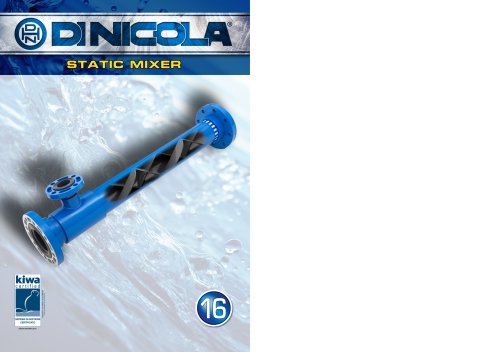
Static mixers
The document describes a mixing process involving blue and white viscous resins in a 1:1 volumetric ratio. The blue resin is injected into a tube containing a Type SX static mixing element assembly. The mixing process is visualized through cross-sectional cuts showing the rapid increase of layers formed. The degree of mixing is quantified using the Coefficient of Variation (CoV), which is detailed in accompanying tables. The mixing follows a geometric pattern dictated by the eight mixing bars within each element, suitable for high viscosity liquid-liquid mixing and polymer fluid processes.
The document outlines the flow types and corresponding Reynolds numbers for different flow sections: laminar, transient, and turbulent. Each section has a specific scope and relation formula, with detailed equations provided for calculating friction factors (f) based on Reynolds numbers.
Specifications are provided for various SMX-ANSI models, ranging from 3/8" to 24" in diameter, with corresponding dimensions in millimeters. These specifications adhere to ANSI B16.5 150LB standards.
Details of various SMX types are provided, including dimensions, number of elements, and performance metrics such as flow rate and pressure drop. The document specifies both fixed and removable designs for mixer elements.
The document includes a Computational Fluid Dynamics (CFD) simulation analysis, providing formulas for calculating friction factors across different Reynolds number ranges, from laminar to fully turbulent flow.
Catalog excerpts
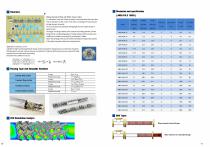
Mixing Element Mixing Sample of Blue and White viscous resins (1:1 volumetrie ratio and similar viscosity) is demonstrated where the blue resin is injected into the center of the tube containing the Type SX static mixing element assembly. The cross-sectional cuts along the mixing length show the rapid increase of layers formed. The degree of mixing achieved at the outlet of each mixing element is shown along with its corresponding degree of mixing achieved which is noted as the Coefficient of Variation of mixing (CoV) as described in Tables. Notice the blending of the blue-and-white resinsfollows...
Open the catalog to page 6All DI NICOLA INFINAM catalogs and technical brochures
 Sleeve valves
4 Pages
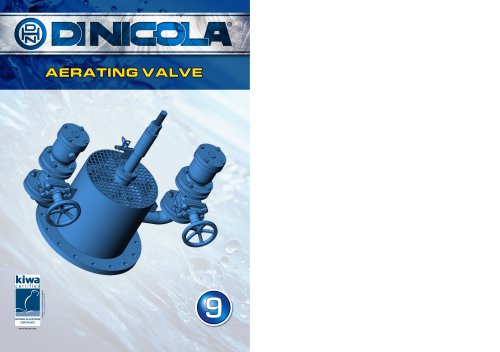 Aerating valve
3 Pages
 Introduction to Di Nicola
12 Pages
 Cast steel gate valves
8 Pages
 Globe valves
6 Pages
 Ball valves
12 Pages
 Clasar check valves
8 Pages
 Penstocks
16 Pages
 Eccentric ball valves
8 Pages
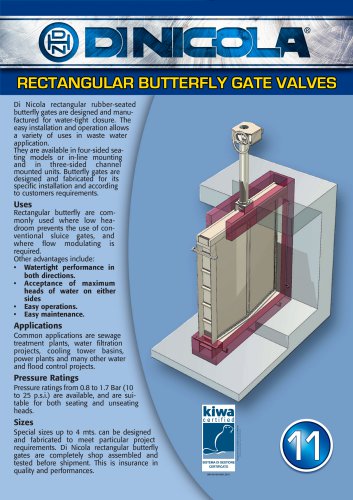 Rectangular butterfly valves
4 Pages
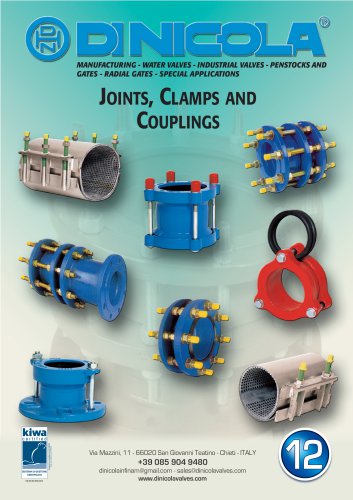 Joints and repair clamps
8 Pages
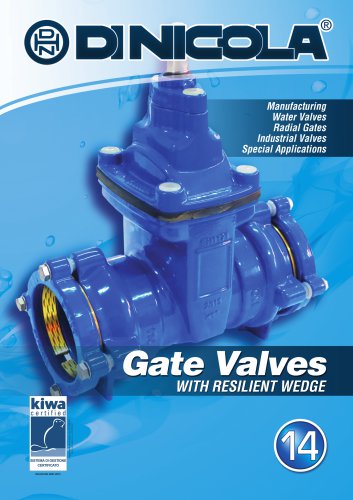 Resilient wedge gate valves
8 Pages
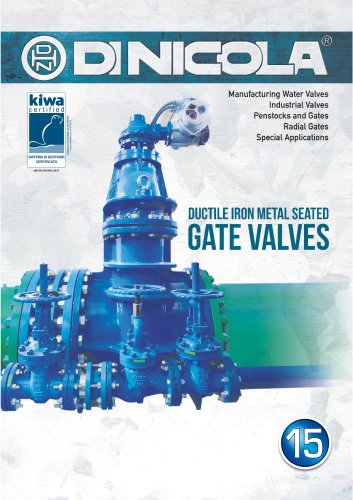 Metal seated gate valves
16 Pages
 Chain screens
4 Pages
 Wafer and lug butterfly valves
12 Pages
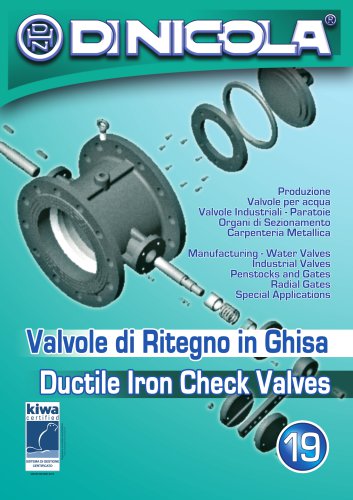 Non return check valves
12 Pages
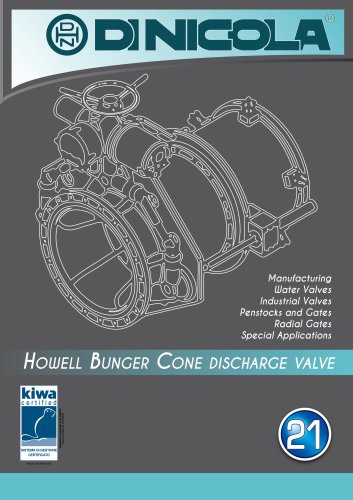 Howell Bunger valve
8 Pages
 Insulating monolithic joint
4 Pages
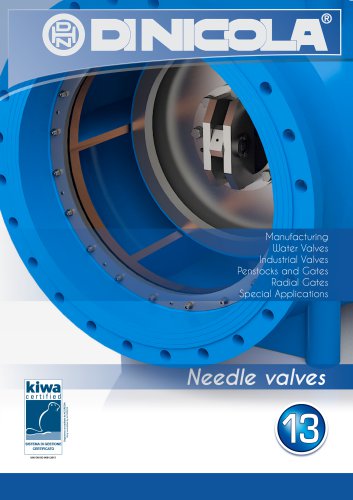 Needle - plunger valve
7 Pages