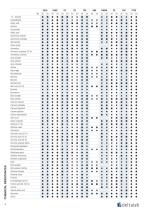
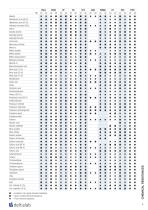
Chemical Resistance: The document includes a comprehensive chart detailing the chemical resistance of various substances, categorized as excellent, good, limited, or poor. It covers materials like sulfuric acid, tartaric acid, tetrahydrofuran, and toluene, and their interaction with plastics such as polystyrene, high-density polyethylene, low-density polyethylene, and polypropylene.
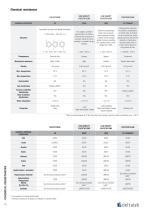
Material Properties: The document outlines the properties of polystyrene, high-density polyethylene, low-density polyethylene, and polypropylene, focusing on structure, transparency, mechanical resistance, density, temperature limits, and sterilization capabilities. Notably, polystyrene is optically clear and rigid, while polypropylene offers high thermal resistance.
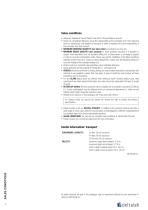
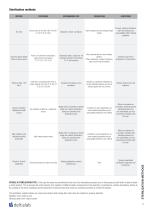
Sterilization Methods: Various sterilization methods are discussed, including dry heat, autoclaving, ethylene oxide gas, gamma irradiation, beta irradiation, and chemical methods. Each method's procedures, recommended uses, precautions, and limitations are detailed, with gamma irradiation noted for altering material properties.
Technical Information: The document provides conversion charts for centrifugal force, metric equivalences, and pressure conversions, along with formulas for calculating volumes of different shapes. It also discusses glove properties, including chemical resistance and comfort levels.
Microbiology and Swabs: Details on swabs for microbiological sampling are provided, including sterile and non-sterile options, dimensions, packaging, and sterilization methods. Swabs are classified as Class IIa medical devices, adhering to ISO standards for sterilization and quality management.
Diagnostic Techniques and Products Overview:
1. Swab Kits: Used for diagnostic techniques involving quantitative PCR, sterilized by radiation, with a 30-month shelf life.
2. Enrichment Media: Includes Selenite, Thioglycolat, and LIM Broth, each with specific uses and shelf lives.
3. Surface and Meat Sampling Kits: Designed for microbiological analysis, adhering to ISO 17604 standards.
4. Petri Dishes: Available in various configurations, suitable for automatic filling machines.
5. Microtitre Plates: Standard 96-well plates for applications like ELISA and hemagglutination.
6. CryoInstant Preservation System: Uses cryovials with porous beads for long-term storage.
7. Accessories: Includes racks for Petri dishes and contact plates, steam autoclavable.
Overview: The document provides specifications and descriptions of microbiology laboratory tools and equipment, including nichrome wire loops, sterile culture tubes, conical tubes, serological pipettes, and pipetting accessories.
Nichrome Wire Loops: Durable and cost-effective for microbiology applications, available in calibrated and non-calibrated versions.
Digralsky Spreader: Sterile, made of polystyrene, radiation sterilized, suitable for environments where pre-use sterilization is not possible.
Sterile Calibrated Loops: Made of flexible polystyrene, available in 1 µl and 10 µl sizes, color-coded for volume differentiation.
Sterile Culture Tubes: Polystyrene tubes with ribbed polyethylene caps, biologically inert, withstand specific centrifugation forces and temperatures.
EUROTUBO® Conical Tubes: Polypropylene tubes for centrifugation tests, available in sterile and non-sterile versions.
Serological Pipettes: Single-use, made of crystal polystyrene, sterilized by radiation, designed for precision.
Pipetting Accessories: Includes
pipette pumps and bulbs made of rubber, resistant to acids and alkalies.
Specifications: Tubes and plates are made of autoclavable polypropylene, certified RNAse, DNAse, and pyrogen free, suitable for Real Time PCR.
Procedures: Real Time PCR is highlighted for its efficiency in providing real-time results during DNA amplification.
Standards: Products adhere to SBS standards for dimensions, compatible with various thermal cyclers and sequencers.
Recommendations: Use opaque white tubes for Real Time PCR to avoid crosstalking.
Key Data: Case quantities, weights, and volumes are provided for each product, with a compatibility chart for thermal cyclers and sequencers.
Adhesive Films and Sealing Materials: Designed to prevent sample evaporation, thermostable from -70°C to 95°C, RNAse and DNAse free.
PCR Sealing Mat: Non-reactive rubber mat ensuring a leak-free seal for 96 well PCR plates.
Deep Well Plates: Made of medical-grade polypropylene, suitable for liquid handling and storage.
Sample Storage Systems: Various racks and tubes for sample storage, compatible with robotic systems, and autoclavable.
Blood Collection Tubes: Ensure 100% traceability, comply with multiple ISO standards, designed for various tests.
Serum Tubes: With clot accelerators and gel separators, ideal for biochemistry and immunology tests.
Overview: The document provides specifications and usage guidelines for blood collection tubes used in hematology and biochemistry.
Serum Tubes: Designed to accelerate clotting and improve serum yield, recommended for routine serum tests.
Anticoagulant Tubes: Various types described, suitable for biochemical tests, with a 24-month shelf life.
ESR Systems: Systems for determining erythrocyte sedimentation rate, based on the Westergren method.
Product Specifications: Detailed with dimensions, case quantities, weights, volumes, and expiry times.
Problem-Solving Guide: Addresses common issues like poor serum separation and tube fractures during centrifugation.
Coagulation and Centrifugation Guidelines: Recommendations for handling blood samples and centrifugation.
Anticoagulants and Preservatives: Available in 15 ml bottles, prepared according to ISO 6710.
Special Techniques: Kits for thrombocyte counting and osmotic brittleness tests.
Microhaematocrit Capillary Tubes: Available with or without heparin, meeting ISO 12772 standards.
Haematological Stains: Eosin solutions available in various formulations.
Spectrophotometer Cuvettes: Disposable cuvettes for visible spectral range assays.
Sample Cups and Containers: Various models for different laboratory equipment.
Histology Supplies: Includes paraffin, histology moulds, and tissue embedding sponges.
Overview: The document provides specifications and descriptions of laboratory staining solutions, jars, racks, and storage systems used in histology, microscopy, and staining processes.
Chemical Solutions: Includes May Grunwald, Eosin solutions, and modified Giemsa solutions.
Staining Kits: Gram and Ziehl differential staining kits.
Staining Equipment: Staining jars and racks made of autoclavable materials.
Slide Storage and Transport: Slide trays and boxes made of polystyrene and ABS.
Sampling and Transport Bags: Whirl-Pak® bags for sample collection and transport.
Overview: The document provides specifications and descriptions of laboratory and sampling products, including bags, containers, tubes, and accessories.
Whirl-Pak® Bags: Polyethylene bags suitable for solid and liquid samples.
Zip-lock Bags: Transparent polyethylene bags resistant to shocks and tearing.
Specimen Transport Kangaroo Bags: Double pouch design for specimen tubes and documents.
Mailing Containers: Leakproof polyethylene containers for 10 ml tubes.
Forceps: Made of POM, autoclavable and flexible.
Exam Gloves: Single-use gloves available in latex, vinyl, and nitrile options.
Swabs for Microbiological Sampling: Sterile swabs available with or without transport media.
Slide Mailers and Sampling Containers: Designed for slide transport and sampling.
Isothermal Bags: Designed for biological sample transport, maintaining temperature for up to 6 hours.
Bottles for Water Sampling: Sterile bottles designed according to ISO standards.
Tubes and Cryovials: Various tubes made from polystyrene and polypropylene.
Overview: The document provides specifications and descriptions of laboratory tubes and caps, including their dimensions, materials, and suitability for different applications.
Specifications: Test tubes, polystyrene tubes, conical tubes, and caps with specific features.
Procedures and Recommendations: Centrifugation limits, autoclaving instructions, and storage guidelines.
Key Features: Material transparency, leakproof design, and temperature resistance.
Conclusion: Comprehensive information on laboratory tubes and caps, highlighting specifications and best practices.
Specifications: Details on laboratory tubes and vials, including culture tubes, screw-neck tubes, and microtubes.
Procedures: Annealing processes and packaging options.
Norms and Recommendations: Ideal uses for screw-neck tubes and cap materials.
Product Details: Specifications for various tube models and microtubes.
Key Features: Borosilicate glass for high thermal resistance, autoclavable polypropylene caps.
Additional Products: CryoInstant preservation system for microbiological cultures.
Overview: The document provides specifications and descriptions of sample containers used in medical and laboratory settings.
Specifications: Material composition, volume capacities, and sterilization options for containers.
Procedures: Sterilization methods and sample transfer instructions.
Norms and Standards: Containers meet UNE-EN 14401 standards for leakproof closures.
Recommendations: Use watertight closures for pneumatic transport.
Key Data from Tables: Case quantities, weights, and volumes for logistics planning.
Additional Products: Urine collection systems and disposable sample cups.
Overview: The document provides specifications and descriptions of pipette tips and pipetting equipment.
Specifications: Tip types, compatibility, material, and sterility details.
Packaging and Sales: Bulk and rack options, case quantities, and weights.
Pipetting Equipment: Reservoirs and pipettes with advanced features.
Key Features: Colour coding and advanced pipette features.
Specifications: Handrop Stepper, micropipettes, graduated pipettes, and general-purpose pipettes.
Procedures: Pipetting bulbs and pumps for safe and efficient pipetting.
Standards and Recommendations: Sterile serological pipettes with precision certification.
Key Data from Tables: Rack specifications and pipette dimensions.
Overview: The document provides specifications and descriptions of laboratory racks and storage solutions.
Specifications: Various rack types, materials, and temperature resistance.
Key Features: Temperature resistance, material durability, and design features.
Applications: Suitable for PCR, microtube storage, and sample transportation.
Overview: The document provides specifications and descriptions of racks and storage solutions for laboratory use.
Racks and Storage Solutions: Plastic, aluminium, and stainless steel racks for various applications.
Wilmut System Products: Tubes and cryoboxes for cryopreservation.
Key Features: Space efficiency, traceability, and durability.
Product Overview: Tongue depressors, absorbent paper, filter paper, urine collection bottles, bed pans, safety gloves, measuring cylinders, beakers,
funnels, volumetric and Erlenmeyer
flasks.
Key Specifications: Materials, temperature resistance, and compliance with standards.
Applications: Laboratory and medical use, protection, and handling of hazardous materials.
Packaging and Storage: Various packaging options and storage guidelines.
Overview: The document provides specifications and descriptions of laboratory and industrial equipment.
Tubing Clamps: Made from autoclavable acetal, designed to control flow.
Connectors: Various types made from polypropylene, autoclavable.
Laboratory Holders: Used for holding tubing or thermometers, made from polycarbonate or polypropylene.
Stirring Bars: PTFE magnetic stirring bars for specific applications.
Timers: Mechanical and digital timers with various features.
Jars and Containers: Various types with specifications for alimentary use.
Beakers and Cups: Polyethylene beakers and disposable cups.
Industrial Jugs and Buckets: Made from polyethylene or polypropylene, designed for industrial use.
Key Specifications: Material, dimensions, weight, and packaging information.
Overview: The document provides specifications and descriptions of laboratory and industrial packaging solutions.
1. Wide Neck Graduated Containers: Made of high-density polyethylene with polypropylene caps.
2. Narrow Neck Bottles: Made of autoclavable polypropylene, hermetical closure.
3. Graduated Bottles: Made of translucent polyethylene for storing acids and bases.
4. High Resistance Bottles: Made of high-density polyethylene for storing acids and bases.
5. Tamper Evident Bottles: Made of high-density polyethylene for storing alcohol.
6. Specialty Containers: Includes screw cap containers with dropper plugs.
7. Drums and Storage Solutions: Various drums made of high-density polyethylene.
8. Additional Accessories: Includes funnels and large deep trays.
Key Features: Materials, design features, and suitability for specific storage needs.
Overview: The document provides specifications and features of drums for transporting hazardous products.
Specifications: Drums made from high-quality raw materials, available in various shapes and capacities.
Features: Airtight seals, smooth internal surfaces, and handles for easy carrying.
Recommendations: Testing drums under forecasted conditions of use.
Index: Extensive index of laboratory and industrial products with page numbers.





 Catalogo EN 2021 alta resolucion
 DELTALAB 2020 catalogue by chapters