
- Catalogs
- DEFONTAINE - ROLLIX
- Rollix slewing rings catalogue English version

Rollix slewing rings catalogue English version

Rollix slewing rings catalogue English version
- Company Overview: Defontaine Group, founded in 1946, specializes in flash-butt welding technology and mechanical parts manufacturing. Rollix, a brand under Defontaine, focuses on slewing rings and special bearings.
- Advantages of Slewing Rings: Benefits include reduced parts, simplified machining, easy assembly, and weight reduction.
- Applications: Used in sectors like construction, packaging, wind turbines, forestry, machine tools, marine, medical, transportation, and special applications.
- Specific Designs and Solutions: Rollix offers custom slewing rings, full module supplies, permanently lubricated rings, and automatic lubrication systems.
- Expertise: Custom solutions designed to international standards, validated using Finite Element Analysis.
- Certifications: Certified for design, materials, and manufacturing with various certification bodies.
- Processes: Includes flash-butt welding, heat treatment, gear cutting, grinding, and surface treatments for quality and durability.
- Quality Control: Dimensional, functional, and non-destructive controls ensure product conformity and performance.
- Services: After-sales services provide expertise and measurement tools for customer support.
Installation of the Slewing Ring on Site:
Optimal service life requires supports of the same quality as the slewing rings. Rollix offers flatness checks and assembly supervision. Services include validation of support flatness, surface reworking, installation, and start-up tests. Bolt tightening is performed using hydraulic tensioners or wrenches.
In-House Laboratory:
Tests on metallic materials, thermoplastics, and elastomers, including mechanical, metallographic, heat treatment, salt spray, and viscosity tests.
Slewing Ring Inspection:
On-site inspections may be required based on environmental constraints. Videoscopy surveys visualize the raceway condition. Lubrication analysis is conducted periodically or punctually.
On-Site Customer Services After Commissioning:
Thorough inspections determine wear levels and assess retrofitting possibilities. Functional and visual checks are conducted, and expert reports are provided.
Composition of a Slewing Ring:
Component Parts: Includes gears, rolling elements, fastening holes, lubrication holes, and protective seals.
Ring Materials: Uses fine carbon steel grades and other materials like stainless steel, bearing steel, and titanium alloys for specific applications.
Sealing Solutions: Various sealing options protect raceways and maintain lubrication.
Rolling Elements: Supplied according to precise specifications and validated by Rollix's laboratory.
Cages and Spacers: Designed to meet customer requirements using different materials or coatings.
Slewing Ring Characteristics:
Estimating Loads: The slewing ring must transmit forces from a moving part to a fixed base. It is essential to specify the resulting torsor applied to the slewing ring's center.
Defining Application Criteria: Factors like utilization, safety, and application are considered to design and size the slewing ring's bearing function.
Selecting the Slewing Ring: The load capacity is calculated based on geometric envelope, materials, heat treatments, rolling elements, and contact parameters.
The document outlines specifications for slewing rings, focusing on load calculations and fastening methods. The application point P, determined by axial load and tilting moment, must remain below the limit curve for safety. Fastening is crucial, with bolting preferred over welding. Bolt quality is defined by ISO 898-1, recommending high-strength bolts of class 10.9, with nuts of equal or greater class.
Fastening and Installation
Proper mechanical fastening to the chassis is essential for force transmission. The document advises against welding and emphasizes the importance of bolt quality and installation. Counterbores are recommended to enhance force transmission and prevent sliding.
Service Life and Maintenance
The service life of slewing rings, whether for continuous or partial rotation, must be regularly checked. The document suggests contacting Rollix for gear life verification.
Load Calculations
Rollix provides calculation rules based on standards like AFNOR FD E 25.030 and VDI 2230. Supported loads should be evenly distributed, and friction coefficients should exceed 0.2. The document details torque calculations, including starting and rotating torque, with examples provided.
Environmental and Operational Conditions
Slewing rings operate between -25°C and +70°C, with specific designs for extreme temperatures. Aggressive environments require protective measures, and continuous shocks or vibrations must be considered in the design.
Installation Recommendations
Chassis design must ensure sufficient stiffness to prevent deformation. Support thickness and shape tolerances are specified to ensure even pressure distribution and prevent bearing damage. Epoxy resins can be used to correct surface defects.
Transport and Storage
Slewing rings are packaged to prevent transport damage, with options for long-term storage and specific transport methods for large diameters.
Slewing rings must be handled carefully to avoid shocks. They should be stored in a covered, tempered room with humidity below 85% and temperature above 12°C. For long-term storage or specific conditions, special packaging is required. Lubrication is necessary every 18 months.
During unpacking, avoid cutting protective seals. Use non-chlorinated thinners for degreasing. Position the soft zone at 90° to the main load axis. Each slewing ring is identified with a metal label. Installation markers include gear run-out and soft zone indicators.
Ensure the structure is suitable for installation. Elastic washers are prohibited; use Nord-Lock type washers. Tighten bolts using a calibrated tool, following the star method. Recommended tightening torque values are provided based on bolt diameter.
Position the pinion 90° from the main load axis and adjust to the maximum gear run-out point. Ensure proper alignment and lubrication before operation.
Rotate the slewing ring to check for hard spots and verify gear run-out. Measure deflection under load and record values in the inspection booklet.
Regular lubrication is crucial for longevity. Use lithium soap-based grease with specific viscosity and additives. Regreasing intervals vary based on operating conditions. Preventive controls include seal and fastening monitoring, and slewing monitoring.
Monitor deflection under load to assess wear. Replace the slewing ring if deflection exceeds safe limits. Follow regulations based on application.
Standard product ranges are identified by the first two digits of the reference number. Various configurations are available, including single and double row, with or without gear, and different materials and diameters.
- Available in sizes ranging from 0 to 3,000 mm.
- Greasing holes can be positioned on the external or internal ring, facially, or radially, with an M10 x 1.00 thread.
- Fastening holes are available in through, tapped, counterbored, or blind types.
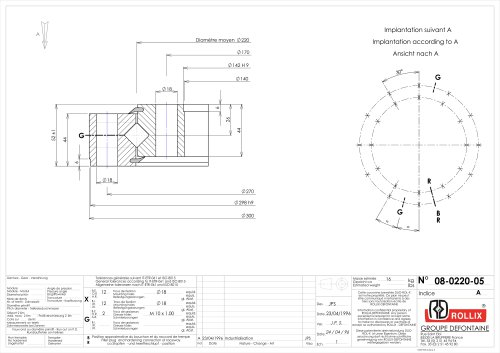
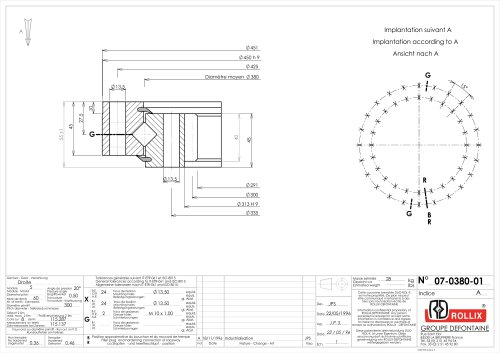
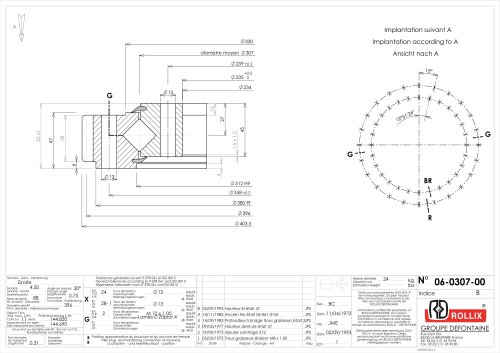
- Specifications include dimensions such as height, diameter, and weight for different models.
- Sizes range from 1,000 to 3,000 mm.
- Gear specifications include module, number of teeth (Z), and gear capacity (unhardened and hardened).
- Fastening and greasing options are similar to those without gear.
- Available in sizes from 1,000 to 3,000 mm.
- Includes gear specifications and similar fastening and greasing options as other types.
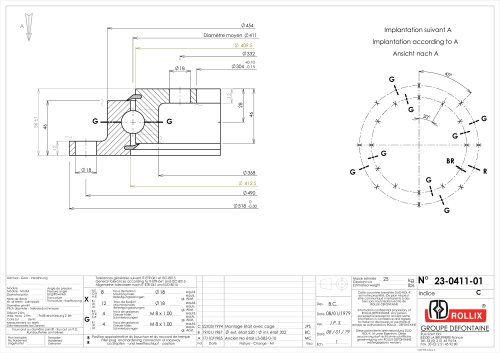
- Includes L-shaped profile slewing rings with external, internal, or no gear.
- Fastening and greasing options are provided with M8 x 1.00 thread.
- Specifications cover dimensions, weight, and gear capacity.
- Graphs illustrate the relationship between tilting moment and axial loads for different models.
- These slewing rings are not recommended for hanging loads and should be used vertically with caution due to clearance issues.
- Available without drilled holes, with identical reference numbers but differentiated by the last two characters.
- Ranges: 31-34-37, 32-35-38, 33-36-39.
- Gear Types: External, Internal, and Without gear.
- Fastening Holes: Options include Through (Th), Tapped (Ta), Counterbored (C), and Blind (Bd).
- Greasing Holes: Options with M8 x 1.00 thread, located on External (E), Internal (I), Facial (F), or Radial (R) positions.
- Main Dimensions: Detailed for each range, including height, diameter, and weight.
- Gear Specifications: Module, number of teeth (Z), and gear capacity (unhardened).
- Types: Single and double row, with external, internal, or no gear.
- Preloaded: All slewing rings are preloaded.
- Run-Outs and Torques: Graphs show maximum values for axial and radial run-outs and rotating torques.
- Fastening Holes: Options include Through (Th), Tapped (Ta), Counterbored (C), and Blind (Bd).
- Greasing Holes: Options with M10 x 1.00 thread, located on External (E), Internal (I), Facial (F), or Radial (R) positions.
- Main Dimensions: Detailed for each range, including height, diameter, and weight.
- Gear Specifications: Module, number of teeth (Z), and gear capacity (unhardened and hardened).
- Range 07: Roller bearings with internal gear, sizes from 2,000 to 6,000 mm.
- Range 08: Slewing rings without gear, sizes from 0 to 2,000 mm.
- Range 16: Roller bearings with external gear, sizes from 1,000 to 3,000 mm.
- Range 17: Roller bearings with internal gear, sizes from 1,000 to 3,000 mm.
- Range 18: Roller bearings without gear, sizes from 1,000 to 3,000 mm.
- Compact Light: Made from XC45 material, available with or without gear.
- Compact: Made from 42CrMo4 material, available in high precision and precision versions without gear.
- Rollix RT: High stiffness bearings made from 100Cr6 material, designed without a soft zone.
- Main Dimensions: The document lists the outer diameter (ØDe), inner diameter (ØDi), and other critical dimensions for various models.
- Fastening Holes: Details on the number and type of holes on the inner and outer rings are provided.
- Axial and Radial Run-Out: Specifications for axial (ARO) and radial run-out (RRO) are given in micrometers (µm).
- Torque and Speed: Maximum starting torque (unloaded) and maximum allowable rotation speed (rpm) are specified for each model.
- DR-S Range: Double row, angular contact ball slewing rings with or without internal gear, suitable for high-speed rotation applications.
- HD-R Range: Double row, roller slewing rings with or without internal gear, designed for very high load applications.
The document provides detailed specifications for various slewing rings, including dimensions, weight, and fastening hole types. The slewing rings are categorized by their range and gear type, with specific measurements for outer and inner diameters, height, and weight. Fastening holes are described with types such as Through (Th), Tapped (Ta), Counterbored (C), and Blind (Bd).
Greasing and Fastening Options:
Greasing options are specified for each slewing ring, indicating whether the greasing holes are on the external (E), internal (I), facial (F), or radial (R) parts of the ring. Fastening hole types are also detailed, providing options for different mounting requirements.
Performance Curves:
The document includes static capacity curves for different slewing ring models, illustrating the relationship between tilting moment and axial loads. These curves help in understanding the load-bearing capabilities of each model.
Warranty and After-Sales Service:
The warranty section outlines the conditions under which the slewing rings are guaranteed, including a 2-year warranty from delivery for standard products and specific conditions for geometric defects. Exclusions from the warranty are detailed, such as failure to complete the IT-ETR-911 questionnaire or non-compliance with Rollix recommendations.
Implementation of Warranty:
In case of malfunction, Rollix offers options such as reworking, replacement, or refund of the slewing ring. The warranty is limited to the repair or replacement of defective parts and does not cover consequential damages.
Company Vision and Values:
Rollix emphasizes sustainable development, new technologies, and commitment to people as core principles. The company aims to create sustainable value and establish lasting partnerships with customers, providing technical expertise and project management support.
Catalog excerpts

SLEWING RINGS
Open the catalog to page 1
TABLE OF CONTENTS Introduction 3 Rollix know-how 14 Composition of a slewing ring 25 Slewing ring characteristics 30 Installation of a slewing ring
Open the catalog to page 2
INTRODUCTION CONTENTS 1.1. Our company Page 4 1.2. Advantages of the slewing ring Page 5 1.3. A range of possible applications
Open the catalog to page 3
1. Introduction 1.1. Our company Defontaine Group was founded in 1946 around the unique technology of flash-butt welding. The group designs and manufactures complex mechanical parts and sub-assemblies. With three production sites (France, China and Tunisia), Defontaine Group is renowned for the quality of its products and its services, as well as for its loyalty and proximity to its customers and partners. The Rollix brand was created in 1969 to design and manufacture slewing rings and special bearings with outside diameters ranging from 100 mm to 6 m, with or without gear. Since its inception,...
Open the catalog to page 4
1.2. Advantages of the slewing ring The slewing ring offers a number of advantages over a conventional bearing assembly and is increasingly being used as a standard mechanical component. These include: • Reduced number of parts • Simplified machining • Quick and easy to assemble • Reduced space requirement • Decrease in total weight... Example: System with a slewing ring System without a slewing ring Rollix - Introduc
Open the catalog to page 5
1.3. A range of possible applications In order to meet the needs of as many applications as possible, Rollix has developed a wide range of standard products. EXTERNAL GEAR Single row STANDARD BALL SLEWING RINGS Single row "thin sections" Double row L-shaped profiles LIGHT SERIES BALL SLEWING RINGS Square sections Single row STANDARD CROSSED ROLLERS SLEWING RINGS Double row PRECISION SLEWING RINGS Compact Light HD-R "Heavy Duty - Radial" SPECIFIC SLEWING RINGS DR-S "Double Row - Speed" Rollix - Introduction INTERNAL GEAR WITHOUT GEAR
Open the catalog to page 6
Construction • Construction cranes • Grapple cranes • Hydraulic excavators • Trenchers • Cold milling machines • Concrete mixers • Drilling equipment High preload and stiffness Large diameter slewing rings in stock Specific design for extreme applications Packaging and bottling • Blowing machines • Bottle rinsers • Filling machines • Bottle capping machines • Packaging machinery • Labelling machines High-speed capability Optimised sections Gear quality and specific designs Easy maintenance
Open the catalog to page 7
Wind turbines • Onshore and offshore blade bearings • Yaw bearings • Rotor bearings Finite Element Analysis (FEA) validation Full-scale test benches Largest global market share Widest range of spare parts on the market Service capabilities for your slewing rings Forestry & Farming • Harvesters • Harvester felling heads • Forest forwarders • Skidders • Debarkers • Harvesting machinery Designed for rough operating conditions (+ very high rotation speed for debarkers) Controlled preload and torque: • To limit clearance increase • To ensure smooth operation of harvesters, tracked carriers, and skidders...
Open the catalog to page 8
Machine tools & Robotics • Robots • Machine tools • Indexing tables & welding positioners • CNC tables • Milling heads Grinding of raceway Systematic pairing & slewing rings preloaded Reliability & precision validated on test benches High speeds Dedicated precision range Handling & Mining • Aerial work platforms on carriers • Self-propelled aerial work platforms • Maintenance cranes for high-rises • Platforms • Automated production lines (turntables) • Underground mining vehicles • Stacker recovery systems • Thickeners / Clarifiers • Dumper trucks Unique sealing solutions Designed for rough operating...
Open the catalog to page 9
Marine • Wind propulsion • Azimuth thrusters • Walkways for wind turbine maintenance • Cranes for wind turbine maintenance • Winches for fishing or oceanographic research • Offshore cranes • Mooring systems for floating wind turbines Central lubrication system Unique sealing solutions Offshore-specific surface treatments Marine certifications Medical • Radiology • Scanners • Diagnostic tables • Pharmaceutical production line Reduced noise in rotation (tested in our anechoic chamber) High-precision slewing rings Compact solutions Very low rotating torque
Open the catalog to page 10
Transportation • Metros, trams, tram-trains, light automatic vehicles • Self-propelled modular trailers • Airport mobile equipment 50 years of railway expertise Lasting lubrication and central lubrication system Finite Element Analysis (FEA) Slewing rings designed for railway applications Special applications • Radar for civil and military applications High-precision guidance High stiffness Harsh environmental conditions Optimised ring weight through specific materials and designs Rollix - Introductio
Open the catalog to page 11
1.4. Rollix specific designs To meet the most specific requirements, Rollix can design custom slewing rings on request. Very thin section (with or without fastening holes) Radial bearing (with or without fastening holes) An alternative between a bearing and a slewing ring. Hybrid assembly, limited space requirement, reduced cost. An alternative between a bearing and a slewing ring. Hybrid assembly, limited space requirement, reduced cost. Triple-ring and dual rotation slewing ring Slewing ring with internal gear on external ring A compact solution with dual rotation. A compact, weight-saving...
Open the catalog to page 12
1.5. Rollix specific solutions 1.5.1 Supply of full modules 1.5.3 Automatic lubrication systems Rollix can offer a turnkey solution tailored to your specific needs: In order to adopt the best possible lubrication option for your system, Rollix can offer the following solutions: • Supply of pinions • Supply of geared motors (with Rollix partners) • Supply of motor support • Supply of cylinder mounting brackets • Lubricators fitted on the slewing rings If the installation allows it, the lubrication systems can be connected directly to the lubrication holes screwed into the slewing ring holes. •...
Open the catalog to page 13All DEFONTAINE - ROLLIX catalogs and technical brochures
 Rollix Spares & Services
8 Pages
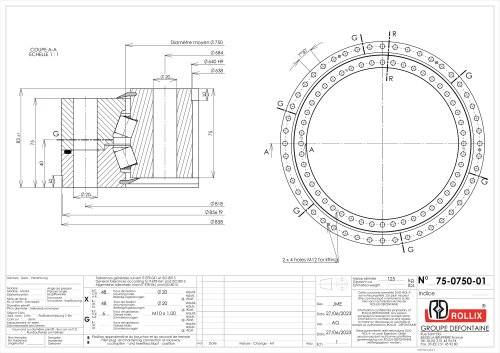
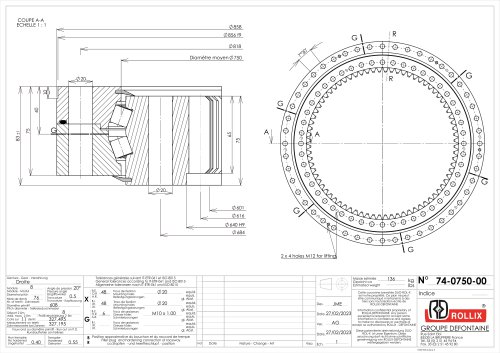
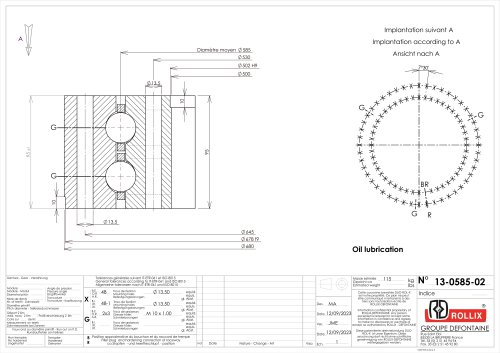
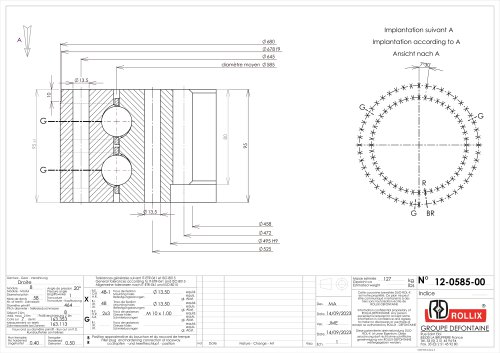
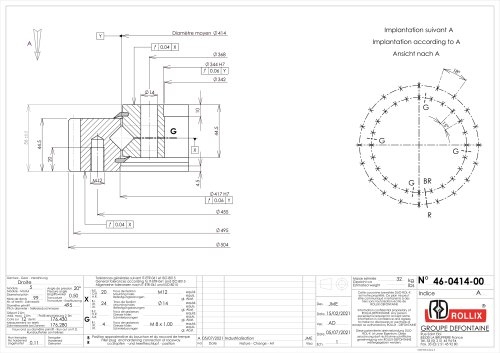
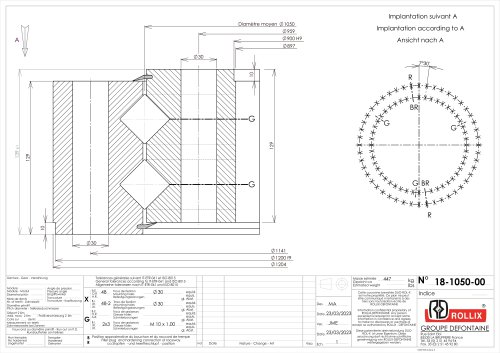
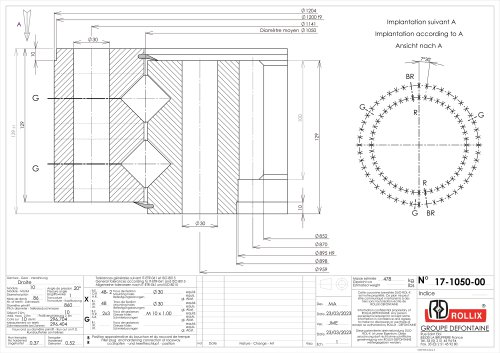
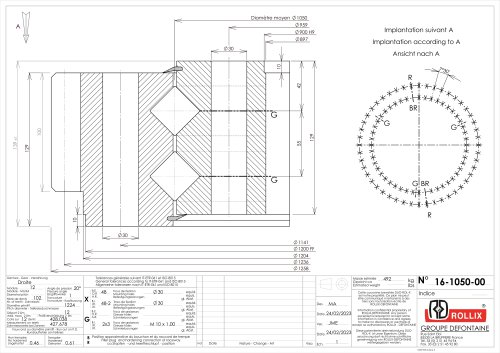
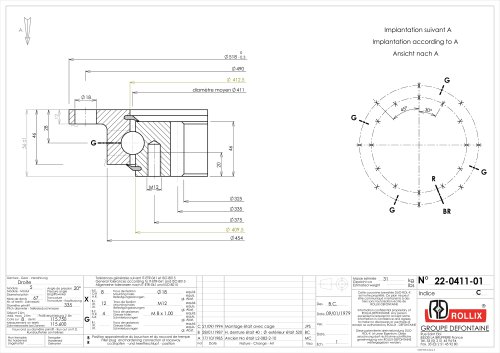
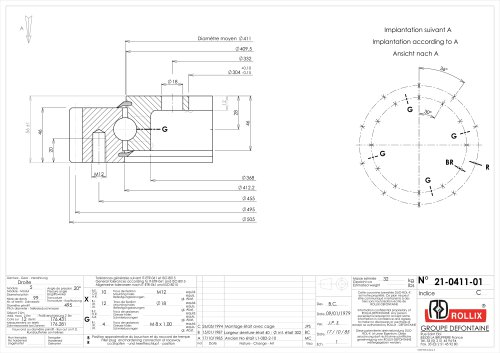
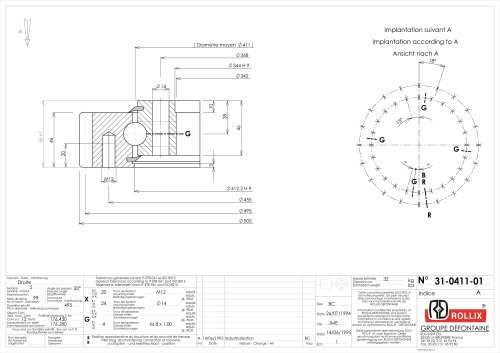
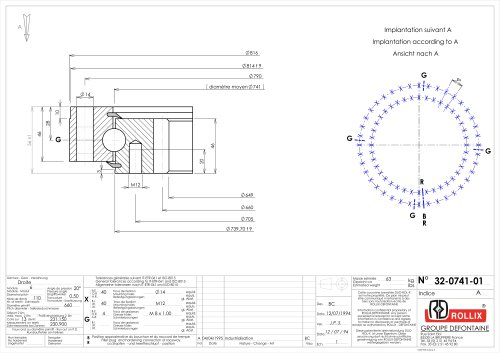
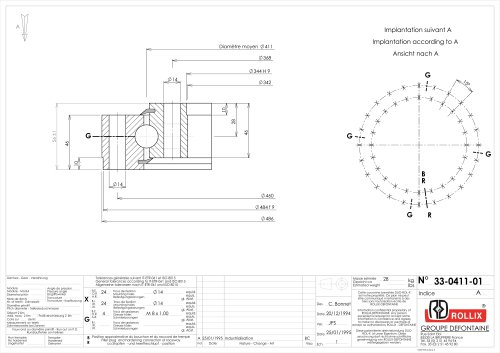
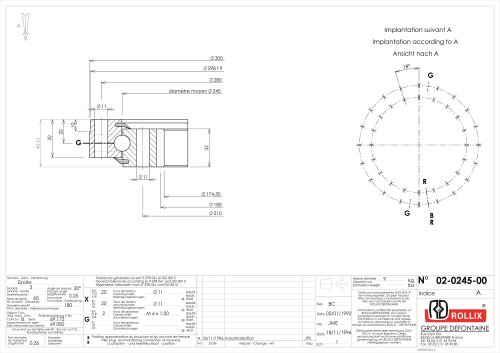
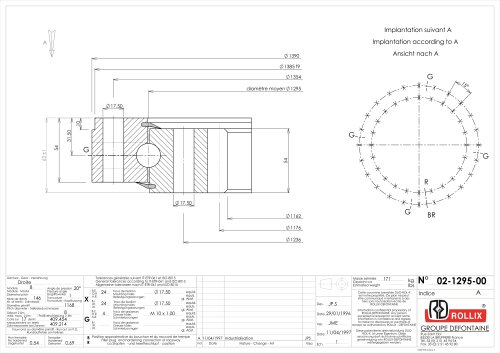
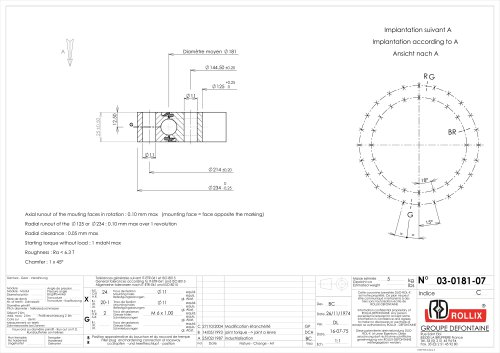
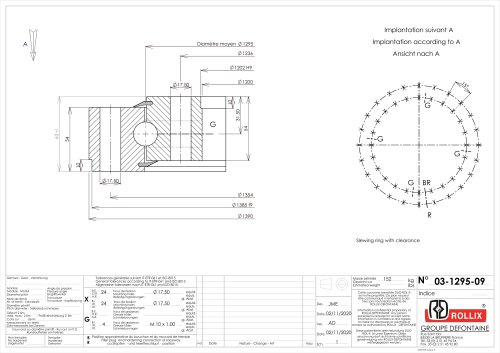
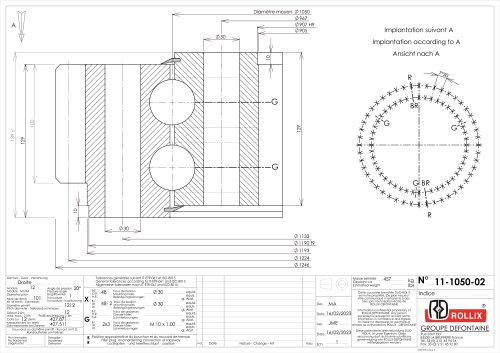
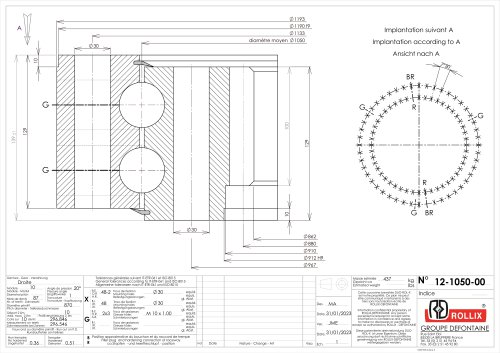
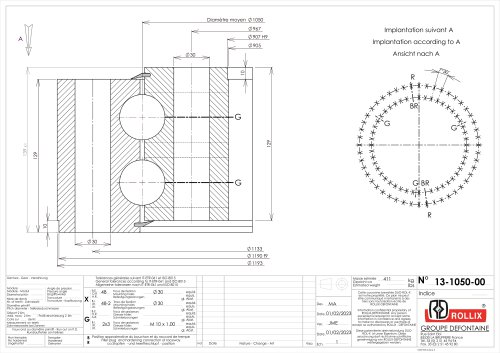
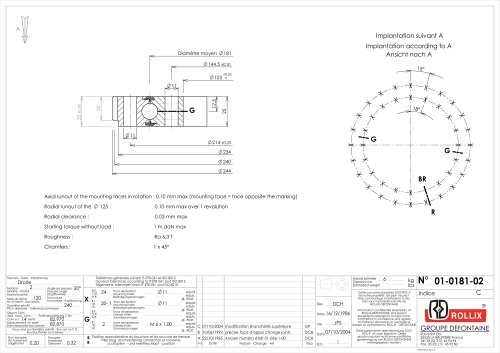

- DEFONTAINE ball bearing slewing ring
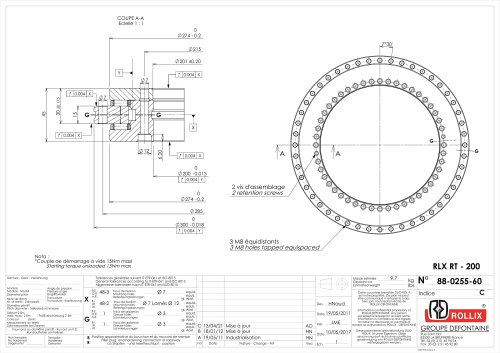
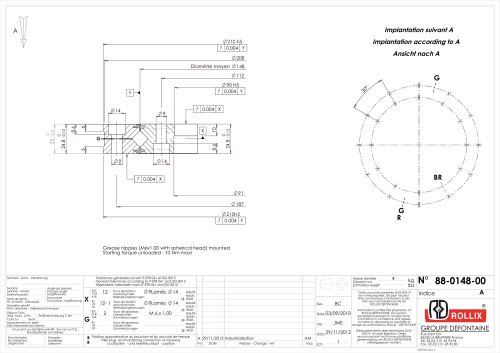
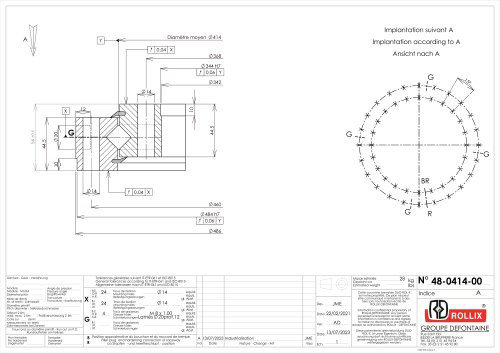
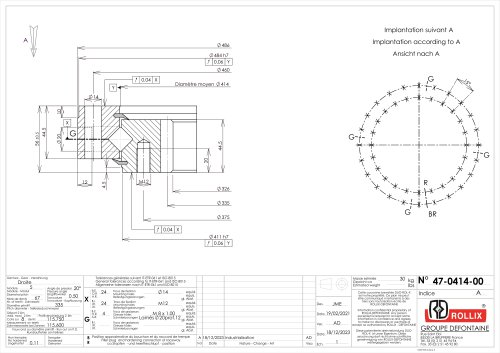
- DEFONTAINE single-row slewing ring
- DEFONTAINE external-toothed slewing ring
- DEFONTAINE slewing ring without teeth
- DEFONTAINE internal-toothed slewing ring
- DEFONTAINE heavy load slewing ring
- DEFONTAINE axial slewing ring
- DEFONTAINE wind turbine slewing ring
- DEFONTAINE double-row slewing ring
- Robotic slewing ring
- DEFONTAINE crossed roller slewing ring
- DEFONTAINE forestry machinery slewing ring
- DEFONTAINE slewing ring for marine applications
- DEFONTAINE slewing ring for medical applications
- DEFONTAINE agricultural machinery slewing ring
- DEFONTAINE radial slewing ring
- DEFONTAINE materials handling slewing ring