
- Catalogs
- Daikin Applied
- CAT 1600 -2 Daikin Classroom Unit Ventilators- Model AV Floor Units

CAT 1600 -2 Daikin Classroom Unit Ventilators- Model AV Floor Units

CAT 1600 -2 Daikin Classroom Unit Ventilators- Model AV Floor Units
Introduction
Daikin Classroom Unit Ventilators have been used in schools for nearly a century, offering quiet and comfortable environments. They are designed for cost-effective installation and operation, ensuring long-term reliability.
AHRI Performance
The document details AHRI performance data for various models, focusing on airflow, cooling capacity, and power input, certified under AHRI Standard 840-98.
Model AV Floor Unit Features
The Model AV is a versatile floor-standing unit suitable for new constructions and retrofits, supporting chilled water or refrigerant for cooling and various heating options. Key features include a durable welded chassis, a draw-thru design for uniform air distribution, and MicroTech II controls for integration into building automation systems.
Features & Benefits
- Quiet Operation: The GentleFlo air moving system minimizes noise.
- Fresh Air and Cooling: Economizer Operation and Demand Control Ventilation options reduce costs.
- Temperature and Dehumidification Control: Precise control strategies ensure optimal levels.
- Low Installation and Operating Costs: Designed for easy installation and efficient operation.
- Easy Maintenance: Modular design allows easy access for maintenance.
- Durability: Built to withstand classroom environments.
MicroTech II Controls
These controls offer superior performance and easy integration with building automation systems, supporting multiple communication protocols.
Application Considerations
The document emphasizes meeting IAQ requirements, following ASHRAE Control Cycle II, and ensuring compliance with AHRI 840 standards.
GentleFlo™ Air Moving System
Engineered for quiet and continuous comfort, it features large fan wheels, offset blades, and a large discharge opening to reduce air resistance.
Ventilation and Cooling Features
Designed to deliver fresh air and cooling capacity, features like Economizer Operation and Demand Control Ventilation help match classroom comfort requirements and reduce costs.
Temperature and Dehumidification Control
Provides precise control using a draw-thru fan design and MicroTech II control strategies.
Installation and Flexibility
Economical to install, with features like reversible drain connections and adjustable leg levelers.
Energy Efficiency and Cost Savings
Designed to minimize energy expenditures while providing a comfortable learning environment.
Overview of Daikin Unit Ventilators
Optimizes classroom comfort and energy efficiency, providing individual control and utilizing fresh outdoor air.
MicroTech II Control Options
Enhances energy savings through features like Economizer Operation and Demand Control Ventilation.
Maintenance and Durability
Designed for easy maintenance with durable materials.
Design and Construction
Features a heavy-duty frame with a corrosion-resistant finish.
Energy-Efficient Features
Equipped with energy-efficient fan motors and a decoupled isolation system.
Damper Design
Uses durable dampers for positive sealing and quiet operation.
Model Types
Outlines various model types with specific features for airflow and temperature control.
Specifications
Details unit combinations, control systems, and installation arrangements.
Control Systems
Describes the MicroTech II control system with various control options.
Installation Arrangements
Details various unit arrangements and installation guidelines.
Digital Ready Systems
Available with pre-wired DDC components for simplified installation.
Economizer Modes
Explains economizer operation for enhanced energy efficiency.
Demand Control Ventilation
Uses a CO2 sensor to adjust outside air intake based on occupancy.
Accessories and Installation
Various configurations and accessories are available for customization.
Ventilation and Exhaust Solutions
Provides energy-efficient air expulsion solutions.
Window Downdraft Protection
Recirculates cold air back into the unit ventilator to maintain comfort.
Technical Specifications
Includes detailed specifications for fan data, filter sizes, and coil water volumes.
Design Conditions
Outlines acceptable design conditions for HVAC systems.
Cooling and Heating Capacities
Provides detailed BTUH capacities for various systems.
Load Calculation Procedures
Advises calculating heating losses and cooling loads using ASHRAE guidelines.
Air Quantity Requirements
Determines air quantity for heating based on room air changes per hour.
Unit Selection and Sizing
Units should meet or exceed CFM delivery requirements.
Freeze Protection
Recommendations include constant pump operation and using antifreeze.
Antifreeze Considerations
Discusses the impact of glycol on capacities and pressure drops.
Chilled Water Selection Example
Provides a step-by-step example for selecting a chilled water system.
Hot Water Heating Selection
Guidelines for selecting hot water coils.
Two-Pipe Applications
Explains selection procedures for two-pipe applications.
Hot Water Coil Pressure Drop
Outlines pressure drop for various unit sizes and coil rows.
Two-Pipe Selection Example
Provides an example for calculating temperature difference for heating load.
Steam Heating Selection
Provides steam capacities and requirements.
Electric Heating Selection
Tables for electric heat capacities for different unit types.
Direct Expansion Cooling Coil Selection
Guidelines for sizing condensing units.
Wiring Diagrams
Illustrates typical wiring diagrams for unit ventilators.
MicroTech II Controls
Describes control modes and functions for unit ventilators.
Operating Modes
Includes various modes like Cooling, Stand By, and Economizer Modes.
External Input and Output Functions
Includes input and output signals for managing external devices.
Advanced Control Options
Includes Part Load Variable Air Control and Demand-Controlled Ventilation.
Compressor Operation and Control Features
Includes key control features for compressor operation.
System Components
Includes components like Unit Ventilator Controller and Local User Interface.
Operating Modes and Fan States
Offers four operating modes and fan states.
Sensors and Actuators
Uses various sensors and actuators for precise control.
Data Points and Alarms
Provides extensive data points for monitoring and alarms.
ServiceTools Software
A software tool for monitoring and diagnosing unit operations.
Optional Communication Modules
Available for various protocols for building automation integration.
Application Considerations
Discusses challenges in managing excess heat and IAQ requirements.
Specifications and Components
Outlines components and specifications for unit ventilators.
AHRI 840 Requirements
Ensures a minimum of 80% rated standard airflow for ventilation.
Application Considerations
Includes face and bypass temperature control for precise environment control.
System Balancing and Economics
Maintains constant water circulation for system balancing.
Maintenance and Freeze Protection
Offers reduced risk of coil freeze with constant water flow.
Modulating Valve Temperature Control
Maintains constant air volume while modulating water flow.
Coil Selection and Quality
Offers a variety of coil options for efficient heat transfer.
Electric Heating Coils
Discusses advantages of Daikin's draw-thru design for electric heating coils.
Steam Coils
Equipped with vacuum breakers for even steam distribution.
DX Split Systems
Compatible with R-410A condensing units, with guidelines for proper sizing.
Condensing Unit Selection
Emphasizes correct sizing to prevent operational problems.
Control Considerations
Outlines control requirements for integrating condensing units.
Installation Guidelines
Provides detailed instructions on wiring and piping.
Digital Ready Systems
Simplifies installation with pre-wired DDC components.
Field-Installed Controls
Outlines responsibilities of the ATC contractor.
ASHRAE Cycle II Overview
Minimizes conditioning of outside air and utilizes natural cooling.
Temperature Measurements
Requires three temperature measurements for control.
Control Sequences
Essential for equipment protection and occupant comfort.
Damper and Valve Operations
Vary based on temperature conditions.
Freezestat Function
Protects hydronic coils from freezing.
System Operation in Low Temperatures
Includes specific actions to prevent freezing.
Unit Installation
Typically installed on an outside wall below a window.
Wall and Floor Considerations
Requires secure mounting and proper placement of air intake louver.
Wall Louvers
Position determined by building construction.
Interior Considerations
Ensure smooth and level interior wall surfaces.
Indoor Air Exhaust Considerations
Exhaust vents may be required by law.
Window Downdraft Protection
Recommended for spaces with large windows.
Valve Selection
End-of-cycle valves required for each hydronic coil.
Specifications
Outlines specifications for Daikin Applied Unit Ventilator Model AV.
Procedures
Provides procedures for selecting and installing valves.
Standards and Recommendations
Includes recommendations for valve installation.
Valve Piping Configurations
Illustrations and descriptions for piping configurations.
Modulating Valve Sizing
Details the process for selecting modulating valves.
Steam Valve Sizing and Piping
Guidelines for selecting steam valves.
Guide Specifications
Outlines general requirements for unit ventilators.
Guide Specifications for Model AV Unit Ventilator
Includes damper specifications, drain pan, agency listing, coils, filters, condensing units, temperature controls, network system, room temperature sensor, night controls, external signal connections, accessories, training, and warranty.
Catalog excerpts

Daikin Classroom Unit Ventilators Models AVS, AVB, AVV and AVR Floor Units People and ideas you can trust.™
Open the catalog to page 1
CAT 1600-2 • MODEL AV UNIT VENTILATOR
Open the catalog to page 2
Introduction Precise Temperature and Dehumidification Control Daikin Classroom Unit Ventilators For nearly a century schools have relied on unit ventilators to keep classrooms comfortable. Students learn more readily in a quiet, well-ventilated environment. That is why Herman Nelson invented the unit ventilator in 1917. Daikin Applied continues to set the industry standard for performance, features and quality. Today Daikin remains committed to continuing the Herman Nelson-AAF-McQuay legacy as the industry leader and meeting the changing requirements of schools with the highest quality unit ventilator...
Open the catalog to page 3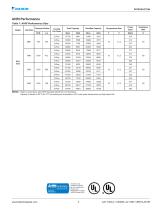
AHRI Performance Table 1: AHRI Performance Data Model Unit Size Cooling Coil Rows Temperature Rise Ventilation Rate Power Input Sensible Capacity Total Capacity Notes: Rated in accordance with AHRI Standard 840-98 for Unit Ventilators Capacity is based on 80°F db, 67°F wb entering air temperature, 45°F enter water temperature and high-speed fan. Ventilation rate certified and tested per Air Conditioning, Heating and Refrigeration Institute (AHRI) Standard 840. CAT 1600-2 • MODEL AV UNIT VENTILATOR
Open the catalog to page 4
Introduction The Model AV is just right for new construction and for retrofit applications. Older buildings with baseboard radiant heat or other hydronic heating systems can be easily adapted to work efficiently with Model AV units. Chilled-water or refrigerant cooling can be added to provide year-round comfort. The major features of this model are shown below and described in more detail on the following pages. Model AV Floor Unit Features Our Model AV is a vertical, floor-standing unit that utilizes remotely-supplied chilled water or refrigerant for cooling, and hot water, steam or electric...
Open the catalog to page 5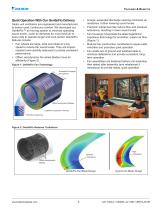
Features & Benefits • A large, expanded discharge opening minimizes air resistance, further lowering sound levels. • Precision tolerances help reduce flow and pressure turbulence, resulting in lower sound levels. • Fan housings incorporate the latest logarithmic expansion technology for smoother, quieter air flow (Figure 1). • Modular fan construction contributes to equal outlet velocities and promotes quiet operation. • Fan shafts are of ground and polished steel to minimize deflections and provide consistent, longterm operation. • Fan assemblies are balanced before unit assembly, then tested...
Open the catalog to page 6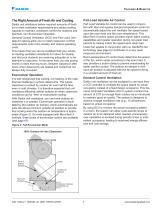
Features & Benefits The Right Amount of Fresh Air and Cooling Part-Load Variable Air Control Daikin unit ventilators deliver required amounts of fresh air to meet ventilation requirements and added cooling capacity to maintain consistent comfort for students and teachers. Our Economizer Operation, Demand Control Ventilation (DCV) and Part Load, Variable Air options allow you to match classroom comfort requirements even more closely, and reduce operating costs. This means that you can be confident that your school is meeting ventilation standards for Indoor Air Quality and that your students are...
Open the catalog to page 7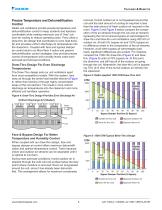
Features & Benefits Precise Temperature and Dehumidification Control removal. Humid outdoor air is not bypassed around the coil until the total amount of cooling air required is less than the total amount of fresh outdoor air required in the room. Figure 5 and Figure 6 below compare the composition of the air streams through the coil and air streams bypassing the coil at various bypass air percentages for draw-thru and blow-thru unit ventilators using 450 cfm of outdoor air. At both 0% bypass air and 100% bypass air, no difference exists in the composition of the air streams. However, at all...
Open the catalog to page 8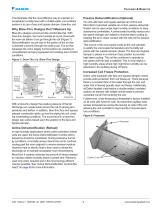
Features & Benefits This illustrates that the most effective way to maintain an acceptable humidity level with a chilled-water unit ventilator system is to use a face and bypass damper, draw-thru unit. Why Blow-Thru Designs Don’t Measure Up Blow-thru designs cannot provide comfort like this. With blow-thru designs, the humid outside air is pre-mixed with the room air before it can go through the coil (Figure 7). Dehumidification occurs only to the portion of the air that is directed unevenly through the cooling coil. The air that bypasses the coil is largely humid outdoor air, resulting in unconditioned...
Open the catalog to page 9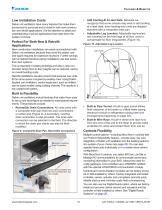
Features & Benefits Low Installation Costs Daikin unit ventilators have many features that make them economical to purchase and to install in both new construction and retrofit applications. It is this attention to detail and understanding of school applications that make them the system of choice. Perfect For Both New & Retrofit Applications New construction installations are easily accomplished with Daikin unit ventilators because they avoid the added cost and space required for expensive ductwork. Further savings can be realized because piping installations use less space than duct systems....
Open the catalog to page 10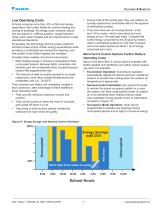
Features & Benefits Low Operating Costs Schools consume more than 10% of the total energy expended in the United States for comfort heating and cooling of buildings. As energy costs increase, educators are placed in a difficult position: caught between rising costs, lower budgets and the requirements to raise educational standards. Fortunately, the technology and the system exists for schools to take control of their energy expenditures while providing a comfortable environment for learning. And that system is the Daikin Applied unit ventilator. Consider these realities of school environments:...
Open the catalog to page 11
Features & Benefits Heavy-Duty Discharge Grille Daikin Unit Ventilators are designed to provide easy access for maintenance and service personnel to all serviceable components. Most maintenance tasks are easily handled by a single person. The discharge grille on the top of the unit is made from extra-strength steel bar stock, promoting long life (Figure 13). It can be removed to facilitate cleaning of fans and fan housings. A built-in 10-degree angle provides proper air throw to blanket the room for proper air circulation and comfort. Modular Fan Deck The entire fan deck is easily removed as...
Open the catalog to page 12All Daikin Applied catalogs and technical brochures
 Maverick® II systems
2 Pages
 Destiny® Indoor Air Handler
28 Pages
 PreciseLine®
4 Pages
 OptiLine™
2 Pages
 CAT 413-4 Steam Coils
23 Pages
 CAT 412-6 Water Heating Coils
32 Pages
 CAT 903 Air Terminal Units
106 Pages
 Daikin Applied 2014
247 Pages
 CAT 610-1 (AGSD 140-200 tons)
88 Pages


- Filter air purifier
- Air heater unit
- Mobile air purifier
- Daikin refrigeration unit
- Daikin stationary refrigeration unit
- HEPA filter air purifier
- Industrial air conditioner
- Air handling unit
- Ventilation unit
- Electric air heater unit
- Compact air conditioner
- Industrial air heater unit
- Outdoor air conditioner
- Inverter heat pump
- Wall-mounted air heater unit
- Commercial air conditioner
- Floor-standing air purifier
- Air purifier for commercial buildings
- Rooftop air conditioner