
- Catalogs
- DABECO Co.,Ltd
- DABECO CP4.0 Electrochemical Total Chlorine Sensor


DABECO CP4.0 Electrochemical Total Chlorine Sensor
DABECO CP4.0 Electrochemical Total Chlorine Sensor
Overview
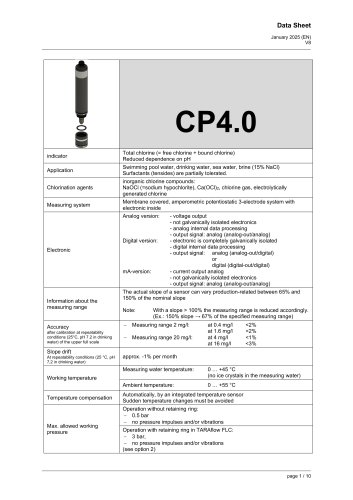
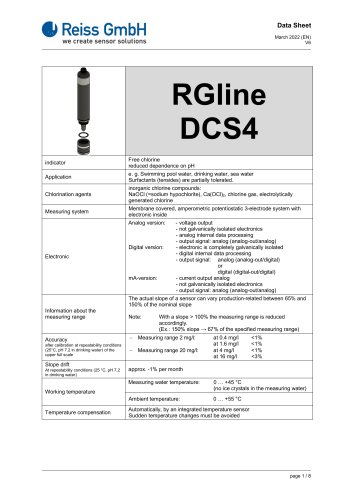
The CP4.0 is a chlorine indicator sensor designed to measure total chlorine (free + bound chlorine) with reduced dependence on pH. It is suitable for applications including swimming pool water, drinking water, seawater, and brine (up to 15% NaCl). The sensor tolerates some surfactants and works with various inorganic chlorine compounds such as sodium hypochlorite, calcium hypochlorite, chlorine gas, and electrolytically generated chlorine.
Measuring System and Electronics
- Membrane-covered amperometric potentiostatic 3-electrode system with integrated electronics.
- Available in analog, digital, and mA output versions:
- Analog: voltage output, not galvanically isolated, analog internal processing.
- Digital: fully galvanically isolated, digital internal processing, output can be analog or digital.
- mA version: current output, not galvanically isolated.
Performance Specifications
- Measuring range varies by model, with sensor slope variability between 65% and 150% of nominal slope affecting effective range.
- Accuracy after calibration at 25°C, pH 7.2:
- 2 mg/L range: <2% error at 0.4 and 1.6 mg/L.
- 20 mg/L range: <1% error at 4 mg/L, <3% at 16 mg/L.
- Slope drift approximately -1% per month under repeatability conditions.
- Working temperature: 0 to +45°C for measuring water; ambient 0 to +55°C.
- Automatic temperature compensation via integrated sensor; avoid sudden temperature changes.
- Maximum working pressure:
- Without retaining ring: 0.5 bar, no pressure impulses or vibrations.
- With retaining ring (option 2) in TARAflow FLC: up to 3 bar, no pressure impulses or vibrations.
Operational Parameters
- Flow rate: approx. 15-30 L/h (15-30 cm/s) with minimal flow dependence.
- pH range: 4 to 12 with reduced pH dependence.
- Conductivity range: 10 µS/cm to 200 mS/cm (including brine).
- Run-in time: approx. 2 hours at first start-up.
- Response time (T90): approx. 3 minutes (5 minutes in brine).
- No zero point adjustment required.
- Calibration performed on device using DPD-4 method (DPD-1 + DPD-3).
Interferences and Limitations
- Cross sensitivities: chlorine dioxide (ClO2) factor 1, ozone (O3) factor 1.3.
- Corrosion inhibitors and water hardness stabilizers may cause measurement errors.
- Disinfectant absence should not exceed 24 hours.
Physical and Connection Details
- Connections:
- mV and Modbus versions: 5-pole M12 plug-on flange.
- 4-20 mA version: 2-pole terminal or 5-pole M12 plug-on flange.
- Maximum sensor cable length:
- Analog: less than 30 m.
- Digital: greater than 30 m permissible.
- Protection rating: IP68 for 5-pole M12 flange, IP65 for 2-pole terminal with mA hood.
- Materials: microporous hydrophilic membrane, PVC-U, PEEK, stainless steel 1.4571.
- Dimensions: approx. 25 mm diameter; length varies by version (190-220 mm).
Storage and Maintenance
- Transport temperature: +5 to +50°C (sensor, electrolyte, membrane cap).
- Storage:
- Sensor dry and without electrolyte: no limit at +5 to +40°C.
- Electrolyte in original bottle: protected from sunlight at +5 to +35°C, minimum 1 year shelf life.
- Membrane cap in original packaging: no limit at +5 to +40°C; used caps cannot be stored.
- Maintenance:
- Check measuring signal at least weekly.
- Replace membrane cap and electrolyte annually, depending on water quality.
Options and Spare Parts
- Option 1: Membrane cap M48.4S for seawater or brine applications.
- Option 2: Retaining ring for operation above 0.5 bar pressure in TARAflow FLC; dimensions 29 x 23.4 x 2.5 mm, slitted PETP with selectable groove positions.
- Spare parts include membrane caps (M48.4E standard, M48.4S for brine), electrolytes (ECP1.4/GEL, ECP2S/GEL), Emery O-ring (S1), and NBR O-ring.
Technical Data by Version
1. Analog Output, Analog Internal Processing
- Measuring ranges: 0.005–2.000 ppm (high sensitivity), 0.05–20.00 ppm (normal range).
- Output: voltage 0 to ±2000 mV depending on model.
- Output resistance: 1 kΩ.
- Power supply: ±5 to ±15 VDC or 10–30 VDC depending on model.
- Galvanic isolation required.
- Connection: 5-pole M12 plug-on flange.
2. Analog Output, Digital Internal Processing
- Measuring ranges similar to analog version.
- Output: analog voltage 0 to ±2 V (max ±2.5 V).
- Power supply: 9–30 VDC, current approx. 7–30 mA.
- No galvanic isolation required.
- Connection: 5-pole M12 plug-on flange.
3. Digital Output, Digital Internal Processing
- Measuring ranges: 0.005–2.000 ppm and 0.05–20.00 ppm.
- Output: Modbus RTU over RS485.
- Power supply: 9–30 VDC, current approx. 7–30 mA.
- No galvanic isolation required.
- Connection: 5-pole M12 plug-on flange.
4. 4-20 mA Output, Analog Internal Processing
- Measuring ranges: 0.005–0.5 ppm up to 0.05–20 ppm.
- Output: 4–20 mA current loop, uncalibrated.
- Output resistance: 32 Ω at lowest range, down to 0.8 Ω at highest range.
- Power supply: 12–30 VDC.
- Galvanic isolation required.
- Connections:
- 2-pole terminal clamp (recommended cable: round, 4 mm diameter, 2 x 0.34 mm²).
- 5-pole M12 plug-on flange with defined pin functions.
Compliance and Certifications
- EMC tested.
- RoHS compliant.
Critical Notes and Best Practices
- Ensure no pressure impulses or vibrations during operation, especially above 0.5 bar.
- Avoid sudden temperature changes to maintain measurement accuracy.
- Regular maintenance and calibration are essential for reliable operation.
- Use appropriate membrane caps and electrolytes based on application (freshwater vs. seawater/brine).
- Observe cable length limits depending on analog or digital signal processing to avoid signal degradation.
Catalog excerpts
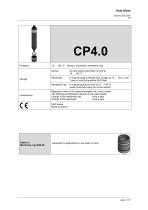
especially for applications in sea water or brine
Open the catalog to page 3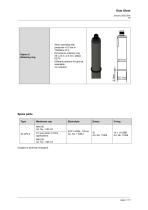
Option 2: Retaining ring When operating with pressures >0.5 bar in TARAflow FLC Dimensions retaining ring 29 x 23.4 x 2.5 mm, slitted, PETP Different positions for groove Spare parts Type (Subject to technical changes!)
Open the catalog to page 4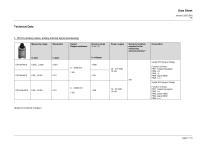
Technical Data 1. CP4.0 (analog output, analog internal signal processing) Galvanic isolation required in the measuring device/controller * Function of wires: measuring signal Function of wires: measuring signal +U (Subject to technical changes!)
Open the catalog to page 5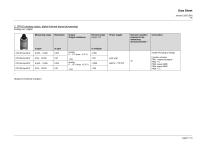
(Subject to technical changes!)
Open the catalog to page 6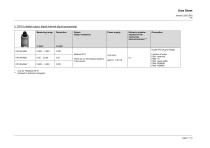
3. CP4.0 (digital output, digital internal signal processing) Output resistance There are no terminating resistors in the sensor. Power supply 9-30 VDC approx. 7-30 mA Galvanic isolation required in the measuring device/controller ** Connection 5-pole M12 plug-on flange Function of wires: * only for TARAsys MT10 ** (Subject to technical changes!)
Open the catalog to page 7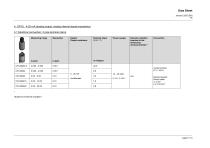
Data Sheet January 2025 (EN) V8 4. CP4.0 4-20 mA (analog output, analog internal signal processing) 4.1 Electrical connection: 2 pole terminal clamp Measuring range Output Output resistance Nominal slope Power supply Galvanic isolation required in the measuring device/controller * Recommended: Round cable 4 mm 2 x 0.34 mm²
Open the catalog to page 8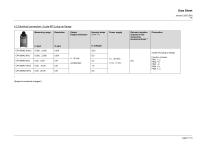
(Subject to technical changes!)
Open the catalog to page 9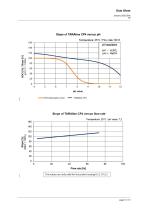
Temperature: 25°C / Flow rate: 30 l/h •HOCI dissociation curve
Open the catalog to page 10All DABECO Co.,Ltd catalogs and technical brochures
 DABECO P9.3 High Temp PAA Sensor
10 Pages
 DABECO MST1 Chlorite Sensor
8 Pages
 DABECO BR1 Bromine Sensor
10 Pages
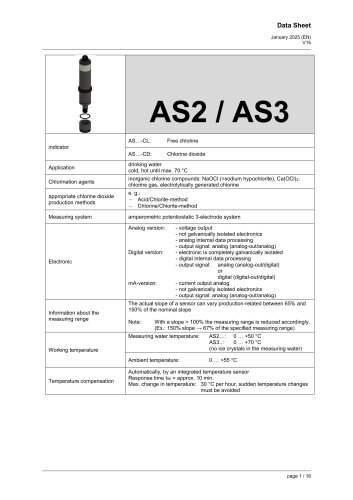 DABECO AS2 Free Chlorine Sensor
16 Pages
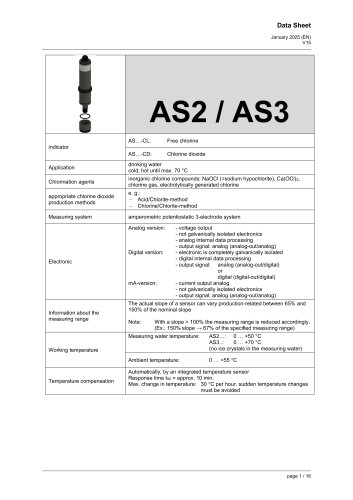 AS2 AS3
16 Pages
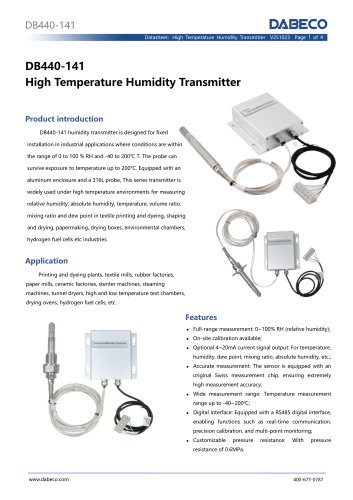 DB440-141
4 Pages
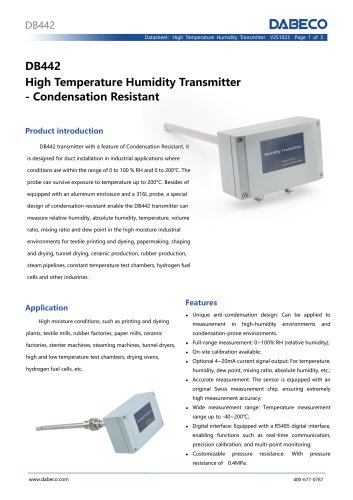 DB442
3 Pages
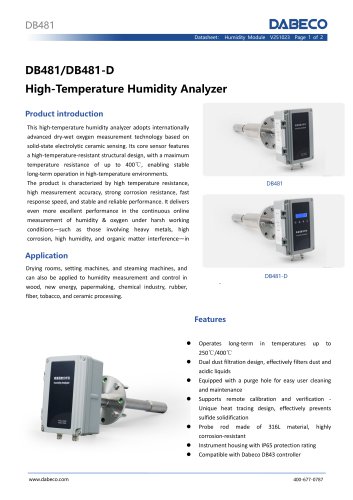 DB481
2 Pages
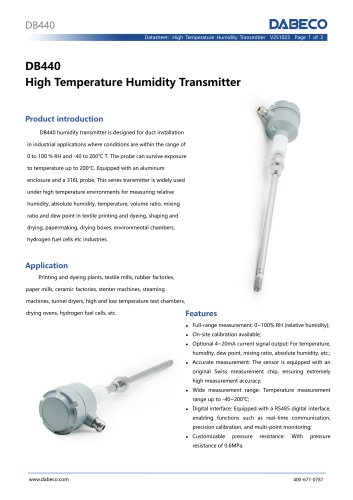 DB440
3 Pages
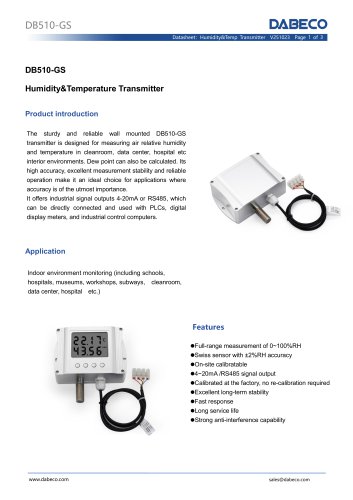 DB510-GS
3 Pages
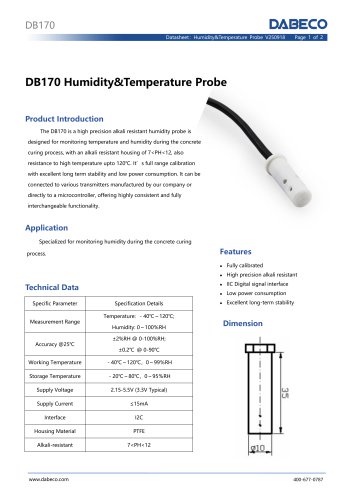 DB170
2 Pages
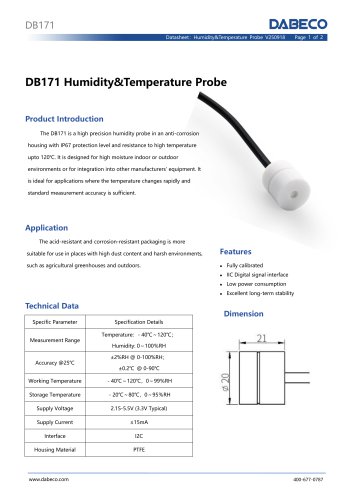 DB171
2 Pages
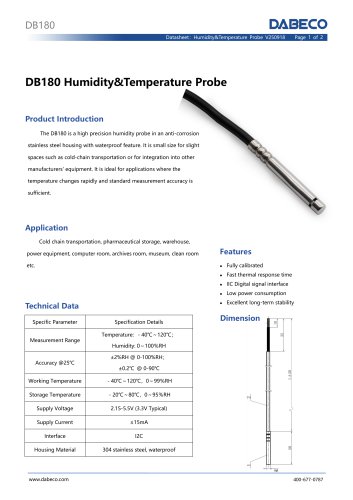 DB180
2 Pages
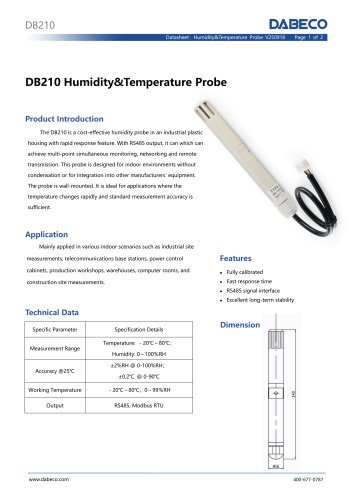 DB210
2 Pages
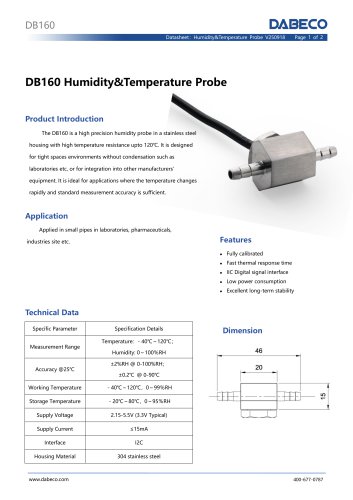 DB160
2 Pages
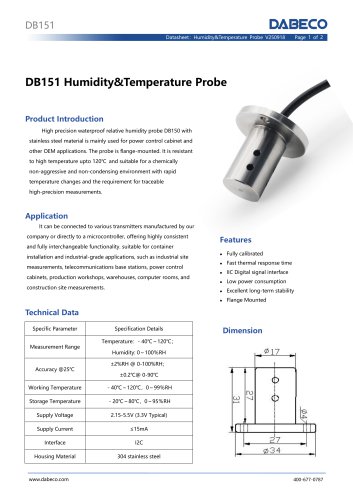 DB151
2 Pages
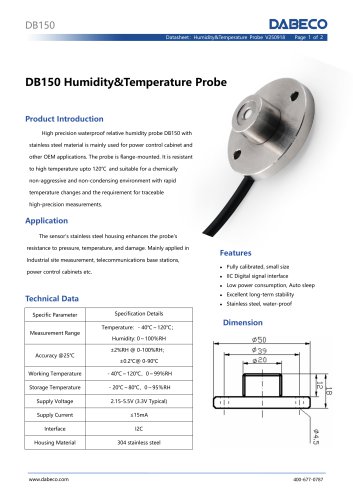 DB150
2 Pages
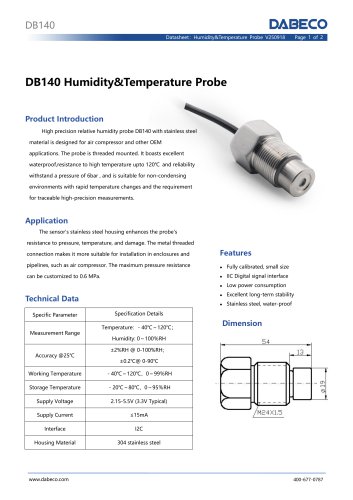 DB140
2 Pages
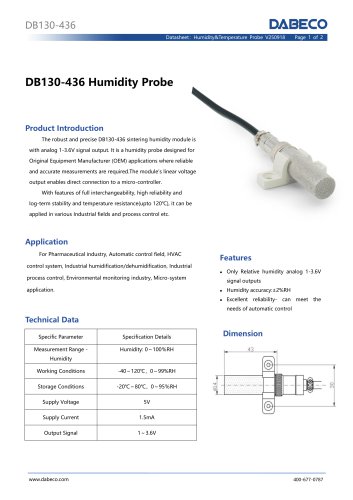 DB130-436 Humidity Probe
2 Pages
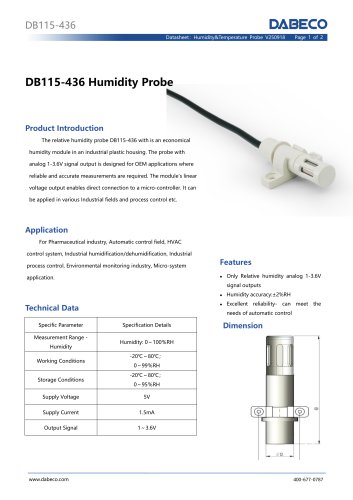 DB115-436 Humidity Probe
2 Pages
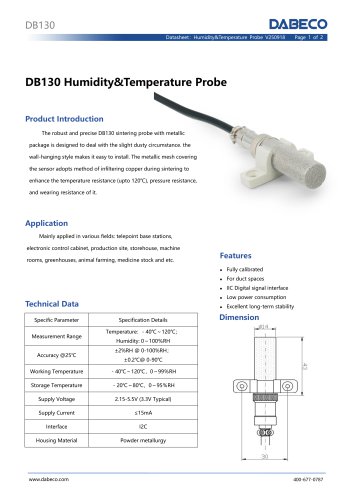 DB130
2 Pages
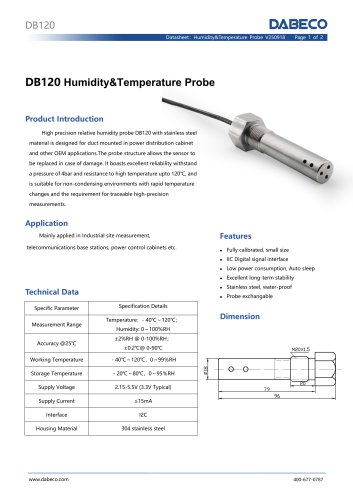 DB120
2 Pages
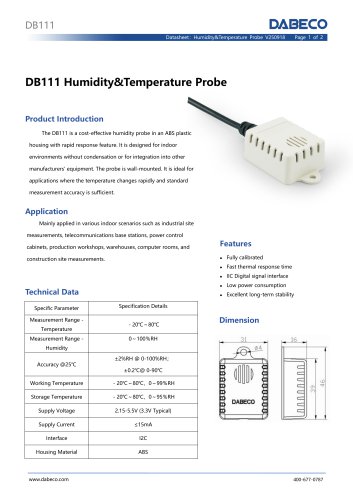 DB111
2 Pages
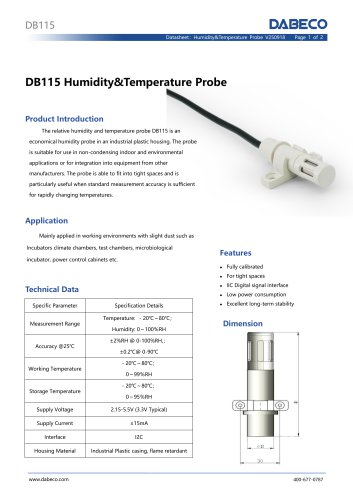 DB115
2 Pages
Archived catalogs
 turbidity sensor DTUL100-S
2 Pages
 COD Smart Probe UVCOD-S
2 Pages
 DUVCOD Smart Probe DUVCOD-S
2 Pages
 liguid analyzer W771-A-RG
4 Pages
 water analyzer DAS1500
2 Pages
 W501
2 Pages
 Humidity Probe DB115
2 Pages
 Humidity Probe DB120
2 Pages
 Humidity Probe DB130
2 Pages
 Humidity Sensor DB140
2 Pages
 Humidity Sensor DB150
2 Pages
 Humidity Sensor DB160
2 Pages
 Humidity Probe DB151
2 Pages
 Temperature Probe DB212
2 Pages
 Humidity Module DHM200
2 Pages
 Flue Gas Sensor DB43
2 Pages
 W501-DCCF1.0
2 Pages
 W501-DCD10.1
2 Pages
 W501-DCP4.0
2 Pages
 W501-DOZ10.1
2 Pages
 W501-DP10.1
2 Pages
 W501-DWP10.1
2 Pages
 W510-DCCF1.0
2 Pages
 W771-DCS4
2 Pages
 W771-DCP4.0
2 Pages
 W771-DAS2
2 Pages
 W771-DCC1
2 Pages
 W771-DCL2.2
2 Pages
 W771-DCD-4.2
2 Pages
 W761-DAS2
2 Pages
 W761-DCC1
2 Pages
 W761-DCL2.2
2 Pages
 W761-DCD-4.2
2 Pages
 W510-DCH10
2 Pages
 W510-DCL4.2
2 Pages
 W510-DAS3
2 Pages
 W501-DCH10
2 Pages
 W501-DCL4.2
2 Pages
 W501-DAS3
2 Pages
 W781 water quality Analyzer
2 Pages


- Temperature probe
- Gas analyzer
- Concentration analyzer
- Monitoring analyzer
- Resistance temperature sensor
- Liquids analyzer
- Automatic analyser
- Solids analyser
- Process analyzer
- Portable analyzer
- Pt100 temperature transducer
- Continuous analyzer
- Waterproof temperature sensor
- Real-time analyzer
- Water analyzer
- Gas sensor
- Integration analyzer
- Laboratory analyzer
- Oxygen analyzer
- Stainless steel temperature transducer