
- Catalogs
- A&D COMPANY, LIMITED
- Users handbook for M series


Users handbook for M series

1 / 30 PagesView full catalog
Users handbook for M series
Product catalog summary
Introduction
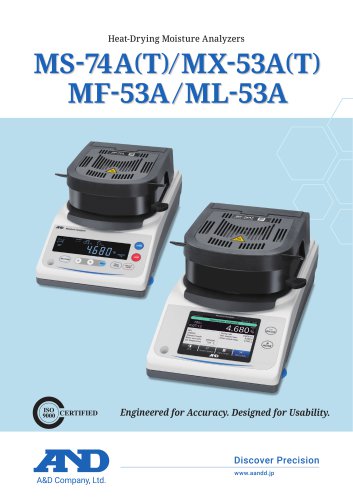
This document serves as a comprehensive guide for the moisture analyzers MS-70, MX-50, MF-50, and ML-50 by A&D Company, Limited. It covers the basics of moisture measurement, calibration, application, data analysis, and maintenance.
This document serves as a comprehensive guide for the moisture analyzers MS-70, MX-50, MF-50, and ML-50 by A&D Company, Limited. It covers the basics of moisture measurement, calibration, application, data analysis, and maintenance.
Basics of Measurement
- Moisture Content: Defined as the percentage of water in a material, including hygroscopic moisture and humidity. Types of moisture include water of adhesion, absorbed water, and crystal water.
- Method of Measurement: Various methods are discussed, with the heating method highlighted for its simplicity and cost-effectiveness.
- Accuracy: Accuracy is defined as the repeatability of results under the same conditions, with a standard accuracy of 0.02%.
- Samples: Sodium Tartrate Dihydrate is used as a standard due to its stable moisture content.
Calibration
- Calibration can be performed for weight and temperature, with specific accessories recommended for accuracy checks. Results can be documented according to GLP, GMP, or ISO standards.
Application and Data Analysis
- Data analysis is facilitated by Windows communication software, WinCT-Moisture, which aids in determining heating temperatures and analyzing results.
Maintenance
- Regular maintenance includes checking the halogen lamp and cleaning the device to ensure accurate measurements.
Key Considerations
- Not all materials are suitable for testing with the heating method, especially those that are explosive, flammable, or form a membrane when heated.
- Sample placement and weight are crucial for accurate measurements, particularly for low moisture content samples.
Specifications and Calibration
The analyzers come with a traceability certificate and a certificate of measurement. Temperature calibration is possible for certain models (MS/MX).
The analyzers come with a traceability certificate and a certificate of measurement. Temperature calibration is possible for certain models (MS/MX).
Heating Methods
The analyzers use halogen lamps for efficient heating, with the SRA filter ensuring even heating.
The analyzers use halogen lamps for efficient heating, with the SRA filter ensuring even heating.
Measurement Procedures
Users can observe samples during heating, enhancing safety and data evaluation. The analyzers incorporate a Super Hybrid Sensor (SHS) for high-speed and accurate weighing.
Users can observe samples during heating, enhancing safety and data evaluation. The analyzers incorporate a Super Hybrid Sensor (SHS) for high-speed and accurate weighing.
Comparison with Karl Fischer Method
The MX/MF analyzers provide comparable results to the Karl Fischer method with better repeatability and reduced measurement time.
The MX/MF analyzers provide comparable results to the Karl Fischer method with better repeatability and reduced measurement time.
Typical Measurement Results
Tables include measurement results for various commodities, detailing sample weight, measurement mode, pan temperature, process time, mean moisture value, repeatability, and coefficient of variation.
Tables include measurement results for various commodities, detailing sample weight, measurement mode, pan temperature, process time, mean moisture value, repeatability, and coefficient of variation.
Software Tools
- RsFig: Processes data into graphs, supporting overlapping display and data storage in CSV files.
- RsTemp: Determines the optimum heating temperature, displaying moisture content and loss in graphs.
- WinCT-Moisture: Facilitates data transfer from analyzers to PCs for storage and analysis.
Recommendations
- For high heat resistance samples, use the highest possible temperature for quick measurement.
- For volatile oils or dark-colored samples, use consistent conditions and consider glass fiber sheets to prevent carbonization.
- Visual and olfactory evaluations are crucial alongside software analysis.
Advanced Usage and Data Analysis
Advanced tips focus on the RsTemp feature for analyzing temperature-related data.
Advanced tips focus on the RsTemp feature for analyzing temperature-related data.
Halogen Lamp Information
Halogen lamps have a lifespan of about 5,000 hours and can be replaced following the instruction manual.
Halogen lamps have a lifespan of about 5,000 hours and can be replaced following the instruction manual.
Maintenance and Cleaning
Cleaning instructions emphasize using water-based or neutral detergents and avoiding organic solvents to prevent affecting measurement accuracy.
Cleaning instructions emphasize using water-based or neutral detergents and avoiding organic solvents to prevent affecting measurement accuracy.
See more
All A&D COMPANY, LIMITED catalogs and technical brochures
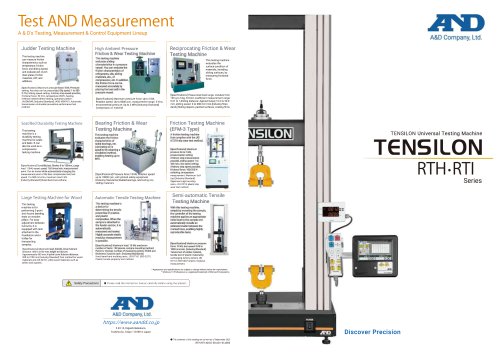 RTH・RTI Series
10 Pages
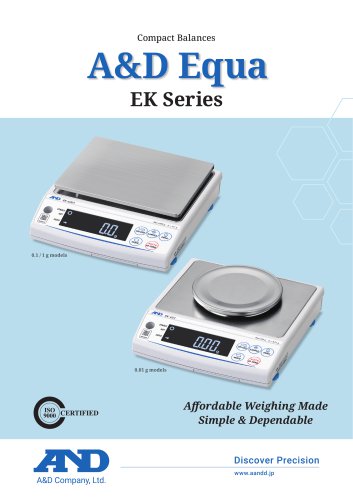 EK Series
4 Pages
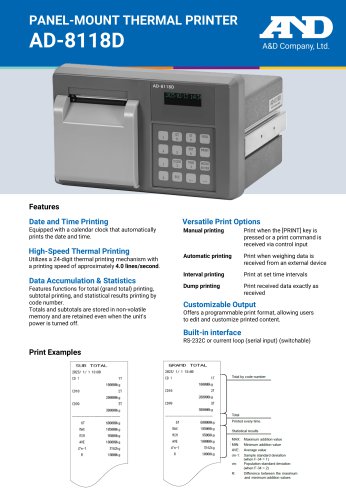 AD-8118D
2 Pages
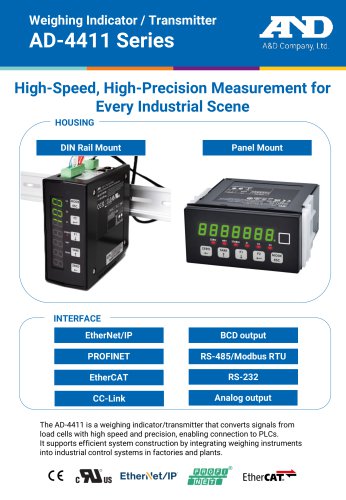 AD-4411 Series
4 Pages
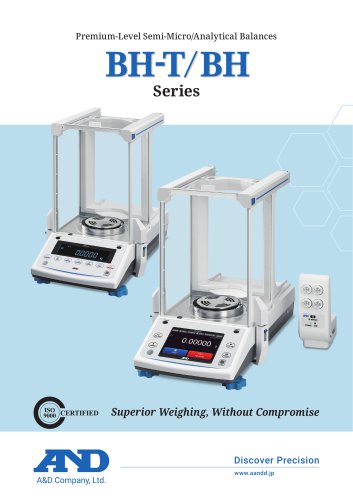 BH-T/BH Series
12 Pages
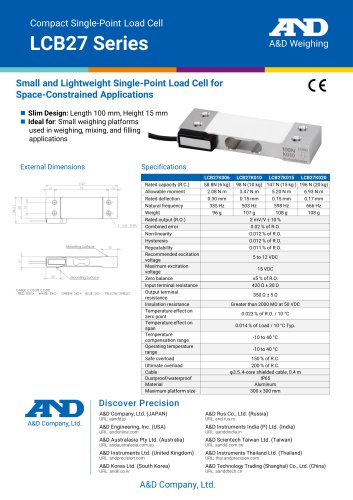 LCB27 Series
1 Page
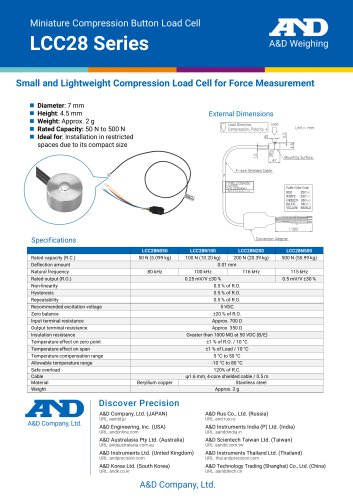 LCC28 Series
1 Page
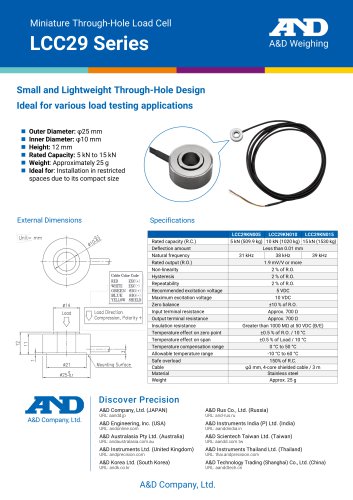 LCC29 Series
1 Page
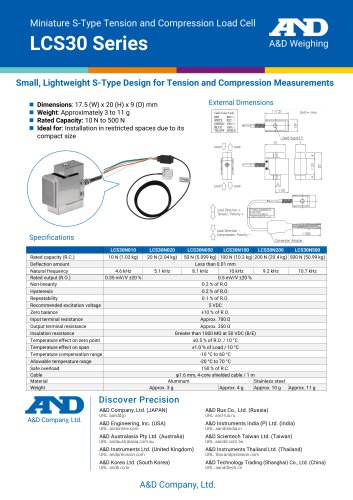 LCS30 Series
1 Page
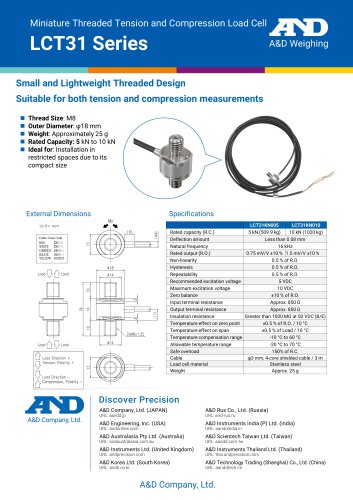 LCT31 Series
1 Page
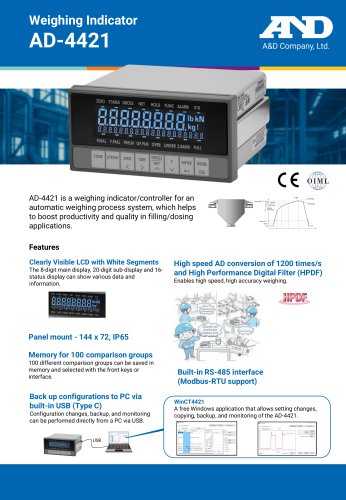 AD-4421
2 Pages
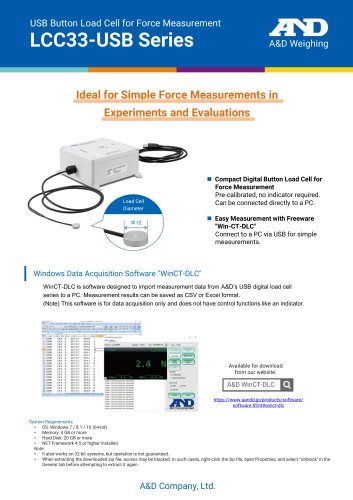 LCC33-USB
2 Pages
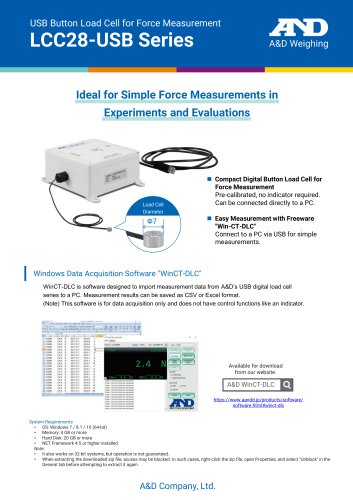 LCC28-USB
2 Pages
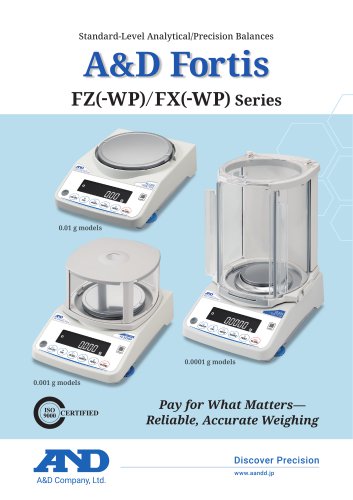 FZ(-WP)/FX(-WP) Series
8 Pages
 LC1205-USB
2 Pages
 CMX-USB
1 Page
 LCC20
LCC201 Page
 LC4001/LC4001A
1 Page
 AD-4329A
4 Pages
 AD4329A-DLC & LCCD20
4 Pages
 AD-4401A
4 Pages
 AD-4402
6 Pages
 AD-4408C
2 Pages
 AD-4410
6 Pages
 AD-4403FP
4 Pages
 AD-4430 series
6 Pages
 AD4413-CW
2 Pages
 AD4412-CW
6 Pages
 GC Series of Counting Scales
8 Pages
 AD-4531B
2 Pages
 AD-4530
2 Pages
 LCM13 Series
2 Pages
 Moisture Analyzer/M series
6 Pages
 Data Acquisition System Omniace
16 Pages
 Pipette Management Solutions
8 Pages
 Laboratory Solutions by A&D
12 Pages
 AD-1612 Comparator Buzzer
2 Pages
 AD-1641 Air Flow Logger
4 Pages
 Leak Tester/AD-1690
2 Pages
 Weighing Data Logger/AD-1688
2 Pages
 Washdown Scales/SC&SE Series
4 Pages
 Digital Indicator/AD-4532B
4 Pages


Archived catalogs
 Press Release/FZ-i series
3 Pages


Related Searches
- A&D testing machine
- A&D load cell
- Measuring device
- Data logger
- A&D tension/compression load cell
- A&D steel load cell
- Automated testing machine
- Material test machine
- A&D strain gauge load cell
- Temperature datalogger
- A&D digital scale
- Computer-controlled test machine
- Digital indicator
- A&D stainless steel load cell
- Portable tester
- A&D weighing load cell
- Panel panel meter
- Compression testing machine
- USB datalogger
- A&D beam type load cell
*Prices are pre-tax. They exclude delivery charges and customs duties and do not include additional charges for installation or activation options. Prices are indicative only and may vary by country, with changes to the cost of raw materials and exchange rates.
About DirectIndustry
DirectIndustry is a marketplace that offers B2B players a complete experience, from product sourcing to purchase. DirectIndustry is an entity of VirtualExpo Group.
Are you a buyer?
Are you a supplier?