
- Catalogs
- Curtis Instruments
- ED1800 Single Pole Single Throw


ED1800 Single Pole Single Throw
ED1800 Single Pole Single Throw
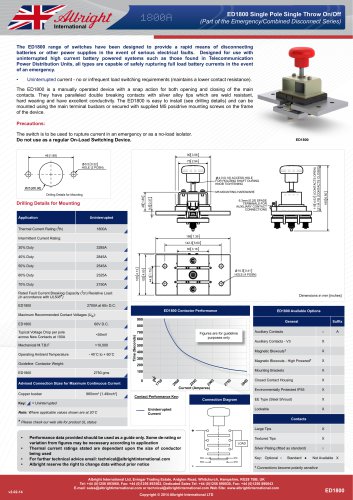
- Thermal Current Rating: 1800A uninterrupted.
- Intermittent Current Ratings: Varying from 3285A at 30% duty to 2150A at 70% duty.
- Rated Fault Current Breaking Capacity: 2700A at 60V D.C. for resistive loads.
- Maximum Recommended Contact Voltage: 60V D.C.
- Typical Voltage Drop: Less than 50mV per pole at 100A.
- Operating Temperature Range: -40˚C to +60˚C.
- Mechanical M.T.B.F: Greater than 10,000 operations.
- Weight: 2750 grams.
- Advised Connection Size: Copper busbar 965mm2.
- Manually operated with snap action for opening and closing.
- Paralleled double breaking contacts with silver alloy tips for durability and conductivity.
- Environmentally protected to IP55 standards.
- Optional features include auxiliary contacts, magnetic blowouts, and mounting brackets.
Catalog excerpts
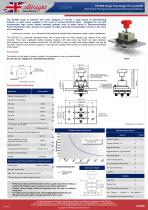
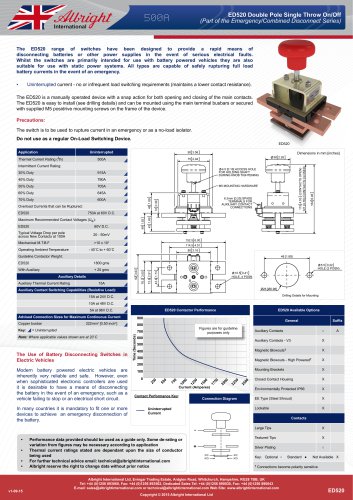
EDI 800 Single Pole Single Throw On/Off (Part of the Emergency/Combined Disconnect Series) ED1800 The ED1800 range of switches have been designed to provide a rapid means of disconnecting batteries or other power supplies in the event of serious electrical faults. Designed for use with uninterrupted high current battery powered systems such as those found in Telecommunication Power Distribution Units, all types are capable of safely rupturing full load battery currents in the event of an emergency. • Uninterrupted current - no or infrequent load switching requirements (maintains a lower contact resistance). The ED1800 is a manually operated device with a snap action for both opening and closing of the main contacts. They have paralleled double breaking contacts with silver alloy tips which are weld resistant, hard wearing and have excellent conductivity. The ED1800 is easy to install (see drilling details) and can be mounted using the main terminal busbars or secured with supplied M5 posidrive mounting screws on the frame of the device. Precautions: The switch is to be used to rupture current in an emergency or as a no-load isolator. Do not use as a regular On-Load Switching Device. Uninterrupted Current Performance data provided should be used as a guide only. Some de-rating or variation from figures may be necessary according to application Thermal current ratings stated are dependant upon the size of conductor being used For further technical advice email: [email protected] Albright reserve the right to change data without prior notice Albright International Ltd, Evingar Trading Estate, Ardglen Road, Whitchurch, Hampshire, RG28 7BB, UK Tel: +44 (0)1256 893060, Fax: +44 (0)1256 893562, Dedicated Sales Tel: +44 (0)1256 890030, Fax: +44 (0)1256 890043 E-mail: [email protected] or [email protected] Web Site: www.albrightinternational.com Copyright © 2014 Albright International LTD
Open the catalog to page 1All Curtis Instruments catalogs and technical brochures
 1222
12226 Pages
 1232E
1232E6 Pages
 AC F4-A
7 Pages
 AC F2-C
7 Pages
 AC F2-A
7 Pages
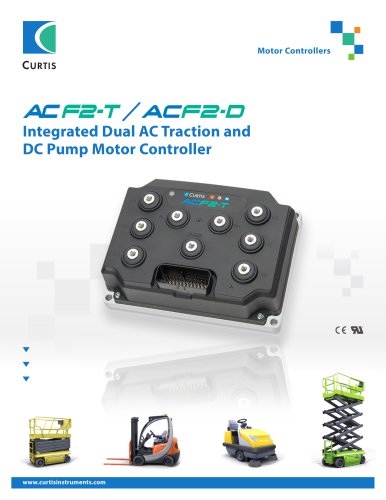 AC F2-T/AC F2-D
8 Pages
 1212C
1212C8 Pages
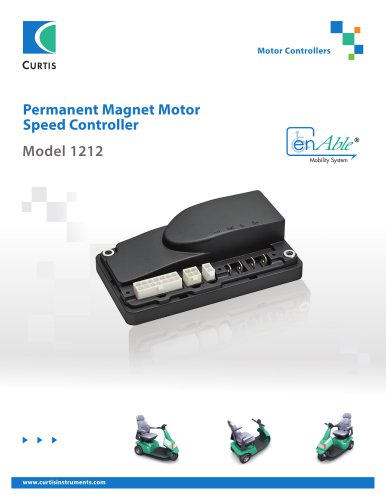 1212
12124 Pages
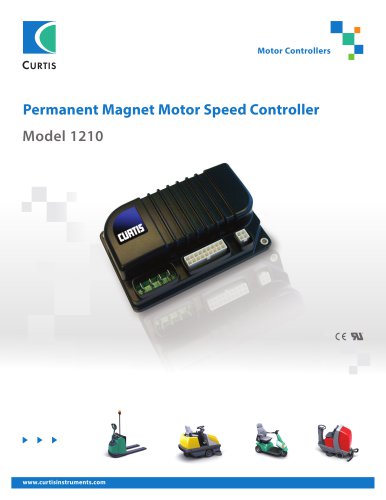 1210
12104 Pages
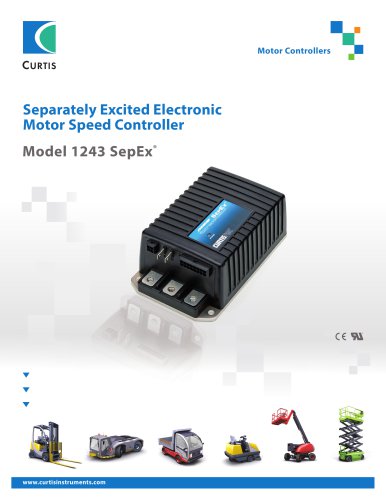 1243/1243 CAN
6 Pages
 AC F2A
7 Pages
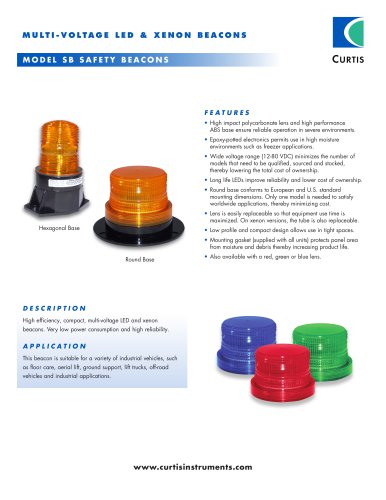 Beacons
3 Pages
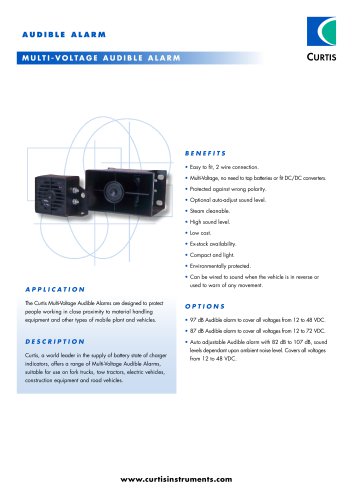 Alarms
3 Pages
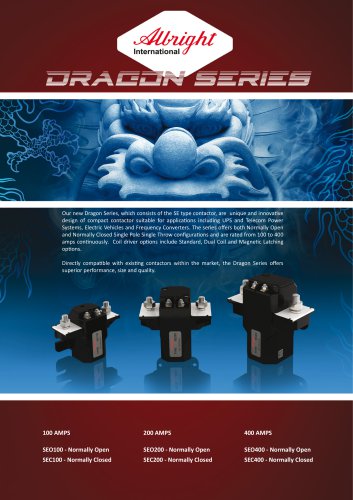 Dragon-Series-Catalogue
5 Pages
 DC88P Monoblock
1 Page



Archived catalogs
 Model 1222
6 Pages
- Windows software
- Battery charger
- DC-DC converter
- Interface software
- Motor controller
- Programming software
- Digital counter
- Stepper motor controller
- Interface module
- Mobile battery charger
- Pulse counter
- Electric vehicle battery charger
- Chassis-mounted DC/DC converter module
- Brushless motor control
- Digital input motor controller
- AC motor controller
- Motor controller with speed control
- Compact motor controller
- Portable battery charger
- Programmable motor controller