
- Catalogs
- Cubic Sensor and Instrument Co.,Ltd
- Ultrasonic Technology Introduction

- Company
- Products
- Catalogs
- News & Trends
- Exhibitions
Ultrasonic Technology Introduction

Ultrasonic Technology Introduction
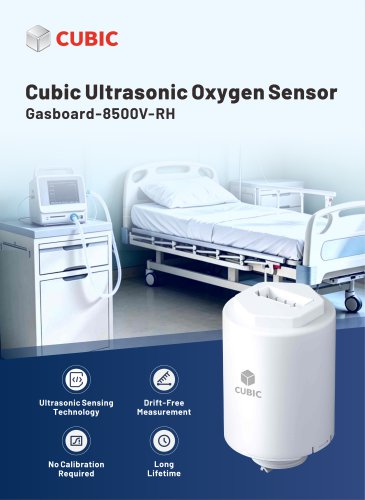
Ultrasonic technology is applied in gas flow meters and gas concentration sensors. This document outlines the principles and benefits of using ultrasonic measurement for detecting gas flow and oxygen concentration, with a focus on Cubic ultrasonic oxygen sensors.
- No need for calibration during application
- Long lifespan of approximately 5-10 years
- Compact size and easy installation
- Low cost with high accuracy and good stability
- Capability to measure gas concentration and flow simultaneously
The ultrasonic concentration detection theory is based on the variation of sound travel speed due to differences in molecular weight in a binary gas mixture.
The ultrasonic oxygen flow meter measures the relationship between sound wave travel time and flow in a medium. The actual propagation velocity of the acoustic wave in the fluid is a combination of the sound wave's propagation velocity in the stationary state of the medium and the axial average velocity of the fluid in the direction of acoustic wave propagation. The relationship between downstream and counter-current propagation times is expressed in the provided equations.
Catalog excerpts
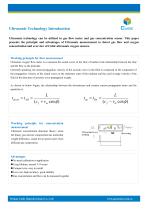
Ultrasonic Technology Introduction Ultrasonic technology can be utilized in gas flow meter and gas concentration sensor. This paper presents the principle and advantages of Ultrasonic measurement to detect gas flow and oxygen concentration and overview of Cubic ultrasonic oxygen sensors. Working principle for flow measurement Ultrasonic oxygen flow meter is to measure the sound waves in the flow of media in the relationship between the time and the flow as the principle. Generally speaking, the actual propagation velocity of the acoustic wave in the fluid is composed of the component of the propagation velocity of the sound waves in the stationary state of the medium and the axial average velocity of the fluid in the direction of acoustic wave propagation weight. As shown in below Figure, the relationship between the downstream and counter current propagation times and the quantities is: Working principle for concentration measurement Ultrasonic concentration detection theory: when the binary gas mixture composition has molecular weight difference, sound travel speed varies from different gas composition. Advantages ◆No need calibration in application ◆Long lifetime, around 5-10 years ◆Compact size, easy to install ◆Low cost, high accuracy, good stability ◆Gas concentration and flow can be measured together Wuhan Cubic Optoelectronics Co., Lt
Open the catalog to page 1All Cubic Sensor and Instrument Co.,Ltd catalogs and technical brochures
 Portable Particle Counter
2 Pages
 Cubic TDLAS CH4 Sensor
4 Pages
 Gasboard-7500H-OPC
13 Pages
 NDIR CO2 Sensor Module-CM1106LS
18 Pages
 Laser Particle Sensor-PM2008M-M
22 Pages
 Laser Particle Sensor-PM2012
19 Pages
 Test Instruction of AM4100-I
7 Pages
 Test Instruction of AM1008W
7 Pages
 Test Instruction of PM5000
7 Pages
 Test Instruction of PM1006
8 Pages
 Test Instruction of CM1107T
7 Pages
 Test Instruction of CM1107BN
8 Pages
 Test Instruction of PM3006T
7 Pages
 Test Instruction of PM2009
8 Pages
 Test Instruction of CM1106SH
8 Pages
 Test Instruction of CM1107
8 Pages
 Test Instruction of CM1106S
8 Pages
 Test Instruction of CM1106LS
8 Pages
 Laser Particle Sensor-PM2008
21 Pages
 Laser Particle Sensor-PM2009
20 Pages
 Laser Particle Sensor-PM2105-M
20 Pages
 NDIR CO2 Sensor Module-CM1106S
18 Pages
 Gas Sensor Line-up
1 Page
 About Cubic
1 Page
 CEMS Solution - Gasboard 9050
22 Pages
 NDIR CO2 Sensor Modules
7 Pages
 Gasboard-7020
4 Pages
 Gasboard-7500
7 Pages
 Mainstream ETC02 module
5 Pages
 Gasboard 3400P
5 Pages
 Analyzer Gasboard 3800P
6 Pages
 LANDFILL APPLICATIONS
8 Pages

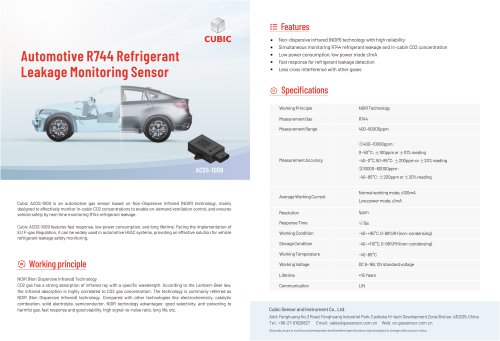
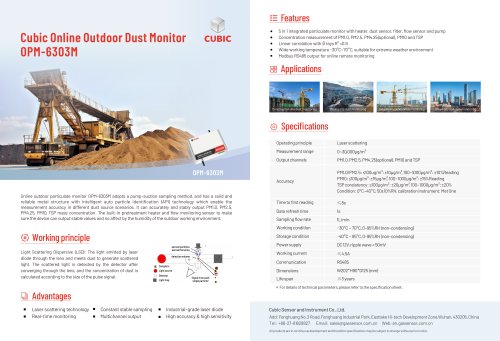
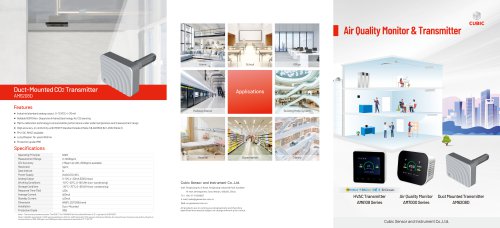
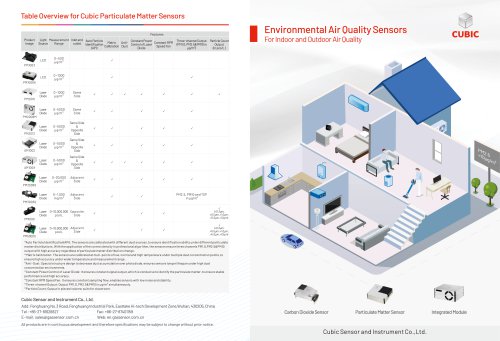





Archived catalogs
 Cubic CO Sensor Brochure
2 Pages
 Air quality monitor AM7000
11 Pages
 RHB Series
8 Pages
 Syngas portable analyzers
4 Pages
 Opacity meter
1 Page
 Infrared Methane gas sensor
3 Pages


- Cubic volume flow meter
- Liquid flow monitor
- Cubic gas analyzer
- Cubic concentration analyzer
- Cubic monitoring analyzer
- Cubic liquids analyzer
- Measuring machine
- Cubic automatic analyzer
- Calibration system
- Cubic waterproof flow meter
- Benchtop analyser
- Cubic solids analyzer
- Stainless steel flow monitor
- Air blower
- Industrial flow monitor
- Cubic process analyzer
- Gas detector
- Pressure probe