
- Catalogs
- Corning Life Sciences
- Corning® Microplate Selection Guide


Corning® Microplate Selection Guide

Corning® Microplate Selection Guide
Corning Life Sciences presents a Microplate Selection Guide for assays and high-throughput screening, detailing new products, technical specifications, and ordering instructions. Additional information is available on their website or through support offices.
The guide covers various microplate formats such as 96, 384, and 1536 well plates, their applications, and compatibility with laboratory equipment.
Selection involves choosing the format and well design, material and color, and surface treatment. The guide explains different well shapes and materials like polystyrene and polypropylene, tailored for specific assays.
- 96 Well Microplates: Suitable for general and cell-based assays with various surface treatments.
- 384 and 1536 Well Microplates: Designed for high-throughput screening, including low volume assays.
Corning offers surface treatments to support different binding needs, including high binding, nonbinding, and specialized surfaces like CellBIND® and Ultra-Low Attachment.
Corning ensures compatibility with a wide range of laboratory instruments, providing performance assurance.
Generic and custom bar code options are available, compatible with scanning systems and resistant to solvents.
Corning's microplates are designed for performance and compatibility, adhering to ISO 9001 standards. Detailed product information and technical support are accessible through their website and support offices.
- 96 Well Assay Microplates: Available in clear, black and white, UV, and flexible vinyl, with standard and half area formats.
- 96 Well Polystyrene Stripwell™ Microplates: Designed for in vitro diagnostic assays, featuring flat bottom strips.
- 96 Well Polypropylene Storage Microplates and Cluster Tubes: Available in various well shapes and volumes, suitable for assay and storage needs, and solvent resistant.
- CellBIND Surface: Enhances consistency and cell attachment.
- Poly-D-Lysine Coating: Improves attachment for difficult cell lines.
- Ultra-Low Attachment Surface: Minimizes cell attachment.
Detailed ordering information is provided for each microplate type, including catalog numbers, plate formats, surface treatments, and packaging details.
- Microplates available in various colors and binding properties, with sterile and non-sterile options.
- Features like Easy Wash™ and NBS™ treatments for specific applications.
- Stripwell microplates offer customizable color coding and cost savings on reagents.
Suitable for immunoassays, cell culture, and storage, with designs to reduce crosstalk and enhance signal detection.
Different well blocks with varying capacities and shapes, including sterile options and packaging quantities.
Polypropylene tubes in a standard microplate format, available individually or in strips, with ordering information.
Variety of 384 well microplates for assays and storage, categorized by application, with specifications on well volume, surface treatment, and sterilization.
High-density microplates for high throughput screening, available in solid black and white polystyrene with round or flat bottoms.
Designed for high-throughput protein crystallization, conforming to ANSI/SBS standards, with multiple formats for protein well shapes.
Features include raised well bottoms for higher sensitivity, various surface treatments for improved cell attachment, and compatibility with automation systems.
- Protein Crystallization Microplates: Available in 96 and 384 well formats, optimized for protein crystallization and imaging.
- Surface Treatments: Some microplates are treated for hydrophilicity to enhance protein interaction.
- Sealing Tapes: Various types for different temperature ranges and applications.
- Lids: Low evaporation and DMSO-resistant lids available.
- Storage Mats: DMSO-resistant and certified DNase- and RNase-free.
- Binding Surfaces: Surface modifications like NBS, high binding, and DNA-BIND for specific assay requirements.
- Performance Metrics: Specifications include well-to-well coefficient of variation (CV) and binding capacities.
Graphs demonstrate moisture exchange rates and fluorescence assay performance, highlighting the effectiveness of Robolids and NBS microplates.
Corning's microplates and accessories offer high-quality solutions for protein crystallization and biochemical assays, ensuring enhanced performance and reliability.
Catalog excerpts
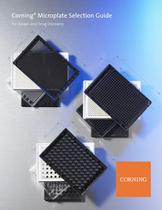
Corning® Microplate Selection Guide For Assays and Drug Discovery
Open the catalog to page 1
Introduction Corning Life Sciences is pleased to present our new Microplate Selection Guide. In this guide, you will find a selection of Corning’s newest and most requested products for assays and high-throughput screening. For up-to-date information on Corning Life Sciences’ comprehensive range of products and services, go to www.corning.com/lifesciences where you can access: Q New Products Q Product Catalog Q Technical Information including: - Application Notes - Instruction Manuals - Product Bulletins - Product Selection Guides Q Microplate Equipment Compatibility Guide Q Product Literature...
Open the catalog to page 2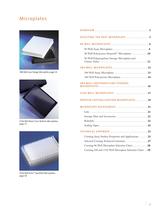
Microplates OV E R V I E W . . . . . . . . . . . . . . . . . . . . . . . . . . . . . . . . . . . . . . . . . 2 9 6 W E L L M I C R O P L AT E S . . . . . . . . . . . . . . . . . . . . . . . . . . . . . 6 96 Well Assay Microplates . . . . . . . . . . . . . . . . . . . . . . . . . . . 6 96 Well Polystyrene Stripwell™ Microplates . . . . . . . . . . . . 10 96 Well Polypropylene Storage Microplates and Cluster Tubes . . . . . . . . . . . . . . . . . . . . . . . . . . . . . . . . . . . . 11 3 8 4 W E L L M I C R O P L AT E S . . . . . . . . . . . . . . . . . . . . . . . . . . 13 384 Well Low Flange...
Open the catalog to page 3
M I C R O P L AT E S Overview DESIGNED FOR PERFORMANCE Corning has been setting the standard for excellence in life science labware for over 85 years. MICROPLATES With our comprehensive line of plasticware, including assay products, we continue to be an industry leader. Corning strives for the highest standards in product design and plastics molding. Corning Life Sciences microplates and accessories are manufactured under strict process controls guaranteeing consistent product performance. Our manufacturing facility is located in Kennebunk, Maine, registered to the ISO 9001 2008 standards. ISO...
Open the catalog to page 4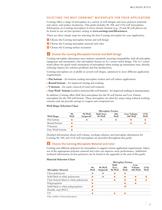
M I C R O P L AT E S SELECTI NG TH E B EST COR N I NG ® MIC ROPL ATE FOR YOU R APPLICATION Corning offers a range of microplates in a variety of well designs and sizes, polymer materials and colors, and surface treatments. This guide includes 96, 384, and 1536 well microplates. Information on Corning microplates in lower density formats (e.g., 24 and 48 well plates) can be found in our on-line product catalog at www.corning.com/lifesciences. 1 Choose the Corning microplate format and well design 2 Choose the Corning microplate material and color 3 MICROPLATES There are three simple steps for...
Open the catalog to page 5
Corning® microplates are available in different materials: ► Clear polystyrene microplates are used for cell culture and colorimetric (absorbance) assays. ► Black and white polystyrene microplates can be used for fluorescent and luminescent assays. Solid black polystyrene microplates are designed to reduce well-to-well crosstalk and back- ground for fluorescent assays. Solid white polystyrene plates are designed to reduce well-to-well crosstalk, enhance luminescent signals and reduce background for luminescent assays. Both black and white microplates are available with clear bottoms for use in...
Open the catalog to page 6
M I C R O P L AT E S Corning® CellBIND® Surface is a Corning proprietary treatment which provides improved consistency and even cell attachment. Q Tissue culture treated (TC-Treated) surface is used for the attachment and growth of anchorage-dependent cells. Q Ultra-Low Attachment Surface has a covalently bonded hydrogel designed to minimize cell attachment, protein absorption, enzyme activation and cellular activation. This surface is noncytotoxic, biologically inert and nondegradable. Q Poly-D-lysine coated surface can improve attachment of difficult-to-attach cells. Q Sulfhydryl (Sulfhydryl-BIND™)...
Open the catalog to page 7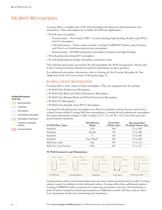
M I C R O P L AT E S 96 Well Microplates Corning offers a complete line of 96 well microplates for laboratory miniaturization and automation. These microplates are available for different applications: MICROPLATES Q 96 well assay microplates - General assays – Not treated, NBS™, covalent binding, high binding, flexible vinyl (PVC), and UV microplates - Cell-based assays – Tissue culture treated, Corning® CellBIND® Surface, poly-D-lysine, and Ultra-Low Attachment polystyrene microplates - Immunoassays – EIA/RIA polystyrene microplates (medium and high binding) Q 96 well polystyrene Stripwell™...
Open the catalog to page 8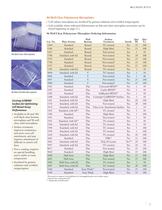
96 Well Clear Microplates 96 Well EIA/RIA Microplates Corning CellBIND Cell-Based Assay well black clear bottom clear solid microplates improves consistency and more even cell difficult-to-attach cell 96 Well Clear Polystyrene Microplates ► Cell culture microplates are sterilized by gamma radiation and certified nonpyrogenic ► Lids available where indicated (Information on lids and other microplate accessories can be found beginning on page 21.) 96 Well Clear Polystyrene Microplate Ordering Information Plate Format High Bind 3894 Standard, with lid_V Flat Corning® CellBIND® Surface Yes High Bind...
Open the catalog to page 9
96 Well Black and White Polystyrene Microplates 96 Well Solid Black and White Polystyrene Microplates ► Designed to reduce well-to-well crosstalk ► White microplates enhance luminescent signals and have low background luminescence and ► Black microplates have low background fluorescence and minimize light scattering 96 Well Solid Black and White Polystyrene Microplate Ordering Information Plate Format Sterile Qty/Pk Qty/Cs Half Area, with lid Half Area Half Area Half Area, with lid Half Area Half Area 3917 Standard, with lid White Flat TC-treated Yes 20 100 3922 Standard White Flat High Bind...
Open the catalog to page 10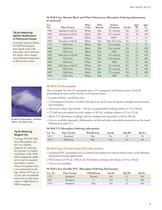
Optical Performance Corning® Special Optics have black walls with ultra thin, clear bottoms for sharp, clear images 96 Well UV Microplate - Certified Corning 96 Well Half needed per well, while still retaining the ability microplate readers. These microplates have untreated or with tissue culture, High Bind, or 96 Well Clear Bottom Black and White Polystyrene Microplate Ordering Information Cat. Plate Well Surfoce Qty/ Qty/ No. Plate Format Color Bottom Treatment Sterile Pk Cs 3903 Standard, with lid White Flat TC-treated Yes 20 100 3904 Standard, with lid Black Flat TC-treated Yes 20 lOtT 3995...
Open the catalog to page 11All Corning Life Sciences catalogs and technical brochures
 Corning Cell Culture Products
19 Pages
 Falcon® Tubes and Pipets
16 Pages
 Corning® Microplates
20 Pages
 Cell Culture
8 Pages
 Stem Cell Research
16 Pages
 SPS-H70-SR1
3 Pages
 048TUB-T4131A20
4 Pages
 060TUB-T4131A20
4 Pages
 Single-Fiber Patch Cords
2 Pages
 072TUB-T4131A20
4 Pages
 096TUB-T4131A20
4 Pages
 144TUB-T4131A20
4 Pages
 192TUB-T4131A20
4 Pages
 216TUB-T4131A20
4 Pages
 ALTOS ® Figure-8
5 Pages
 Corning® TransportoCells
3 Pages
 Corning Filtration Guide
20 Pages


Archived catalogs


- Welding system
- Liquid filter
- Laboratory shaker
- Incubator
- Filtration unit
- Laboratory incubator
- Digital laboratory stirrer
- VOC-free liquid filtration unit
- Laboratory centrifuge
- Vertical centrifuge
- Compact sealer
- Digital incubator
- Forced convection incubator
- Bench-top laboratory shaker
- Filtration system
- Magnetic laboratory stirrer
- 230V single phase welding machine
- Benchtop centrifuge
- Laboratory water bath
- Semi-automatic welding machine