
- Catalogs
- COREMO OCMEA
- SMART&CAB


SMART&CAB

1 / 16 PagesView full catalog
SMART&CAB
Product catalog summary
Correct Use of the Product
The document emphasizes the importance of adhering to safety standards and technical specifications for COREMO OCMEA's SMART and CAB pneumatic brakes. Users must not exceed the maximum data provided in the catalogue.
Application Selection
Proper selection of the braking unit is crucial, with a recommended service factor of at least 2 for holding duties. The Technical Department is available for guidance.
Use and Maintenance
Following the Mounting and Maintenance Instructions is essential to prevent accidents and ensure product longevity. Initial torque may be 30% to 50% less than nominal until the friction surfaces are properly worn in.
Precautions
Protective clothing is recommended during mounting and maintenance. Rotating parts must be shielded according to EEC directives. Special care is needed for spring-applied failsafe brakes due to pre-tensioned springs.
Materials and Safety
Brakes use non-asbestos friction materials. Avoid inhaling dust and ensure hands are clean before eating or drinking. Limited use of oils and greases is advised, with protective measures for those with allergies.
Storage and Disposal
Proper storage and handling are necessary to prevent accidents. Worn materials are non-toxic and should be disposed of according to local regulations. In case of fire, toxic gases may be released, requiring appropriate safety measures.
Technical Data and Specifications
The document provides detailed technical data for various brake models, including dimensions, thermal capacity, and torque specifications. It stresses not exceeding the disc's thermal capacity and consulting the Technical Office for proper brake selection.
Thermal Capacity and Heat Dissipation
Thermal capacity data is provided for different disc sizes, focusing on continuous heat dissipation at a temperature difference of 170°C. Formulas for calculating dynamic torque and heat production are included.
The document emphasizes the importance of adhering to safety standards and technical specifications for COREMO OCMEA's SMART and CAB pneumatic brakes. Users must not exceed the maximum data provided in the catalogue.
Application Selection
Proper selection of the braking unit is crucial, with a recommended service factor of at least 2 for holding duties. The Technical Department is available for guidance.
Use and Maintenance
Following the Mounting and Maintenance Instructions is essential to prevent accidents and ensure product longevity. Initial torque may be 30% to 50% less than nominal until the friction surfaces are properly worn in.
Precautions
Protective clothing is recommended during mounting and maintenance. Rotating parts must be shielded according to EEC directives. Special care is needed for spring-applied failsafe brakes due to pre-tensioned springs.
Materials and Safety
Brakes use non-asbestos friction materials. Avoid inhaling dust and ensure hands are clean before eating or drinking. Limited use of oils and greases is advised, with protective measures for those with allergies.
Storage and Disposal
Proper storage and handling are necessary to prevent accidents. Worn materials are non-toxic and should be disposed of according to local regulations. In case of fire, toxic gases may be released, requiring appropriate safety measures.
Technical Data and Specifications
The document provides detailed technical data for various brake models, including dimensions, thermal capacity, and torque specifications. It stresses not exceeding the disc's thermal capacity and consulting the Technical Office for proper brake selection.
Thermal Capacity and Heat Dissipation
Thermal capacity data is provided for different disc sizes, focusing on continuous heat dissipation at a temperature difference of 170°C. Formulas for calculating dynamic torque and heat production are included.
Technical Specifications
The document provides technical data for braking units, including parameters such as tangential force, dynamic torque, maximum wear, and thickness of new lining. Tangential force is specified at 748 N at 6 bar for certain models, with dynamic torque calculated based on the disc radius.
Operational Considerations
Initial torque on new units can be 30% to 50% less than the nominal value until the friction facing and disc are properly worn in. An appropriate service factor must be considered when selecting brakes, with a minimum factor of 2 for holding duties.
Thermal Capacity
The document emphasizes that the heat to be dissipated should not exceed the disc's thermal capacity, which depends on its cooling speed. Consultation with the Technical Office is recommended for precise calculations.
Product Data
Tables provide detailed product data, including disc diameter, torque at different pressures, thermal capacity, axial load, air volume, and weight for various product codes.
Global Network
The document lists countries where agents and representatives are available, indicating a wide commercial network across continents including Europe, Asia, the Americas, and Africa.
The document provides technical data for braking units, including parameters such as tangential force, dynamic torque, maximum wear, and thickness of new lining. Tangential force is specified at 748 N at 6 bar for certain models, with dynamic torque calculated based on the disc radius.
Operational Considerations
Initial torque on new units can be 30% to 50% less than the nominal value until the friction facing and disc are properly worn in. An appropriate service factor must be considered when selecting brakes, with a minimum factor of 2 for holding duties.
Thermal Capacity
The document emphasizes that the heat to be dissipated should not exceed the disc's thermal capacity, which depends on its cooling speed. Consultation with the Technical Office is recommended for precise calculations.
Product Data
Tables provide detailed product data, including disc diameter, torque at different pressures, thermal capacity, axial load, air volume, and weight for various product codes.
Global Network
The document lists countries where agents and representatives are available, indicating a wide commercial network across continents including Europe, Asia, the Americas, and Africa.
See more
All COREMO OCMEA catalogs and technical brochures
 Caliper Brakes
88 Pages
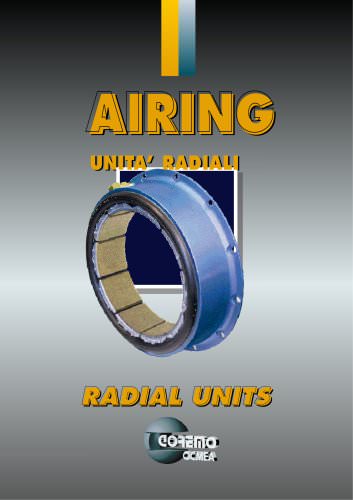 AIRING, Radial Units
14 Pages
 BI-M-VS
20 Pages
 MINI clutches and brakes
16 Pages
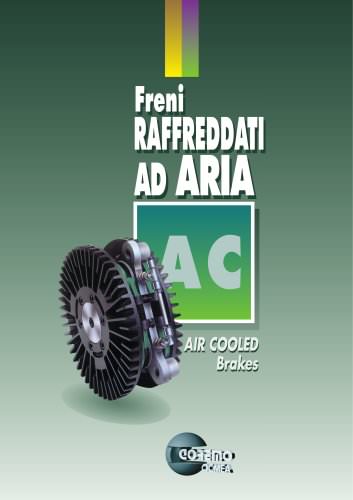 Air Cooled Brakes
16 Pages
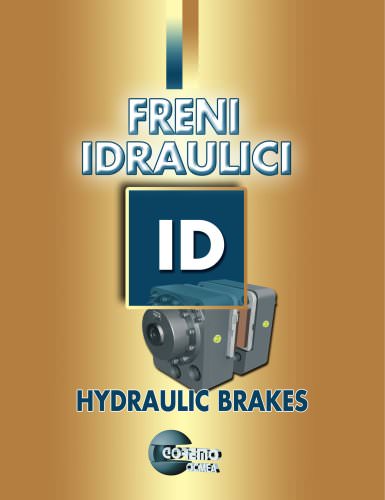 ID Hydraulic Brake
54 Pages
 TB&SB
TB&SB22 Pages
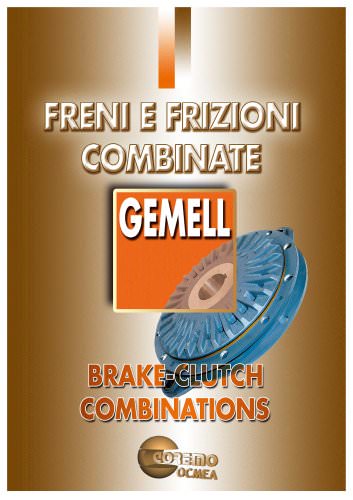

Archived catalogs
 Electric caliper brake
4 Pages
*Prices are pre-tax. They exclude delivery charges and customs duties and do not include additional charges for installation or activation options. Prices are indicative only and may vary by country, with changes to the cost of raw materials and exchange rates.
About DirectIndustry
DirectIndustry is a marketplace that offers B2B players a complete experience, from product sourcing to purchase. DirectIndustry is an entity of VirtualExpo Group.
Are you a buyer?
Are you a supplier?