
- Catalogs
- COREMO OCMEA
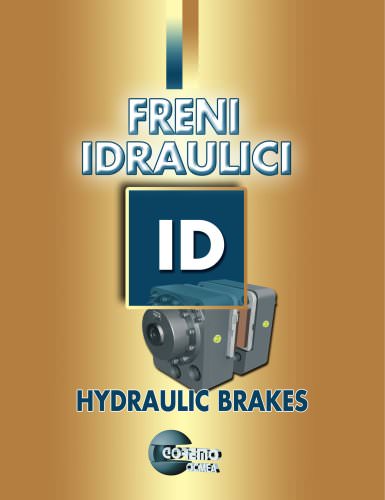
- ID Hydraulic Brake


ID Hydraulic Brake
1 / 54 PagesView full catalog
ID Hydraulic Brake
Product catalog summary
Correct Use of the Product
The COREMO OCMEA Hydraulic Brakes are designed to function under specific conditions. It is essential not to exceed the maximum specifications listed in the catalogue. Proper selection should include an appropriate service factor, especially for holding duties, which should not be less than 2. Incorrect mounting and maintenance can lead to accidents and reduced product lifespan. Operators must wear protective clothing, and rotating parts should be protected according to European EEC directives.
The COREMO OCMEA Hydraulic Brakes are designed to function under specific conditions. It is essential not to exceed the maximum specifications listed in the catalogue. Proper selection should include an appropriate service factor, especially for holding duties, which should not be less than 2. Incorrect mounting and maintenance can lead to accidents and reduced product lifespan. Operators must wear protective clothing, and rotating parts should be protected according to European EEC directives.
Selection
When selecting brakes, consider factors such as dynamic torque, total inertia load, rotating speed, braking time, and heat produced per stop. Specific calculations are provided for high inertia and emergency stops to determine the appropriate brake type and specifications. Examples of brake selection, including braking torque and thermal capacity calculations, are included.
When selecting brakes, consider factors such as dynamic torque, total inertia load, rotating speed, braking time, and heat produced per stop. Specific calculations are provided for high inertia and emergency stops to determine the appropriate brake type and specifications. Examples of brake selection, including braking torque and thermal capacity calculations, are included.
Discs
The document details the dimensions and specifications of various disc types, including their thermal capacity for continuous and emergency stops. Discs are available in different diameters and thicknesses, with specific inertia, speed, and weight parameters.
The document details the dimensions and specifications of various disc types, including their thermal capacity for continuous and emergency stops. Discs are available in different diameters and thicknesses, with specific inertia, speed, and weight parameters.
Technical Data
Technical specifications for different brake models (A3-ID, D3-ID, F3-ID) are provided, including dimensions, oil volume, weight, and thermal capacity. The brakes use mineral oil-based hydraulic fluid SAE/ISO 46, and initial torque can be 30% to 50% less than the catalogue value until the friction facing and disc are worn in.
Technical specifications for different brake models (A3-ID, D3-ID, F3-ID) are provided, including dimensions, oil volume, weight, and thermal capacity. The brakes use mineral oil-based hydraulic fluid SAE/ISO 46, and initial torque can be 30% to 50% less than the catalogue value until the friction facing and disc are worn in.
Technical Specifications
- Braking Force and Torque: Detailed specifications for various hydraulic brake models, including F3-ID, G3-ID, ID 800, ID 900, ID 2000, and others, are provided. Each model specifies the braking force at 100 bar, dynamic torque calculations, and maximum pressure.
- Wear and Lining Thickness: Maximum total wear and the thickness of new linings are specified for each model, indicating durability and maintenance requirements.
- Thermal Capacity: Continuous thermal capacity (Qc) is provided for each model, indicating the heat dissipation capability during continuous operation and emergency stops.
- Hydraulic Fluid: All models use mineral oil-based SAE/ISO 46 hydraulic fluid, with specified oil displacement for pad movement.
Procedures and Recommendations
- Initial Torque Adjustment: The initial torque on new units can be 30% to 50% less than the nominal value until the friction facing and disc are properly worn in.
- Spacer Requirements: For certain models, spacers are required if the disc thickness exceeds specified limits.
- Spring Configuration: Torque values depend on the number of springs used, with options for reducing torque by adjusting the number of springs.
Dimensions and Installation
- Mounting Dimensions: Detailed dimensions for caliper bases and other components are provided for proper installation.
- Weight and Oil Volume: Each model lists the oil volume required and the weight of the brake unit.
Diagrams and Charts
- Torque and Wear Charts: Diagrams illustrate the relationship between torque and lining wear, providing guidance for maintenance and adjustment.
Technical Specifications
The document provides detailed technical specifications for various hydraulic brake models, including E4N-ID, F2N-ID, F3N-ID, G2N-ID, G3N-ID, ID 800N, ID 900N, ID 1500N, ID 2000N, and ID 3000N. Each model is described with its braking force, dynamic torque calculation, maximum total wear, thickness of new lining, continuous thermal capacity, and hydraulic fluid requirements.
The document provides detailed technical specifications for various hydraulic brake models, including E4N-ID, F2N-ID, F3N-ID, G2N-ID, G3N-ID, ID 800N, ID 900N, ID 1500N, ID 2000N, and ID 3000N. Each model is described with its braking force, dynamic torque calculation, maximum total wear, thickness of new lining, continuous thermal capacity, and hydraulic fluid requirements.
Braking Force and Torque
Each brake model specifies a tangential force (F) and a formula for calculating dynamic torque based on the disc radius. Torque values are influenced by the number of springs used, with options for reducing torque by using fewer springs.
Each brake model specifies a tangential force (F) and a formula for calculating dynamic torque based on the disc radius. Torque values are influenced by the number of springs used, with options for reducing torque by using fewer springs.
Wear and Maintenance
The maximum total wear for the brake linings is specified, along with the thickness of new linings. The document emphasizes the need to adjust the system to maintain nominal torque values as wear occurs.
The maximum total wear for the brake linings is specified, along with the thickness of new linings. The document emphasizes the need to adjust the system to maintain nominal torque values as wear occurs.
Hydraulic Specifications
All models use mineral oil-based hydraulic fluid (SAE/ISO 46). The document specifies the minimum and maximum release pressures, as well as the total oil displacement required for a 2 mm movement of each pad.
All models use mineral oil-based hydraulic fluid (SAE/ISO 46). The document specifies the minimum and maximum release pressures, as well as the total oil displacement required for a 2 mm movement of each pad.
Initial Torque Considerations
It is noted that the initial torque on new units can be 30% to 50% less than the nominal value until the friction facing and disc are properly lapped or worn in.
It is noted that the initial torque on new units can be 30% to 50% less than the nominal value until the friction facing and disc are properly lapped or worn in.
Dimensions and Installation
Dimensions for each brake model are provided, including specific instructions for the thickness of the center mounting bracket relative to the disc thickness. The document includes diagrams and charts illustrating the torque variation with wear and other technical details.
Dimensions for each brake model are provided, including specific instructions for the thickness of the center mounting bracket relative to the disc thickness. The document includes diagrams and charts illustrating the torque variation with wear and other technical details.
Specifications:
The document specifies the dimensions and requirements for a center mounting bracket, which must be the same thickness as the disc plus 71 mm. It includes details on the number and size of holes (6 holes, Ø37) and various other measurements.
The document specifies the dimensions and requirements for a center mounting bracket, which must be the same thickness as the disc plus 71 mm. It includes details on the number and size of holes (6 holes, Ø37) and various other measurements.
Technical Data:
The document provides technical data for hydraulic systems, including:
The document provides technical data for hydraulic systems, including:
- Tangential force (F) for different models: ID 3000N-200 (200,000 N) and ID 3000N-270 (270,000 N).
- Dynamic torque calculation: F • (disc radius in m - 0.124) = Nm.
- Minimum release pressure: 115 bar for ID 3000N-200 and 150 bar for ID 3000N-270.
- Maximum pressure: 200 bar.
- Maximum total wear: 20 mm.
- Thickness of new lining: 16 mm.
- Continuous thermal capacity: 80 kW.
- Hydraulic fluid type: Mineral oil based SAE/ISO 46.
- Total oil displacement for 2 mm movement of each pad: 0.11 dm3.
Hydraulic Diagram:
The document includes a hydraulic diagram, although specific details are not provided in the text.
The document includes a hydraulic diagram, although specific details are not provided in the text.
Network and Distribution:
The document lists countries where agents and distributors are available, including Argentina, Australia, Austria, Belgium, Brazil, Canada, China, and many others across the globe.
The document lists countries where agents and distributors are available, including Argentina, Australia, Austria, Belgium, Brazil, Canada, China, and many others across the globe.
Notes:
Additional notes mention that a full list of agents and representatives is available upon request.
Additional notes mention that a full list of agents and representatives is available upon request.
See more
All COREMO OCMEA catalogs and technical brochures
 Caliper Brakes
88 Pages
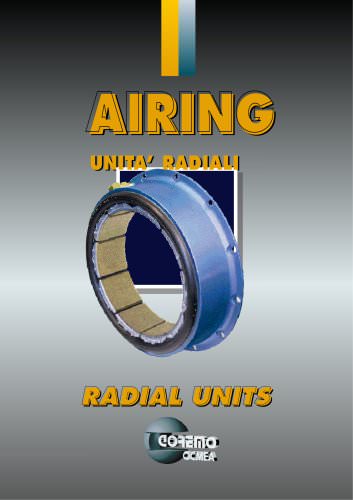 AIRING, Radial Units
14 Pages
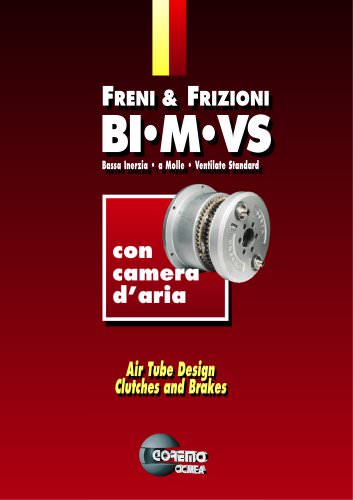 BI-M-VS
20 Pages
 MINI clutches and brakes
16 Pages
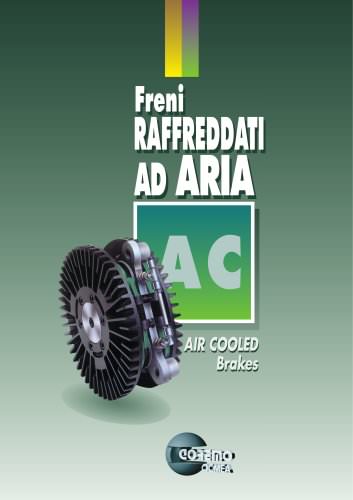 Air Cooled Brakes
16 Pages
 SMART&CAB
16 Pages
 TB&SB
TB&SB22 Pages

Archived catalogs
 Electric caliper brake
4 Pages
*Prices are pre-tax. They exclude delivery charges and customs duties and do not include additional charges for installation or activation options. Prices are indicative only and may vary by country, with changes to the cost of raw materials and exchange rates.
About DirectIndustry
DirectIndustry is a marketplace that offers B2B players a complete experience, from product sourcing to purchase. DirectIndustry is an entity of VirtualExpo Group.
Are you a buyer?
Are you a supplier?