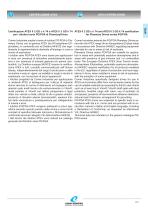
ATEX Certification: The PG/PGA series of planetary drives by Comer Industries are certified under ATEX II 2 GD c k T4 and ATEX II 3 GD k T4, complying with Directive 94/9/EC. These drives are suitable for use in potentially explosive atmospheres, including areas with gas mixtures and combustible dusts. The certification is mandatory for all products marketed in the EU for use in explosion-risk areas. The drives are designed with materials like Viton® for oil seals and include features such as synthetic oils, heat-sensitive adhesive detectors, and grounding arrangements.
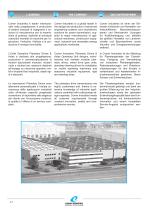
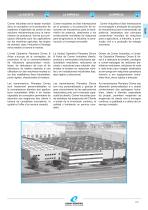
The Company: Comer Industries is a global leader in engineering and technology, specializing in advanced systems and mechatronic solutions for power transmission. The Planetary Drives & Axles Operating Unit focuses on designing, manufacturing, and marketing modular planetary drives,
wheel drive gear units, and slewing drives for mobile and stationary industrial equipment. The company emphasizes customization, innovation, quality, and comprehensive service to meet customer needs.
Technical Characteristics: The document provides detailed technical specifications for various models in the PG/PGA series, including torque ranges and specific applications. These specifications are crucial for selecting the appropriate drive for specific industrial applications.
Installation and Maintenance: Guidelines for installation and maintenance are provided to ensure optimal performance and longevity of the planetary drives. Proper lubrication and adherence to maintenance schedules are emphasized.
Applications: The planetary drives are used in a wide range of industrial applications, including agricultural machinery, construction equipment, and renewable energy systems. Their design allows for high customization to meet specific operational requirements.
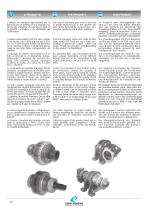
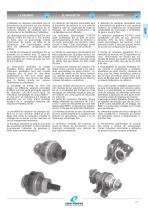
Specifications: The planetary gear units (PG/PGA series) are composed of approximately 60% steel, 35% cast iron, and smaller amounts of aluminum, copper, rubber, and brass. These percentages vary based on product configuration. The PG series is available in two basic sizes with output torques ranging from 0.5 kNm to 65 kNm.
Modular Construction: The modular design allows for the combination with bevel gears, worm gears, hydraulic brakes, and various input shafts. It also supports coupling flanges for hydraulic and electric motors. This modularity enables the assembly of different stages in series, offering a wide range of reduction ratios from 3:1 to 10,000:1.
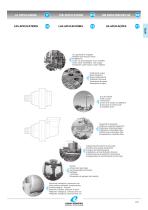
Applications: Initially used in earth-moving machinery, the applications have expanded to include industrial sectors such as chemical plants, machine tools, marble processing, transportation, hoisting systems, food, and ecology industries. The planetary drives are also used in marine applications, concrete pumps, mobile cranes, wind power generators, and more.
Technical Information: Key parameters include the reduction ratio (input speed n1 to output speed n2), maximum input speed (n1max), efficiency (typically 0.97-0.98 per reduction stage), and continuous torque (Mc), which is defined according to ISO 6336 standards. The standard product supply does not include final painting, and eco-friendly paints are recommended.
Technical Specifications Overview
Introduction: This document provides essential technical information for selecting and using planetary drives and axles. Understanding and correctly interpreting the data is crucial for optimal product selection and application.
Key Parameters:- Reduction Ratio (i): The ratio between input speed (n1) and output speed (n2), specified for each drive type on its technical sheet.
- Maximum Input Speed (n1max): The highest permissible speed for each drive size under intermittent conditions. For continuous duty or higher speeds, consult Comer Industries Technical-Commercial Service.
- Efficiency: Generally high in planetary transmissions, with average values between 0.97 and 0.98 per reduction stage. Efficiency decreases at high speeds or with bevel gears.
- Continuous Torque (Mc): The maximum stress value on gears according to ISO 6336, ensuring unlimited theoretical gear life by considering bending stress and tooth surface strength (Hertz pressure).
Additional Specifications:- Maximum Torque (Mmax): The peak torque the drive can handle briefly without damage, not to be used as continuous working torque. Important for applications with frequent start-ups or reversals.
- Working Temperature: Drives operate between -20°C and +90°C. Special lubricants and gaskets are required for temperatures outside this range.
- Thermal Power (Pt): Maximum power transmission under continuous duty without exceeding 90°C oil temperature, specified under conditions of continuous duty and speed n1 = 1500 min-1.
Conclusion: For proper drive selection, consider the duration constant nxh, with Mc values provided for fixed n2xh values on technical sheets. For further assistance, contact Comer Industries Technical-Commercial Service.
Technical Specifications: The document outlines the technical specifications for gearboxes, focusing on thermal power, maximum torque, and operating temperature. The maximum thermal power (Pt) is the highest power the gearbox can transmit continuously without exceeding an oil temperature of 90°C. This is specified under continuous duty conditions with a speed of 1500 min-1.
Maximum Torque (Mmax): Mmax is the maximum torque the gearbox can handle briefly without damage. It is intended for peak loads and should not be used as a continuous operating torque. The value is specified in the technical data sheets.
Operating Temperature: Gearboxes can operate between -20°C and +90°C. Outside this range, special measures regarding lubricants and seals are necessary, which should be decided in consultation with Comer Industries' Technical-Commercial Service.
Thermal Power Adjustment: The document provides a table for adjusting thermal power based on room temperature and work time percentage. For foot-mounted drives, the Pt value can be increased by 15%. If the required power exceeds the specified values, a lubricant cooling system is necessary.
Service Factor (fs): The service factor is a multiplication coefficient used in selecting the drive, accounting for application load conditions. It is defined in a separate table.
Additional Notes: Pt refers to the power actually transmitted by the drive and should not be confused with the motor's power, which might be higher. For further details, contact Comer Industries' Technical-Commercial Service.
Technical Specifications: The document specifies the use of ISO VG 150 oil, horizontal mounting position, and an ambient temperature of 20°C. If the required power exceeds the values indicated in the reducer's technical sheet, a lubricant cooling system is necessary. For foot-mounted reducers (sizes PG 100 to PG 1600), the Pt value can be increased by 15%. A corrective factor fk can be applied if usage characteristics differ, as shown in Table 1.
Thermal Capacity Adaptation Factor (fk): Table 1 provides the fk values based on ambient temperature and percentage of operating time. For example, at 20°C and 100% operating time, fk is 1.0.
Service Factor (fs): The service factor is a multiplication coefficient used in the formula for selecting the reducer, accounting for load conditions. It is defined in Table 2.
Output and Input Shaft Loads: The document details the radial (Fr) and axial (Fa) load values for output and input shafts, with maximum loads not occurring simultaneously. The values are based on ISO 281 standards, with specific durations for output and input shafts.
Drive Selection: Selecting the appropriate drive requires knowledge of the entire transmission system, including the type of operation, rotation speed, power/torque absorption, and working cycle for the driven equipment, as well as the type, characteristics, power/torque, and operating speed of the prime mover.
Additional Information: Comer Industries reserves the right to make technical and dimensional changes without prior notice as part of continuous product improvement.
Technical Specifications: The document outlines the specifications for radial and axial loads on gear reducers. It specifies that maximum radial and axial loads cannot occur simultaneously. The permissible load values Fr (radial) and Fa (axial) are based on ISO 281 standards, with different durations for output (n x h = 105) and input shafts (n x h = 5x10⁶). Version F reducers are typically used for torque transmission without radial loads, hence maximum Fr and Fa values are not provided.
Reducer Selection: For mechanical transmissions, the reducer is positioned between the motor and the driven equipment. The selection depends on the motor and equipment characteristics, including absorbed power and duty cycle. Key parameters to know include:
- Driven equipment: service type, rotation speed, absorbed power/torque, duty cycle.
- Motor: type, characteristics, delivered power/torque, operating speed.
Verification of Drive Parameters: Initial drive selection involves determining the reduction ratio, working torque, and loads on output and input shafts. Verification of specific parameters includes:
- Drive input rotation speed (n1 max)
- Working torque (Mc)
- Loads on output and input shafts (Fr; Fa)
- Horsepower to be transmitted (Pt) under continuous duty
- Room temperature
Verification of torque involves calculating the equivalent working torque (Me) using the cumulative load principle.
Duration and Service Factors: For installations with working cycles exceeding 2x10⁴, a duration factor (fh) is introduced to adjust the catalog torque value (Mc) to meet project cycle requirements. The service factor (fs) accounts for shocks from intermittent motion and overloads during starts and stops, with values provided in Table 2 based on operation type.
Additional Information: Operating values are for drives with hydraulic and electric motors. For other motor types, contact the Technical-Commercial Service Department. Comer Industries reserves the right to make technical and dimensional modifications without prior notice.
Technical Specifications and Load Classifications: This document provides detailed technical specifications for planetary drives and axles, focusing on load classifications and service factors. It includes tables and diagrams to assist in calculating service factors and equivalent working loads.
Load Classifications: The document categorizes load conditions into three main types: Uniform (U), Moderate (M), and Heavy (H). Each category is further divided based on hours per day and starts per hour, with specific service factors (fs) provided for each scenario.
Duration Factor (fh): For industrial applications where the number of working cycles (nxh) exceeds 20,000, a duration factor (fh) must be introduced. This factor adjusts the catalog torque value (Mc) to meet the project's cycle requirements.
Service Factor (fs) Calculation: The service factor accounts for shocks and overloads during starts and stops. It is calculated using Tables 2 and 3, which relate to the type of operation and load conditions. The document emphasizes the importance of using the correct service factor to ensure the longevity and reliability of the equipment.
Verification of Drive According to Output Shaft Loads: The document outlines the process for verifying drive selection based on output shaft loads. It includes formulas for calculating equivalent working loads (Fre, Fae) and ensuring that peak torque (Mp) does not exceed maximum allowable torque (M max).
Key Formulas and Diagrams: Several formulas are provided for calculating service factors and verifying load conditions. Diagram 1 and Tables 2 and 3 are essential tools for these calculations, offering visual guidance and examples of load classifications.
Recommendations: For applications using motors other than hydraulic and electric, such as internal combustion engines, it is recommended to contact the Technical-Commercial Service Department for specific guidance.
This document is a comprehensive guide for engineers and technicians involved in the selection and maintenance of planetary drives and axles, ensuring optimal performance and durability under various load conditions.
Radial Loads Fr [N]: This section provides guidance on determining the maximum allowable radial load and the service life of bearings on input and output shafts of planetary drives. The process involves using known parameters to find the admissible radial load capacity.
Known Parameters:- Input or output version (Input: EL, EML, EM, EP, ET; Output: MS, MC, PS, PC)
- Distance E [mm] (distance from load position to output shaft shoulder)
- Required bearing service life [h]
- Shaft rotation speed [min-1]
Procedure:- Select the appropriate bearing service life chart for the input or output shaft. Radial load curves for output shaft versions are in the drive technical sheets, while input versions are on page 228.
- Use the curve to find the radial load (Fr) value with reference to distance E.
- The Fr value found is the maximum radial load acceptable at position E for a bearing service life of h.
- If the calculated bearing service life does not meet requirements, determine the radial load correction factor to achieve the desired service life.
- Determine the number of cycles the shaft will complete during the required service life: nxh = n1-2 [min-1] x h [h].
- Use the radial load correction factor curve to find the K value corresponding to the calculated number of cycles.
Example: The document includes an example of a bearing service life curve and a radial load correction factor curve for input and output shaft versions.
General Mounting and Maintenance Instructions: To ensure optimal performance and longevity of drives, they must be correctly mounted on the application structure. The structure's surfaces should be machined with H8 spigots to ensure flatness and perpendicularity to the drive axis. Use the specified nuts and bolts from the technical drawings and ensure all fixing holes on the flanges are used. For outdoor installations, protect drives from weather, treat with anticorrosive agents, and use water-repellent grease on oil seals. In cases of potential overloads, a mechanical or hydraulic safety device is recommended to protect the drive. For heavy motors over 100 kg, consult the Technical-Commercial Service Department for proper mounting positions. Alternatively, mount units separately and connect with couplings or pulleys.
Machine Disposal: Waste from machine demolition must be disposed of with environmental considerations, avoiding pollution of soil, air, and water. Such waste is classified as special waste, and local environmental laws must be observed. Ferrous materials are recyclable and should be delivered to authorized collection centers. Plastic materials can be recycled where possible, disposed of in landfills for urban-like waste, or incinerated in plants with post-combustion and dust damping systems.
Lubrication Recommendations: Comer Industries recommends using EP additive oils with anti-foaming properties for gearboxes. For high-temperature conditions, synthetic oils are advised. It is crucial not to mix mineral and synthetic lubricants or lubricants with different characteristics.
Lubricant Specifications: Tables 4 and 5 provide a list of commercially available oils suitable for various ambient temperatures. The tables specify the viscosity and temperature ranges for both mineral and synthetic oils.
Contact Information: For further information on lubricants, including those not listed in the tables, food-grade, and biological lubricants, or for installations in extreme temperatures, contact Comer Industries' technical-commercial service.
Lubricant Quantities: The document provides indicative quantities of lubricants required for different planetary drive models. These quantities should be verified during filling using the service plug.
Key Warnings: Do not mix lubricants with different characteristics, as this can affect performance. The viscosity of lubricants increases as temperature decreases and decreases as temperature increases.
Specifications: The document provides detailed specifications for planetary drives and axles, including dimensions, materials, and torque capacities. Key components such as splined rods, flanges, shrink discs, and pinions are described with their respective measurements and material standards like DIN 5482 and UNI C40.
Procedures: Instructions for the application of axial and radial loads are provided, with emphasis on the direction and version of application. The document includes tables and diagrams illustrating load capacities and factors for achieving desired values.
Standards and Norms: Material standards such as SAE 1040 and DIN Ck40 are referenced, ensuring compliance with industry norms for hardness and tempering processes.
Recommendations: The document advises that maximum torque values are valid only when using shrink discs supplied by Planetary Drives, highlighting the importance of using specified components for optimal performance.
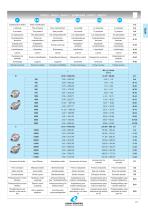
Data Summary: Tables provide detailed data on torque (kNm), maximum speed (n1max), power (Pt), and gear ratios (i) for various models (PG 501, PG 502, etc.). The tables also include load factors and performance metrics for different operational conditions.
Critical Information: Emphasis is placed on the correct application of loads and the use of specified components to ensure the reliability and efficiency of the planetary drives and axles.
Technical Specifications: The document provides detailed specifications for various SAE flange types (B-B, C, C-C, D, E, F) used in hydraulic motors. Each type is defined by specific measurements such as diameter, thickness, and other dimensional parameters. These specifications are crucial for ensuring compatibility and performance in hydraulic systems.
Standards and Compliance: The flanges are designed according to the SAE J744C standard, which ensures uniformity and compatibility across different hydraulic systems and components. This standardization is essential for maintaining system integrity and performance.
Motor Types and Codes: The document lists various motor types and their corresponding codes, such as OMM, OMP, OMR, OMS, and OMT. Each motor type is associated with specific dimensions and codes, which are critical for identifying and ordering the correct components.
Planetary Gear Units: The document outlines the configurations and stages of planetary gear units, indicating the number of stages (1-5) and their compatibility with different motor types. This information is vital for selecting the appropriate gear unit for specific applications.
Worm Gearbox Adaptors: Details on worm gearbox adaptors are provided, including types and codes for various configurations. These adaptors are essential for connecting worm reduction units to hydraulic motors, ensuring efficient power transmission.
Recommendations: The document emphasizes the importance of separate lubrication systems for planetary gear units and worm reduction units to ensure optimal performance and longevity. It also highlights the availability of combined reduction units, which can be supplied complete with worm reduction units or preset for them.
Key Data Extraction:- SAE flange types and dimensions
- Motor types and corresponding codes
- Planetary gear unit stages and configurations
- Worm gearbox adaptor types and codes
- Compliance with SAE J744C standard
Overall, the document serves as a comprehensive guide for selecting and configuring hydraulic motor components, ensuring compatibility and adherence to industry standards.



 Planetary Travel & Hoist Drives
 Road Construction
 Powertrain
 GEARBOX
 DRIVESHAFTS Spare Parts
 Planetary Drives for WTG
 Driveshafts spare parts
 Planetary Drives
 Driveshafts - T807 SERIES
 Driveshafts - VP SERIES
 Driveshafts - EN SERIES
 Axles
Axles PTO Drive shafts
 Electric Wheel Drives catalogue
 Orbit motors technical catalogue
 Slew drives
 PG-PGA technical catalogue

 Gearboxes_2018
 Gearboxes_2014
 Modular planetary gear drivers
 Axial piston motors
 Orbit motors
 PTO Drive shafts