
- Catalogs
- COMEC ITALIA
- Inks catalogue

- Company
- Products
- Catalogs
- News & Trends
- Exhibitions
Inks catalogue

Inks catalogue
- Ink Storage and Preparation: Inks should be stored in a dry, ventilated, and dark environment at temperatures between 10 and 25°C. Containers must be sealed and stored upright to prevent contamination and exposure to sunlight. Once opened, containers should be closed tightly to avoid the formation of a hard film on the ink surface. A small amount of thinner can be added to prevent this.
- Catalysts: Catalysts for two-component inks are hygroscopic and should be exposed to air only briefly to maintain their properties. Containers should be closed immediately after use.
- Safety and Hygiene: Follow safety measures and hygiene practices as outlined in the technical data sheets accompanying the products.
- Compatibility: Ensure all containers and tools used for ink preparation are clean and dry to avoid contamination. This includes spatulas, mixers, funnels, and ink trays.
- Treatment: Inkcups come with a protective cap for the ceramic ring, which should only be removed during machine assembly. Handle inkcups carefully to avoid damaging the ceramic ring. Before use, check the ring for cracks and ensure it fits correctly in the inkcup.
- Cleaning: Use clean cloths and solvent to remove dry ink residues from the ceramic ring. Avoid using metal tools that could damage the ring.
- Machine Use: Ensure the pressure between the ring and the plate is not excessive to prevent damage.
1. Machine Setup and Maintenance
- Adjust the internal spring of the presser pin to ensure proper pressure between the ring and the plate (cliché).
- Ensure the inkcup's position is correct to avoid mechanical misalignment, which can cause uneven wear and ink application issues.
- The base or support surface for the plate must be flat and free of irregularities. The plate should be securely fixed to prevent movement that could lead to inking problems or damage to the ceramic ring.
- Prevent dry ink accumulation on the ring edges during operation.
2. Cleaning Procedures
- Avoid leaving cleaning tools or inkcups in the cleaning tank to prevent damage.
- Use clean cloths and solvent to remove dry ink residues from the ceramic ring. Do not use metal tools.
- Clean up any ink spills immediately to prevent machine malfunction and printing defects.
- Regularly clean excess ink from the cliché and its support.
3. Ink Transfer and Mixing
- The quality of ink transfer depends on the thinners used, ink viscosity, and machine speed.
- Adjust ink viscosity according to job requirements using precision scales or graduated containers.
- For mono-component inks, mix with the corresponding thinner. For two-component inks, add the catalyst first, then the thinner.
- Prepare a small sample mixture to test print quality and adjust as needed.
4. Viscosity Control
- Check viscosity visually by observing the flow of ink from a stirring tool. Adjust with thinner or ink as needed to achieve a regular, even flow.
- Use the Viscomix tool for precise viscosity measurement, ensuring consistent ink density for repeatable results.
5. Safety and Cleaning
- Stop the machine and disconnect power before cleaning.
- Use appropriate solvents for different surfaces, such as denatured alcohol for painted surfaces and specific ink solvents for untreated surfaces.
Pad printing inks require a high pigment percentage and a fast solvent mixture to ensure excellent and consistent print quality. This printing method is versatile, suitable for various surfaces and materials. COMEC ITALIA offers a range of inks tailored to different substrates, focusing on both technical and aesthetic outcomes, such as color tones, brightness, and image sharpness. Ink selection considers material type, surface characteristics, desired brightness, drying needs, and mechanical or chemical resistance.
Ink Preparation and Safety
Before using inks, review safety sheets and implement protective measures for operators and the environment. Ink preparation and equipment cleaning should occur in well-ventilated areas, with operators wearing appropriate protective gear. COMEC ITALIA provides a variety of mono and bicomponent inks, with detailed preparation instructions available on their website and catalog.
Cleaning Procedures
For cleaning ink from machines, stop the machine and disconnect power supplies. Absorb ink with cloths or sponges, and clean surfaces with appropriate solvents. Ensure proper ventilation when using solvents. Clichés and pads should be cleaned with specific solvents and dried thoroughly.
Machine Operation
During machine operation, promptly clean ink stains to prevent operational issues. Regularly check and clean the inkcup and clichés. At the end of the day, ensure the inkcup is correctly positioned, switch off the machine, and clean components with suitable solvents.
Recommendations for Ink Preparation
Single-component inks should be mixed with suitable thinners, considering ink density and working conditions. Two-component inks require a catalyst addition before dilution. Thorough mixing is essential.
Safety Warnings
Dispose of leftover inks and thinners in authorized centers. Products are flammable; avoid open flames and smoking. Consult safety data sheets for detailed hazard information.
Ink Selection Guide
The document includes a table for selecting inks based on material type, with specific recommendations for various substrates like cellulose acetate, anodized aluminum, and paper.
The document lists various materials such as metals, leather, wood, and different types of plastics (e.g., PET, polyamide, polycarbonate) and indicates the most suitable inks for each material using bold crosses. It emphasizes the importance of preliminary trials to ensure product suitability.
PLT1 Ink Specifications
Applications: Suitable for ABS, SAN, polycarbonate, treated polyester, paper, cardboard, and wood. Not recommended for polyolefins and polymethacrylates. Particularly suitable for polyurethane, rigid and soft PVC, and polystyrene.
Features: Vinyl-based, single-component ink with a matte appearance, quick drying, excellent covering power, and good resistance to abrasion and alcohol. It is non-toxic and complies with European standards.
Processing: Requires mixing and dilution with PLA thinner (10-20%). Excessive or insufficient dilution can affect print quality.
Drying and Hardening: Dries in 10-15 minutes at 20°C. Complete hardening occurs after 24 hours.
Color Range: Colors can be mixed, with special and metallic shades available upon request.
Additives: Includes PLA thinner, PLB fast thinner, and PLD retardant.
PLT2 Ink Specifications
Applications: Suitable for ABS, rigid PVC, wood, paper, cardboard, and as a bicomponent ink for pre-treated PE and PP, thermosetting plastics, metal, varnished surfaces, and polyamide.
Features: Polyester-based, mono and bicomponent ink with good opacity, fast drying, and excellent chemical resistance. Non-toxic and compliant with European standards.
Processing: Can be used as a two-component ink with a catalyst (10:1 ratio). Requires mixing and dilution with PLA thinner (10-20%).
Drying and Hardening: Dries in about 2 minutes at 20°C, with increased time when using a catalyst. Pot life with catalyst is 12-14 hours.
Color Range: Colors can be mixed, with special and metallic shades available upon request.
Additives: Includes PLA thinner, PLB fast thinner, PLD retardant, PLH catalyst, and TPH1 catalyst.
Preservation and Caution
Inks have a preservation lifetime of 2 to 2.5 years, depending on the type. They should be stored in sealed packages in a dry and cool environment. The document stresses the importance of conducting preliminary trials to verify product suitability and notes that product use is the customer's responsibility. The manufacturer reserves the right to make changes as necessary.
The document describes various types of inks, including PLT5, PLT6, and PLT7, each with specific applications and characteristics. PLT5 is suitable for materials like polystyrene and acrylic glass, while PLT6 is for rubber and flexible substrates. PLT7 is designed for metals and treated plastics.
Procedures:
For enhanced mechanical and chemical resistance, inks can be used as two-component systems by adding a catalyst (PLH) in a specified ratio. Proper mixing and dilution with thinners (PLA, PLK) are crucial for optimal performance. Excessive or insufficient dilution can lead to quality issues.
Drying and Hardening:
Inks dry at ambient temperatures within minutes, but complete hardening takes longer (24-48 hours for PLT5 and PLT6, 6-7 days for PLT7). Accelerated drying can be achieved using hot air ovens or infrared devices.
Standards and Recommendations:
All inks comply with European regulations EN 71/part 3 and Directive 2011/65/EC (RoHS 2). It is recommended to conduct preliminary trials to ensure product suitability for specific materials and conditions.
Preservation:
Inks have a shelf life of 2-3.5 years, depending on the type. They should be stored in sealed packages in cool, dry environments.
Warnings:
Information provided is indicative, and product use is the customer's responsibility. The manufacturer may update specifications as needed.
The document provides detailed information about various ink products offered by Comec Italia, including PLT12, PLT13, and PLT15 inks. These inks are designed for specific applications and materials, with each having unique characteristics and processing requirements.
PLT12 Ink
Applications: Suitable for ABS, cellulose acetate, polycarbonate, treated polyester, and polymethacrylate.
Features: Acrylic-vinyl based, glossy, non-toxic, good abrasion and alcohol resistance, recommended for outdoor use.
Processing: Can be used as a dual-component with PLHN catalyst. Requires careful dilution to maintain quality.
Drying: Dries in 15-20 minutes at room temperature; complete hardening in 24-48 hours.
PLT13 Ink
Applications: Designed for silicon materials, fabrics, and non-slip socks.
Features: Silicone-based, flexible, glossy, non-toxic, good chemical resistance.
Processing: Requires PLH13 catalyst; ready to use but can be thinned with PLB.
Drying: Requires oven drying at specific temperatures for polymerization.
PLT15 Ink
Applications: Suitable for cellulose acetate, metal, treated PETG, polycarbonate, treated polyester, polystyrene, PVC, lacquered surfaces, aluminum, and wood.
Features: Vinyl-based, glossy, non-toxic, not suitable for outdoor use, excellent alcohol resistance.
Processing: Can be used as a dual-component with PLH catalyst. Requires careful dilution.
General Notes
Preservation: All inks have a shelf life of about 2 years (1 year if metallic). Store in a sealed package in a cool, dry place.
Caution: Information is indicative; users should conduct preliminary trials to ensure product suitability. The manufacturer is not responsible for product use.
Reproduction: Unauthorized reproduction of the document is prohibited.
The document provides detailed specifications for various inks produced by Comec Italia, including PLT18, PLT18G, and PLT22. These inks are designed for use on different materials such as thermosetting resins, metals, glass, ceramics, and plastics. Each ink type has specific characteristics, such as being epoxy-based or acrylic-vinyl based, and offers features like quick drying, good coverage, and compliance with European safety standards.
Procedures:
The preparation and application procedures for each ink type are outlined. For instance, the PLT18 ink requires the addition of a PLH catalyst in a 20% ratio and dilution with PLA thinner. The document emphasizes the importance of correct dilution to avoid issues like loss of coverage or printing quality.
Drying and Hardening:
Drying times vary between 10 to 15 minutes at 20°C, with complete hardening occurring after 24 to 48 hours for PLT18 and 5 to 6 days for PLT18G. Accelerated drying can be achieved using hot air circulation ovens or infrared devices.
Color Range:
All color shades can be mixed, and special sample colors or metallic shades are available upon request. The document advises consulting the Comec Italia color chart for options.
Additives:
Various additives are mentioned, including PLA thinner, PLB fast thinner, PLD retardant, and PLH catalyst. These additives are crucial for achieving the desired ink properties and performance.
Preservation:
The inks have a shelf life of about 5 years, with metallic and fluorescent shades having a reduced lifespan. Proper storage conditions include keeping the package sealed in a dry and cool environment.
Important Notes:
The document includes cautionary notes emphasizing that the provided information is indicative and that product use is the customer's responsibility. Preliminary trials are recommended to ensure product suitability for specific materials and conditions. The manufacturer reserves the right to make changes to the product specifications.
The document outlines the specifications for various inks, including PLT22, PLT23, and PLT31. These inks are suitable for different materials such as ABS, SAN, polycarbonate, and more. They are compliant with European regulations EN 71/part 3 and Directive 2011/65/EC (RoHS 2). The inks offer good resistance to alcohol, flexibility, and abrasion, with varying degrees of light resistance measured in DIN.
Procedures:
For enhanced mechanical and chemical resistance, the inks can be used as dual-component by adding specific catalysts (e.g., PLH, PLTZHN) in specified ratios. Proper mixing and dilution with thinners like PLA are crucial, with recommendations for using retardants like PLD for fine detail printing in warm environments.
Drying and Hardening:
Drying times vary by ink type and environmental conditions, with options to accelerate drying using hot air ovens or infrared devices. Complete hardening can take from 24 hours to several days, depending on the ink.
Color Range and Additives:
The inks are available in various colors, which can be mixed. Special colors and metallic shades are available upon request. Additives include thinners, retardants, and adhesion promoters.
Preservation:
The inks have a shelf life of about 2 years, requiring storage in sealed packages in cool, dry environments.
Recommendations and Cautions:
Users are advised to conduct preliminary trials to ensure product suitability for specific materials and conditions. Excessive or insufficient dilution can affect ink performance and print quality. The responsibility for product use lies with the customer, and the manufacturer reserves the right to make changes as necessary.
The document provides detailed instructions for using PLT33 and PLT34 inks, which are vinyl-polyester based and suitable for various materials such as PP, metal, and lacquered surfaces. The inks are mono and bi-component with a glossy appearance, good opacity, and fast drying properties. They comply with European standards EN 71/part 3 and Directive 2011/65/EC (RoHS 2).
For PLT33, mix the ink with a PLH catalyst in a 10:1 ratio and dilute with PLA thinner (10-20%). For PLT34, use the PLHN catalyst and PLA34 thinner. Both inks require careful dilution to avoid loss of covering power or printing quality issues. The catalyzed ink should be used within 8-9 hours.
PLT33 dries in 10-15 minutes at 20°C, while PLT34 takes 15-20 minutes. Both can be accelerated using hot air circulation ovens or infrared devices. Complete hardening occurs after 6-7 days for PLT33 and 7-8 days for PLT34.
Consult the COMEC ITALIA color chart for available shades. Special colors and metallic shades are available upon request. Additives include PLA thinner, PLB fast thinner, PLD retardant, and catalysts PLH and PLHN.
The inks have a shelf life of about 2 years (1 year if metallic) and should be stored in a sealed, dry, and cool environment.
The document emphasizes the importance of preliminary trials to ensure product suitability and states that product use is the customer's responsibility. The manufacturer may make changes as necessary, and reproduction of the document is prohibited without authorization.
PLTF ink is suitable for rigid and flexible PVC, metacrylate, polycarbonate, and polystyrene. It is a vinyl-acrylic based, single-component ink with a brilliant appearance, quick-drying, and excellent coverage. It is non-toxic and complies with European standards EN 71/part 3 and Directive 2011/65/EC (RoHS 2). The ink is resistant to alcohol and petrol, making it suitable for outdoor use.
The ink should be mixed and diluted with PLF thinner (10-20%). Excessive dilution can lead to loss of coverage and smudging, while insufficient dilution can cause issues with ink transfer and print quality. Drying time is approximately 10 minutes at 20°C, with complete hardening after 24-48 hours. Accelerated drying can be achieved using hot air ovens or infrared devices.
All color shades can be mixed, with special colors and metallic shades available upon request. Additives include PLF thinner, PLB fast thinner, PLD retardant, PPLD retardant paste, PLTF transparent base, and PP2 adhesion promoter.
The ink has a shelf life of about 2 years when stored in a sealed package in a dry, cool place.
PLTUV2/R ink is designed for PVC, polycarbonate, polyester, polyamide, duroplastics, and painted surfaces. It is an acrylic-based, mono-component ink with an opaque finish and excellent coverage. It complies with Directive 2011/65/EC (RoHS 2) and offers excellent resistance to chemicals, mechanical action, and abrasion.
The ink should be mixed and diluted with PLBUV2/R/A thinner (10-20%). Drying is performed using UV equipment (500-2000 mj/cm2), with complete hardening after 24 hours.
All color shades can be mixed, with special colors and metallic shades available upon request. The main additive is PLBUV2/R/A thinner.
The ink has a shelf life of about 2 years, with metallic and fluorescent shades having a reduced lifetime.
PLTTEXA ink is suitable for all types of fabrics. It is a polyurethane-based, mono-component ink that can also be used as a two-component ink. It has a brilliant satin finish, excellent adherence, and resistance to washing, mechanical stress, and solvents. It is non-toxic and complies with EN 71/part 3 and Directive 2011/65/EC (RoHS 2).
For increased resistance, the ink can be used as a two-component ink with PLTTEXB catalyst (10:1 ratio). It should be mixed and diluted with PLK thinner (10-20%). Drying time is 10-15 minutes at 20°C, with complete hardening after 24 hours.
All color shades can be mixed, with special colors and metallic shades available upon request. Additives include PLK thinner, PLD retardant, PPLD retardant paste, PLTTEXB catalyst, and OP opacifier.
The ink has a shelf life of about 2 years (1 year if metallic), stored in a sealed package in a dry, cool place.
All information is indicative, and preliminary trials are recommended to verify product suitability. The use of products is the customer's responsibility, and the manufacturer may make changes as necessary. Reproduction of this document is prohibited without written authorization from Comec Italia srl.
Catalog excerpts

COMEC ITALIA srl - P.le Del Lavoro, 149 - 21044 CAVARIA (Va) Italy Tel. 0331-219516 (5R.A.) Fax: 0331-216161 www.comec-italia.it [email protected]
Open the catalog to page 1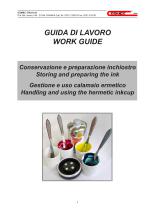
COMEC ITALIA srl P.le Del Lavoro,149 - 21044 CAVARIA (Va) Tel. 0331-219516 Fax: 0331-216161 GUIDA DI LAVORO WORK GUIDE Conservazione e preparazione inchiostro Storing and preparing the ink Gestione e uso calamaio ermetico Handling and using the hermetic inkcup
Open the catalog to page 3
COMEC ITALIA srl Ple Del Lavoro,149 - 21044 CAVARIA(Va) Tel. 0331-219516 Fax: 0331-216161 4.2 Accumulo inchiostro durante il lavoro pag.15
Open the catalog to page 4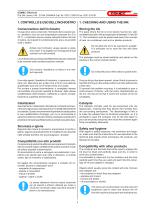
COMEC ITALIA srl P.le Del Lavoro,149 - 21044 CAVARIA (Va) Tel. 0331-219516 Fax: 0331-216161 Conservazione dell’inchiostro Il luogo dove viene conservato l’inchiostro deve essere secco, ventilato e buio ad una temperatura compresa tra 10 e 25 °C. I contenitori devono essere collocati lontano da fonti di calore, da impianti di condizionamento aria e da prodotti acidi o alcalini. The place where the ink is to be stored must be dry, wellventilated and dark, with a temperature of between 10 and 25 °C. The containers must be placed well away from sources of heat, air conditioners and acid or alkaline...
Open the catalog to page 5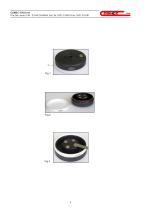
COMEC ITALIA srl P.le Del Lavoro,149 - 21044 CAVARIA (Va) Tel. 0331-219516 Fax: 0331-216161
Open the catalog to page 6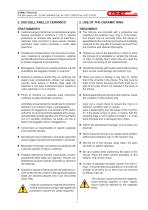
COMEC ITALIA srl P.le Del Lavoro,149 - 21044 CAVARIA (Va) Tel. 0331-219516 Fax: 0331-216161 2. USO DELL’ANELLO CERAMICO TRATTAMENTO • I calamai vengono forniti con una protezione a tappo inserita sull’anello in ceramica (1 Fig.1). Questa protezione va rimossa solo quando si inserisce il calamaio sulla macchina e deve essere rimessa sull’anello dopo averlo smontato e pulito dalla macchina. • Predisporre nel laboratorio una zona dove conser-vare i calamai (si consiglia di numerare i calamai per identificarne il loro successivo impiego secondo le proprie esigenze di lavorazione). • Maneggiare i...
Open the catalog to page 7
COMEC ITALIA srl P.le Del Lavoro,149 - 21044 CAVARIA (Va) Tel. 0331-219516 Fax: 0331-216161 PULIZIA Prestare molta attenzione durante le operazioni di pulizia dei calamai: • Non lasciare utensili usati per la pulizia o calamai all’interno della vaschetta di pulizia (evitare che i calamai si urtino dentro la vaschetta di pulizia). Un altro operatore puo nel frattempo utilizzare la vaschetta e provocare la rottura o sdentatura dell’anello. • Rimuovere i residui secchi di inchiostro dall’anello ceramico con panni puliti e con solvente. /Cv Non utilizzare utensili metallici (cacciaviti, spatole,...
Open the catalog to page 8
COMEC ITALIA srl P.le Del Lavoro,149 - 21044 CAVARIA (Va) Tel. 0331-219516 Fax: 0331-216161 SCHEMA CICLO DI STAMPA PRINTING SEQUENCE SCHÉMA CYCLE D’IMPRESSION ESQUEMA DEL CICLO DE IMPRESIÓN
Open the catalog to page 9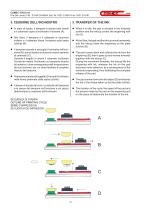
COMEC ITALIA srl P.le Del Lavoro,149 - 21044 CAVARIA (Va) Tel. 0331-219516 Fax: 0331-216161 3. CESSIONE DELL’INCHIOSTRO • In stato di riposo, il tampone e situato tutto avanti e il calamaio copre di inchiostro I’incisione (A). • Allo Start, il tampone e il calamaio si muovono indietro e il calamaio libera l’incisione sulla lastra (cliche) (B). • Il tampone scende e raccoglie l’inchiostro dall’inci-sione (B), quindi risale e si muove in avanti assieme al calamaio (C). Durante il tragitto in avanti il calamaio inchiostra l’incisione mentre l’inchiostro sul tampone diventa piu adesivo, come conseguenza...
Open the catalog to page 10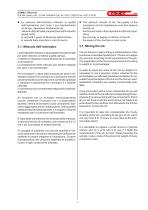
COMEC ITALIA srl P.le Del Lavoro,149 - 21044 CAVARIA (Va) Tel. 0331-219516 Fax: 0331-216161 La cessione dell’inchiostro ottimale, la qualità nell’impressione così come il suo mantenimento nel tempo, dipendono direttamente da: - i diluenti utilizzati nella preparazione dell’inchiostro (rapidi, lenti); - la viscosità o grado di diluizione dell’inchiostro; - la velocità della macchina o ciclo di lavoro. The optimum transfer of ink, the quality of the impression and its maintenance over time depend directly on: - the thinners used in the preparation of the ink (rapid, slow); - the viscosity or...
Open the catalog to page 11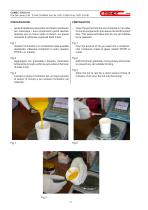
COMEC ITALIA srl P.le Del Lavoro,149 - 21044 CAVARIA (Va) Tel. 0331-219516 Fax: 0331-216161 PREPARAZIONE - Aprire il barattolo e mescolare I’inchiostro contenuto per mescolare i suoi componenti quindi lasciare riposare per un breve lasso di tempo. La pausa consente di eliminare eventuali bolle d’aria. Fig.1 Versare l’inchiostro in un contenitore nella quantita desiderata. Utilizzare contenitori in vetro, plastica PP/PE o in metallo. Fig.2 Aggiungere con gradualita il diluente, mescolare lentamente in modo uniforme per evitare il formarsi di bolle d’aria. Fig.3 Lasciare a riposo l’inchiostro per...
Open the catalog to page 12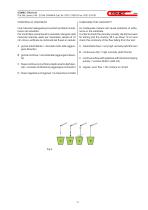
COMEC ITALIA srl P.le Del Lavoro,149 - 21044 CAVARIA (Va) Tel. 0331-219516 Fax: 0331-216161 CONTROLLO VISCOSITÀ Una mescola inadeguata provocherà problemi di aderenza nel substrato. Per controllare visivamente la viscosità, intingere nella mescola l’utensile usato per mescolare, alzarlo di 10 cm circa e verificare la continuità del flusso in caduta: An inadequate mixture will cause problems of adherence in the substrate. In order to check the viscosity visually, dip the tool used for stirring into the mixture, lift it up about 10 cm and check the continuity of the flow falling from the tool:...
Open the catalog to page 13
COMEC ITALIA srl P.le Del Lavoro,149 - 21044 CAVARIA (Va) Tel. 0331-219516 Fax: 0331-216161 Per verificare con maggiore precisione la viscosità, può essere utilizzato il Viscomix che è lo strumento ideale per controllare rapidamente la densità dell'inchiostro e per poterlo riprodurre uguale di volta in volta. In order to check the viscosity with greater precision, you can use the Viscomix which is the ideal tool for quickly checking the density of the ink and to enable you to repeat it the same from time to time. Preparare la mescola e immergere Viscomix nel barattolo fino a coprire completamente...
Open the catalog to page 14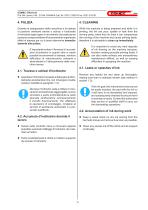
COMEC ITALIA srl P.le Del Lavoro,149 - 21044 CAVARIA (Va) Tel. 0331-219516 Fax: 0331-216161 Durante la preparazione della macchina e la stampa si possono verificare travasi o schizzi o fuoriuscite d’inchiostro dagli organi in movimento che essiccando possono comprometterne il funzionamento e generare difetti di stampa per cui è bene intervenire immediatamente alla pulizia. While the machine is being prepared and while it is printing, the ink can pour, spatter or leak from the moving parts; when this ink dries it can compromise the running of the machine and cause printing faults, therefore it...
Open the catalog to page 15All COMEC ITALIA catalogs and technical brochures
 Washing machines
2 Pages
 Rotative machine catalogue
2 Pages
 Photoexposures
2 Pages
 INKPRINT SLIDE
2 Pages
 KV 09, KP 09
2 Pages
 KP13/KE13
2 Pages
 KP16/KE16
2 Pages
 Eazy-90-130-160
2 Pages
 Pads catalogue
138 Pages
 Color chart
2 Pages
 KP04 / KP07 / KE 07
2 Pages
 KP04 GL
2 Pages
 Flamers unit
2 Pages
 Comec Italia General Catalogue
45 Pages
 KRTECH 6C 160
2 Pages
 Pad Printing Machine XE20
2 Pages
 KP08
KP082 Pages
 Comec Italia Company Profile
34 Pages
 Pad Printing Machine X30
2 Pages
 Drying UV Oven model UV300
2 Pages
 Colorbox
2 Pages
 PHOTOEXPOSURE Units model BR
2 Pages


- Electric furnace
- Heat treatment kiln
- Automatic cleaning system
- Drying system
- Drying kiln
- Stainless steel cleaning system
- Tunnel kiln
- Air blast dewatering system
- Spray cleaning system
- COMEC pad printing machine
- Manual cleaning system
- Air circulating oven
- COMEC pad printing machine with closed ink cup
- Compact cleaning system
- Hot air dryer
- Solvent cleaning system
- Compact kiln
- Conveyor oven