


CLUFIX-STUD

CLUFIX-STUD
Installation Tools:
CLUFIX-STUD™ installation requires LA CLUSIENNE-CLUFIX oleopneumatic crimping tools. It is essential to use standard tooling that matches the diameter of the CLUFIX-STUD™.
Technical Data:
Preparation of the metal sheet should align with its design. The body can be cylindrical or hexagonal, with specific dimensions provided in millimeters. No preparation of the workpiece is needed, but drilling and counterboring can be done to embed the insert head flush with the surface. Stepped punching is also an option.
Preparation Process:
Four processes can be used to create the hole for CLUFIX-STUD™: punching, drilling, laser cutting, and water jet cutting. The quality of preparation is crucial for optimal crimping and mechanical resistance. A precision-sharpened punch is recommended to limit strain-hardening.
Installation Settings:
1. Stroke Adjustment: This optimizes crimping quality based on the CLUFIX-STUD™ part number and workpiece thickness. The crimping stroke S is calculated as S = X – Ep, where X is a variable from the product data sheet and Ep is the workpiece thickness. A crimping test is recommended to validate the stroke.
2. Air Pressure: Relevant for oleopneumatic tools, the air supply pressure affects the setting force. A minimum pressure of 6 bars is required, and an air pressure gauge is advised.
Performance Data:
Tensile Force: The tensile force for steel is provided for different sizes (e.g., M5: 1250 daN).
Push-out Force: This assesses resistance in the opposite direction of installation (e.g., M5: 250 daN).
Crimping Force: Average force necessary for optimal crimping is specified (e.g., M5: 400 daN).
Torque Resistance: Direct and indirect torque values are provided, with specific conditions for testing.
Data is indicative and may vary based on materials and conditions. Testing in actual application conditions is recommended.
Catalog excerpts
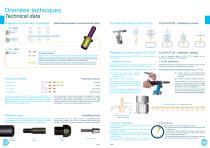
Données techniques Technical data Préparation de la tôle selon morphologie Fût / Body Processus de pose de CLUFIX-STUD™ CLUFIX-STUD™ installation process Cylindrique : Round: Metal sheet preparation in accordance with design unité : mm (tolérances disponibles dans les fiches produits) dimensions: mm (tolerance provided in the data sheets) Hexagonal : Hexagonal: Tête / Head Cylindrique : Flanged: Pas de préparation de la tôle No workpiece preparation Réalisation d’un perçage et d’un lamage pour noyer la tête de l’insert et ainsi obtenir une tête affleurante (ces deux opérations peuvent être réalisées simultanément à l’aide d’un foret étagé). Drilling and counterboring can be carried out to embed the head of the insert perfectly flush to the surface (these two stages can be achieved simultaneously using a stepped drill). Réalisation d’un poinçonnage étagé pour noyer la tête de l’insert et ainsi obtenir une tête affleurante. Stepped punching can be carried out to embed the head of the insert perfectly flush to the surface. Réglages pour la pose de CLUFIX-STUD™ CLUFIX-STUD™ installation settings Afin de garantir la pose optimale du CLUFIX-STUD™, deux paramètres clés sont à considérer : In order to guarantee optimum CLUFIX-STUD™ crimping, two key parameters must be taken into consideration: Ce réglage permet d’optimiser la qualité du sertissage en fonction de la référence de CLUFIX-STUD™ et de l’épaisseur de la tôle support. This adjustment optimises crimping quality in line with the chosen CLUFIXSTUD™ part number and the thickness of the workpiece. La course de sertissage S se calcule à l’aide de la formule : S = X – Ep The crimping stroke S is calculated using the formula: S = X – Ep X = variable définie pour chaque référence consultable dans la fiche produit du CLUFIXSTUD™ concerné Preparation process - Découpe laser Laser cutting Ces quatre processus peuvent être utilisés pour la réalisation du trou recevant CLUFIX-STUD™. Toutefois, la qualité de préparation est prépondérante pour garantir un sertissage optimal et donc une tenue mécanique élevée. Il est donc par exemple conseillé d’utiliser un poinçon correctement affûté pour limiter l’écrouissage du trou. X = variable data for each CLUFIX-STUD™ part number (available from the data sheet in question) Ep = épaisseur de la tôle à assembler Ep = customer application workpiece thickness Après calcul de la valeur S, il est nécessaire de réaliser un essai de pose sur un échantillon de tôle de même épaisseur à l’aide de l’appareil de pose choisi. After calculation of S, we recommend that you carry out a crimping test (using your chosen installation tool) on a metal sheet sample matching the thickness used in your application. De plus, cet essai permet de valider physiquement la course S en effectuant le différentiel entre la mesure de Lc avant sertissage et de Lts après pose. This test will also help you check the S (stroke) data by means of the difference between the Lc measurement before crimping and Lts after installation. These four processes can be used to create the hole destined to receive the CLUFIX-STUD™. Quality of preparation is, however, of overriding importance in guaranteeing optimal crimping which will result in high mechanical resistance. Use of a precision-sharpened punch is, for example, recommended - in order to limit strain-hardening of the hole. Lts = Lc - S Intervalles de tolérances Ls / Tolerance for Ls data: Ø Installation tools La pose de CLUFIX-STUD s’effectue à l’aide des sertisseurs oléopneumatiques LA CLUSIENNE-CLUFIX. Pour permettre la pose, l’utilisation d’un outillage standard adapté au diamètre de CLUFIX-STUD™ est impérative. Ls : voir fiches produits refer to data sheet CLUFIX-STUD should be fitted using LA CLUSIENNE-CLUFIX oleopneumatic crimping tools. Use of a standard tooling matching the selected CLUFIX-STUD™ diameter is imperative to carrying out installation. Crimping tool 2. Pression d’alimentation Ce paramètre de réglage ne concerne que les appareils de pose oléopneumatiques. La pression d’alimentation d’air conditionne l'effort de pose développé par l'appareil. Pour garantir un sertissage optimum, il est conseillé d’équiper le réseau d’un manomètre de contrôle placé en amont de l’appareil de pose. La pression minimum requise est de 6 bars. Cette valeur correspond à la pression habituelle d’un réseau d’air comprimé. 2. Air pressure This parameter concerns only oleopneumatic tools. The air supply pressure level determines the setting force of the installation tool. To guarantee optimum crimping, we advise you to use an air pressure gauge (positioned up
Open the catalog to page 1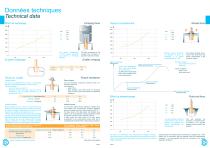
Données techniques Technical data Effort de sertissage Crimping force Tensile force Acier Steel Acier Steel Ces valeurs correspondent à l’effort moyen nécessaire pour garantir un sertissage optimum. This data corresponds to the average force necessary to guarantee optimum crimping. Méthode d’essai permettant de quantifier la tenue du sertissage et du filetage indépendament de la tôle. Ø after crimping Effort de sertissage Setting force Ø max (mm) Courbe type caractéristique effort / course de sertissage de CLUFIX-STUD™. CLUFIX-STUD™ tensile / stroke chart, which assesses force and crimping stroke....
Open the catalog to page 2All Clufix catalogs and technical brochures
 BOLTOFIX
1 Page
 RIVETFIX
1 Page
 Crimping hand pliers
1 Page
 Oleopneumatic crimping tools
4 Pages
 CLUFIX ®
5 Pages
 Oleopneumatic press
1 Page
 Riveting hand pliers
1 Page
 Oleopneumatic riveting tools
3 Pages
 NUTFIX?
3 Pages
 FLUSHFIX®
3 Pages
 ENDFIX®
3 Pages
 CLUFIX®
5 Pages
 CAPTIFIX™ HR Stainless Steel
11 Pages
 CAPTIFIX™ 316L Stainless Steel
14 Pages
 CAPTIFIX™ Stainless Steel
14 Pages
 CAPTIFIX™ Steel
14 Pages
 LOCKFIX™
12 Pages
 STUDFIX™ Steel - Aluminium
16 Pages
 SPACERFIX™ Aluminium
15 Pages
 SPACERFIX™ HR Stainless Steel
15 Pages
 SPACERFIX™ 316L Stainless Steel
16 Pages
 SPACERFIX™ Stainless Steel
16 Pages
 SPACERFIX™ Steel
16 Pages
 NUTFIX™ Steel - Aluminium
16 Pages
 FLUSHFIX®
9 Pages
 ENDFIX®
18 Pages
 CLUFIX-STUD™
9 Pages
 SOFTERFIX™
16 Pages
 CLUFIX® Aluminium
14 Pages
 CLUFIX® 316L Stainless Steel
18 Pages
 CLUFIX® Stainless Steel
18 Pages
 CLUFIX® Steel
17 Pages


