
- Catalogs
- CHEMTRONICS
- Flux-Off No Clean Extra


Flux-Off No Clean Extra

Flux-Off No Clean Extra
1. Identification
Product: Flux-Off No Clean Extra, an aerosol flux remover for industrial/professional use.
Supplier: Chemtronics, Kennesaw, GA, USA. Emergency contact via Chemtrec 1-800-424-9300 (24/7).
Product Code: ES888B-B.
2. Hazards Identification
The product is classified as an extremely flammable aerosol (Category 1), contains compressed gas, and causes serious eye irritation (Category 2A). The signal word is "Danger." Key hazards include explosion risk if heated and serious eye irritation. Precautions involve avoiding heat, sparks, and flames, wearing eye/face protection, not piercing or burning the container, and washing hands after use.
3. Composition / Ingredients
Main hazardous ingredients are Acetone (10-25%) and (2-methoxymethylethoxy)propanol (≤5%). No other significant hazardous components reported.
4. First Aid Measures
- Eye Contact: Rinse with water for 10+ minutes, remove contact lenses, seek medical help if irritation persists.
- Skin Contact: Flush with water, remove contaminated clothing, seek medical attention if symptoms occur.
- Inhalation: Move to fresh air, provide artificial respiration if needed, seek medical attention if symptoms persist.
- Ingestion: Do not induce vomiting unless directed, rinse mouth, seek immediate medical attention.
Symptoms include eye and skin irritation, respiratory irritation, and possible CNS depression.
5. Fire-Fighting Measures
The aerosol is extremely flammable with explosion risk if heated. Firefighters should use self-contained breathing apparatus (SCBA) and full protective gear. Suitable extinguishing media depend on surrounding fire. Containers should be cooled with water spray and removed if safe.
6. Accidental Release Measures
Evacuate area, avoid ignition sources, wear appropriate PPE, and avoid inhaling vapors. Prevent environmental contamination by containing spills with inert absorbents (sand, earth, vermiculite). Dispose of waste per regulations using licensed contractors.
7. Handling and Storage
Handling: Use with adequate ventilation, avoid eye/skin contact, do not pierce or burn containers, avoid vapor inhalation, and use explosion-proof equipment.
Storage: Store in cool, dry, ventilated area away from sunlight, ignition sources, and temperatures above 50°C. Keep away from incompatible materials and food.
Hygiene: No eating, drinking, or smoking in handling areas; wash hands before breaks and after work.
8. Exposure Controls / Personal Protection
Exposure Limits: Acetone - ACGIH TLV TWA 250 ppm, STEL 500 ppm; OSHA PEL TWA 1000 ppm. (2-methoxymethylethoxy)propanol - ACGIH TLV TWA 100 ppm, STEL 150 ppm; OSHA PEL TWA 100 ppm.
Engineering Controls: Use local exhaust or process enclosures with explosion-proof ventilation to maintain exposure below limits.
Personal Protective Equipment: Chemical splash goggles, chemical-resistant gloves, anti-static protective clothing if ignition risk, and respirators if ventilation is inadequate.
Environmental Controls: Ensure emissions comply with regulations; use fume scrubbers or filters if needed.
Critical Safety Information
- Extremely flammable aerosol with explosion risk if heated.
- Causes serious eye irritation; avoid eye contact.
- Contains pressurized gas; do not puncture or incinerate container.
- Use only in well-ventilated areas with appropriate PPE.
- Dispose of waste and contaminated materials according to local regulations.
Respiratory and Skin Protection
Use certified respirators with proper fit and training. Select footwear and additional skin protection based on task risk, with specialist approval before handling.
9. Physical and Chemical Properties
- Physical state: Liquid aerosol
- Appearance: Clear, colorless
- Odor: Characteristic
- Heat of combustion: 26.6 kJ/g
- Type of aerosol: Spray
- Other properties (melting point, vapor pressure, density, solubility, flash point, auto-ignition temperature, viscosity, evaporation rate) not available.
10. Stability and Reactivity
- Chemically stable under normal conditions.
- Avoid ignition sources (sparks, flames).
- No hazardous decomposition products or reactions known.
11. Toxicological Information
- Acute toxicity: Acetone oral LD50 in rats is 5800 mg/kg.
- Irritation: Mild to moderate eye and skin irritation from acetone and (2-methoxymethylethoxy)propanol.
- Exposure routes: Inhalation may cause CNS depression; ingestion requires immediate medical attention; skin and eye contact cause irritation.
- No significant carcinogenicity, mutagenicity, teratogenicity, or reproductive toxicity data.
- Symptoms include respiratory irritation, coughing, skin redness, eye pain, watering, and redness.
12. Ecological Information
- Acetone shows variable acute toxicity to aquatic organisms: EC50 for marine algae 20.565 mg/L (96h), LC50 for freshwater crustaceans 6,000,000 µg/L (48h), LC50 for freshwater fish 5600 ppm (96h).
- Chronic NOEC values indicate low-level effects on algae and crustaceans.
- Low bioaccumulation potential for acetone (LogPow -0.23) and (2-methoxymethylethoxy)propanol (LogPow 0.004).
- No significant adverse environmental effects known.
13. Disposal Considerations
- Minimize waste generation.
- Dispose of product and by-products per environmental and local regulations.
- Use licensed waste disposal contractors for surplus/non-recyclable materials.
- Do not dispose untreated into sewers unless compliant.
- Recycle packaging where possible; incinerate or landfill only if recycling is not feasible.
- Do not puncture or incinerate containers; residues may remain.
14. Transport Information
- Classified as Flammable Aerosols, UN1950, hazard class 2.1.
- Complies with DOT, IMDG, IATA, TDG, ADR/RID, and Mexico regulations.
- Reportable quantity: 25,000 lbs (11,350 kg).
- Limited quantity exemptions for packages ≤5 L or ≤5 kg.
- No marine pollutant mark required for road or rail transport.
- Transport in closed, upright, secure containers; personnel must be trained for spill/accident response.
15. Regulatory Information
- Not listed under Clean Air Act Hazardous Air Pollutants or Class I/II substances.
- DEA List II Chemicals: Listed.
- TSCA: All components listed or exempted.
- SARA 311/312 classifications: Fire hazard, sudden release of pressure, immediate (acute) health hazard.
- State listings include Massachusetts, New York, New Jersey, Pennsylvania for acetone, heptane, dipropylene glycol methyl ether.
- International inventories confirm listing or exemption in major jurisdictions (Australia, Canada, China, Europe, Japan, Korea, New Zealand, Philippines, Taiwan, Turkey).
- Not listed under major international chemical conventions (Chemical Weapons, Montreal Protocol, Stockholm, Rotterdam, UNECE Aarhus).
16. Other Information
- Hazard ratings (HMIS): Health 2, Flammability 4, Physical Hazard 0.
- NFPA ratings: Health 2, Flammability 4, Instability 0.
- Classification based on test data: Flammable Aerosols Category 1, Gases Under Pressure - Compressed Gas, Eye Irritation Category 2A.
- Information is accurate to best knowledge; users must determine suitability and exercise caution.
- Abbreviations and references provided for clarity.
Catalog excerpts
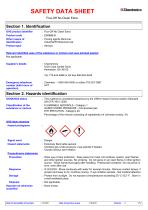
SAFETY DATA SHEET Flux-Off No Clean Extra Section 1. Identification GHS product identifier : Flux-Off No Clean Extra Product code Other means of identification Product type : Fluxing agents Remover. Industrial/Professional use : Aerosol. Relevant identified uses of the substance or mixture and uses advised against Not applicable. Supplier's details : Chemtronics 8125 Cobb Center Drive Kennesaw, GA 30152 Tel. 770-424-4888 or toll free 800-645-5244 Emergency telephone number (with hours of operation) Section 2. Hazards identification OSHA/HCS status Classification of the substance or mixture : This material is considered hazardous by the OSHA Hazard Communication Standard (29 CFR 1910.1200). : FLAMMABLE AEROSOLS - Category 1 GASES UNDER PRESSURE - Compressed gas EYE IRRITATION - Category 2A Percentage of the mixture consisting of ingredient(s) of unknown toxicity: 3% GHS label elements Hazard pictograms Signal word Hazard statements : Extremely flammable aerosol. Contains gas under pressure; may explode if heated. Causes serious eye irritation. Precautionary statements Prevention Response Storage Disposal Hazards not otherwise classified Date of issue/Date of revision : Wear eye or face protection. Keep away from heat, hot surfaces, sparks, open flames and other ignition sources. No smoking. Do not spray on an open flame or other ignition source. Wash hands thoroughly after handling. Pressurized container: Do not pierce or burn, even after use. : IF IN EYES: Rinse cautiously with water for several minutes. Remove contact lenses, if present and easy to do. Continue rinsing. If eye irritation persists: Get medical attention. : Protect from sunlight. Do not expose to temperatures exceeding 50 °C/122 °F. Store in a well-ventilated place. : Not applicable. : None known. Date of previous issue
Open the catalog to page 1
Flux-Off No Clean Extra Section 3. Composition/information on ingredients Substance/mixture Other means of identification : Fluxing agents Remover. Industrial/Professional use Ingredient name Any concentration shown as a range is to protect confidentiality or is due to batch variation. There are no additional ingredients present which, within the current knowledge of the supplier and in the concentrations applicable, are classified as hazardous to health or the environment and hence require reporting in this section. Occupational exposure limits, if available, are listed in Section 8. Section...
Open the catalog to page 2
Flux-Off No Clean Extra Section 4. First aid measures Ingestion : Adverse symptoms may include the following: Ingestion Seek medical attention. Indication of immediate medical attention and special treatment needed, if necessary Notes to physician Specific treatments Protection of first-aiders : Treat symptomatically. Contact poison treatment specialist immediately if large quantities have been ingested or inhaled. : No specific treatment. : No action shall be taken involving any personal risk or without suitable training. It may be dangerous to the person providing aid to give mouth-to-mouth...
Open the catalog to page 3
Flux-Off No Clean Extra Section 6. Accidental release measures Environmental precautions : Avoid dispersal of spilled material and runoff and contact with soil, waterways, drains and sewers. Inform the relevant authorities if the product has caused environmental pollution (sewers, waterways, soil or air). Water polluting material. May be harmful to the environment if released in large quantities. Methods and materials for containment and cleaning up Small spill : Stop leak if without risk. Move containers from spill area. Use spark-proof tools and explosion-proof equipment. Dilute with water...
Open the catalog to page 4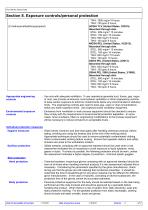
Flux-Off No Clean Extra Section 8. Exposure controls/personal protection TWA: 1800 mg/m³ 8 hours. TWA: 750 ppm 8 hours. ACGIH TLV (United States, 3/2015). Absorbed through skin. STEL: 909 mg/m³ 15 minutes. STEL: 150 ppm 15 minutes. TWA: 606 mg/m³ 8 hours. TWA: 100 ppm 8 hours. NIOSH REL (United States, 10/2013). Absorbed through skin. STEL: 900 mg/m³ 15 minutes. STEL: 150 ppm 15 minutes. TWA: 600 mg/m³ 10 hours. TWA: 100 ppm 10 hours. OSHA PEL (United States, 2/2013). Absorbed through skin. TWA: 600 mg/m³ 8 hours. TWA: 100 ppm 8 hours. OSHA PEL 1989 (United States, 3/1989). Absorbed through skin....
Open the catalog to page 5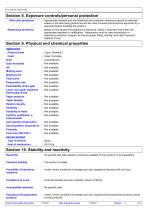
Flux-Off No Clean Extra Section 8. Exposure controls/personal protection Other skin protection Respiratory protection : Appropriate footwear and any additional skin protection measures should be selected based on the task being performed and the risks involved and should be approved by a specialist before handling this product. : Based on the hazard and potential for exposure, select a respirator that meets the appropriate standard or certification. Respirators must be used according to a respiratory protection program to ensure proper fitting, training, and other important aspects of use. Section...
Open the catalog to page 6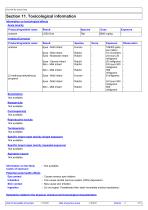
Flux-Off No Clean Extra Section 11. Toxicological information Information on toxicological effects Acute toxicity Product/ingredient name Irritation/Corrosion Product/ingredient name Eyes - Mild irritant Eyes - Mild irritant Eyes - Moderate irritant Rabbit Rabbit Eyes - Severe irritant Skin - Mild irritant Rabbit Rabbit Skin - Mild irritant Eyes - Mild irritant 186300 parts per million 10 microliters 24 hours 20 milligrams 20 milligrams 24 hours 500 milligrams 395 milligrams 8 milligrams Eyes - Mild irritant Skin - Mild irritant 24 hours 500 milligrams 500 milligrams Sensitization Not available....
Open the catalog to page 7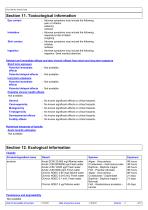
Flux-Off No Clean Extra Section 11. Toxicological information Eye contact : Adverse symptoms may include the following: pain or irritation watering redness : Adverse symptoms may include the following: respiratory tract irritation coughing : Adverse symptoms may include the following: irritation redness : Adverse symptoms may include the following: Ingestion Seek medical attention. Skin contact Delayed and immediate effects and also chronic effects from short and long term exposure Short term exposure Potential immediate : Not available. effects Potential delayed effects Long term exposure Potential...
Open the catalog to page 8All CHEMTRONICS catalogs and technical brochures
 Konform
6 Pages
 FOCCUS
11 Pages
 Chemtronics
40 Pages
 IPA-ISOPROPYL ALCOHOL
11 Pages
 ES2289
10 Pages
 ES189
ES18911 Pages
 Electro-Wash® Delta
10 Pages
- Protective coating
- Metal spray
- Industrial coating
- Plastic spray
- Corrosion protection aerosol spray
- Dissolvent
- Degreaser
- Cleaning solvent
- Cleaner degreaser
- Thermofused coating
- Non-flammable aerosol spray
- Cleaning wipe
- Degreasing spray
- Abrasion-resistant coating
- Solvent spray
- Industrial degreaser
- Duster spray
- Metal part degreaser
- Thermal resistant coating
- Quick evaporating spray