
- Catalogs
- Carbolite Gero
- Laboratory & Industrial Ovens & Furnaces


Laboratory & Industrial Ovens & Furnaces

Laboratory & Industrial Ovens & Furnaces
The document provides a comprehensive overview of Carbolite Gero's product offerings, focusing on laboratory and industrial ovens and furnaces. It highlights the company's expertise in heat technology, with products ranging from 30°C to 3000°C, and its global presence in over 100 countries.
Carbolite Gero was formed from the merger of Carbolite (UK) and Carbolite Gero (Germany) in 2016. The company has manufacturing sites in Derbyshire, UK, and Neuhausen, Germany, specializing in various heat treatment solutions.
The document details various product lines, including laboratory ovens, industrial ovens, chamber furnaces, and tube furnaces. Each product category is described with its maximum operating temperature and specific applications.
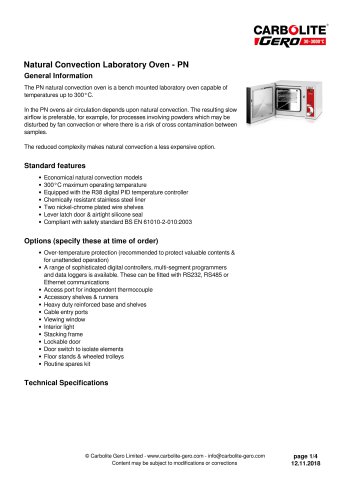
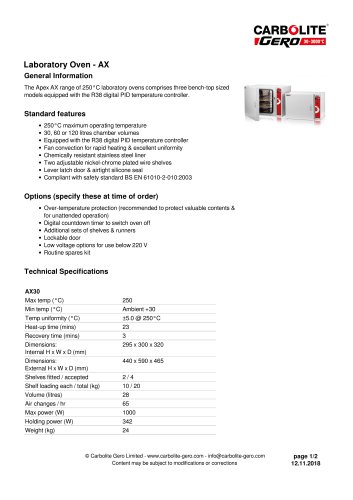
- Laboratory Ovens: Ranges up to 700°C, including models like AX, PN, and PF.
- Industrial Ovens: Includes general-purpose and high-temperature models up to 700°C.
- Chamber Furnaces: Offers models up to 1800°C, suitable for various industrial applications.
- Tube Furnaces: Available in horizontal and vertical configurations, with temperatures up to 1800°C.
The document explains the physics of heat transfer, including convection, conduction, and radiation, and how these mechanisms are utilized in Carbolite Gero products.
Details on the types of atmospheres and vacuum capabilities for different furnace models are provided, highlighting the importance of atmosphere control in heat treatment processes.
An application matrix is included, showing the suitability of various products for specific applications such as ashing, sintering, pyrolysis, and more.
The document discusses the importance of Nadcap accreditation in the aerospace sector and Carbolite Gero's expertise in providing compliant ovens and furnaces.
Carbolite Gero offers a wide range of high-quality heat treatment solutions, with a strong focus on customization and compliance with industry standards.
The document outlines technical data for several oven models, including maximum temperature, temperature stability, uniformity, heat-up time, recovery time, internal and external dimensions, shelf configurations, volume, power requirements, and weight. Key models include PF, LHT, GP, TLD, HT, and LGP series, each with specific features and capacities.
Common features across the models include robust construction, stainless steel interiors, digital controllers, and options for over-temperature protection. The ovens are designed for efficient air circulation and temperature uniformity, with some models offering rapid cooling capabilities.
The document highlights various optional features available at the time of order, such as sophisticated digital controllers, data loggers, over-temperature protection, viewing windows, cable entry ports, and reinforced bases. Custom modifications are available to meet specific user requirements, including compliance with AMS2750F standards for heat treatment.
The ovens are suitable for a range of industrial applications, including annealing, stoving, curing, and tempering. They are designed to handle heavy-duty cycles and can be customized for specific processes, such as handling volatile solvents or larger chamber sizes.
The document notes important considerations such as the minimum operating temperature, uniformity measurements, power supply requirements, and the impact of optional features on performance. It emphasizes the importance of evenly distributed weight for shelf loadings and the potential need for increased power with certain options.
The document provides detailed specifications and options for various industrial ovens, including large general-purpose ovens (LGP), high-temperature modified atmosphere ovens (HTMA), and clean room ovens (CR and HTCR). These ovens are designed for specific industrial applications, offering features like temperature control, insulation, and atmosphere modification.
- Exterior and Models: The ovens feature a coated, painted mild steel exterior with single and double door models available.
- Insulation and Ventilation: Low thermal mass insulation ensures fast response and energy efficiency, with fully adjustable chamber ventilation.
- Temperature Control: Over-temperature protection is recommended for valuable contents and unattended operation. Ethernet communications are available for certain models.
- Technical Data: The document includes detailed technical data for each model, specifying maximum temperature, temperature stability, uniformity, heat-up time, dimensions, shelf loading, volume, and power requirements.
- A range of digital controllers, programmers, and data loggers with digital communication options are available.
- Models can be customized for AMS2750F (Nadcap) compliance, with options for access ports, exhaust proving switches, and various door types.
- Additional accessories include explosion relief panels, interior lights, and sample loading and handling accessories.
- LGP Ovens: These ovens are designed for general-purpose use, with models offering maximum temperatures up to 700°C and various capacities.
- HTMA Ovens: These ovens are suitable for use with inert atmospheres, featuring separate flow controls for purge and process gases, and options for automatic programmable control systems.
- CR and HTCR Ovens: Designed for clean room environments, these ovens offer maximum temperatures up to 600°C and are suitable for ISO 14644-1 Class 5 and 6 environments.
- All ovens feature corrosion-resistant stainless steel interiors, perforated shelves, and various safety and control options.
- Clean room ovens are fully sealed to prevent particulate contamination, with easily cleaned exteriors and interiors.
The document provides comprehensive information on the specifications, options, and applications of Carbolite Gero's range of industrial ovens, catering to diverse industrial needs with advanced temperature control and safety features.
The document provides technical specifications and features of Carbolite Gero's high-temperature clean room ovens (HTCR) and chamber furnaces. These products are designed for laboratory and industrial applications, offering precise temperature control and uniformity.
- Models and Specifications: The HTCR series includes models with maximum temperatures of 400°C, 500°C, and 600°C. Each model varies in internal and external dimensions, shelf capacity, and power requirements.
- Temperature Control: All models maintain a temperature stability of ±0.5°C and uniformity of ±5.0°C at 250°C.
- Design Features: Options for bench-top or floor-standing configurations, with specific models offering different heat-up and recovery times.
Chamber furnaces operate up to 1800°C, suitable for various applications requiring high-temperature processing.
- Design and Safety: Features include front-opening doors, vertical lift options, and modified atmosphere capabilities for specific applications.
- Temperature Control: Equipped with PID controllers for precise temperature management, with options for multi-segment programming.
- Continuous operation at maximum temperature can reduce furnace life; recommended to operate 100°C below maximum.
- Furnaces are optimized for uniform temperature distribution within a specified working volume.
- Options for over-temperature protection and custom-built designs for specific applications.
- Retort options for controlled atmosphere processes, enhancing surface hardness or preventing oxidation.
Carbolite Gero offers a comprehensive range of high-temperature ovens and furnaces, designed for precision and safety in laboratory and industrial settings. The products are customizable to meet specific application needs, ensuring optimal performance and longevity.
The document outlines the use of NiCr alloy (Inconel) and 314 grade stainless steel for manufacturing, with maximum operating temperatures of 1100 °C and 1050 °C respectively.
Details are provided for various models of furnaces, including internal dimensions, door types, and lid types. Specific models like CWF and HRF are mentioned with their respective dimensions and features.
Furnaces have a maximum operating temperature of 750 °C, equipped with programmable controllers, and available in various chamber volumes. They include wire elements, stainless steel liners, and low thermal mass insulation.
Available options include digital controllers, over-temperature protection, and additional shelves. These options are recommended for protecting valuable contents and for unattended operation.
These furnaces are designed for rapid heating and high thermal transfer, with models available in bench-mounted and floor-standing configurations. They are suitable for AMS2750F Nadcap compliant environments.
Available in three chamber sizes with maximum temperatures of 1100 °C or 1200 °C. They feature rapid thermal response and energy-efficient insulation.
These furnaces are suitable for tall crucibles and heavy components, with a maximum temperature of 1200 °C. They include free radiating wire elements and a vented top opening door.
Available with maximum temperatures of 1400 °C, 1500 °C, and 1600 °C. They feature silicon carbide heating elements and are designed for rapid heating and cooling.
These furnaces have a maximum temperature of up to 1800 °C and are ideal for sintering high-performance ceramics. They feature an electrically operated elevator hearth and excellent temperature uniformity.
- Temperature Range: Models available with maximum operating temperatures of 1200°C, 1300°C, 1700°C, and 1800°C.
- Volume Capacities: Laboratory models range from 4 to 10 liters, while industrial models range from 27 to 560 liters.
- Heating Elements: High-quality molybdenum disilicide elements are used for efficient heating.
- Controllers: Programmable EPC3016P1 controllers are standard, with options for advanced digital controllers and data loggers.
- Vertical lift doors and advanced refractory interiors for safety and efficiency.
- Over-temperature protection and fan cooling to maintain low external case temperatures.
- Ethernet communication capabilities for enhanced connectivity.
- Digital controllers, multi-segment programmers, and data loggers with digital communication options.
- Gas supply systems with adjustable flow meters and atmosphere modification capabilities.
- Fast cooling options to reduce natural cool down times.
- Available with maximum temperatures of 1600°C, 1700°C, and 1800°C.
- Features include automatic door movement, compact design, and debinding options.
- Fast cooling options with multiple fans for efficient temperature management.
- Available at 1200°C and 1300°C with capacities from 131 to 400 liters.
- Features include free radiating coiled wire elements, low thermal mass insulation, and up & away doors.
- Options for AMS2750F Nadcap compatibility for aerospace applications.
- Equipped with metallic retorts for controlled atmospheres, suitable for stress relieving additive manufactured components.
- Available with maximum temperatures from 1000°C to 1150°C depending on retort material.
- Options for vacuum systems, gas monitoring, and forced cooling systems.
- Designed for use with hydrogen atmospheres, incorporating necessary safety equipment.
- Retort capacities align with the GPCMA range.
The document outlines various models of industrial furnaces, including GPCMA and GLO series, with specifications such as maximum temperature, retort volume, and dimensions. The GPCMA models range from 37 to 245 liters in retort volume, with maximum temperatures between 1000°C and 1150°C. The GLO series offers models with volumes from 5 to 1300 liters, supporting temperatures up to 1100°C.
Different materials require specific temperature ranges and atmospheres for heat treatment. For example, aluminum requires 500°C in air or inert gas, while titanium and tool steel need 900°C to 1100°C in argon. Inconel 718 requires fast cooling from 960°C & 1060°C to 200°C in argon.
The GLO furnaces feature a vacuum-tight retort with symmetrical heating elements made of CrFeAl, embedded in ceramic fiber insulation. They are designed for space efficiency, low leakage rates, and include features like water-cooled door flanges and over-temperature protection.
Various options are available, such as digital controllers, gas control systems, fast cooling systems, and vacuum pumps. Customization options include different retort sizes and materials, automation systems, and safety features for handling explosive gases.
The furnaces can achieve temperature uniformity of ±3°C, meeting AMS2750F Class 1 standards. They offer precise atmosphere control and over-temperature protection.
Both natural and forced cooling options are available, with graphs illustrating cooling rates for different models.
Detailed technical data is provided for each model, including dimensions, power requirements, and weight. The document also includes information on the construction and materials used in the furnaces, such as stainless steel and Inconel.
The furnaces are suitable for various applications, including heat treatment of metals, ceramics sintering, and aerospace applications. They are designed to meet industry standards like AMS2750F.
The document provides a comprehensive guide on selecting and using Carbolite Gero's range of ashing furnaces, which are designed for laboratory applications such as analyzing ash residue from combustible samples. The document outlines specifications, features, and options for various furnace models, emphasizing their suitability for different materials and standards.
- Specifications and Features: The furnaces are designed to operate at maximum temperatures of 1100 °C and 1200 °C, with features like preheated airflow, silicon carbide shielded wire elements, and protection against chemical and mechanical damage. They comply with standards such as ISO 1171:2010 and ASTM D3174-04: 2010.
- Furnace Models: The document details several models, including AAF 11/3, AAF 11/7, AAF 11/18, AAF 12/18, AAF-BAL 11/17, GSM 11/8, and ABF 8/28. Each model is tailored for specific applications, such as ashing hydrocarbons, heat treatment, and loss on ignition applications.
- Selection Guide: Factors to consider when selecting a furnace include the need for compliance with test methods, the generation of aggressive fumes, airflow requirements, sample size, work cycle intensity, and potential contamination from insulation materials.
- Options and Accessories: The furnaces offer options like advanced digital controllers, over-temperature protection, and catalytic converters for reducing fumes. Accessories include sample trays, loading handles, and two-tier rack systems.
- Technical Data: Detailed technical specifications are provided for each model, including dimensions, power requirements, and thermocouple types.
Carbolite Gero's ashing furnaces are versatile and designed to meet a wide range of laboratory needs, offering precise control and compliance with international standards. The document serves as a valuable resource for selecting the appropriate furnace model based on specific application requirements.
The document provides detailed specifications and features of the ABA 7/35B Asphalt Binder Analyser and various tube furnaces by Carbolite Gero, focusing on their applications, technical specifications, and operational benefits.
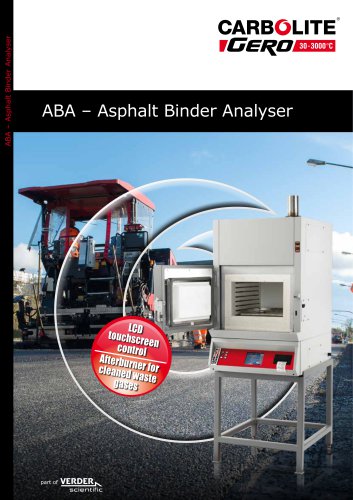
- Purpose: Measures asphalt binder content using loss on ignition, avoiding issues related to solvent extraction methods.
- Features: Operates up to 750°C, multilingual touchscreen interface, automatic calculations, and USB data output. It supports large sample sizes up to 4.5 kg and provides precise weight measurements to 0.1 g resolution.
- Compliance: Adheres to AASHTO T 308-10, ASTM D6307-19, and BSEN 12697-39:2020 standards.
- Environmental Impact: Equipped with a high-temperature afterburner to reduce emissions.
- Types: Includes universal, split, and gradient tube furnaces with maximum operating temperatures ranging from 1100°C to 1800°C.
- Design: Offers single, three-zone, or gradient heating capabilities, with options for inert atmosphere or vacuum configurations.
- Efficiency: Designed for rapid temperature changes and reduced power consumption, enhancing return on investment.
- Customization: Available with various work tube materials and configurations for specific applications.
- ABA 7/35B: Maximum temperature of 750°C, dimensions of 220 x 350 x 450 mm (internal), and 980 x 600 x 775 mm (external), with a power rating of 8 kW.
- Tube Furnaces: Models like TF1 and TF3 offer heated lengths from 150 to 1200 mm, with options for vertical or horizontal mounting and various control configurations.
- For optimal performance, select tube furnaces with at least 100°C extra heating range above the desired working temperature.
- Consider the use of insulation plugs and radiation shields to improve temperature uniformity and reduce heat loss.
The document provides detailed specifications and options for various models of tube furnaces, including Single Zone Tube Furnaces (TF1), 3-Zone Tube Furnaces (TF3), and Split Tube Furnaces (TS1, TS3). These furnaces are designed for high-temperature applications up to 1200°C and are suitable for use in air or modified atmospheres.
The document provides detailed specifications and features of various tube furnaces manufactured by Carbolite Gero, including the FHA, FHC, FST, FZS, TF1, and TF3 models. These furnaces are designed for high-temperature applications and offer various configurations and options to suit different industrial needs.
- Maximum Operating Temperature: Ranges from 1300 °C to 1600 °C depending on the model.
- Programmable Temperature Controller: All models feature a 24-segment programmable temperature controller, with specific models fitted with Carbolite Gero EPC3016P1 or CC-T1 controllers.
- Over-Temperature Protection: Each furnace is equipped with an independent thermocouple for over-temperature control.
- Work Tube Compatibility: Accepts work tubes with outer diameters ranging from 32 mm to 200 mm, depending on the model.
- Heated Lengths: Available in various lengths from 180 mm to 4500 mm.
- Orientation: Furnaces can be used in both horizontal and vertical orientations.
- Construction: Features include high-grade thermocouples, low thermal mass ceramic fibre insulation, and high-quality APM wire heating elements.
- Communication: New models include Ethernet communication capabilities.
- FHA and FHC Furnaces: These are universal tube furnaces available in single-zone (FHA) and three-zone (FHC) configurations, with maximum temperatures up to 1350 °C.
- FST and FZS Split Tube Furnaces: Designed for easy positioning and faster cooling, these furnaces have a maximum operating temperature of 1300 °C and are available in single-zone and three-zone configurations.
- TF1 and TF3 Tube Furnaces: High-temperature furnaces with a maximum temperature of 1600 °C, available in single-zone (TF1) and three-zone (TF3) configurations, offering excellent temperature uniformity.
- Various digital controllers, multi-segment programmers, and data loggers with digital communication options.
- Wide choice of tube diameters and materials, including ceramic and quartz work tubes.
- Insulation plugs, radiation shields, and modified atmosphere and vacuum packages.
- Gas packages with manual or electrically operated valves for up to three gases.
- Laboratory Gas Safety System for safe use with hydrogen.
The document provides detailed specifications and options for Carbolite Gero's high-temperature tube furnaces, including horizontal (HTRH), vertical (HTRV), and split tube (HTRV-A) models. These furnaces are designed for precise thermal treatment applications, offering various configurations and accessories to meet specific needs.
- Maximum operating temperature of 1800 °C.
- Available in single or three heating zones for better temperature uniformity.
- Programmable temperature controllers with 24 segments.
- Accepts work tubes with outer diameters up to 200 mm.
- Heated lengths range from 100 mm to 900 mm.
- Options include digital controllers, work tubes in various materials, and modified atmosphere and vacuum assemblies.
- Designed for vertical orientation with a maximum temperature of 1800 °C.
- Features low thermal mass ceramic fibre insulation and MoSi2 heating elements.
- Accepts work tubes with outer diameters up to 200 mm.
- Heated lengths of 100, 250, or 500 mm.
- Options include stands, insulation plugs, and gas packages.
- Maximum operating temperature of 1700 °C.
- Split design allows easy positioning and faster cooling.
- Accepts work tubes with outer diameters up to 100 mm.
- Heated lengths of 120, 250, 500, or 700 mm.
- Options include inert gas bundles and longer heated lengths.
Carbolite Gero's range of tube furnaces offers versatile solutions for high-temperature applications, with customizable features to enhance performance and safety. The document provides comprehensive information to assist in selecting the appropriate furnace configuration and accessories for specific thermal processing needs.
The document provides detailed information on various types of furnaces offered by Carbolite Gero, focusing on their specifications, applications, and technical features. The primary types discussed include gradient tube furnaces, split tube furnaces, rotating horizontal split tube furnaces, rotary reactor tube furnaces, and coal ashing furnaces.
The system supports 10 unique program profiles, each with 24 segments. It features Ethernet communication, a panel-mounted USB socket, and data logging capabilities to a USB memory stick in .csv format. A real-time clock and program schedule start are included, along with program status indication and event indication for two events. Control power indication and user-level security are also provided. Dual temperature calibration and multiple language settings are available, including English, German, French, Italian, Spanish, Chinese, Russian, and Japanese. The 3-zone version allows for retransmission of setpoints.
Optional features include over-temperature protection, alarm activation for relays, program segment events, temperature alarm relay connections, cascade control, and Ethernet to USB adapter for direct computer connection. An Ethernet firewall router with DHCP capability is also available for network connections.
The CC-T1 touch screen controller offers user-level functionality with different access levels: Operator (change temperature setpoint, run pre-configured programs, run data logging), Supervisor (configure and edit programs, manage alarms), and Administrator (set language, time, and date, edit data logging settings, calibration, and serial communication settings). The program view screen provides a graphical summary of the selected program, while the data logging screen shows a graphical view of setpoint and actual temperature.
New controllers include EPC3016P1 and EPC3008P10, both offering programmable temperature control with 24 segments and Ethernet communication. The EPC3016P1 supports one program, while the EPC3008P10 supports ten programs. Both are certified for cybersecurity communications robustness. The nanodac™ combines precision PID temperature control with a data logger, supporting up to 100 programs and multiple languages.
The nanodac™ can function as a paperless chart recorder, logging data into CSV or secure UHH files. It supports up to 4 channels and 14 virtual channels for trends, alarms, and mathematical functions. The controller can store and retrieve 100 programs, with additional storage via USB or Ethernet.
Standard Ethernet communication is available for CC-T1, EPC3016P1, EPC3008P10, and nanodac controllers. Ethernet to USB converters and pre-configured Ethernet Router Firewalls are available for network connections.
This option provides a variable set point for chamber or load protection, with an independent thermocouple and protection circuit integrated into the controller. It is recommended for unattended operation or valuable loads.
Work tube materials vary based on application, with options for air, gas atmosphere, and vacuum environments. Calibration certificates traceable to UK national standards are available for thermocouples and temperature controllers.
The document outlines various work tube packages designed for different furnace applications, including gas atmosphere, vacuum, and inert gas environments. Each package is tailored to specific temperature ranges and operational requirements, with options for different materials and configurations.
- Thermocouple glands are included in all work tube packages, with sizes varying based on temperature requirements.
- Material options for work tubes include mullite, quartz, RCA, and APM, depending on the furnace type and temperature range.
- Air Package: Designed for air atmosphere with no additional gas or vacuum capabilities.
- Gas Atmosphere Package: Suitable for inert gas or hydrogen, requiring a gas safety system for hydrogen use.
- Vacuum and Inert Gas Package: Includes vacuum flanges and radiation shields, suitable for low leakage applications.
- Comprehensive Vacuum Package: Features water-cooled flanges and is designed for high vacuum applications.
- Leakage rates and compatibility with different gases are specified for each package type.
- End seals and insulation options are detailed, including requirements for radiation shields and insulation plugs.
- Various accessories are available for operation under vacuum and process gas, including pumps, flanges, and gas supply equipment.
- Inert gas packages are offered in standard and advanced configurations, with options for manual or automatic control.
- A laboratory gas safety system is mandatory for hydrogen use, ensuring safe operation through controlled purging and monitoring.
- Safety features include over-pressure protection, excess flow protection, and automated purging systems.
The document provides technical specifications and operational guidelines for Carbolite Gero's laboratory gas safety systems and furnaces, focusing on hydrogen and nitrogen gas handling. It includes safety protocols, technical data, and configuration options for various furnace models.
The document provides detailed specifications and configurations for various models of furnaces and ovens manufactured by Carbolite Gero. It includes information on voltage, phase, and amperage requirements for each model, as well as temperature capabilities and applications.
Catalog excerpts

Laboratory & Industrial Ovens & Furnaces LEADING HEAT TECHNOLOGY
Open the catalog to page 1
SCIENCE FOR SOLIDS HEAT TREATMENT ELEMENTAL ANALYSIS MATERIALOGRAPHY & HARDNESS TESTING MILLING & SIEVING PARTICLE CHARACTERIZATION As part of the VERDER Group, the business division VERDER SCIENTIFIC sets standards in the development, manufacture and sales of laboratory and analytical equipment. The instruments are used in the areas of quality control, research and development for sample preparation and analysis of solids.
Open the catalog to page 2
Leading Heat Technology The Carbolite Gero brand is synonymous with high quality, In addition to the wide range of standard products as leading heat technology in the design and manufacture of shown in this catalogue, Carbolite Gero is an expert in laboratory and industrial ovens and furnaces ranging from the development of customized equipment for complex 30 to 3000 and sold globally to over 100 countries. °C °C heat treatment processes. Solving customers’ individual application requirements has given Carbolite Gero an On 1st January 2016 Carbolite (UK) and Carbolite Gero important place in...
Open the catalog to page 3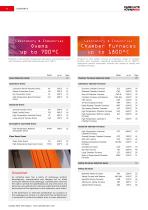
Laboratory & Industrial Laboratory & Industrial Products in this section include both laboratory and industrial ovens with maximum operating temperatures up to 700 °C. Products in this section include an extensive range of chamber furnace with maximum operating temperatures up to 1800 °C. Application specific equipment includes the ranges of ashing and annealing furnaces. Ovens Selection Guide Laboratory Ovens Chamber Furnaces Selection Guide Laboratory Chamber Furnaces Laboratory Bench Mounted Ovens Economy Chamber Furnaces Natural Convection Ovens Standard Chamber Furnaces Burn-off Chamber...
Open the catalog to page 4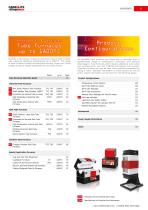
Horizontal & Vertical Product Configurations Tube Furnaces up to 1800 °C Products in this section include an extensive range of tube furnaces with maximum operating temperatures up to 1800 °C. The range of tube furnaces includes horizontal and vertical, single and 3-zone models as well as models specifically for use under vacuum. Tube Furnaces Selection Guide All Carbolite Gero products are fitted with a controller from a sophisticated range of temperature controllers and optional data loggers. Tube furnaces often require additional work tubes and accessories for use with modified atmosphere...
Open the catalog to page 5
PHYSICS OF HEAT | INTRODUCTION Temperature Temperature is a measure of the heat or kinetic energy of the particles within a substance. There are three primary mechanisms of heat transfer: convection, conduction and radiation. All three mechanisms occur within Carbolite Gero products. In convection heat transfer occurs by the movement of gases or liquids. The movement occurs within a fluid or gas by the tendency of hotter, and therefore less dense, material to rise, and colder denser material to sink under the influence of gravity. This results in transfer of heat. Most Carbolite Gero products...
Open the catalog to page 6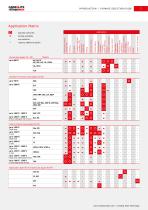
INTRODUCTION | FURNACE SELECTION GUIDE Application Matrix Clean room applications Precious metals applications Coal assay including ash fusibility Asphalt binder analysis Stoving & curing* Thermocouple calibration Annealing / stress relieving Drying / moisture extraction* Tensile testing Materials testing requires additional option Transport reactions (including CVD) Hardening / tempering limited suitability specially suited for Ashing/calcination/ LOI/burn-off Chamber Furnaces (see pages 26-59) up to 750 °C up to 1300 °C AAF, AAF-BAL, CWF-B, CWF-BAL, GSM, ABF up to 1300 °C - 1800 °C BLF, HB...
Open the catalog to page 7
Carbolite Gero’s Expertise in Pyrometry and the Application of AMS2750F Created by the Performance Review Institute, the Nadcap programme is designed to provide an accreditation and quality assurance framework for a defined range of ‘special processes and products’ that are used within the Aerospace and Defence sectors. It was originally sponsored by Boeing and is now adopted by all Western aerospace Loading manufacturers. concept? Nadcap is becoming increasingly important in the aerospace sector with accreditation frequently being requested by companies such as: GE Aviation, Rolls Royce plc,...
Open the catalog to page 8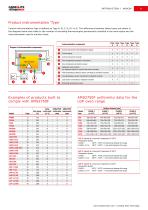
Product instrumentation ‘Type’ Control instrumentation type is defined as Type A, B, C, D, D+ or E. The differences between these types are shown in the diagram below and relate to the number of recording thermocouples permanently installed in the work-space and the instrumentation used to monitor these. Type Type Type Type Type Type A B C D D+ E Instrumentation components Diagram of instrumentation components 1 Control instrument recorder Over-temperature protection instrument Over-temperature protection sensor Multipoint chart recorder (or separate channel in control instrument recorder) High...
Open the catalog to page 9
Laboratory & Industrial Leading Heat Technology | www.carbolite-gero
Open the catalog to page 10
Ovens Selection Guide Laboratory Ovens Industrial Ovens Atmosphere Controlled Ovens Clean Room Ovens www.carbolite-gero.com | Leading Heat Technolog
Open the catalog to page 11
LABORATORY OVENS SELECTION GUIDE | LABORATORY OVENS As discussed in the Physics of Heat (page 6) Carbolite Gero defines ovens as operating up to 700 °C, where heat transfer is predominantly by convection (as shown right). Factors to consider when selecting an oven: What temperature? • Carbolite Gero offers several ranges of ovens with different maximum operating temperatures from maximum temperatures of 250 to as high as 700 °C °C with minimum working temperatures of ambient +30 °C to +60 °C • Ovens are suitable for use at their maximum operating temperature. What size? • Carbolite Gero’s...
Open the catalog to page 12
AX – Laboratory Bench Mounted Ovens The Apex AX range of 250 laboratory ovens, °C comprises three bench mounted models equipped with the R38 digital PID temperature controller. Standard features • 250 maximum operating temperature °C • Chemically resistant stainless steel liner • Equipped with the R38 digital PID temperature controller as standard • Two adjustable nickel-chrome plated wire shelves • 30, 60 or 120 litre chamber volumes • Built to comply with BS EN 61010-2-010:2003 • Fan convection for rapid heating & excellent uniformity • Lever latch door & airtight silicone seal (specif y...
Open the catalog to page 13All Carbolite Gero catalogs and technical brochures
 CAF G5
2 Pages
 Overview - Ovens & Furnaaces
16 Pages
 Materialography
20 Pages
 PF
PF5 Pages
 PN
PN4 Pages
 AX
AX2 Pages
 Furnaces for Precious Metals
4 Pages




Archived catalogs
 RHZS - Rotating Tube Furnace
2 Pages
 LHT
LHT6 Pages
 Verder Scientific Product News
16 Pages
 Verder Scientific
20 Pages
 Batch Heat Treatment Furnaces
8 Pages
 Furnaces & Ovens for Aerospace
12 Pages


- CARBOLITE GERO chamber oven
- Gas analyzer
- CARBOLITE GERO electric oven
- CARBOLITE GERO heat treatment oven
- Liquids analyzer
- Automatic analyser
- Benchtop analyser
- CARBOLITE GERO digital temperature control
- CARBOLITE GERO drying oven
- CARBOLITE GERO combustion oven
- Digital temperature controller
- Stainless steel kiln
- CARBOLITE GERO gas oven
- Calibration analyzer
- CARBOLITE GERO curing oven
- CARBOLITE GERO controlled atmosphere oven