Corporate Profile: Canare Electric Co., Ltd., founded in 1974, specializes in manufacturing and selling audio-video cables, connectors, assemblies, converters, and related products for the professional audio and video industry. The company operates globally with subsidiaries in America, Korea, Taiwan, and Europe.
Product Development Goals: Canare focuses on five key areas: responsiveness to industry needs, unique features not offered by competitors, cutting-edge technology, enduring long-term value, and a global focus on niche and universal markets.
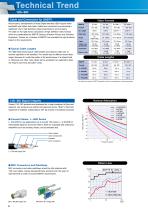
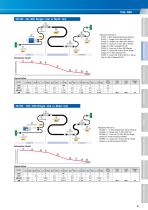
Technical Trends: The document highlights the development of 12G-SDI technology, supporting higher data rates and bandwidth for high-definition video production. Canare's products, including coaxial cables and connectors, meet SMPTE standards for UHDTV applications.
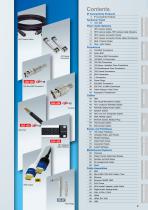
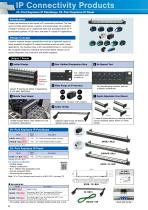
IP Connectivity Products: Canare has introduced IP connectivity solutions, including patch panels and couplers, designed for IP broadcasting systems and A/V applications. These products are compatible with Keystone panels and offer a wide range of connection options.
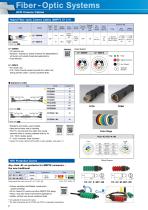
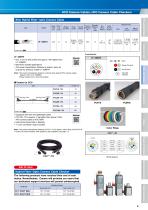
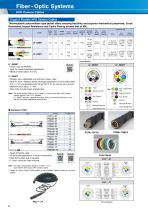
Fiber-Optic Systems: The document details various fiber-optic systems, including HFO camera cables and connectors, designed for high-performance and reliable video transmission.
Connectors and Cables: Canare offers a wide range of connectors and cables, including BNC, HDMI, and Ethernet, designed for professional audio and video applications. Specifications and standards for each type are provided.
Panels and Patchbays: The document outlines various panels and patchbays, including video and audio patchbays, designed for efficient signal management in professional settings.
Multichannel Systems: Canare provides multichannel systems, including snake trunks and junction boxes, for complex audio and video setups.
Key Features and Benefits: Canare's products are designed for ease of installation, compatibility with existing systems, and high performance, with features like built-in dust cap holders and compliance with industry standards.
Fiber-Optic Systems Overview: The document provides detailed technical specifications and guidelines for fiber-optic systems, focusing on cleaning procedures,
connector panels, splice enclosures, and cable assemblies. It includes information on various models, their configurations, and installation instructions.
Cleaning Procedures: Efficient cleaning of fiber-optic connectors is crucial. A fiber scope is recommended for real-time monitoring of ferrule surfaces. Dust can accumulate inside alignment sleeves, and specific tools like CLETOP are suggested for cleaning these areas. Proper positioning and locking of connectors are emphasized to avoid issues.
Connector Panels: The document describes HFO camera connector panels, which facilitate quick installation between HD camera systems and terminal panels. These panels are pre-terminated and available in various configurations, including wall and rack mount types. Key features include lightweight aluminum chassis, cost-effectiveness, and reduced installation time.
Splice Enclosures: Fiber-optic splice enclosures are designed to protect fusion splice connections. They are compatible with HFO camera cables and can be installed vertically or horizontally. The document lists necessary tools for installation and highlights features like detachable brackets and insulated tension member clamps.
Cable Assemblies: The document details various fiber-optic cable assemblies, including single-mode and multi-mode options. Specifications such as tensile strength, bending radius, and transmission loss are provided. The cables are designed for heavy-duty applications, with features like abrasion-resistant jackets and aramid yarn strength members.
Technical Specifications: The document includes tables with detailed specifications for different cable models, including dimensions, weight, tension tolerance, and temperature range. It also covers fiber attenuation and bending loss characteristics, compliant with ITU-T standards.
Key Features and Benefits: The document highlights the benefits of using these fiber-optic systems, such as ease of installation, flexibility, and compatibility with various HD systems. It also emphasizes the durability and performance of the cables in demanding environments.
BNC and Micro BNC Connectors Overview: This document provides technical specifications and descriptions for various BNC and Micro BNC connectors, focusing on their applications in 12G-SDI systems. It includes details on different models, their mounting types, return loss characteristics, and packaging information.
Specifications: Connectors are designed for 12G-SDI applications, with models available in right angle and straight configurations. Return loss varies by model, with BCJ-FPLV-12G offering 15 dB at 6 GHz and 10 dB at 12 GHz. Insulation material is m-PPO (m-PPE), and cleaning solvents should not be used to avoid insulation problems.
Models and Features: The BCJ-FPLV series includes models like BCJ-FPLV-12G, BCJ-FPLVA, and BCJ-FPLV-L, each with specific return loss characteristics. Active BNC models such as BCAK-TL and BCAK-RL integrate I/O interface devices, reducing PCB design complexity. Micro BNC connectors like HBCP-D25HDA are designed for SMPTE ST 2082-1 compliance, suitable for 12G-SDI routers and switchers.
Standards and Compliance: Connectors comply with standards such as SMPTE ST 2082-1, 2081-1, 424, 292, 259, and BTA S-004C. Return loss and VSWR graphs are provided for various models, indicating performance across different frequencies.
Installation and Usage: Standard packaging varies by model, with most connectors available in packages of 20 or 100 pieces. Tools such as nut driver bits and extraction tools are recommended for installation and maintenance. Models are designed for easy installation with features like crimp designs and ball-locking mechanisms for reliable mating.
Recommendations: Use Canare crimp tools for installation to ensure reliability. Consider the specific return loss requirements and connector type (right angle or straight) based on application needs.
Connectors Overview: This document provides technical specifications and descriptions for various Canare connectors, including coaxial, triaxial, RCA, and phone plugs. It highlights the features, benefits, and installation requirements for each type of connector, focusing on high-density mounting and downsizing devices.
Specifications: Various models offer return loss specifications such as 20.8 dB or greater up to 3 GHz, and 26.4 dB or greater up to 3 GHz. Temperature range is -25 to 85 degrees Celsius for certain models. VSWR is 1.2 or less up to 1.5 GHz for some connectors.
Procedures and Tools: Use of Canare Crimp Tool is recommended for reliable installation. Nut driver bit NDT-DIN is required for specific models.
Key Features and Benefits: Durable design beneficial for maintenance. Flexible layout and reliable connectivity for 12G-SDI signal paths. Push-lock mechanism for triaxial connectors ensures reliability.
Product Descriptions: 75Ω Micro-miniature Coaxial Connectors are designed for 4K/8K UHD equipment, verified for 12GHz, and meet SMPTE ST2082-1 standards. 75Ω Triaxial Connectors are true 75Ω, DC 1.5 GHz with ≥20 dB return loss and a push-lock mechanism. RCA Connectors are crimp and solder plugs with robust metal shells and available in multiple insulation colors. Phone Plugs are available in 3.5mm mini and 1/4” sizes, featuring a cable cramp system for reliability.
Installation Recommendations: Ensure the use of specified crimp tools for installation to maintain reliability and performance. Follow specific mounting and hole dimension guidelines for each connector type.
Conclusion: Canare connectors offer a range of solutions for high-density and reliable connectivity in various applications, with specific tools and installation procedures to ensure optimal performance.
Model Descriptions: Various models of cable assemblies and connectors are described, including XLR3 to BNC jack configurations with options for attenuation pads. These models are designed for specific audio signal transmission needs.
Specifications and Performance: The document provides detailed specifications for AES/EBU transmitters and transformer outputs, including voltage levels with and without a 10dB pad. It also includes impedance transformer specifications for converting digital audio signals between 110Ω/XLR3 and 75Ω/BNC standards.
Microphone Cable Considerations: The document discusses the importance of selecting the right microphone cables to minimize electromagnetic noise. It highlights the use of two-conductor and star quad cables, with the latter offering superior noise rejection in high-noise environments. The document also provides guidelines for cable routing and the use of metal conduits to prevent noise induction.
Shielding Types: Different types of cable shielding are explained, including braided, spiral, and aluminum foil shields. Each type has specific applications and cost implications, with recommendations for use based on environmental conditions and installation requirements.
Star Quad Cable Features: Canare's Star Quad cables are highlighted for their noise rejection capabilities, flexibility, and durability. The document details the construction of these cables, including the use of high-conductivity copper, special PVC jackets, and irradiated polyethylene insulation.
Technical Data and Standards: Technical data on cable dimensions, weight, electrical characteristics, and American Wire Gauge (AWG) standards are provided. The document also includes frequency characteristics and performance graphs for various cable models.
Overview: The document provides detailed specifications and characteristics of various types of cables, including Star Quad Cables, Two-Conductor Shielded Cables, and Multichannel Microphone Cables. These cables are designed for high-performance audio applications, particularly in environments where noise prevention and audio quality are critical.
Specifications: The cables feature aluminum foil and braided shields, cross-linked polyethylene (PE) insulation, and PVC jackets with a dielectric strength of 500V AC/min. They include a drain wire for grounding and Kevlar fillers for enhanced pull resistance.
Star Quad Cables: These cables are available in multiple configurations (e.g., L-4E3, L-4E4) with varying numbers of channels and conductors. They are designed for use in music auditoriums and studio facilities, offering excellent noise prevention and audio quality.
Two-Conductor Shielded Cables: These cables, such as the L-2B2AT and L-2E5AT, are ideal for internal rack wiring and device connections. They feature high braid coverage for effective electromagnetic noise shielding and are available in various jacket colors.
Multichannel Microphone Cables: The M202 and MR202 series offer lightweight and slim designs with individual channel isolation using insulated aluminum foil shields. These cables are suitable for studio interconnects and portable snake systems.
Electrical Characteristics: The document provides detailed electrical characteristics for each cable type, including conductor and shield DC resistance, nominal capacitance between conductors and between conductor and shield, and twist pitch.
Applications: These cables are recommended for use in professional audio environments, including live events, studio recordings, and internal rack wiring. They are designed to withstand regular handling and provide reliable performance in demanding conditions.
Figures and Diagrams: The document includes figures illustrating crosstalk characteristics, pull load and stretch ratio, and cross-sectional views of cable configurations, highlighting the construction and shielding methods used.
Overview: The document provides detailed specifications and characteristics of various types of cables, including digital audio cables, speaker cables, and composite cables. It outlines their construction, electrical properties, and suitable applications.
1. Digital Audio Cables: Designed for AES/EBU and IEC standards, ideal for digital audio signal transmission. Insulation made from cross-linked PE or foam PE, with a PVC jacket. DA206 and DA202 series are suitable for paths up to 360m and 180m respectively, with consistent 110Ω impedance. Includes drain wire and is lightweight, with color-coded insulation for easy identification.
2. Speaker Cables: Four-conductor configuration minimizes noise and enhances frequency characteristics. Insulation is polyethylene with a PVC jacket, offering a dielectric strength of 500V AC/min. Oxygen-free copper (OFC) conductors are used for improved performance. Different models are available for various applications, including fixed installations and multi-way speaker systems.
3. OFC Line and A/V Composite Cables: Outer conductor made of fine OFC strands for flexibility and durability. Includes a carbon plastic shield to block noise, with a braided configuration for added protection. Designed for fixed installations and suitable for linking audio-video equipment.
4. DMX and RS422 Cables: Standard DMX cables designed for stage lighting control, with consistent 110Ω impedance. Features include PE filler rods and a spiral shield for enhanced performance. RS422 cables are suitable for short-distance communication, with irradiated foam core PE insulation.
Key Considerations: Ensure cables are kept as short as possible to minimize signal loss and interference. Select cables with higher damping factors for better control over speaker excursion and sound quality. Special care is needed when connecting cables with carbon plastic shields to prevent shorting.
Specifications: The document outlines various specifications for coaxial cables used in video transmission systems. Key specifications include jacket color (BLK), dielectric strength (1000V AC/min), and characteristic impedance (75Ω). The cables are suitable for NTSC, AHD, HD-TVI, HD-CVI, HD-SDI, and EX-SDI formats, supporting resolutions up to 1080/30p.
Procedures and Recommendations: The document recommends using specific cable types for different applications, such as analog high-definition video surveillance systems. It highlights the importance of selecting the right center conductor, insulation, and shield type based on the application requirements. Stranded conductors offer flexibility, while solid conductors are ideal for long-distance transmission.
Standards and Norms: The document references SMPTE standards for video transmission, including SD-SDI, HD-SDI, 3G-SDI, and 12G-SDI, with corresponding bit rates and clock frequencies. It also provides typical transmission distances based on these standards.
Key Data from Tables and Charts: The attenuation values for various cable models are provided, indicating signal loss at different frequencies. The document includes a chart showing nominal attenuation for 75Ω coaxial cables, with specific values for each model at frequencies ranging from 10 MHz to 6 GHz.
Critical Information: The document emphasizes the importance of choosing the right insulation type (solid, foamed, or highly-foamed PE) for better attenuation performance. It notes that aluminum braid cannot be soldered and recommends specific BNC crimp plugs for certain cable types. Propagation delay is discussed, highlighting its impact on transmission and the differences caused by insulation types.
Best Practices: Use flexible stranded center conductors for locations requiring cable bending. Consider the use of high-density braided shields for better signal protection. Ensure compatibility with the intended video format and transmission distance requirements.
Overview: The document provides detailed specifications and descriptions of various cable assemblies, focusing on HDMI, DVI, VGA, and USB Type-C technologies. It includes information on cable types, models, lengths, and technical capabilities.
Specifications: The document lists multiple cable types, including HDMI, DVI, and VGA, with specific models and lengths. It highlights the technical specifications such as bit rates, frame rates, and compatibility with different HDMI versions. For example, HDMI 2.1 supports up to 48 Gbps bandwidth, 8K60p/4K120p resolutions, and Dynamic HDR.
Procedures and Recommendations: The document emphasizes the importance of using the correct cable directionality, especially for HDMI Active Optical Cables. It also provides handling tips to avoid cable damage, such as avoiding twisting and ensuring proper bending diameters.
Standards and Compliance: The document mentions compliance with various standards, such as VESA-DDC Plug and Play and HDMI Licensing Administrator trademarks. It also discusses the USB Implementers Forum's recommendations for consistent terminology use.
Key Features and Benefits: The document outlines the advantages of using specific cables, such as the reliability of Canare HDMI Active Optical Cables for professional use, and the benefits of USB Type-C, including high-speed data transfer and high power delivery.
Technical Notes: Detailed technical notes are provided for USB Type-C technology, including data rates, power delivery specifications, and the advantages of USB Type-C connectors.
Overview: This document provides detailed specifications and features of various 12G-SDI and 3G-SDI products, including converters, amplifiers, and cables. It is structured into sections covering product specifications, key features, and technical standards.
1. Product Specifications: 12G-SDI Products include models like CB-1120, CB-8120, and CB-8130, detailing power consumption, voltage range, dimensions, and weight. For example, CB-1120 has a power consumption of 2.0W and supports a voltage range of USB 3.3 - 5.5 V. 3G-SDI Products such as CB-2011 and CB-2012 are highlighted, with specifications on power, dimensions, and weight. CB-2011 is a 3G-SDI to HDMI mini converter with a power consumption of 2.5W.
2. Key Features and Benefits: 12G-SDI Solutions feature automatic switching between SD, HD, 3G, 6G, and 12G-SDI, 10km transmission distance, and support for DVB-ASI signals. Products like CB-1120 offer dual 12G-SDI outputs and automatic cable equalization. 3G-SDI Solutions emphasize features like automatic signal detection, AES/EBU audio embedding, and up/down scaling capabilities. Products such as CB-2021 provide HDMI & AV scaling conversion.
3. Technical Standards and Recommendations: Cabling details on hybrid fiber-optic camera cables, including specifications for models like LF-2SM9N-PUR, which are fire-rated and suitable for broadcast applications. Converters information on EO/OE converters for 12G-SDI and 3G-SDI, highlighting capabilities like pathological test pattern transmission and long-distance optical transmission.
4. Additional Information: Annex contains a regional product catalog and additional technical data for European markets. Website References provide links for further product details and support.





 ANNEX: Regional Product Catalog
 Cable Assemblies
 Multichannel Systems
 Panels and Patchbays
 Cables
 Connectors
 Fiber - Optic Systems
 IP Connectivity Products