
- Catalogs
- Bytorent Technology Co., Ltd.
- Bytorent safety switch Guard-M1

- Company
- Products
- Catalogs
- News & Trends
- Exhibitions
Bytorent safety switch Guard-M1

Bytorent safety switch Guard-M1
Advantages
This section outlines the key benefits of the technology or system described. It highlights improvements in efficiency, reliability, and performance, emphasizing how these advantages contribute to better operational outcomes.
Application Scenario
Detailed use cases and environments where the technology is applicable are described here. This includes typical operational conditions, target industries, and specific challenges addressed by the solution. The section also discusses integration considerations and expected impact on workflows.
Features
This part lists the main features of the product or system, focusing on technical capabilities, user interface elements, and unique functionalities that differentiate it from alternatives. It provides a clear overview of what users can expect in terms of performance and usability.
Technical Specification
Comprehensive technical details are provided, including model options, parameter ranges, and performance metrics. This section supports informed decision-making for model selection based on specific requirements and constraints.
Model Selection
Guidelines for choosing the appropriate model variant are presented, considering factors such as capacity, compatibility, and application needs. This helps users align their choice with operational goals and technical demands.
Summary of Key Data
Although the original document contains tables and possibly diagrams, the critical data extracted includes performance benchmarks, parameter thresholds, and configuration options essential for deployment and optimization.
Critical Information and Best Practices
- Ensure compliance with specified technical parameters to maintain system integrity.
- Follow recommended procedures for installation and operation to maximize benefits.
- Consider environmental and application-specific factors when selecting models.
- Leverage the outlined features to enhance operational efficiency.
This structured synthesis provides a clear and concise understanding of the document’s core content, facilitating effective application and further analysis.
Catalog excerpts

Application Scenario
Open the catalog to page 1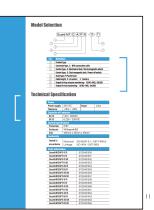
Model Selection Technical Specification
Open the catalog to page 2All Bytorent Technology Co., Ltd. catalogs and technical brochures
 Bytorent Product Catalogue
40 Pages
 Bytorent safety relay DN11XX
2 Pages


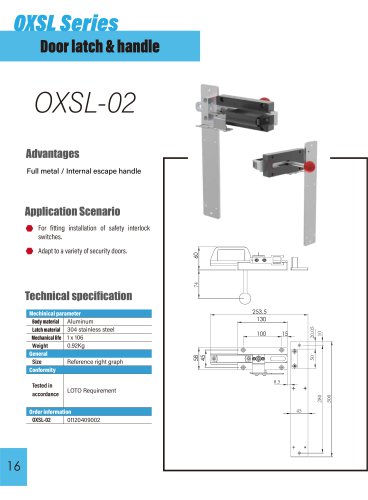


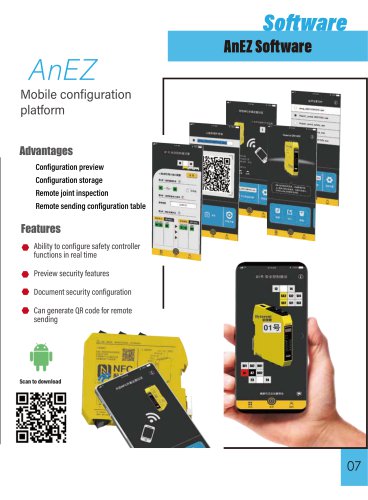


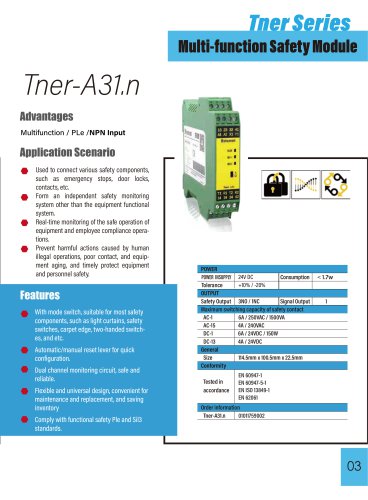
- Electrical cable
- Real-time software
- Mechanical lock
- Technology switch
- Industrial software
- Multipole switch
- Industrial cable
- Switch electrical cable
- Door lock
- Key lock
- Safety electric switch
- Rotary electric switch
- Black electrical cable
- IP67 switch
- Real-time monitoring module
- Metal latch
- Rubber mat
- Light barrier
- Polymer tag
- Safety lock