
- Catalogs
- Bytorent Technology Co., Ltd.
- Bytorent Multifunction protection relay Tner-A31

- Company
- Products
- Catalogs
- News & Trends
- Exhibitions
Bytorent Multifunction protection relay Tner-A31

Bytorent Multifunction protection relay Tner-A31
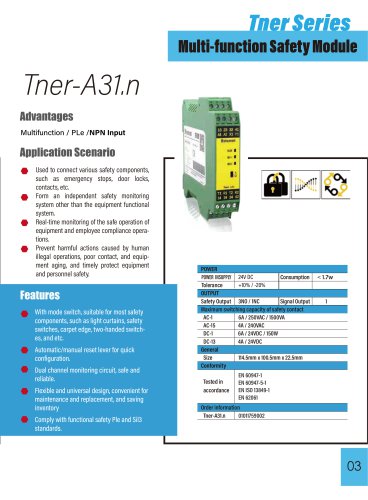
Advantages
This section outlines the benefits of the discussed technology or process, emphasizing key strengths and improvements over existing solutions. It highlights efficiency gains, enhanced performance, and potential cost savings.
Application Scenario
Details the practical contexts and environments where the technology or process can be effectively applied. It includes descriptions of operational conditions, target industries, and specific use cases to illustrate relevance and adaptability.
Specifications
Provides technical parameters and requirements essential for implementation. This includes performance metrics, design constraints, and compatibility considerations necessary to ensure proper functioning and integration.
Procedures
Describes step-by-step instructions or methodologies for deploying, operating, or maintaining the system. Emphasizes critical steps, safety measures, and quality control practices to achieve optimal results.
Standards and Norms
Lists applicable industry standards, regulatory requirements, and best practice guidelines that govern the design and use of the technology. Ensures compliance and interoperability within the relevant sector.
Recommendations and Best Practices
Offers guidance on optimizing performance, extending lifespan, and minimizing risks. Includes tips for troubleshooting, routine checks, and environmental considerations.
Features
Summarizes the main characteristics and functionalities of the technology or process, highlighting unique selling points and innovative aspects that differentiate it from alternatives.
Catalog excerpts
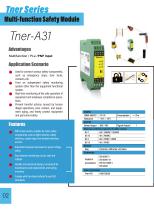
Advantages Application Scenario
Open the catalog to page 1All Bytorent Technology Co., Ltd. catalogs and technical brochures
 Bytorent Product Catalogue
40 Pages
 Bytorent safety relay DN11XX
2 Pages






- Electrical cable
- Real-time software
- Mechanical lock
- Technology switch
- Industrial software
- Multipole switch
- Industrial cable
- Switch electrical cable
- Door lock
- Key lock
- Safety electric switch
- Rotary electric switch
- Black electrical cable
- IP67 switch
- Real-time monitoring module
- Metal latch
- Rubber mat
- Light barrier
- Polymer tag
- Safety lock