
- Catalogs
- burster Measurement Solutions GmbH
- Load Cell for Manually Operated Presses Model 8451

Load Cell for Manually Operated Presses Model 8451

Load Cell for Manually Operated Presses Model 8451
The Model 8451 load cells are designed for force measurement in production equipment, using Newtons as the unit of measurement. It is important to consider local gravitational acceleration when determining masses.
- Unpacking: Inspect the sensor for damage and report any issues within 72 hours. Transport the sensors in their original packaging.
- First-time Use: Connect the sensor to instrumentation amplifiers with a safety transformer as per EN 61558.
- Grounding: Ensure all connecting wires are electrically insulated from the sensor body, with a minimum insulation resistance of 10 MΩ.
- Storage: Store the sensor in dry conditions, without condensation, and at temperatures between 0 °C and 60 °C.
The sensor uses a spring element to measure force, which is converted into an electrical signal by strain gauges. The spring element is crucial for converting force into a linear extension.
- Measurement Ranges < 2 kN: Use a horizontally mounted elastic membrane as the spring element.
- Measurement Ranges > 2 kN: Use a hollow compression body, offering a compact design and high resonant frequency.
Strain gauges increase electrical resistance when stretched. They are mounted on the spring element and connected as a Wheatstone bridge to minimize measurement errors.
- Adaptation: The sensor can be fitted into standard commercial presses using a peg with specific fits.
- Mounting: Ensure axial force application for accuracy. The sensor should be oriented correctly for right or left-handed operation, and the cable should be arranged without tension.
Various methods are available for adjusting the measuring chain, including using test and calibration data, shunt calibration, and precision voltage sources.
The tool must fit tightly against the sensor's contact surface to ensure accurate force measurement. The tool punch length must not exceed the sensor peg length. Secure the tool using the clamping screw to complete the installation of model 8451.
To prevent damage, protect the sensor and cables from fluids, strain, and vibration. Ensure cables have large bend radii and are laid separately from high-power cables to avoid interference. The output signal ranges from 0 to 6 mV, requiring a resolution of approximately 20 µV for 1% measurement accuracy.
Sensors are factory-calibrated, but electronic alignment is necessary. Use the test and calibration report data, a strain gauge simulator, or a shunt resistor for calibration. Adjust the measurement chain using known physical magnitudes or a precision voltage source.
Burster provides a warranty for material and production defects but excludes liability for improper use or consequential damages. Technical changes may occur without notice, and reproduction of documentation requires prior approval.
Catalog excerpts

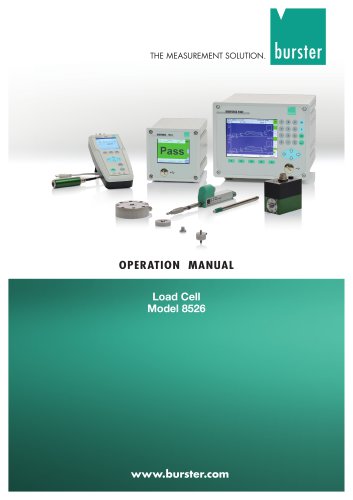
OPERATION MANUAL Load Cell for Manually Operated Presses Model 8451
Open the catalog to page 1
In diesem Handbuch finden Sie alle Informationen, die Sie für die Inbetriebnahme und den Betrieb dieses Gerätes benötigen. This operation manual provides you with all information necessary for the set-up and operation of the instrument. Haben Sie wider Erwarten dennoch Probleme, hilft Ihnen der zuständige Produktingenieur weiter. Rufen Sie uns einfach an unter Tel. 07224/645-0 oder unter der auf dem Lieferschein angegebenen Telefon-Durchwahl. Gerne können Sie uns auch eine email mit Ihren offenen Fragen schicken. If, contrary to expectations, you face any problems with the operation of the instrument,...
Open the catalog to page 2
Technical Product Information Commissioning, Function, Fitting Specification Model 8451 - 1/12 -burster prazisionsmesstechnik gmbh &co kg ■ Talstr. 1-5 ■ 76593 Gernsbach ■ Tel.: (+49) 07224-6450 ■ www.burster.de ■ [email protected]
Open the catalog to page 3
Technical Product Information Commissioning, Function, Fitting Specification Model 8451 The load cells in the model 8451 series are primarily designed for the measurement of force in production equipment, using Newtons (N) as the unit of measurement. The local gravitational acceleration (g « 9.81 m/s2) must be taken into account when determining masses. 2. Preparing for use > Inspect the sensor carefully for damage. If you suspect that the unit has been damaged during shipping, notify the delivery company within 72 hours. Keep all packaging materials for inspection by the representative of the...
Open the catalog to page 4
Technical Product Information Commissioning, Function, Fitting Specification Storage The sensor must be stored under the following conditions only: dry no condensation temperature between 0 °C and 60 °C Note: Provided the storage conditions have been observed, no special steps need to be taken after storage and prior to commissioning. The sensor operates with the aid of a spring element. The force to be measured deforms the spring element elastically. This deformation is transformed into an electrical signal by strain gauges. They, together with the spring element, constitute the measuring...
Open the catalog to page 5
Technical Product Information Commissioning, Function, Fitting Specification Mechanical design Measurement ranges smaller than 0...2 kN In the sensors with measurement ranges smaller than 0...2 kN a horizontally mounted elastic membrane is used as the spring element. Strain gauge principle of a horizontally mounted membrane This elastic membrane is deflected by the applied force, resulting in a reduction in the sensor’s overall height. This deformation cannot be seen by the naked eye. It is measured by strain gauges. In these sensors the strain gauges are mounted on the underside of the spring...
Open the catalog to page 6
Technical Product Information Commissioning, Function, Fitting Specification Function of the strain gauge The electrical resistance of a wire rises with increasing length and falling crosssection. When a wire is pulled, it becomes thinner and longer – both of these effects result in an increase in its electrical resistance. This is the principle on which the function of strain gauges is based. In practice, however, strain gauges do not consist of a single wire, but of a metal foil laminated onto a carrier material. The metal foil is etched to create a meandering structure (see Figure 3:). Foil...
Open the catalog to page 7
Technical Product Information Commissioning, Function, Fitting Specification Model 8451 In addition to the four strain gauges shown here, compensation resistors to reduce the effect of temperature and balancing resistors to balance the bridge circuit are also incorporated. Depending on the sensor model, further resistors for the purpose of standardizing the rated characteristic are integrated into the cable or the connector. The output voltage of the sensor at maximum load, U a , is calculated as follows: Ua = c x U b U b : excitation voltage c: characteristic value (sensitivity) of the sensor....
Open the catalog to page 8
Technical Product Information Commissioning, Function, Fitting Specification External forces CAUTION! Sensor will be damaged! Avoid vibrations, even if the loads caused by these vibrations are less than the rated maximum. Design your measuring system in such a way as to prevent these external forces. Note: External forces, acting on the sensor, adulterate the result materially. External forces here refer to any force that acts outside the sensor's axis of symmetry - transverse forces, bending moments and twisting moments in particular. Overload protection Sensors with measuring ranges up to and...
Open the catalog to page 9
Technical Product Information Commissioning, Function, Fitting Specification Model 8451 The sensor peg has two flat faces, allowing for two different orientations when fitting the sensor. This means that you can fit the sensor on presses designed for left-handed or right-handed operators without the sensor cable getting in the way. Unlike other sensors, the 8451 sensor can be fitted without any extra mechanical parts for guiding forces onto the sensor axis. 4.1.2 Mounting It is important to ensure when fitting the 8451 sensor that the force will be applied axially to the sensor. This is essential...
Open the catalog to page 10
Technical Product Information Commissioning, Function, Fitting Specification Electrical system, evaluation instrumentation CAUTION! If the cable sheath is damaged, fluids can penetrate and damage the sensor. For this reason: Take suitable precautions to relieve the bending stress exerted by the connecting cable on the cable bushing at the sensor housing. In particular, pulsating or alternating loads acting on this bushing will damage it and hence the cable will come loose. Make sure that you lay the cables with sufficiently large bend radii. Avoid vibration on the cables. Protect the cables from...
Open the catalog to page 11
Technical Product Information Commissioning, Function, Fitting Specification Measuring chain adjustment The sensors of the model 8451 are calibrated ex works. Because of this, every sensor has an individual test and calibration report. However, you basically have to align every following electronic to the particular sensor. After this adjustment you have done a basic adjustment of the measuring chain. Using the data of the test and calibration report Depending on the type of the following electronic, you are able to insert the data of test and calibration report directly or you have to use strain...
Open the catalog to page 12All Burster Measurement Solutions GmbH catalogs and technical brochures
 Operation Manual Model 8565
24 Pages
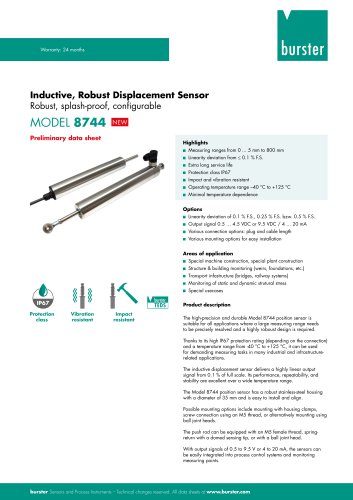 Data Sheet Model 8744
6 Pages
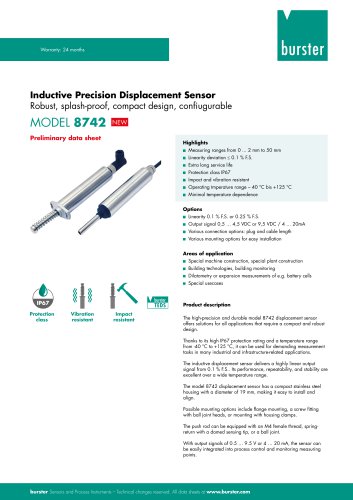 Data Sheet Model 8742
6 Pages
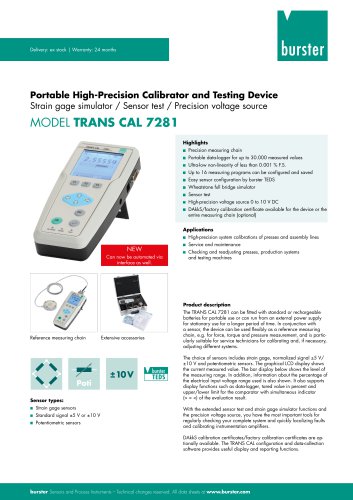 Data Sheet Model 7281
5 Pages
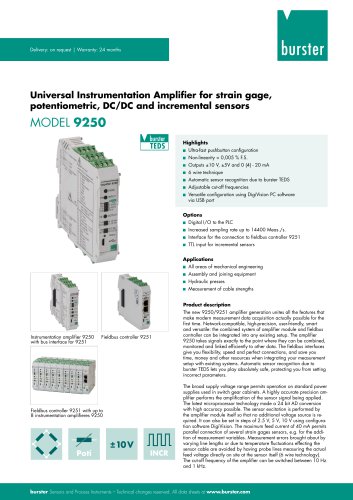 Data Sheet Model 9250
7 Pages
 Operation manual 2025
76 Pages
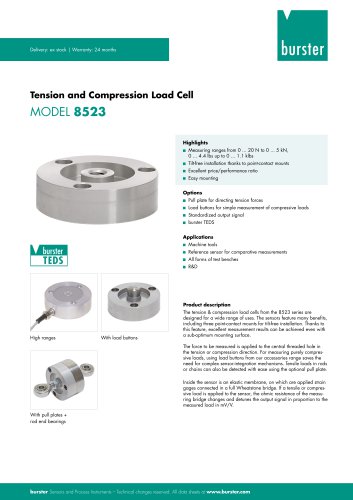 Data Sheet Model 8523 (2025)
8 Pages
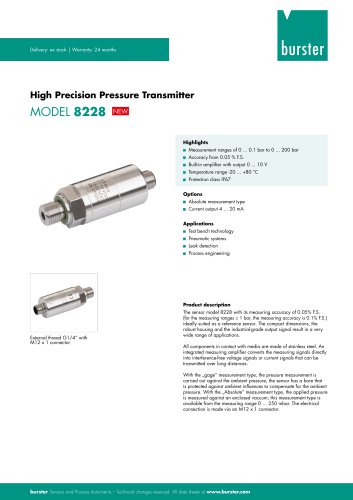 Data-Sheet- Model 8228
6 Pages
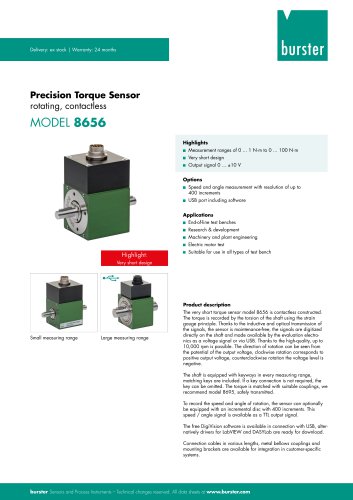 Data Sheet Model 8656
7 Pages
 Brochure Load Cell
25 Pages
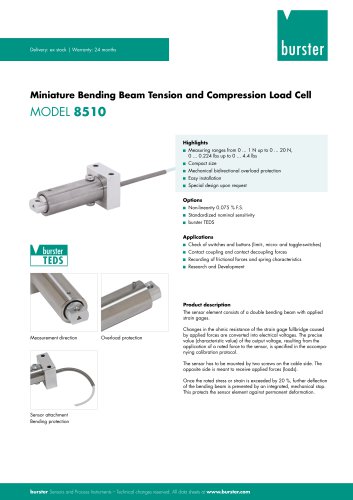 Data Sheet Model 8510 (2025)
5 Pages
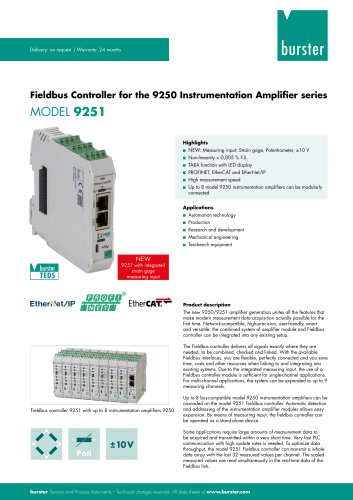 Data-Sheet - 9251
6 Pages
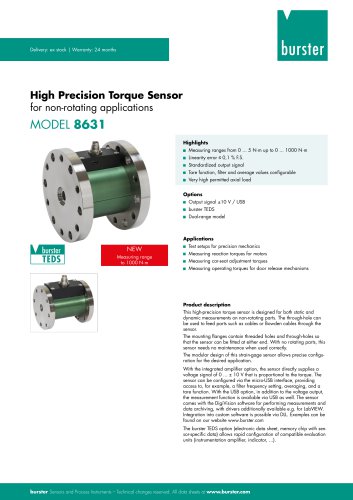 Data sheet Model 8631
5 Pages
 Data Sheet Model 2511
6 Pages
 Data Sheet Model 2311
5 Pages
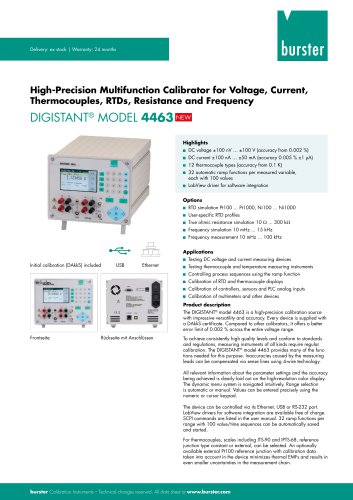 Data Sheet Model 4463
5 Pages
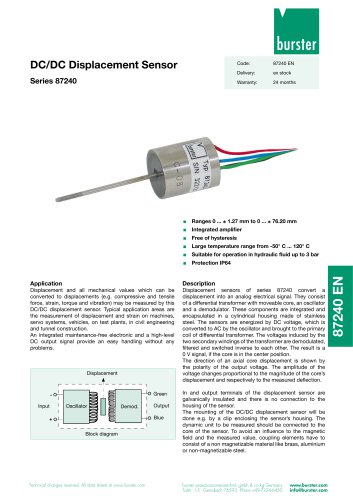 Data Sheet Typ 87240
2 Pages
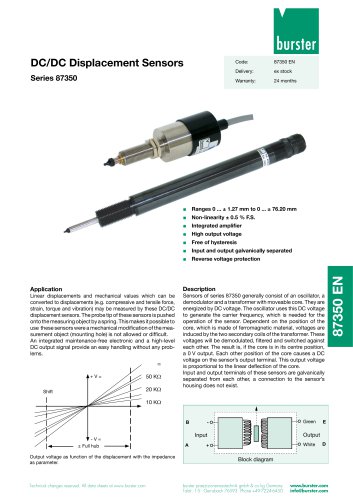 Data Sheet Series 87350
2 Pages
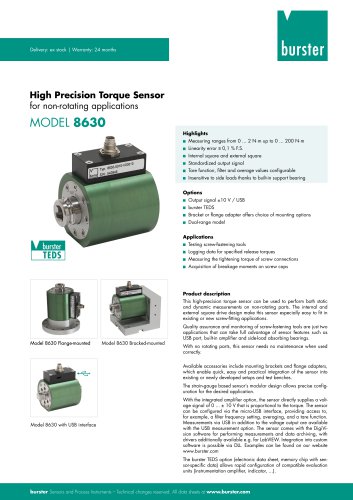 Data Sheet Model 8630
6 Pages
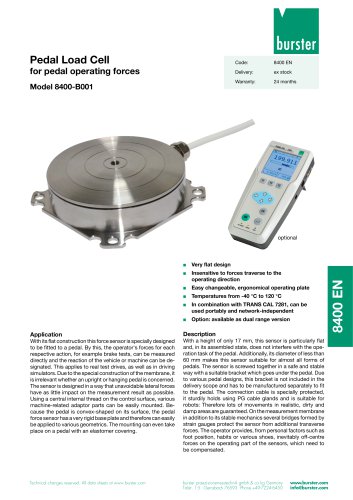 Data Sheet Model 8400-B001
2 Pages
 Load-cell
25 Pages
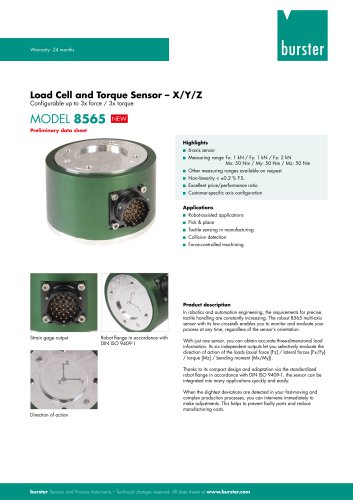 Data Sheet Model 8565
5 Pages
 Torque Sensors
9 Pages
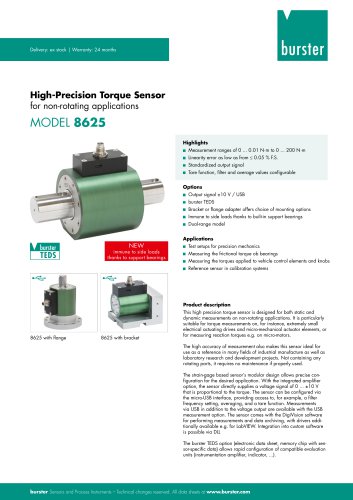 Data Sheet Typ 8625
7 Pages
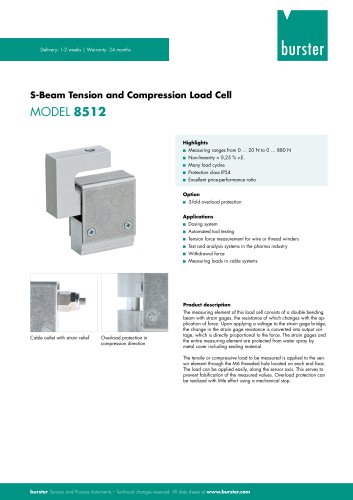 Data Sheet Typ 8512 (2025)
5 Pages
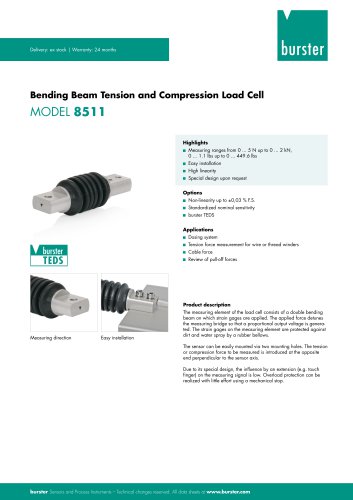 Data Sheet Model 8511 (2025)
6 Pages
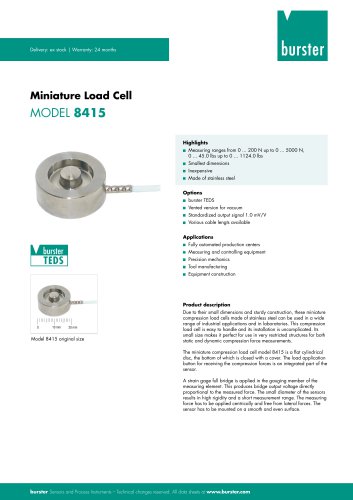 Data Sheet Model 8415 (2025)
6 Pages
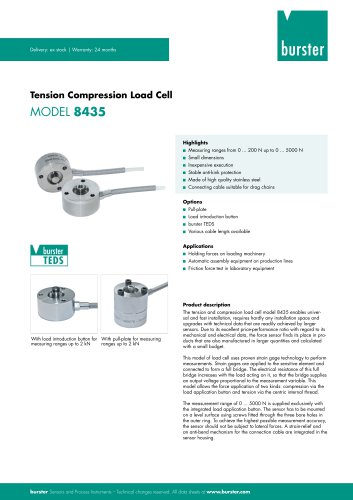 Data sheet Model 8435 (2025)
7 Pages
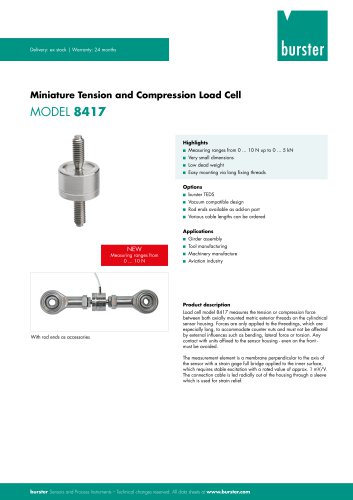 Data Sheet Typ 8417 (2025)
7 Pages
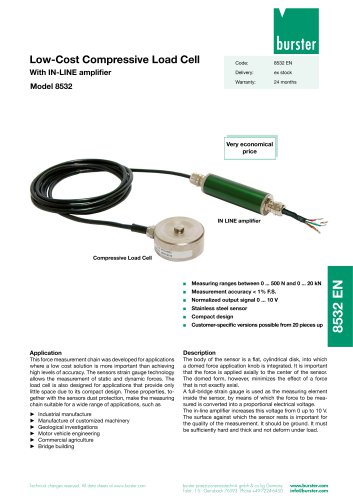 Data Sheet Typ 8532 (2025)
2 Pages
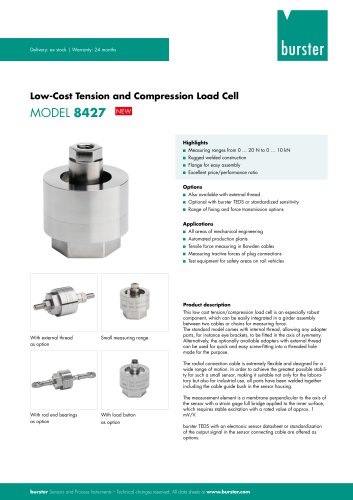 Data Sheet 8427 (2025)
7 Pages
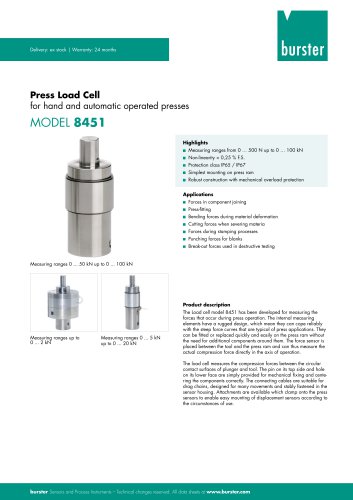 Data Sheet Motel 8451 (2025)
7 Pages
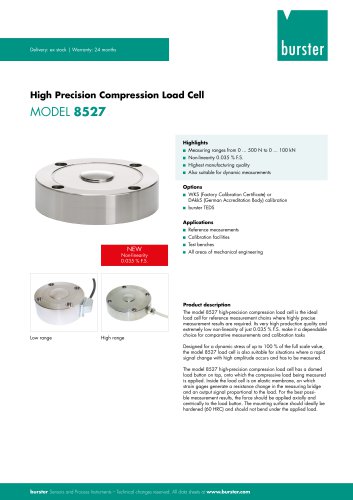 Data Sheet Model 8527 (2025)
7 Pages
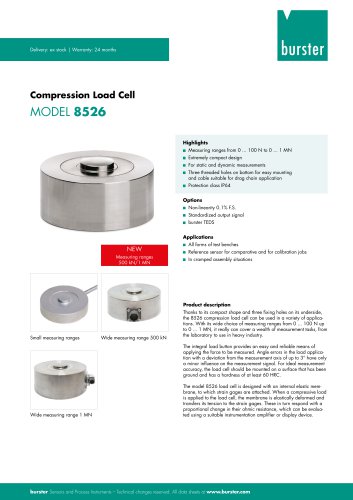 Data Sheet Model 8526 (2025)
9 Pages
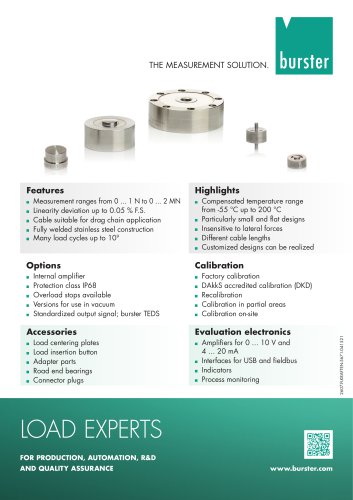 Flyer Load Experts 2025
1 Page
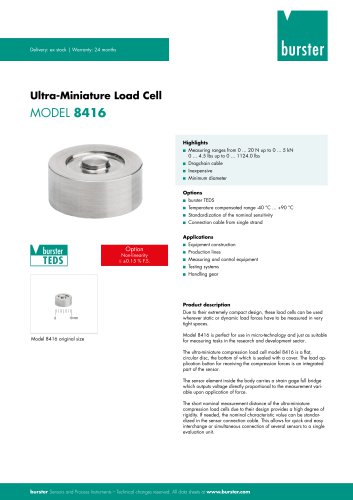 Data sheet Typ 8416 (2025)
6 Pages
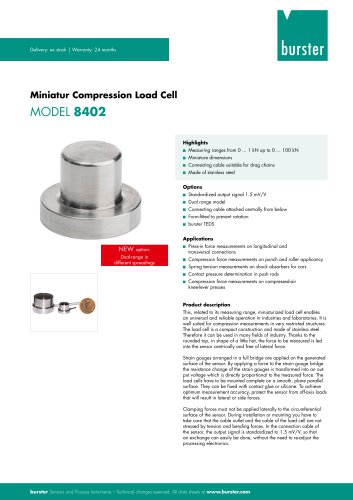 Data Sheet Model 8402 (2025)
6 Pages
 2511 BATTERY MEASURING MODULE
14 Pages
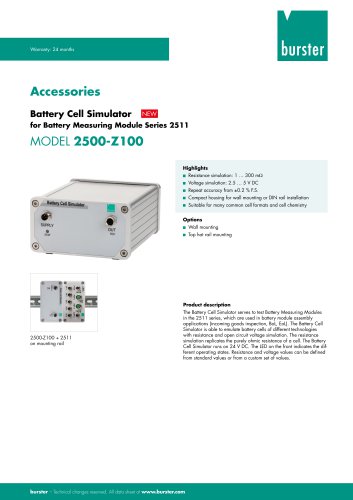 Data Sheet- Model 2500-Z100
2 Pages
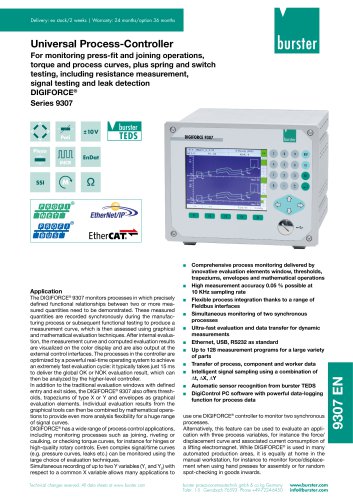 Data Sheet Typ 9307
6 Pages
 Data Sheet Model 9210
5 Pages
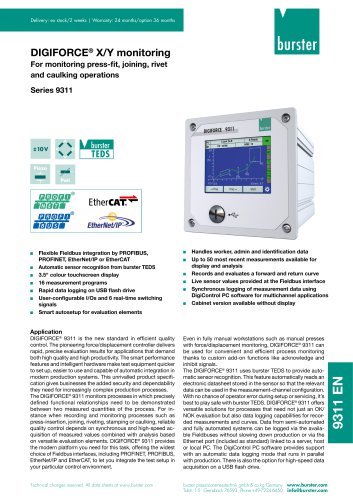 Data Sheet Typ 9311
6 Pages
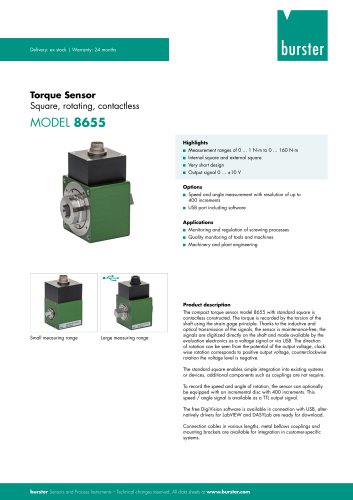 Data Sheet Typ 8655 (2025)
7 Pages
 Displacement Sensors 2025
2 Pages
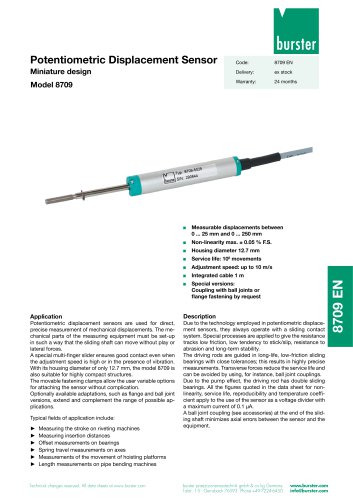 Data sheet Model 8709 (2025)
2 Pages
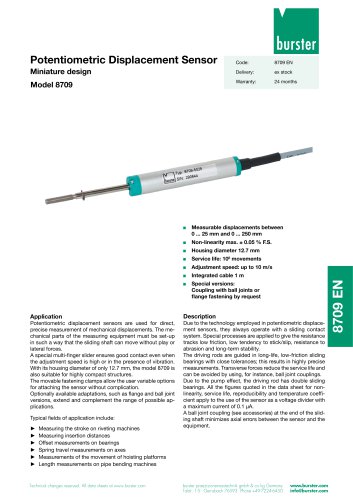 Data sheet Model 8709
2 Pages
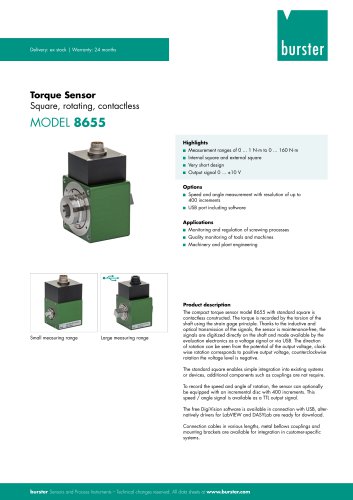 Data Sheet Typ 8655
7 Pages
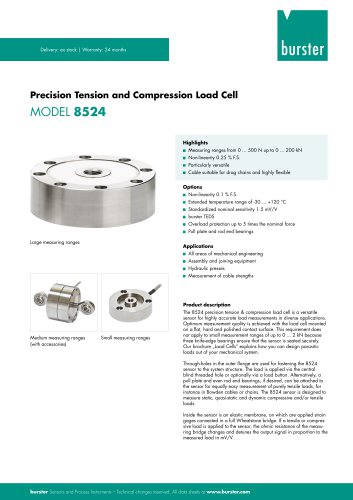 Data Sheet Model 8524
8 Pages
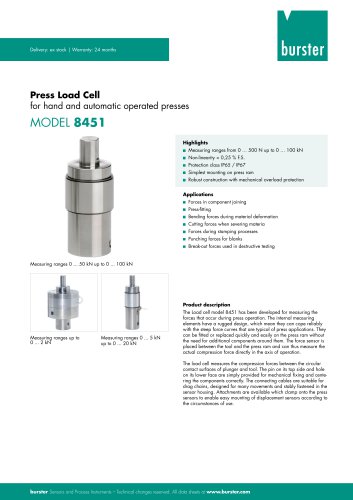 Data Sheet Motel 8451
7 Pages
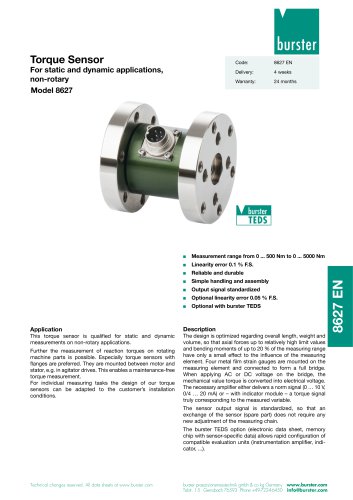 Data Sheet Typ 8627
2 Pages
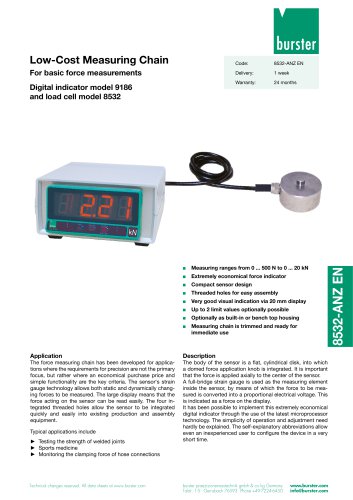 Data Sheet Model 9186/8532
2 Pages
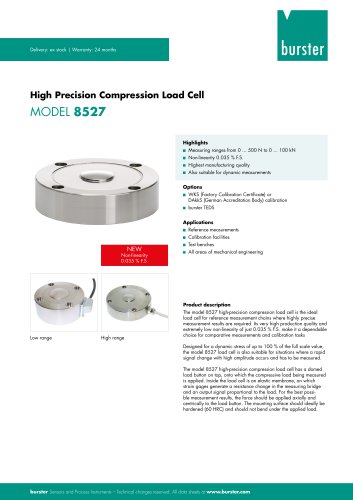 Data Sheet Model 8527
7 Pages
 Data Sheet Typ 8512
5 Pages
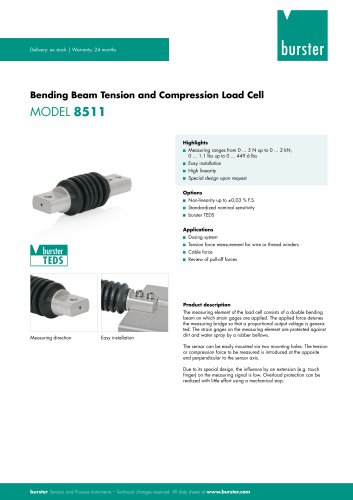 Data Sheet Model 8511
6 Pages
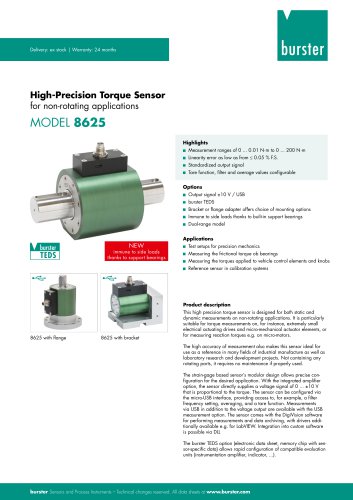 Data Sheet Typ 8625
7 Pages
 Data Sheet Typ 8532
2 Pages
 Data Sheet Model 8561
6 Pages
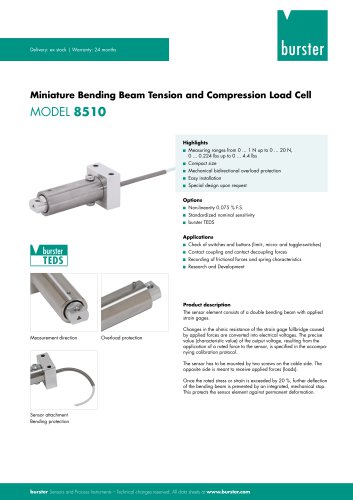 Data Sheet Model 8510
5 Pages
 Data Sheet Model 8523
8 Pages
 Data Sheet Model 8526
9 Pages
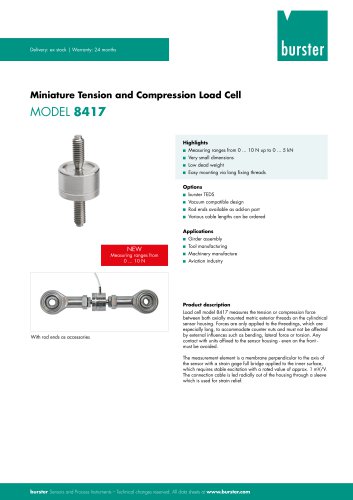 Data Sheet Typ 8417
7 Pages
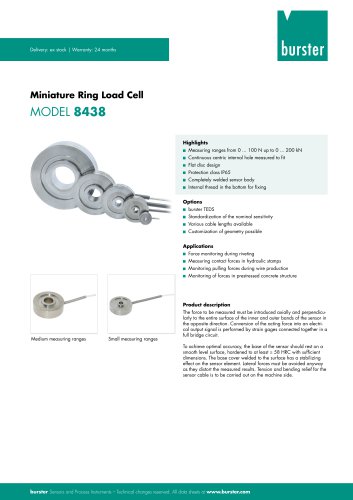 Data Sheet - Model 8438
6 Pages
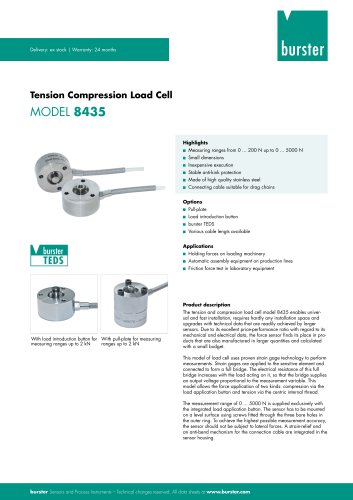 Data sheet Model 8435
7 Pages
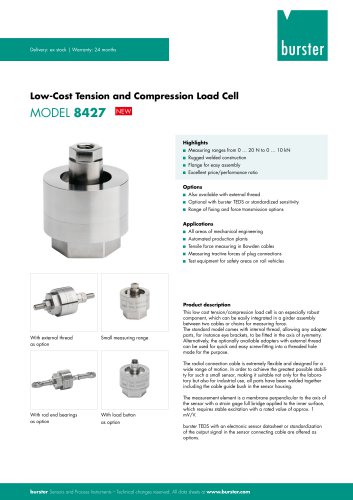 Data Sheet 8427
7 Pages
 Data Sheet Model 8402
6 Pages
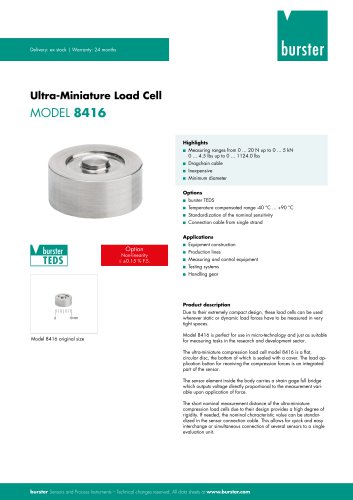 Data sheet Typ 8416
6 Pages
 Press fitting - the reliable way
11 Pages
 Data Sheet Model 9243
2 Pages
 Displacement Sensors
2 Pages
 Flyer Load Experts
1 Page
 Sensor Solutions
1 Page
 Data Sheet Model 9235
2 Pages
 Data sheet Series 8738
2 Pages
 Flyer Battery Tester
1 Page
 Data Sheet Model 2560
5 Pages
 Operation manual
76 Pages
 Data Sheet Typ 8739
2 Pages
 RESISTOMAT® Model 2329
4 Pages
 Data Sheet Model 2550
4 Pages
 Data Sheet Typ 8645
5 Pages
 Flyer Displacement Sensor
2 Pages
 Data Sheet - Model 8670
4 Pages

























Archived catalogs
 Data Sheet Model 8415
6 Pages
- Display module
- Pressure transmitter
- BURSTER tension/compression load cell
- BURSTER steel load cell
- Calibration system
- Analog pressure transmitter
- BURSTER strain gauge load cell
- Digital indicator
- BURSTER stainless steel load cell
- Waterproof pressure transmitter
- Membrane pressure transmitter
- Stainless steel pressure transmitter
- Panel panel meter
- Relative pressure transmitter
- Position transducer
- Beam type force sensor
- Signal amplifying integrated circuit
- BURSTER compression load cell
- Automated software