
- Catalogs
- burster Measurement Solutions GmbH
- Brochure Load Cell

Brochure Load Cell
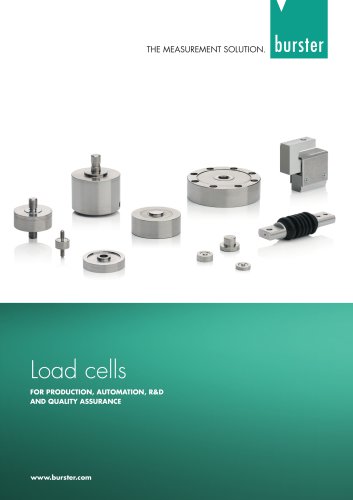
Brochure Load Cell
- Product Specifications: Burster offers a range of load cells, from miniature to large-scale, designed to fit specific industrial needs. These products are engineered to withstand high loads, impact forces, and frequent load changes, ensuring reliability and precision in measurements.
- Technological Advancements: The integration of Burster TEDS technology allows for smart interaction and automatic configuration of evaluation electronics, enhancing process control and reducing configuration time and errors.
- Customization and OEM Solutions: Burster provides tailored OEM sensor solutions for specialized applications, ensuring that each product meets the specific requirements of the task and environment.
- Applications: The document details various applications of load cells, such as measuring pressing forces in rollers, punching forces in die-cutters, and testing anti-pinch protection in automatic doors. Each application highlights the load cell's ability to fit into tight spaces and handle dynamic loads.
- Calibration and Services: Burster offers calibration services through their accredited calibration center, ensuring measurement confidence. They also provide a range of accessories and after-sales services to support their products.
- Industry Relevance: The document underscores the growing importance of force measurement in industries like automotive, aerospace, medical technology, and more, positioning Burster as a leader in providing innovative measurement solutions.
- Applications: Suitable for test benches, reference sensor for comparative measurements, and integration in machine tools.
- Design: Compact with three fixing holes, measuring ranges from 0 to 200 kN, integral load button for force application.
- Benefits: Inexpensive, standardized nominal sensitivity, easy integration.
- Applications: Used for measuring retaining force of hose clips, reaction forces in precision engineering, and laboratory use.
- Design: Small diameter, robust, suitable for tight spaces.
- Features: Measuring ranges from 0 to 5 kN, excellent value for money, extended temperature range.
- Applications: Monitoring tensions in tie rods, measuring axial support forces in ball bearings.
- Design: Space-saving, suitable for custom applications.
- Features: Measuring ranges from 0 to 200 kN, protection class IP65.
- Applications: Monitoring conveyor belt tension, simple test benches, and process monitoring.
- Design: Cost-effective, factory-calibrated, suitable for harsh environments.
- Features: Measuring ranges from 0 to 20 kN, bundled with instrumentation amp for direct reading.
- Applications: Used in harsh environments, materials testing, and reference measurements.
- Design: Built-in support diaphragm, high load cycle capability.
- Features: Measuring ranges from 0 to 2 MN, low non-linearity, protection class IP68.
- Applications: Reference measurements, test bench construction, and laboratory use.
- Design: Made of stainless steel, low non-linearity.
- Features: Measuring ranges from 0 to 100 kN, ultra-high precision, optional burster TEDS.
- Applications: Measuring forces in manual and automatic presses.
- Design: Easy to fit, mechanical overload protection.
- Features: Low measurement error, protection class IP65.
- Applications: Monitoring press force in hydraulic presses, versatile for various applications.
- Design: Central internal thread for direct load application, optional accessories for versatility.
- Features: Low measurement error, mechanical overload protection available.
This document provides detailed information on various models of tension and compression load cells, highlighting their specifications, applications, features, and benefits. These load cells are used in mechanical engineering, assembly equipment, hydraulic presses, and more.
Specifications
- Overload protection up to 5 times the nominal force.
- Non-linearity ≤ 0.1% F.S.
- Measuring ranges from 0 ... 500 N up to 0 ... 200 kN.
- Made of high-strength stainless steel.
- Protection class IP67.
Applications
- Mechanical engineering, assembly and joining equipment, hydraulic presses, and measurement of cable strengths.
- Specific applications include placing caps on tubes, measuring tensions on mounting parts, and monitoring press-insertion forces.
Features
- Standardized nominal sensitivity.
- Connecting cable suitable for drag chains.
- Versatile design with rugged housing.
- Load buttons for compressive loads and rod end bearings for force application.
Highlights
- Excellent price/performance ratio.
- High measurement accuracy and long-term stability.
- Low sensitivity to lateral forces.
- Up to 109 load cycles for certain models.
Accessories
- DAkkS and factory calibration certificates.
- Display/evaluation units, fieldbus modules, and complex process control systems.
- Various connectors and cable lengths available.
Model-Specific Information
MINIATURE TENSION AND COMPRESSION LOAD CELL 8435
- Suitable for small spaces with a flange-type screw-fitting.
- Non-linearity 0.25% F.S.
TENSION AND COMPRESSION LOAD CELL 8523
- Made of high-quality aluminum with central internal thread.
- Protection class up to IP64.
PRECISION LOAD CELLS 85041/85075
- Resistant to bending and torsional forces.
- Protection class IP68 and extended temperature range.
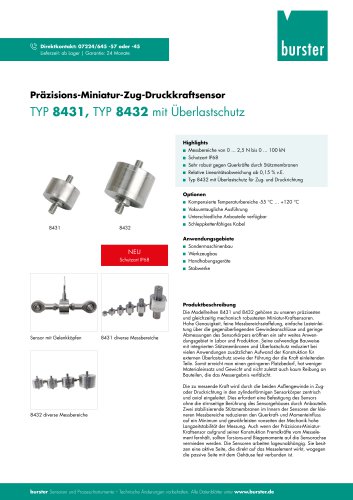
MINIATURE TENSION AND COMPRESSION LOAD CELLS 8431/8432
- Built-in support diaphragms and bidirectional overload protection.
- Non-linearity 0.15% F.S.
MINIATURE TENSION AND COMPRESSION LOAD CELL 8417
- Smallest sensor with a diameter of 10 mm and weight of 3 g.
- Suitable for mass-critical applications.
- Bending Beam Load Cells (8510/8511): These are used in limited space applications due to their low height. They offer overload protection and are suitable for tensile and compressive loads. Applications include testing micro-switches and measuring reaction torques.
- S-Beam Tension and Compression Load Cell (8512): Designed for tablet hardness testing, these load cells are compact and offer high measurement accuracy. They are used in quality control and materials testing in the medical and pharmaceutical industries.
- Multi-Axis Load Cells (8560, 85SD-M231): These are used for measuring forces in multiple dimensions, such as in tyre-testing machines. They offer low cross-talk and high overload capability, making them suitable for applications in medical technology and automotive testing.
- Special-Purpose Load Cells: Includes precision ring compression load cells and pedal load cells, designed for specific applications like measuring pedal forces and compressive loads in rolling mills.
- Load cells offer a range of measuring capabilities, from small forces (0 ... 1 N) to large forces (0 ... 2 MN).
- They are designed to be easy to fit, with options for overload protection and high cycle durability.
- Non-linearity is kept low (< 0.1% F.S.), ensuring high accuracy in measurements.
- Burster offers custom load cell designs for unique measurement challenges, providing tailored solutions that meet specific technical and mechanical requirements.
- Modified standard solutions are available for projects requiring minor adjustments to existing sensor designs.
- Strain gages can be applied to customer-supplied components, allowing for precise force measurement without altering the original structure.
This document outlines the capabilities and services offered by a company specializing in sensor design and development. It emphasizes the use of advanced tools like FEM and Rapid Prototyping to deliver precise, cost-effective, and fast solutions tailored to customer needs.
Services Offered
The company provides a range of services including in-line calibration, cable/connector assemblies, DAkkS/factory calibration certificates, custom calibrations, user training, online retrieval of certificates, CAD data, and application advice.
Load Cell Models and Specifications
The document lists various load cell models, detailing their descriptions, non-linearity, measuring ranges, special features, and main application fields. For instance, models like the Miniature bending beam load cell and S-beam tension and compression load cell are highlighted for their specific applications and features such as mechanical overload protection and high precision.
Sensor Signal Analysis
Emphasizing the importance of signal processing, the document discusses the need for correct signal amplification, visualization, and analysis to convert sensor signals into valuable data. It highlights the use of burster's comprehensive tools for sensor signal acquisition and analysis.
Instrumentation Amplifiers and Interfaces
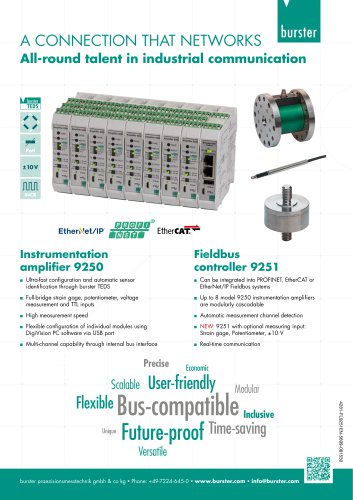
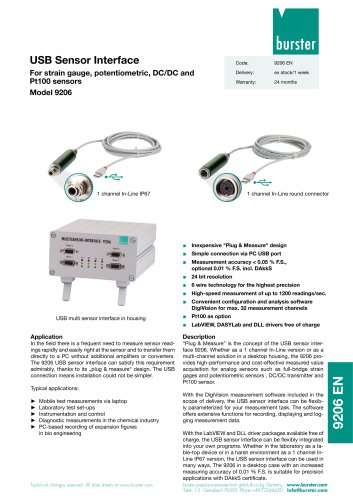
The document introduces the new generation of instrumentation amplifiers (9250/9251) and sensor interfaces (9206 and 9236), detailing their features like automatic sensor recognition, high-speed measurement, and compatibility with various fieldbuses.
Process Monitoring Controllers
Process controllers are described as essential for detailed process analysis and optimization. They provide high-speed data acquisition and evaluation techniques, integrating with various motion technologies and transmitting results via modern communication interfaces.
Expertise and Applications
The document concludes by highlighting the versatility and trustworthiness of burster's products across industries such as mechanical engineering, automation, automotive, medical technology, and more. It also offers services for adjusting sensors with external instruments to ensure accurate measurements.
The document provides detailed information on various measurement and calibration devices offered by Burster, including their specifications, applications, and services. It covers digital indicators, testing devices, process monitors, and calibration services.
Specifications
- SENSORMASTER 9163: Designed for force, pressure, or torque measurements using strain gage sensors. It offers a measurement accuracy of 0.1%, high sampling rate, and sensor-specific linearization.
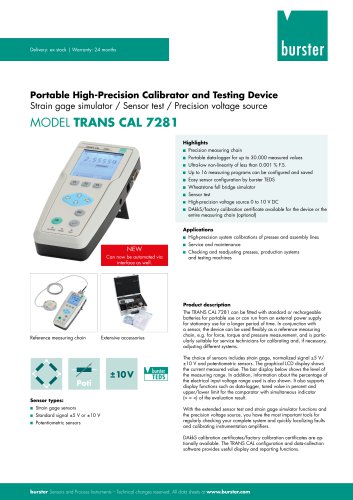
- TRANS CAL 7281: A mobile high-precision calibrator compatible with strain gage and potentiometric sensors. It features excellent linearity, data logging capabilities, and a DAkkS/factory calibration certificate.
- DIGIFORCE® 9307 & 9311: These devices monitor processes requiring precise functional relationships between measured quantities. They offer high measurement accuracy, real-time data logging, and automatic sensor recognition.
- ForceMaster 9110: Specifically for monitoring manual lever presses, featuring easy auto-configuration and data logging capabilities.
Procedures and Services
- Calibration Services: Burster offers in-house and on-site calibration services, including DAkkS-accredited calibration certificates. They provide comprehensive calibration solutions tailored to customer needs.
- Customer Support: Includes expert application support, training, and commissioning services to ensure effective integration and use of sensors and instruments.
- Accessories: A wide range of accessories is available to ensure optimal load-cell fit and functionality in various installation scenarios.
Recommendations
For precise force measurements, it is recommended to use Burster's calibration services to ensure accuracy and reliability. The use of their comprehensive service package can optimize measurement systems and reduce downtime.
Conclusion
Burster provides a wide range of high-precision measurement and calibration devices, supported by extensive customer services and calibration options, ensuring reliable and accurate measurement solutions for various industrial applications.
The document outlines key specifications for burster load cells, including deflection full scale, nominal force, nominal sensitivity, and nominal temperature range. Deflection full scale refers to the travel distance of sensor application points under nominal force, typically a few micrometers. Nominal force is the maximum force the load cell is designed for, while nominal sensitivity is expressed in mV/V, indicating the output signal's dependence on supply voltage. The nominal temperature range specifies the ambient temperature within which the load cell maintains its technical data tolerances.
Factory calibration certificates provide information on measurement uncertainty and traceability, with test points at 0%, 20%, 40%, 60%, 80%, and 100% of full scale. Calibration is performed for both tensile and compressive loads. Overload protection is available for some sensors, activating at 130% of nominal force and effective up to 500%. Load cells generally do not require pre-loading, but a small pre-load may be advisable to secure the sensor.
Load must be applied along the primary axis to avoid measurement errors or sensor damage. Non-linearity and non-repeatability are measured as percentages of full scale. Operating temperature range and overload burst are defined to prevent damage. Relative hysteresis and sensitivity are also specified. Standardization ensures consistent sensor output, crucial for parallel connections. Temperature effects on zero output and nominal sensitivity are expressed in % F.S./K.
Avoid sudden load changes to prevent sensor damage. When connecting load cells in parallel, ensure identical characteristics and consistent temperature across sensors. An instrumentation amplifier is necessary for converting low output signals from strain gage-based load cells into usable signals.
burster provides comprehensive solutions and services for measuring equipment and sensors, emphasizing quality and innovation. Contact information and further details are available on their website.
Catalog excerpts
Load cells FOR PRODUCTION, AUTOMATION, R&D AND QUALITY ASSURANCE
Open the catalog to page 1
A powerful force taking measurements forward SMART LOAD CELLS KEEPING PACE WITH ADVANCES IN PROCESS CONTROL. burster LOAD CELLS FIT YOUR NEEDS PRECISELY. PRODUCTS DESIGNED FOR THE CHALLENGES OF OUR AGE FROM THE SPECIFIC TO THE UNIVERSAL – GLOBAL SOLUTIONS Our customers operate in practically every branch of industry around the world and expect products to work perfectly 100% of the time. As the requirements set by exacting production processes and quality assurance standards become ever more stringent, process control depends increasingly on sensors and analysis equipment. Force measurement is...
Open the catalog to page 2
Force measurement done propel burster - PERFECTLY SKILLED IN THE ART OF LOAD CELL DESIGN. Your guide to precision force measurementSENSORS AND SERVICE FOR EVERY APPLICATION. CONTENTS LOAD CELLS - THE WAY TO MEASURE THE MECHANICAL VECTOR QUANTITY OF FORCE (F) Load cells consist of a spring element, which experiences elastic and linear deformation as a result of the force being measured, and a device for measuring this deformation. There are various ways of measuring small deformations. The aim is always to map the mechanical parameter "deformation" onto the electrical parameter "voltage". Measuring...
Open the catalog to page 3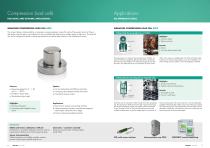
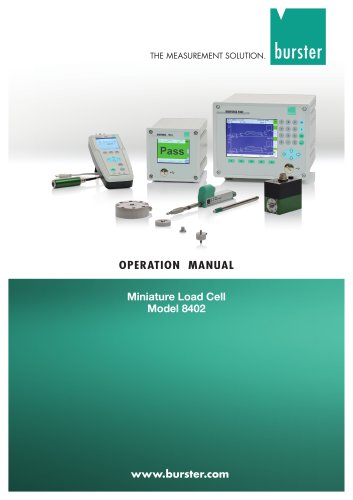
Compression load cells FOR STATIC AND DYNAMIC APPLICATIONS. MINIATURE COMPRESSION LOAD CELL 8402 MINIATURE COMPRESSION LOAD CELL 8402 The compact design, made possible by a compression measuring element, makes this load cell the popular choice for fitting in tight spaces when the sensor must withstand not only consistently high loads but also sudden impacts at high force. This load cell can also be configured to specific customer requirements to provide the ideal solution for the intended environment. Measuring the pressing forces of rollers Highlights Miniature design Rigid construction bearing...
Open the catalog to page 4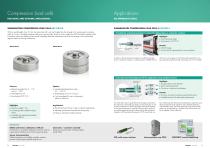
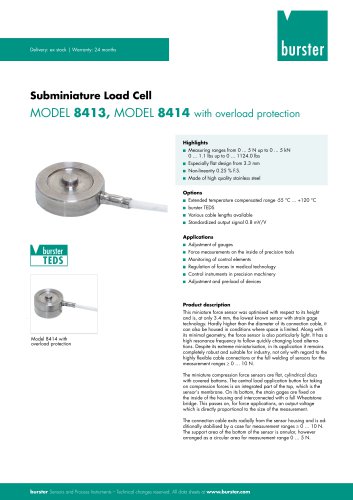
Compression load cells FOR STATIC AND DYNAMIC APPLICATIONS. SUBMINIATURE COMPRESSION LOAD CELLS 8413/8414 SUBMINIATURE COMPRESSION LOAD CELLS 8413/8414 With an overall height of just 3.3 mm, the entire load cell is not much higher than the diameter of its side-mounted connecting cable. Its “niche” is therefore wherever other sensors are too bulky. Thanks to its low weight, the 8413 load cell is equally suited to locations where any additional mass would completely distort the measurement results or the test setup, with a particularly negative impact on moving mechanisms. Testing the anti-pinch...
Open the catalog to page 5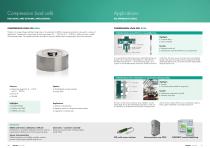
Compression load cells FOR STATIC AND DYNAMIC APPLICATIONS. COMPRESSION LOAD CELL 8526 COMPRESSION LOAD CELL 8526 Thanks to its compact shape and three fixing holes on its underside, the 8526 compression load cell can be used in a variety of applications. Coupled with a wide choice of measuring ranges of 0 ... 100 N up to 0 ... 200 kN, it really can cover a wealth of measurement tasks. The integral load button provides an easy and reliable means of applying the force to be measured. Monitoring the press-fit force in assembly lines Highlights Compact design Easy to integrate mandrel guide load...
Open the catalog to page 6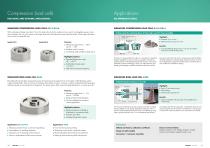
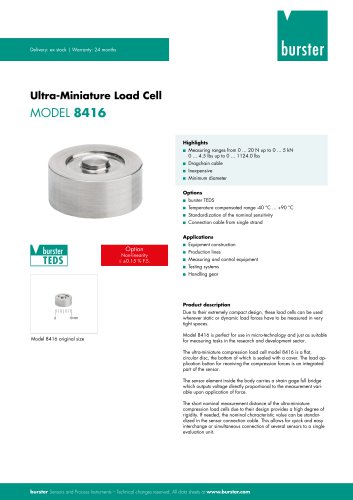
Compression load cells FOR STATIC AND DYNAMIC APPLICATIONS. MINIATURE COMPRESSION LOAD CELLS 8415/8416 MINIATURE COMPRESSION LOAD CELLS 8415/8416 With a diameter of barely more than 10 mm, this load cell is by far the smallest, and so also fits in the tightest spaces in tools and instruments. Yet it is just as robust as far larger load cells, and features the same industrial quality. Which means that there are no limits to its potential uses. Model 8415 Measuring the retaining force of hose clips used for hose assembly hinged rest shaped with the desired radius Highlights Diameter of just 10...
Open the catalog to page 7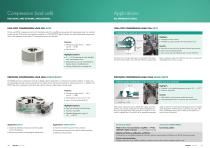
Compression load cells FOR STATIC AND DYNAMIC APPLICATIONS. LOW-COST COMPRESSION LOAD CELL 8532 LOW-COST COMPRESSION LOAD CELL 8532 The low-cost 8532 compression load cell is the ideal product for cost-effective measurement of compressive loads. As a product bundle with the 9236 in-line instrumentation amplifier or 9186 DIGILOW digital indicator, this factory-calibrated measurement chain is the stand-out choice where 1% measurement errors are tolerable. Checking the tension of a conveyor belt Highlights pivot guide roller Features Measuring ranges from 0 ... 500 N up to 0 ... 20 kN conveyor belt...
Open the catalog to page 8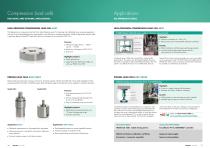
Compression load cells FOR STATIC AND DYNAMIC APPLICATIONS. HIGH-PRECISION COMPRESSION LOAD CELL 8527 HIGH-PRECISION COMPRESSION LOAD CELL 8527 The high-precision compression load cell is the ideal reference sensor for checking and calibrating force measuring equipment and also for providing high-precision measurements in test benches or weighing equipment. Made of high-quality stainless steel, a particular feature of the 8527 load cell is the low non-linearity of no more than 0.05 % F.S. Calibrating a hydraulic press using a reference measurement hydraulic cylinder linear guide easuring ranges...
Open the catalog to page 9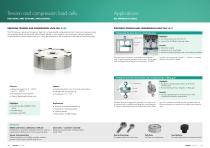
FOR STATIC AND DYNAMIC APPLICATIONS. Applications AN IMPRESSIVE FORCE. PRECISION TENSION AND COMPRESSION LOAD CELL 8524 PRECISION TENSION AND COMPRESSION LOAD CELL 8524 The 8524 precision tension and compression load cell is a highly versatile multipurpose load cell. Tensile and compressive loads can be applied directly into the central internal thread, although it is also possible to fit a load button. Optional mechanical overload protection protects against loads up to 5 times the nominal force. Also avai lable are a pull plate and rod end bearings. ^ Measuring the press force in a hydraulic...
Open the catalog to page 10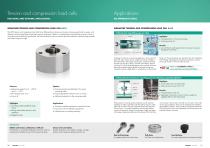
FOR STATIC AND DYNAMIC APPLICATIONS. Applications AN IMPRESSIVE FORCE. MINIATURE TENSION AND COMPRESSION LOAD CELL 8435 MINIATURE TENSION AND COMPRESSION LOAD CELL 8435 The 8435 tension and compression load cell can be fitted quickly in almost any situation, taking up practically no space, and offering a technical specification that larger sensors would envy. Thanks to its outstanding price/performance ratio in terms of its mechanical and electrical specification, the load cell finds its niche in products that are produced in relatively large numbers and where margins are tight. Placing and snap-fitting...
Open the catalog to page 11All Burster Measurement Solutions GmbH catalogs and technical brochures
 Operation Manual Model 8565
24 Pages
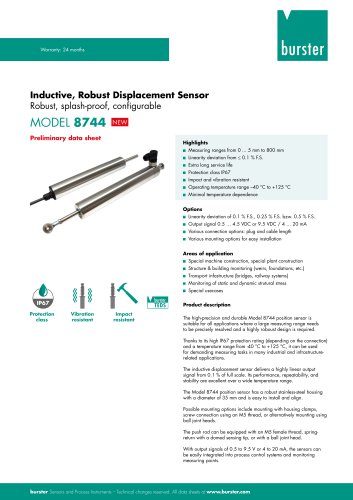 Data Sheet Model 8744
6 Pages
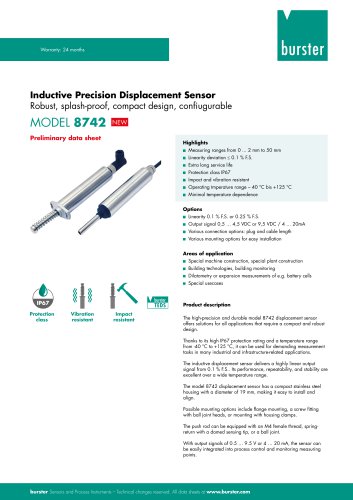 Data Sheet Model 8742
6 Pages
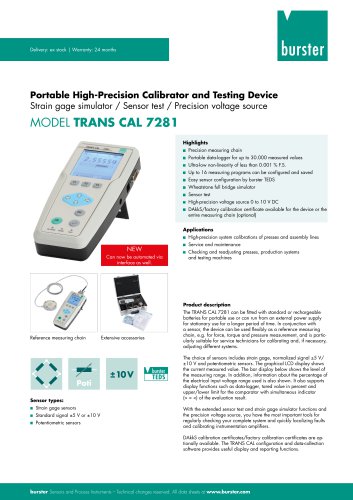 Data Sheet Model 7281
5 Pages
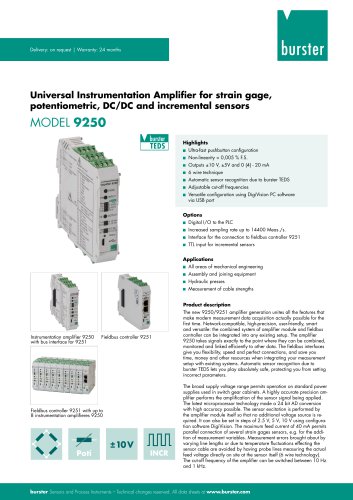 Data Sheet Model 9250
7 Pages
 Operation manual 2025
76 Pages
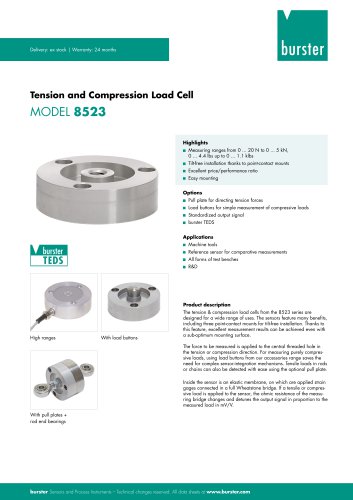 Data Sheet Model 8523 (2025)
8 Pages
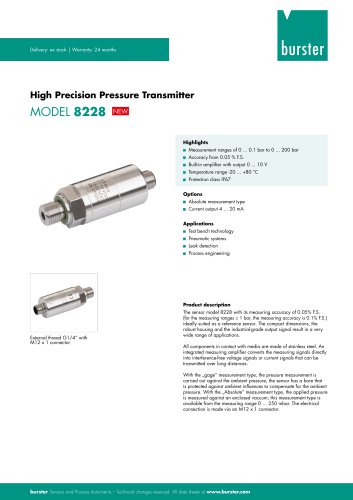 Data-Sheet- Model 8228
6 Pages
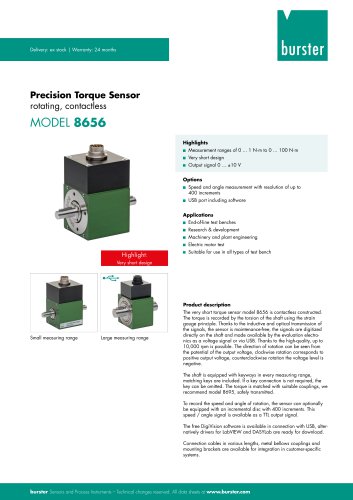 Data Sheet Model 8656
7 Pages
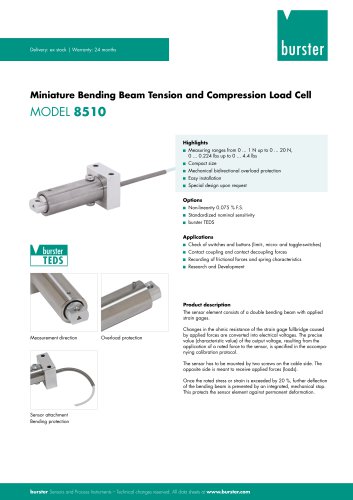 Data Sheet Model 8510 (2025)
5 Pages
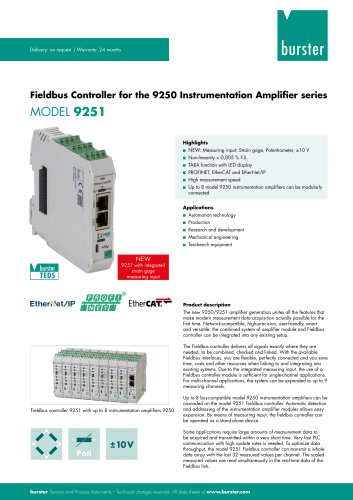 Data-Sheet - 9251
6 Pages
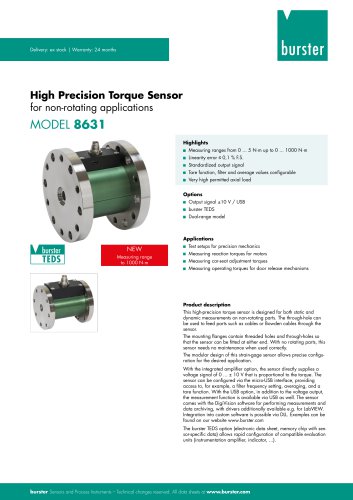 Data sheet Model 8631
5 Pages
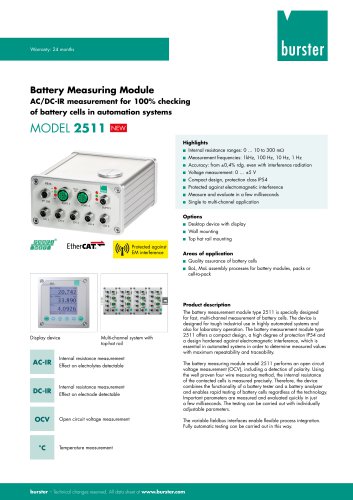 Data Sheet Model 2511
6 Pages
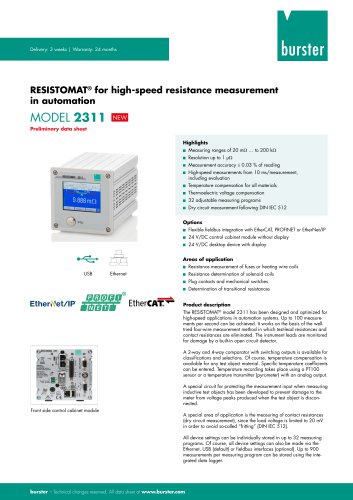 Data Sheet Model 2311
5 Pages
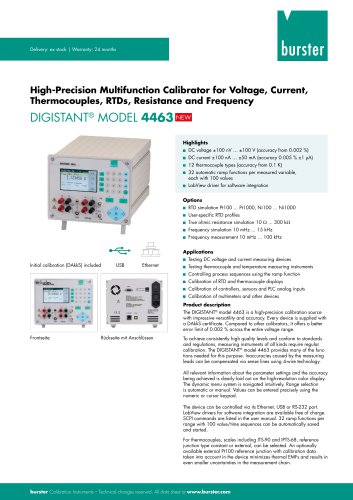 Data Sheet Model 4463
5 Pages
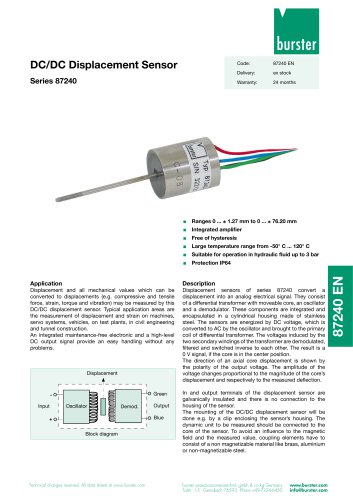 Data Sheet Typ 87240
2 Pages
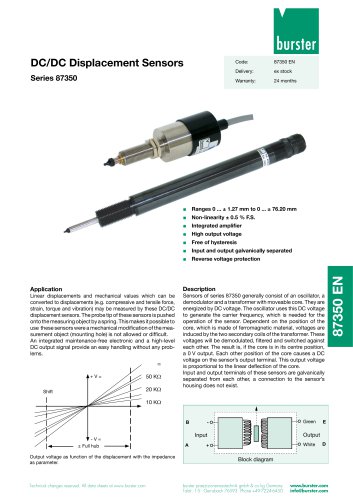 Data Sheet Series 87350
2 Pages
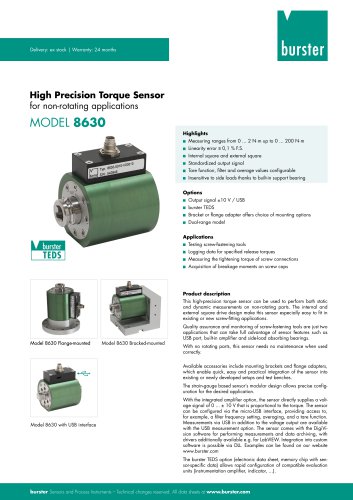 Data Sheet Model 8630
6 Pages
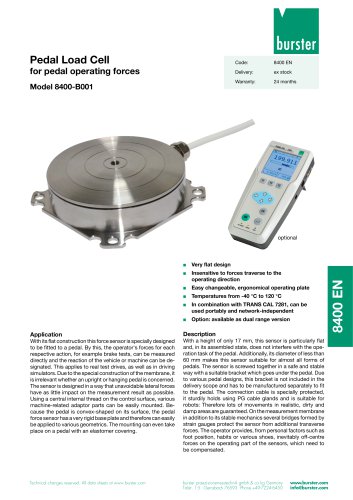 Data Sheet Model 8400-B001
2 Pages
 Load-cell
25 Pages
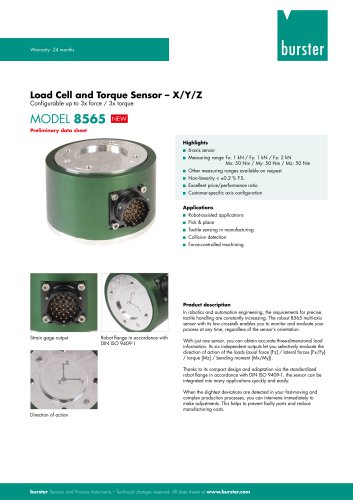 Data Sheet Model 8565
5 Pages
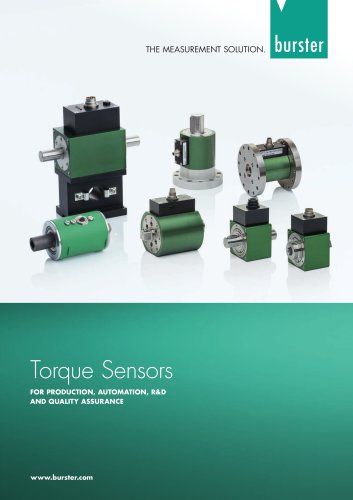 Torque Sensors
9 Pages
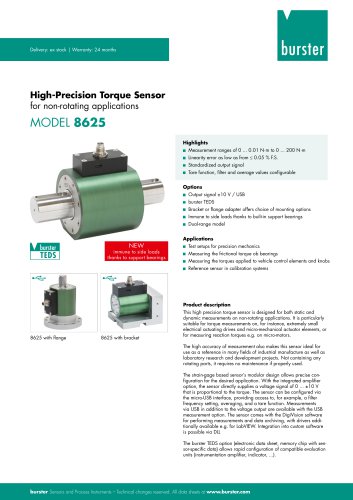 Data Sheet Typ 8625
7 Pages
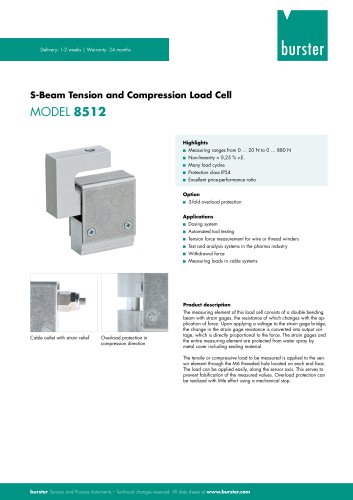 Data Sheet Typ 8512 (2025)
5 Pages
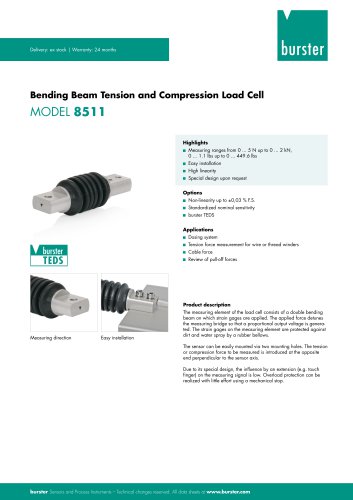 Data Sheet Model 8511 (2025)
6 Pages
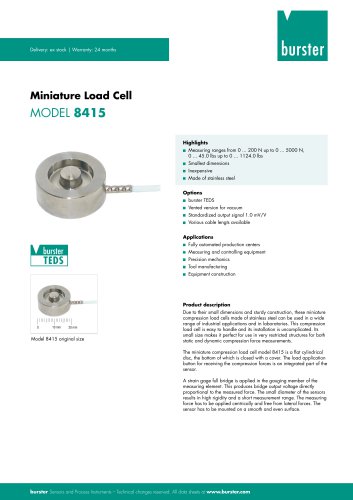 Data Sheet Model 8415 (2025)
6 Pages
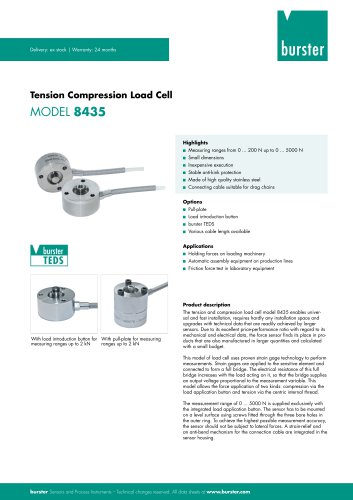 Data sheet Model 8435 (2025)
7 Pages
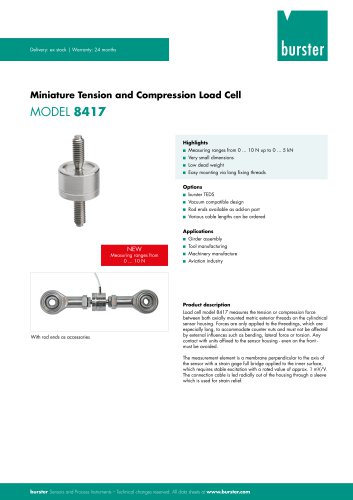 Data Sheet Typ 8417 (2025)
7 Pages
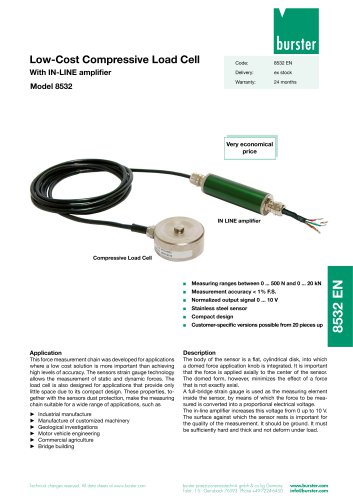 Data Sheet Typ 8532 (2025)
2 Pages
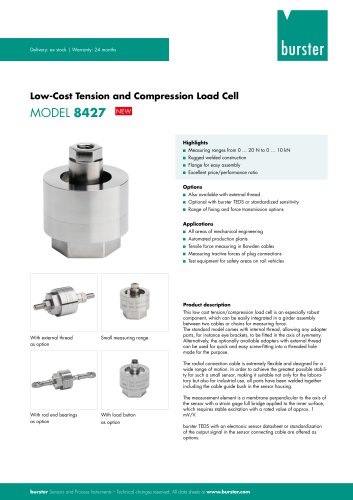 Data Sheet 8427 (2025)
7 Pages
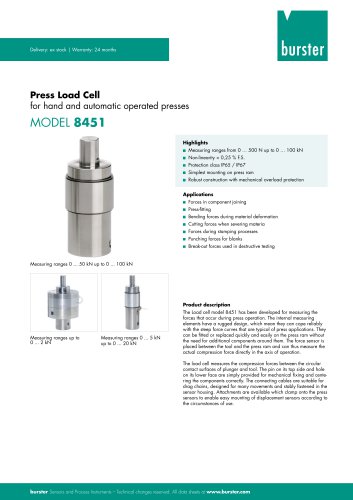 Data Sheet Motel 8451 (2025)
7 Pages
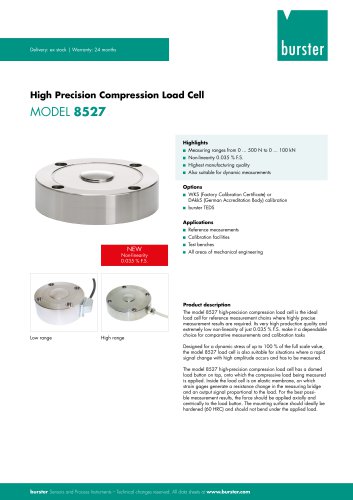 Data Sheet Model 8527 (2025)
7 Pages
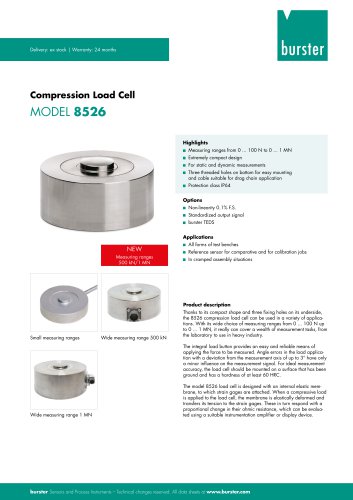 Data Sheet Model 8526 (2025)
9 Pages
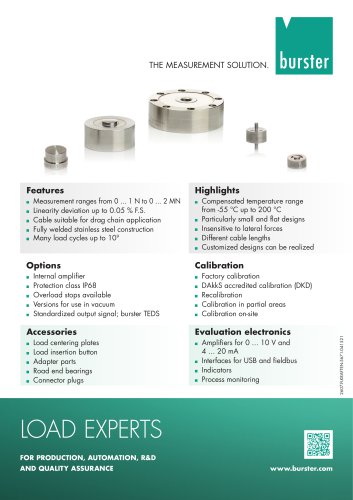 Flyer Load Experts 2025
1 Page
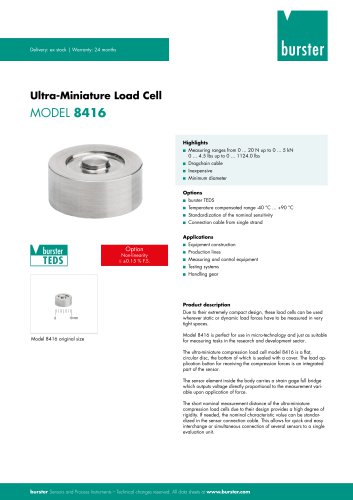 Data sheet Typ 8416 (2025)
6 Pages
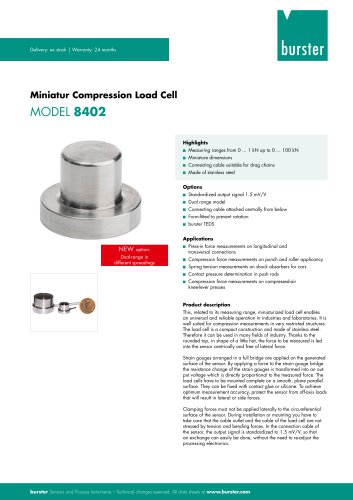 Data Sheet Model 8402 (2025)
6 Pages
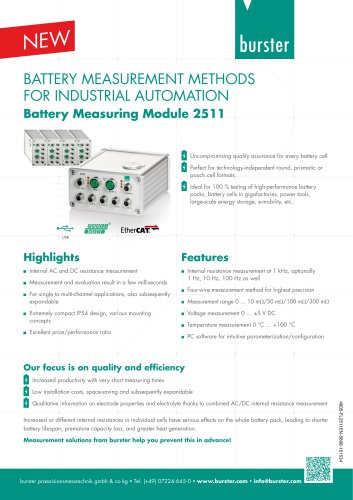
 2511 BATTERY MEASURING MODULE
14 Pages
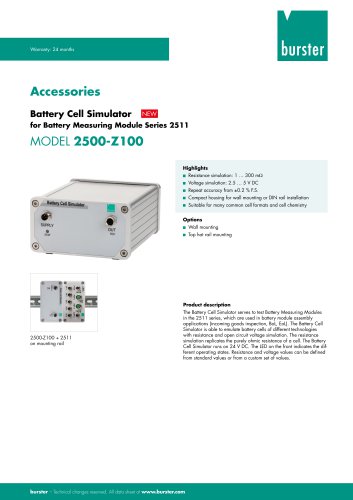 Data Sheet- Model 2500-Z100
2 Pages
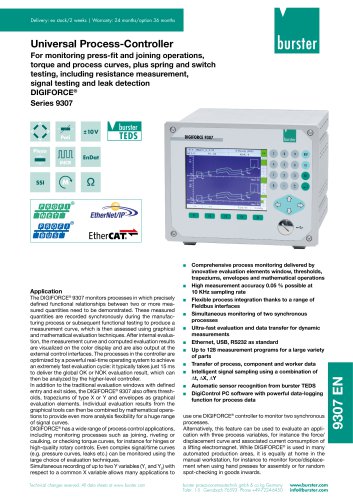 Data Sheet Typ 9307
6 Pages
 Data Sheet Model 9210
5 Pages
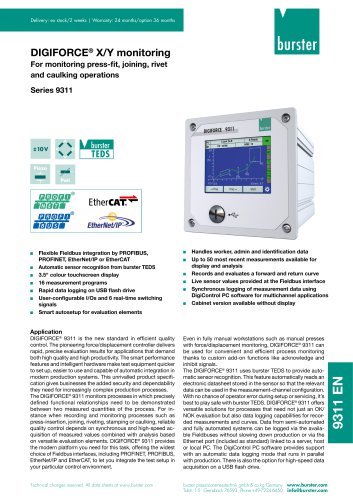 Data Sheet Typ 9311
6 Pages
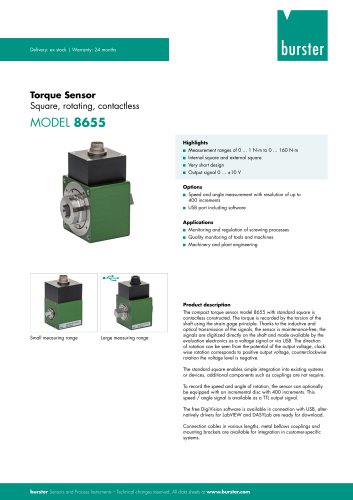 Data Sheet Typ 8655 (2025)
7 Pages
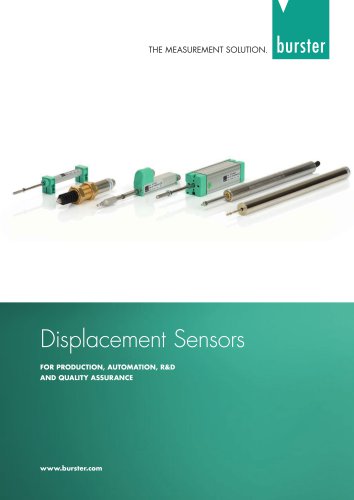 Displacement Sensors 2025
2 Pages
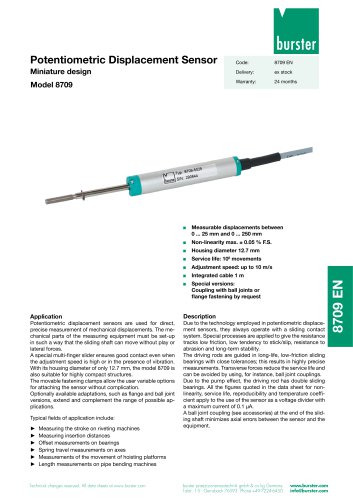 Data sheet Model 8709 (2025)
2 Pages
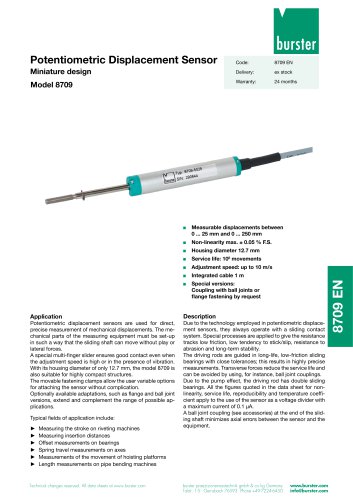 Data sheet Model 8709
2 Pages
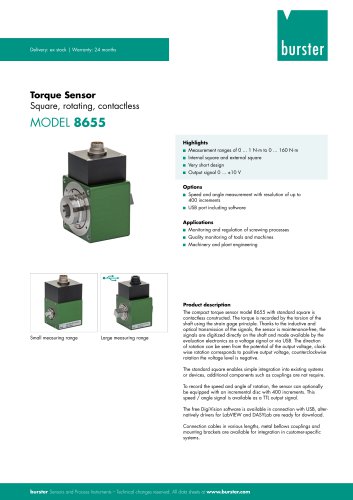 Data Sheet Typ 8655
7 Pages
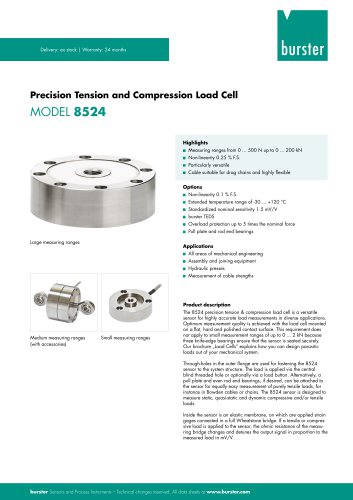 Data Sheet Model 8524
8 Pages
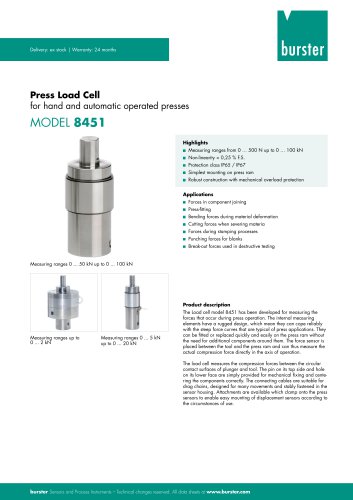 Data Sheet Motel 8451
7 Pages
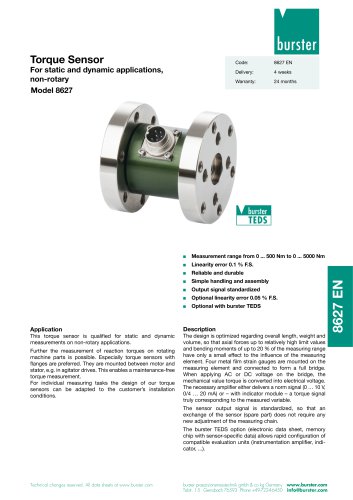 Data Sheet Typ 8627
2 Pages
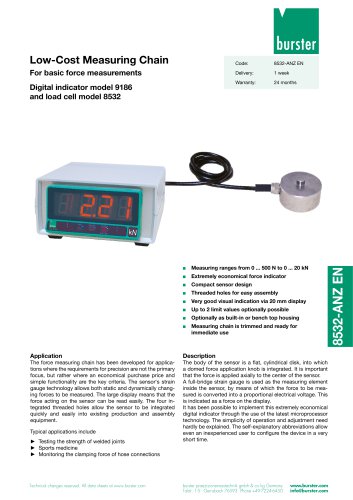 Data Sheet Model 9186/8532
2 Pages
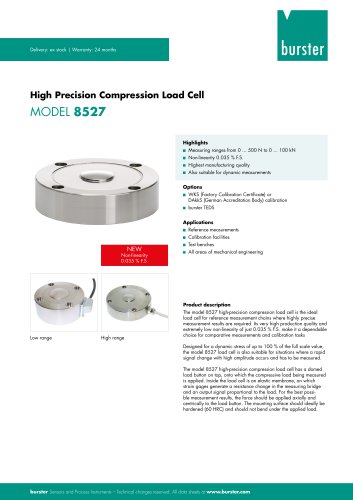 Data Sheet Model 8527
7 Pages
 Data Sheet Typ 8512
5 Pages
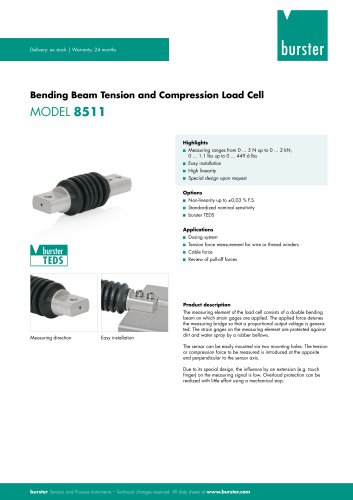 Data Sheet Model 8511
6 Pages
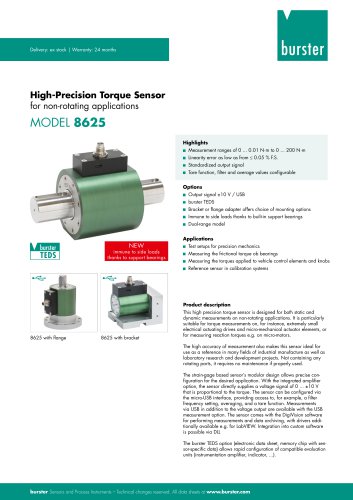 Data Sheet Typ 8625
7 Pages
 Data Sheet Typ 8532
2 Pages
 Data Sheet Model 8561
6 Pages
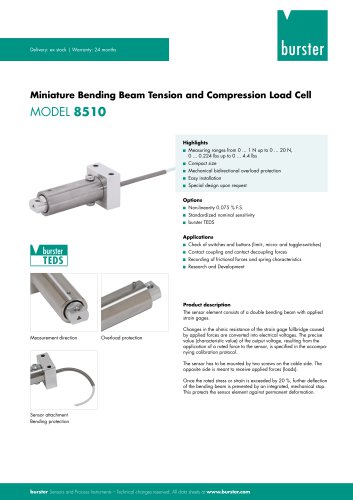 Data Sheet Model 8510
5 Pages
 Data Sheet Model 8523
8 Pages
 Data Sheet Model 8526
9 Pages
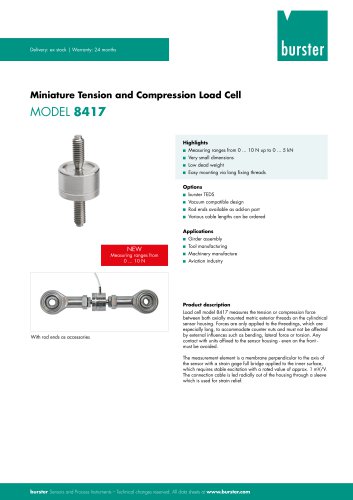 Data Sheet Typ 8417
7 Pages
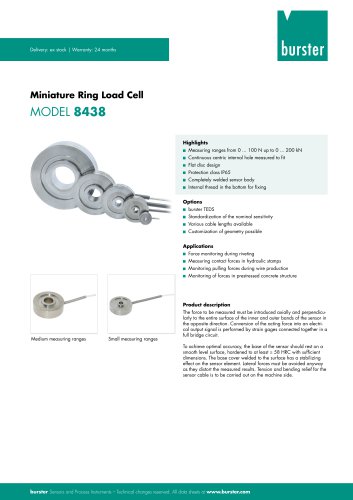 Data Sheet - Model 8438
6 Pages
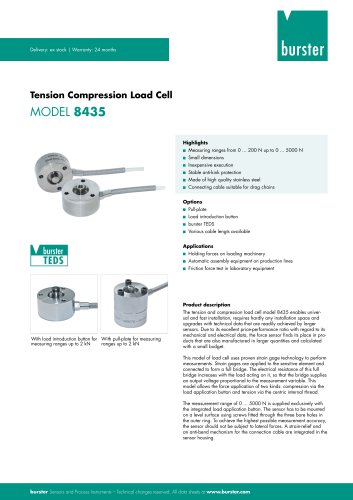 Data sheet Model 8435
7 Pages
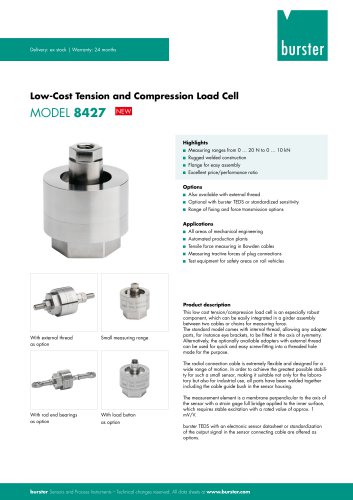 Data Sheet 8427
7 Pages
 Data Sheet Model 8402
6 Pages
 Data sheet Typ 8416
6 Pages
 Press fitting - the reliable way
11 Pages
 Data Sheet Model 9243
2 Pages
 Displacement Sensors
2 Pages
 Flyer Load Experts
1 Page
 Sensor Solutions
1 Page
 Data Sheet Model 9235
2 Pages
 Data sheet Series 8738
2 Pages
 Flyer Battery Tester
1 Page
 Data Sheet Model 2560
5 Pages
 Operation manual
76 Pages
 Data Sheet Typ 8739
2 Pages
 RESISTOMAT® Model 2329
4 Pages
 Data Sheet Model 2550
4 Pages
 Data Sheet Typ 8645
5 Pages
 Flyer Displacement Sensor
2 Pages
 Data Sheet - Model 8670
4 Pages




















Archived catalogs
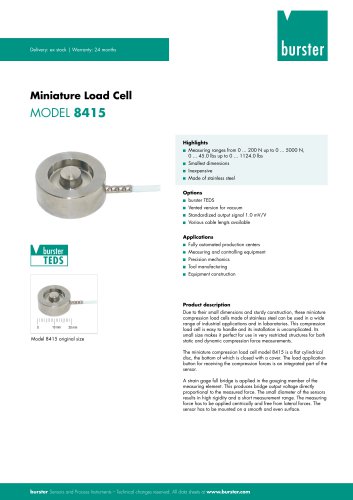 Data Sheet Model 8415
6 Pages
- Pressure transmitter
- BURSTER tension/compression load cell
- BURSTER steel load cell
- Analog pressure transmitter
- BURSTER strain gauge load cell
- BURSTER stainless steel load cell
- Waterproof pressure transmitter
- Membrane pressure transmitter
- Stainless steel pressure transmitter
- Panel panel meter
- Relative pressure transmitter
- Position transducer
- Beam type force sensor
- Signal amplifying integrated circuit
- Automated software