
- Catalogs
- Burckhardt Compression AG
- LABY®-GI FUEL GAS COMPRESSOR SYSTEMS


LABY®-GI FUEL GAS COMPRESSOR SYSTEMS
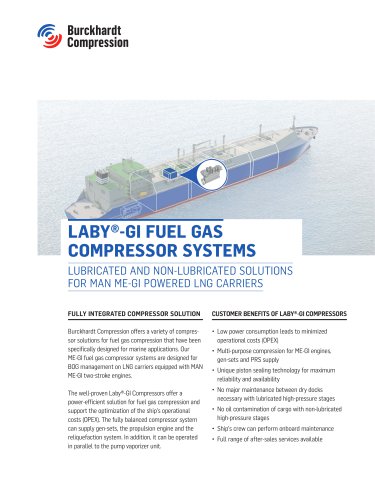
LABY®-GI FUEL GAS COMPRESSOR SYSTEMS
Burckhardt Compression provides compressor solutions specifically designed for marine applications, particularly for LNG carriers with MAN ME-GI two-stroke engines. The Laby®-GI Compressors are engineered for efficient fuel gas compression, optimizing operational costs (OPEX) and supporting various ship systems including gen-sets, propulsion engines, and reliquefaction systems.
- Low power consumption reduces operational costs.
- Multi-purpose compression supports ME-GI engines, gen-sets, and PRS supply.
- Unique piston sealing technology ensures reliability and availability.
- No major maintenance required between dry docks for lubricated high-pressure stages.
- No oil contamination with non-lubricated high-pressure stages.
- Onboard maintenance can be performed by the ship's crew.
- Comprehensive after-sales services are available.
The document provides specifications for various compressor models, including mass flow, dimensions, and weight. For example, the 4LP250 model has a typical mass flow of less than 4,500 kg/h (9,900 lbs/h) and weighs 127,000 kg (280,000 lbs).
- Gas-tight crankcase for enhanced safety and zero gas loss.
- Cryogenic operation without the need for BOG pre-warming.
- No vibrations due to the elimination of unbalanced forces and moments.
- Designed according to marine standards.
- Available as a non-lubricated compressor up to 310 bar.
The process layout includes components such as the Pump Vaporizer, Laby®-GI Compressor, Gas Valve Unit (GVU), and MAN ME-GI Engine, operating at temperatures between -90°C to -140°C (-130°F to -220°F) and pressures up to 310 bar (4500 psi).
Catalog excerpts

LUBRICATED AND NON-LUBRICATED SOLUTIONSFOR MAN ME-GI POWERED LNG CARRIERS FULLY INTEGRATED COMPRESSOR SOLUTION Burckhardt Compression offers a variety of compressor solutions for fuel gas compression that have been specifically designed for marine applications. Our ME-GI fuel gas compressor systems are designed for BOG management on LNG carriers equipped with MAN ME-GI two-stroke engines. The well-proven Laby®-GI Compressors offer a power-efficient solution for fuel gas compression and support the optimization of the ship's operational costs (OPEX). The fully balanced compressor system can supply gen-sets, the propulsion engine and the reliquefaction system. In addition, it can be operated in parallel to the pump vaporizer unit. CUSTOMER BENEFITS OF LABY®-GI COMPRESSORS • Low power consumption leads to minimized operational costs (OPEX) • Multi-purpose compression for ME-GI engines, gen-sets and PRS supply • Unique piston sealing technology for maximum reliability and availability • No major maintenance between dry docks necessary with lubricated high-pressure stages • No oil contamination of cargo with non-lubricated high-pressure stages • Ship's crew can perform onboard maintenance • Full range of after-sales services available
Open the catalog to page 1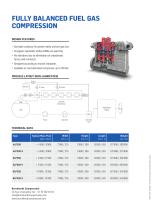
DESIGN FEATURES • Gas-tight crankcase for greater safety and zero gas loss • Cryogenic operation without BOG pre-warming • No vibrations due to elimination of unbalanced forces and moments • Designed according to marine standards • Available as non-lubricated compressor up to 310 bar PROCESS LAYOUT (NON-LUBRICATED) TECHNICAL DATA Burckhardt Compression 24-hour emergency tel.: +41 52 262 53 53 [email protected] www.burckhardtcompression.com 40.10.14.40 - 07/2019 - All content is subject to change without notice.
Open the catalog to page 2All Burckhardt Compression AG catalogs and technical brochures
 M-Line
2 Pages
 B-Line
2 Pages
 LABY®-GI
24 Pages
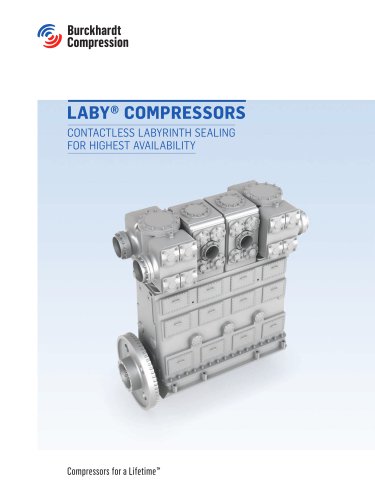 LABY
LABY24 Pages
 COMPACT PACKAGE
12 Pages
 Redura(R) Rod Sealing Systems
16 Pages
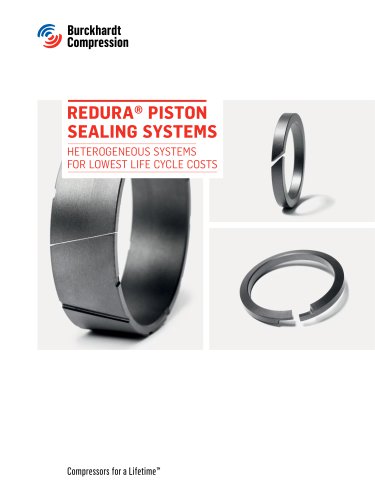 Redura(R) Piston Sealing Systems
16 Pages
 Hyper Compressors
24 Pages
 Reciprocating compressors
8 Pages
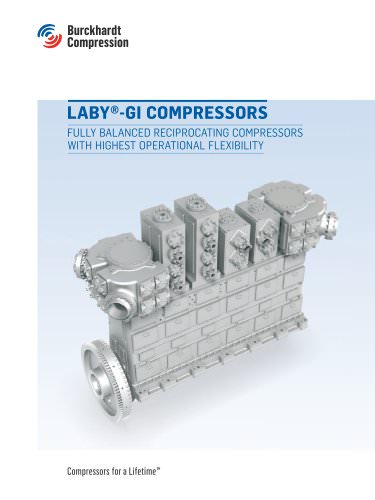 Laby-GI Compressors
24 Pages
 Laby Compressors
24 Pages
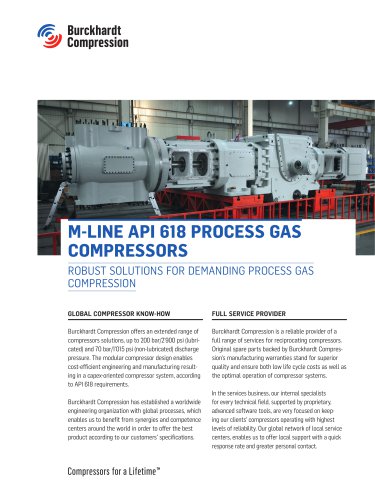







- Air compressor
- Positive-displacement compressor
- Stationary compressor
- Industrial compressor
- Electrically-powered compressor
- Reciprocating piston compressor
- Oil-free compressor
- Compact compressor
- Tank-mounted compressor
- Cooled compressor
- High-pressure compressor
- Air-cooled compressor
- Rugged compressor
- Compressor with tank
- Process compressor
- Single-stage compressor
- Water-cooled compressor