
- Catalogs
- Bruker Daltonics
- Brochure ultraflex III & ultraflex III TOF/TOF


Brochure ultraflex III & ultraflex III TOF/TOF

1 / 6 PagesView full catalog
Brochure ultraflex III & ultraflex III TOF/TOF
Product catalog summary
Technical Specifications Overview
The Bruker Daltonics ultraflex III is a MALDI-TOF/TOF mass spectrometer designed for advanced proteomics applications. This document outlines its key features, technological advancements, and applications.
The Bruker Daltonics ultraflex III is a MALDI-TOF/TOF mass spectrometer designed for advanced proteomics applications. This document outlines its key features, technological advancements, and applications.
Key Features and Technologies
- Smartbeam Laser Technology: Offers adjustable repetition rates from 1-200 Hz, enhancing sensitivity and mass resolution.
- PAN Technology: Provides high mass resolution across a wide range (700-6000 Da) without parameter adjustments.
- High Precision Calibration (HPC): Ensures high mass accuracy, crucial for MALDI Imaging and Biomarker Profiling.
- Grid-less Ion Optics: Facilitates top-down proteomics with unique reISD/T3-sequencing capabilities.
Analytical Performance
- Resolution of ≥ 1,100 in linear mode and ≥ 25,000 using PAN technology.
- Mass accuracy of ≤ 80 ppm in linear mode and ≤ 3 ppm in reflectron mode.
- Sensitivity in the low attomole range with a high signal-to-noise ratio in TOF/TOF mode.
Software and Support
- Compass Software Suite: Includes flexControl for instrument control, flexAnalysis for data analysis, and optional packages like BioTools, WARP-LC, and ClinProTools for specialized applications.
- Support Features: Extended self-diagnostics, remote online service, and custom maintenance contracts.
Applications and Integration
- Seamless integration with Bruker Daltonics’ system solutions for MALDI Molecular Imaging, Biomarker Analysis, and Proteomics Suites.
- Designed for research use, not for diagnostic purposes.
Advanced Capabilities
- Smartbeam Advantages: Combines nitrogen laser performance with Nd:YAG laser speed and lifetime, offering superior performance for MALDI Imaging and profiling applications.
- Adjustable Laser Focus: Allows for high-resolution scanning of tissue samples with focus size variations from 10 μm to 80 μm.
- ClassImaging: Enhances MALDI Imaging by visualizing statistically relevant markers in tissue samples.
Conclusion
The ultraflex III is positioned as a leading instrument in the field of mass spectrometry, offering unmatched performance and versatility for a wide range of proteomics applications.
The ultraflex III is positioned as a leading instrument in the field of mass spectrometry, offering unmatched performance and versatility for a wide range of proteomics applications.
Overview
The document discusses the capabilities and features of the Bruker Daltonics ultraflex III, a mass spectrometry system designed for peptide and protein analysis with high mass accuracy and sensitivity.
The document discusses the capabilities and features of the Bruker Daltonics ultraflex III, a mass spectrometry system designed for peptide and protein analysis with high mass accuracy and sensitivity.
Specifications
The ultraflex III achieves a mass accuracy of less than 0.02 Da, demonstrated with Glu-Fibrinopeptide B samples. It features gridless ion optics for enhanced sensitivity in both MS and MS/MS modes.
The ultraflex III achieves a mass accuracy of less than 0.02 Da, demonstrated with Glu-Fibrinopeptide B samples. It features gridless ion optics for enhanced sensitivity in both MS and MS/MS modes.
Technological Innovations
The system incorporates several patented technologies, including Smartbeam laser technology for high-sensitivity imaging, and LIFT technology for high-performance MS/MS with flexible fragmentation options. The AnchorChip technology ensures reproducible sample preparations.
The system incorporates several patented technologies, including Smartbeam laser technology for high-sensitivity imaging, and LIFT technology for high-performance MS/MS with flexible fragmentation options. The AnchorChip technology ensures reproducible sample preparations.
Applications
The ultraflex III supports a range of applications, including LC-MALDI for protein sequence validation, posttranslational modification screening, and quantitative proteomics. It also enables MALDI Imaging for spatial distribution analysis of protein biomarkers and drug candidates in tissue samples.
The ultraflex III supports a range of applications, including LC-MALDI for protein sequence validation, posttranslational modification screening, and quantitative proteomics. It also enables MALDI Imaging for spatial distribution analysis of protein biomarkers and drug candidates in tissue samples.
Software Integration
The system is operated using the Compass software environment, which integrates with the ProteinScape database for comprehensive proteomics project management. This platform supports various workflows and maximizes protein identification reliability.
The system is operated using the Compass software environment, which integrates with the ProteinScape database for comprehensive proteomics project management. This platform supports various workflows and maximizes protein identification reliability.
Research and Development
The document highlights the use of the ultraflex III in characterizing complex samples, such as highly disulfide-bridged peptides in snake venom, achieving high sequence coverage. The system is also utilized in international research collaborations like the HUPO Human Brain Proteome Project.
The document highlights the use of the ultraflex III in characterizing complex samples, such as highly disulfide-bridged peptides in snake venom, achieving high sequence coverage. The system is also utilized in international research collaborations like the HUPO Human Brain Proteome Project.
Conclusion
The Bruker Daltonics ultraflex III offers advanced capabilities for proteomics research, combining high accuracy, sensitivity, and integrated software solutions to support cutting-edge scientific work.
The Bruker Daltonics ultraflex III offers advanced capabilities for proteomics research, combining high accuracy, sensitivity, and integrated software solutions to support cutting-edge scientific work.
See more
All Bruker Daltonics catalogs and technical brochures
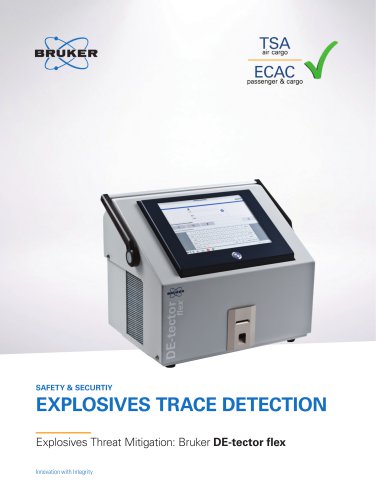 DE-tector flex
8 Pages
 MATRIX II-MG
8 Pages
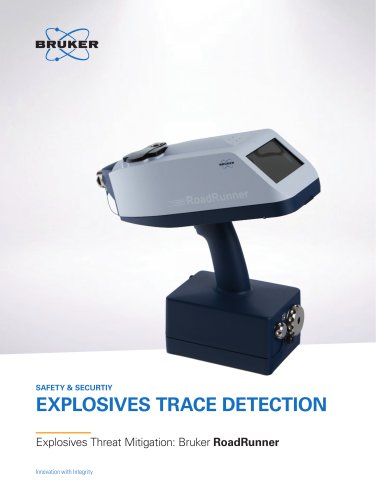 RoadRunner
8 Pages
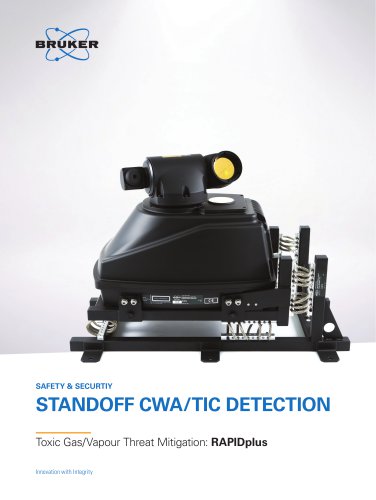 RAPIDplus
12 Pages
 RAID-XP
8 Pages
 Maritime Detection Systems
7 Pages
 SVGps
SVGps4 Pages
 TIMON
TIMON13 Pages
 MALDI Biotyper® CA System
12 Pages
 RAID-M Series
7 Pages
 HDX Solution
2 Pages
 EVOQ GC-TQ
8 Pages
 timsTOF PRO
8 Pages
 Agri Solutions brochure
8 Pages
 PesticideScreener
8 Pages
 Elute LC series
8 Pages
 nanoElute®
6 Pages
 timsTOF™
8 Pages
 rapifleX™
8 Pages
 amaZon SL
6 Pages
 compact
8 Pages
 MALDI Biotyper
56 Pages
 rapifleX™ MALDI Tissuetyper™
8 Pages
 MALDI PharmaPulse™
4 Pages
 Toxtyper
6 Pages
 impact II
12 Pages
 maxis II
12 Pages
 amaZon speed
10 Pages
 Albira Brochure
12 Pages
 prime
prime12 Pages
 solarix
10 Pages
 Metabolomics
12 Pages
 aurora M90
10 Pages
 Clean Room Pack
4 Pages
 MATRIX-F FT-NIR Spectrometer
2 Pages
 TANGO
TANGO12 Pages
 The new autoflex? series
10 Pages
 MM 2
MM 26 Pages
 µRAID
µRAID4 Pages
 Radiation Backpack Sentry
4 Pages
 Posterbook Metabolomics ebook
14 Pages
 CaptiveSpray nanoBooster
8 Pages
 Scion SQ Series GC-MS
8 Pages
 solariX XR
12 Pages
 aurora Elite
6 Pages
 nano-Advance UHPLC
8 Pages
 EVOQ
EVOQ12 Pages
 CaptiveSpray
4 Pages
 ImagePrep
4 Pages
 micrOTOF-Q II
12 Pages
 PROTEINEER fc II
4 Pages
 Ultraflextreme
16 Pages
 Autoflix speed
10 Pages
 microflex
6 Pages
 SCION 436-GC
4 Pages
 SCION 456-GC
4 Pages
 GC CARE
8 Pages


Archived catalogs
 Brochure BioTools 2.2
10 Pages
 Brochure EASY-nLC
6 Pages
 Brochure micrOTOF II
8 Pages
 RAID-M 100
6 Pages
 compact?
6 Pages
 MALDI Biotyper
12 Pages
 Toxtyper
8 Pages
 micrOTOF-Q III
6 Pages
 impact HD
12 Pages
 Brochure MetaboliteTools 1.1
8 Pages
 Brochure ProfileAnalysis
4 Pages


Related Searches
- Automation software solution
- Bruker analysis software
- Process software
- Real-time software
- Microscope
- Control software
- Gas detector
- Monitoring software solution
- Optical microscope
- 3D software solution
- Industrial software
- Measurement software
- Interface software
- Visualization software solution
- Laboratory microscope
- Quality software
- Automated software
- Bruker industrial detector
- Monitoring detector
*Prices are pre-tax. They exclude delivery charges and customs duties and do not include additional charges for installation or activation options. Prices are indicative only and may vary by country, with changes to the cost of raw materials and exchange rates.