
- Catalogs
- Brady EMEA
- Lockout/Tagout Catalogue


- Products
- Catalogs
- News & Trends
- Exhibitions
Lockout/Tagout Catalogue

Lockout/Tagout Catalogue
Brady provides solutions for hazardous energy control through Lockout/Tagout (LO/TO) programs, emphasizing product testing and offering a warranty limited to product replacement for defects. As a leader in labeling and identification, Brady continuously improves its safety solutions to meet customer needs.
Implementing a LO/TO program is essential for reducing workplace accidents and injuries, enhancing productivity by minimizing downtime, and ensuring machinery operates efficiently. It is recognized globally as a best safety practice and is legally required in some regions.
Brady offers a complete approach to energy control, including audits, energy point identification, device selection, instruction preparation, and staff training, designed to meet legal requirements and improve safety practices.
1. Develop a documented Lockout/Tagout policy.
2. Establish machine-specific procedures and label energy isolation points.
3. Identify and document all energy control points.
4. Train employees on legal requirements and specific procedures.
5. Provide appropriate Lockout/Tagout tools.
6. Continuously maintain and improve the program.
The document references European directives and standards, such as Directive 2009/104/EC and EN ISO 14118, which outline safety requirements for machinery and equipment to ensure worker protection.
Brady's LO/TO solutions aim to support companies in achieving zero workplace accidents through comprehensive safety programs and high-quality products.
The document outlines national and international regulations, including AschG and AM-VO in Austria, UTE C18-510 in France, BetrSichV 2015 in Germany, and OSHA regulations in the USA, emphasizing the importance of lockout/tagout procedures.
LO/TO is highlighted as a critical safety measure, with Brady offering services such as gap analysis, program design, and training.
The ATEX directive focuses on safety in potentially explosive atmospheres, categorizing zones based on risk levels and specifying equipment requirements.
Brady's LINK360™ software aids in managing safety procedures across multiple locations, offering features like task notifications, reporting, and mobile app access.
Brady offers a range of padlocks suitable for LO/TO applications, providing guidance on selecting the right padlock based on material, size, and shackle options.
Padlocks are available in various materials, sizes, and colors, with options for personalization and compliance with the ATEX Equipment Directive.
Brady offers a comprehensive line of lockout devices for electrical and mechanical risks, including cable lockout devices, ball valve lockouts, and gate valve lockouts.
The document underscores the importance of adhering to legal requirements and technical standards to ensure workplace safety, highlighting Brady's role in providing comprehensive safety solutions.
Catalog excerpts

Solutions for hazardous energy control LOCKOUT / TAGOUT
Open the catalog to page 1
BRADY Once you have worked with BRADY, our name will stick with you, (just like our labels) because BRADY is one of the world’s leading labelling and identification specialists. Innovative At BRADY we continue to improve. We have many customers from all industries, and we strive to be ahead of their needs by continuing to invest in research for even more performant solutions. By developing more user-friendly and efficient concepts, we give our thousands of customers the best in the market. Strength At BRADY, we believe our biggest strength is the wide range of identification and safety solutions...
Open the catalog to page 2
When it comes to identification, safety and compliance, there’s a clear advantage to working with Brady. We put our customers first in everything we do. Our goal is to give you an unrivalled customer experience. We are relentlessly committed to performance and excellence -in our products, services and people. Our products and solutions perform in ways that others simply can’t match. Our people perform in ways that regularly exceed your expectations. And our focus and discipline work toward solid, long-term performance for our customers. In short, Brady is the company you trust when performance...
Open the catalog to page 3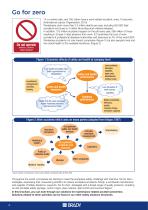
Go for zero “A co-worker dies, and 160 others have a work-related accident, every 15 seconds. (International Labour Organisation, 2015) Workplaces claim more than 2.3 million deaths per year, including 350,000 fatal accidents and close to 2 million life ending work-related diseases. In addition, 313 million accidents happen on the job every year, 268 million of those resulting in at least 3 days absence from work. ILO estimates the cost of work accidents & professional diseases indemnities and absences to 4% of the world GDP. Workplace accidents not only impact companies (Figure 1) but also people’s...
Open the catalog to page 4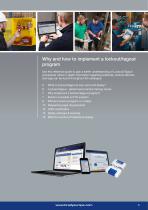
Why and how to implement a lockout/tagout program Use this reference guide to gain a better understanding of Lockout/Tagout procedures. More in-depth information regarding padlocks, lockout devices and tags can be found throughout the catalogue. 6 What is lockout/tagout & why work with Brady? 6 Lockout/tagout - global best practice training movie 7 Why implement a lockout/tagout program? 7 Brady’s complete LO/TO solution 8 Efficient lockout program in 4 steps 10 Respecting legal requirements 13 Safety software & services 16 Effective control of hazardous energy
Open the catalog to page 5
Why and how to implement a lockout/tagout program What is lockout/tagout? Lockout / Tagout is a planned safety procedure which involves turning off the energy supply of industrial machinery and equipment whilst maintenance work or repairs are being carried out. This procedure protects workers from the risks posed by live machinery or electricity. LO/TO SAVES LIVES! Why work with Brady? Brady is the global leader in Lockout/Tagout solutions. Brady was the first to respond to the new OSHA legislation in the U.S. in 1990, and has maintained its position as a leading Lockout solutions provider ever...
Open the catalog to page 6
Reduced accident rates and injury costs EU Figures show that 10 to 15% of all fatal accidents at work and 15 to 20% of all accidents are connected with maintenance. Common injuries include fractures, lacerations, amputations, burns and shocks. Due to the serious nature of many maintenance accidents, injury-related costs can be exorbitant. Less downtime, higher productivity A well-organised LO/TO program that includes clearly labelled energy sources, easy-to-follow procedures, and readily accessible lockout tools can greatly speed up maintenance and servicing activities. Workers can avoid time-consuming...
Open the catalog to page 7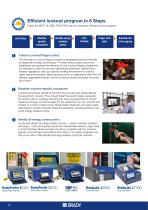
Efficient lockout program in 6 Steps Follow the BEST GLOBAL PRACTICE plan for creating an efficient lockout program: Create a Lockout/Tagout policy The first step to Lockout/Tagout success is developing and documenting an equipment energy control policy. A written lockout policy document establishes and explains the elements of your Lockout/Tagout programme. It’s important to take into account international standards, relevant laws, industry regulations, and your specific working environment to create a highly relevant procedure. Best practices call for a collaborative effort from all relevant...
Open the catalog to page 8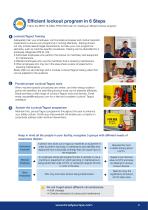
Efficient lockout program in 6 Steps Follow the BEST GLOBAL PRACTICE plan for creating an efficient lockout program: Q Lockout/Tagout Training Adequately train your employees, communicate processes and conduct periodic inspections to ensure your programme is running effectively. Training should not only include relevant legal requirements, but also your own programme elements, such as machine-specific procedures. Training can be diversified for 3 employee categories (OSHA, US): • Authorised employees who perform the lockout on machinery and equipment for maintenance. • Affected employees who...
Open the catalog to page 9
Respecting legal requirements and technical standards EUROPE Directive 2009/104/EC (formerly directive 89/655/EEC of the Council from 30 November 1989) specify the minimum requirements for safety and health protection for workers using work equipment at work. Paragraph 2.14 lays down that “every piece of equipment must be fitted with clearly visible devices with which it can be separated from every energy source”. Paragraph 2.15. lays down that “Work equipment must bear the warnings and markings essential to ensure the safety of workers”. EN ISO 14118 (2018-07) norm of Safety of machinery (is...
Open the catalog to page 10
Respecting legal requirements and technical standards GERMANY BetrSichV 2015 (Ordinance on Industrial Safety and Health) Ordinance concerning the protection of safety and health in the provision of work equipment and its use at work and maintenance processes. Extract from BetrSichV 2015 § 8 Protective measures in case of hazards caused by energies, start-up and stoppage Paragraph 3: “Command devices which have an influence on the safe use of the means of work shall in particular be secured against unintended or unauthorised operation. Paragraph 4: “Work equipment may only be intentionally put...
Open the catalog to page 11All Brady EMEA catalogs and technical brochures
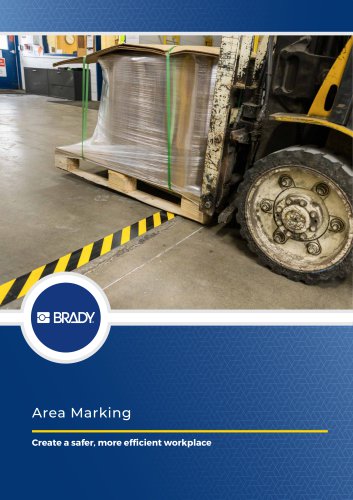 Area marking Catalogue
32 Pages
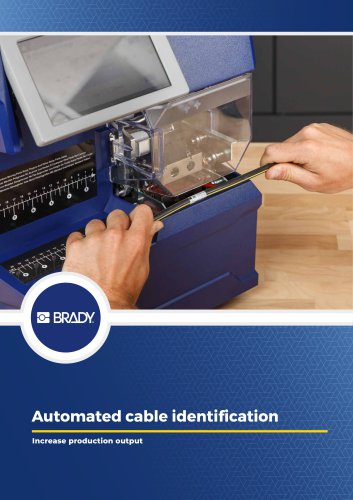 Automated Cable Identification
16 Pages
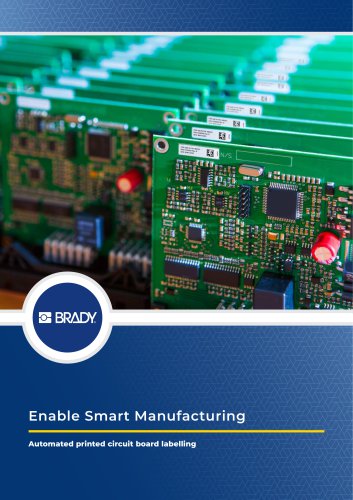 Automated PCB Labelling
20 Pages
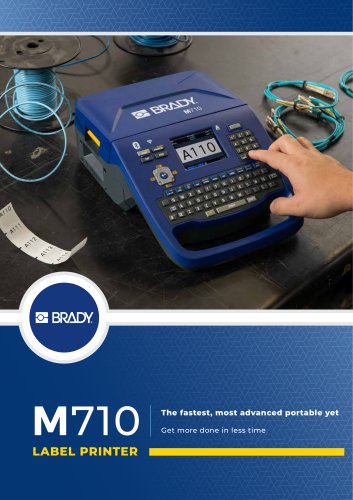 M710 Label Printer Brochure
56 Pages
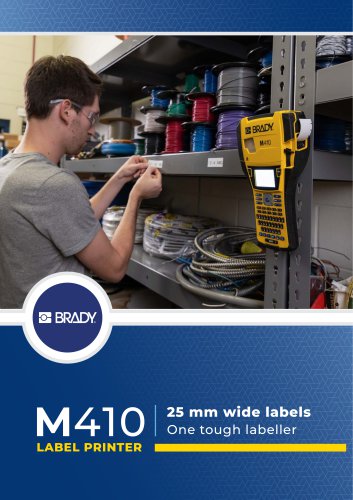 M410 LABEL PRINTER Brochure
17 Pages
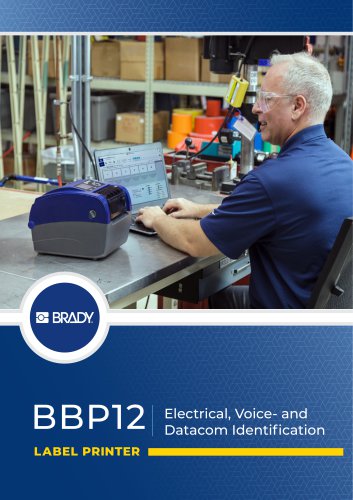 BBP12 Label Printer Brochure
4 Pages
 RFID Solution for Flyable Parts
12 Pages
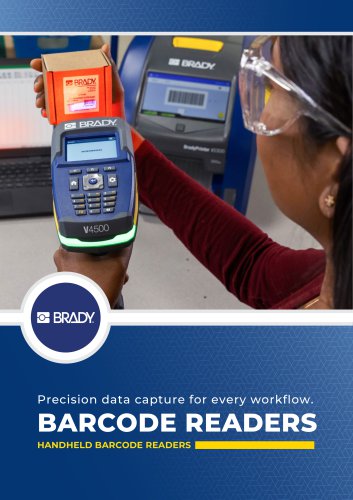 Brady Barcode Readers Brochure
28 Pages
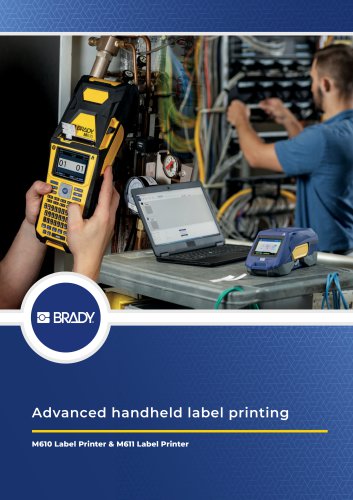
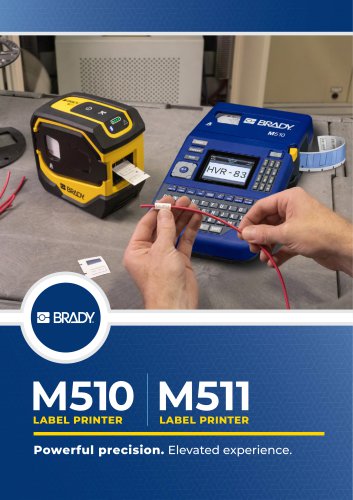
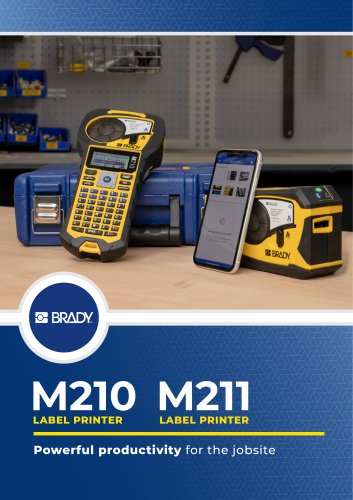
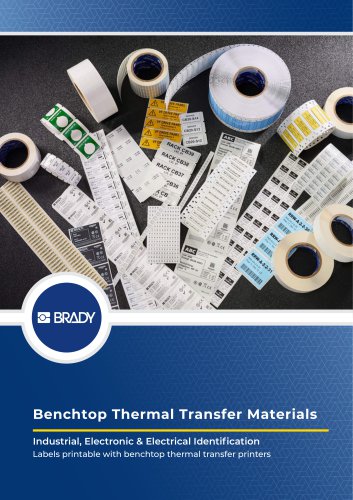
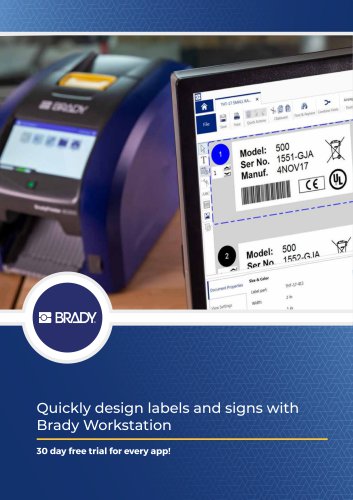
- Windows software
- Computer-aided design software
- Cloud-based software
- Design software solution
- Quality software
- Automated software
- Printing machine
- Radio antenna
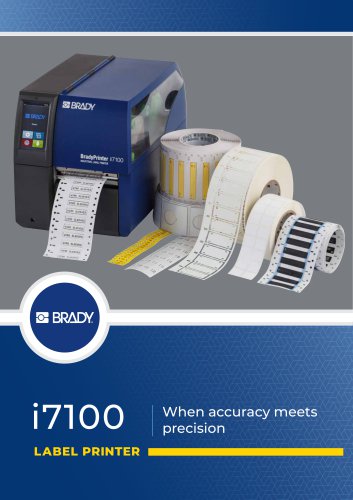
- BRADY label printer
- Machine software
- BRADY thermal transfer label printer
- Creation software
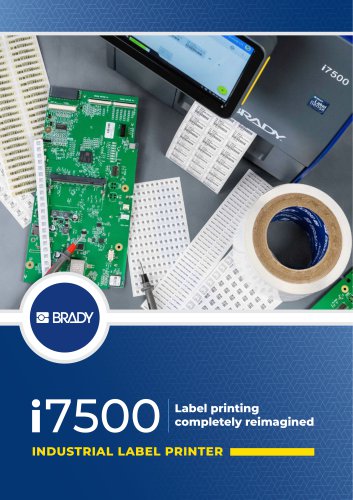
- BRADY plastic label
- BRADY RFID reader
- BRADY white label
- BRADY automatic dispenser
- Outdoor antenna
- BRADY industrial label
- BRADY roll label
- Desktop label printer