
- Catalogs
- Bloom Engineering
- Baffle Burner Concept

Baffle Burner Concept

Baffle Burner Concept
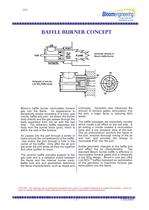
Bloom's baffle burner is designed to recirculate furnace gas into the flame, featuring a simple structure comprising a body, gas nozzle, baffle, and port. The burner allows air to enter directly into the body, while gas is separated by a fuel tube. The refractory baffle separates the body from the burner block, which is embedded in the furnace wall.
Functionality and Design
Air enters the port through circumferential holes around the baffle, while gas enters through a central hole. Mixing and ignition occur only after both air and gas enter the port. The ceramic baffle supports the gas tube and acts as a radiation shield. The geometry of the baffle holes and ports influences flame characteristics, such as shape and luminosity, and affects the recirculation of furnace gases, which is crucial for reducing NOx emissions.
Jet Effect and Recirculation
The baffle passages function as nozzles, creating a jet effect that establishes a recirculation zone and low-pressure area at the exit. This jet phenomenon anchors the flame, ensures thorough mixing of air and fuel, and facilitates the recirculation of products of combustion (POC) into the port.
Design Optimization
Subtle changes in baffle and port geometry can alter jet characteristics. The standard Bloom burner baffle is effective in recirculating furnace gases and is inherently designed for low NOx emissions. Bloom's Low and Ultra Low NOxTM baffles optimize geometry to maximize gas recirculation into the flame.
Safety Notice
Improper use of combustion equipment can pose hazards to people and property. Users are advised to adhere to National Safety Standards and Insurance Underwriters' recommendations.
Catalog excerpts
7/05 BAFFLE BURNER CONCEPT > Blooms baffle burner recirculates furnace gas into the flame. Its appearance is deceptively simple consisting of a body, gas nozzle, baffle and port. Air enters the burner body directly and the gas passes through the body separated from the air with the fuel tube. The refractory baffle separates the body from the burner block (port), which is within the wall of the furnace. Air passes into the port through a series of holes around the circumference of the baffle. Gas enters the port through a hole in the center of the baffle. Only after the air and gas enter the port areas do they mix together and allow ignition to occur. The ceramic baffle provides support to the gas tube and is a radiation shield between the flame and the internal burner parts. Baffle hole and port geometries determine the flame characteristics, such as shape and luminosity. Geometry also influences the amount of furnace gases recirculation into the port, a major factor in reducing NOx levels.The baffle passages are essentially nozzles which create a jet effect on the exit side. A jet exiting a nozzle creates a recirculation zone and a low pressure area at the exit. The jet phenomenon anchors the flame in the port, ensures thorough mixing of the air and fuel, and provides the energy to recirculate POC into the port. Subtle geometric changes to the baffle and port affect the jet characteristics. The standard Bloom burner baffle is effective in recirculation furnace gases and is inherently a low NOx design. BloomҒs Low and Ultra Low NOx TM baffles represent an optimization of the geometry to maximize furnace gas recirculation into the flame. CAUTION: The improper use of combustion equipment can result in a condition hazardous to people and property. Users are urged to comply with National Safety Standards and/or Insurance Underwriters recommendations - 1 - 7/29/2005 size="-2">
Open the catalog to page 1All Bloom Engineering catalogs and technical brochures
 LTR Brochure - Web Layout
4 Pages
 Radiant Tube Burners
6 Pages
 Radiant Tube Burners 2320
4 Pages
 Direct Fired Burners 1029
4 Pages
 Direct Fired Burners 1020
10 Pages
 1510 ULTRA5 LOW NOXTM BURNER
3 Pages


