
- Catalogs
- Bicker Elektronik GmbH
- BP-LFP-1025S

BP-LFP-1025S

BP-LFP-1025S
The BP-LFP-1025S(D) battery features a nominal voltage of 9.9 V and a capacity of 2.5 Ah. It includes a system present function, an integrated temperature sensor, and is designed for high storage capability and long backup times. The battery is environmentally friendly, being free of lead and cadmium, and has a lifespan five times longer than lead-acid batteries. It is certified for safe transport under UN 38.3 and uses lithium iron phosphate technology, operating within a temperature range of -20 to +55 °C. The design is compact and reliable, with IEC 62133-2 approval.
Users must read safety instructions thoroughly before use. Incorrect operation can lead to serious injury or death. The battery should not be disassembled, exposed to heat, or short-circuited. Specific chargers must be used, and polarity must be observed. In case of leakage, avoid contact with skin, eyes, or ingestion, and seek medical help if necessary.
The battery system includes communication and power supply connections with specific cable lengths and plug types. It is crucial to follow the correct pin functions for safe operation.
The battery uses ANR26650-M1B cells with a nominal capacity of 2.5 Ah and a voltage range of 7.5 V to 11.1 V. It features overvoltage and undervoltage protection, a 15 A fuse, and operates at a maximum height of 5000 m. Charging parameters include a recommended end-of-charge voltage of 10.35 V and a charging current of 2.5 A. The battery operates in temperatures from -20 to +55 °C.
The Battery Management System (BMS) monitors cell voltages and disconnects the main current path in case of faults. It includes protection functions for short-term and permanent errors, charging behavior, and balancing. The BMS ensures safe charging and discharging processes, with specific limits for cell voltages and balancing.
The battery includes additional functions such as system present detection and balancing during charging. The System Present function is mandatory for battery operation, requiring specific pin connections to enable the main current path.
The package includes the battery and necessary documentation for safe use and handling.
The battery should be stored at a recommended temperature of 25 °C and a state of charge of 80%. It should be kept clean and dry, and connections should be cleaned with a dry cloth if necessary. After disconnection, the battery must be protected from foreign particles and moisture.
The battery is certified for transport under UN 38.3 regulations. Lithium batteries are subject to dangerous goods regulations, including Class 9 and UN 3480/3481. Disposal should follow local regulations for recycling and environmental safety. Used batteries must be returned to the point of sale or a special disposal system and not disposed of with household waste.
For further details, users should refer to the manufacturer's instructions and data sheets. The manual provides guidance for legal compliance but does not replace legal requirements. Information is provided by Bicker Elektronik GmbH.
Catalog excerpts

Bicker Elektronik GmbH Ludwig-Auer-Straße 23 | 86609 Donauwörth | Germany
Open the catalog to page 1
Legend of used symbols Symbol Description Attention! Important hazard warning. Attention! Avertissement de danger important. Do not dispose of in the domestic waste. Ne pas jeter avec les ordures ménagères. Warning of electrical voltage. Avertissement de tension électrique. Battery intended for recycling. Batterie destinée au recyclage. Revision Directory Date Initial version Release version DIN-Rail model included
Open the catalog to page 2
System present function Integrated temperature sensor Very high storage capability Ideal for long backup time 100% lead and cadmium free 5x higher life span than lead-acid batteries UN 38.3 transport certification Safe lithium iron phosphate technology Extended temperature range -20…+55 °C Compact and reliable design IEC 62133-2 approved
Open the catalog to page 5
B Safety instructions B1 General information The safety instructions must be read completely before the first time use! In addition, please regard the corresponding data sheet for safety use. Incorrect operation or connection may result in serious injury or death. Exagerating the limits or personal errors may lead to the risk of explosion. When working with the batteries, extra care must be taken that no jewelry such as rings or watches are worn, which can cause a short circuit. B2 Safety warnings for battery use The described limit values of the battery module must be observed. A violation...
Open the catalog to page 6
If a cell leaks, the fluid must not come into contact with the skin or enter the eyes or mouth. Measures in case of inhalation Vapors or mists escaping from a damaged cell can cause respiratory irritation. When inhaling the contents of an open cell, remove the source of contamination or remove the affected person to fresh air. Seek medical help immediately. Measures in case of eye contact Contact with the contents of an opened cell can cause severe chemical burns or eye irritation. If eye contact occurs with the contents of an opened cell, immediately rinse the contaminated eye(s) with a lukewarm,...
Open the catalog to page 7
C Connections of battery system POWER SUPPLY 2x Red (Plus): AWG 18 2x Black (Minus): AWG 18 Plug: WST (WELI SHENG TERMINAL), P/N: P4-I42002 COMMUNICATION AWG 24 Cable length BP-LFP-1325S: 345…365 mm BP-LFP-1325SD: 335…355 mm Plug: Würth Elektronik, P/N: 624008213322
Open the catalog to page 8
D Technical data BP-LFP-1025S(D) ELECTRICAL DATA Cell type Nominal capacity Nominal voltage Voltage range Corepack Overvoltage switch-off Once first cell reaches 3.7 V Overvoltage switch-off Recovery Undervoltage switch-off Once first cell reaches 2.5 V Undervoltage switch-off Recovery Fuse Own power consumption 15 A State of storage: max. 15 µA Activated state: max. 500 µA 5000 m Maximum installation height CHARGING PARAMETERS Recommended end-of-charge voltage Charging mode Recommended charging current Maximum charge current Operating temperature range Shutdown temperature range -20…+55 °C...
Open the catalog to page 9
TEMPERATURE SENSOR Type Between two cells (outer wall) HUMIDITY Operating MECHANICAL DATA BP-LFP-1025S Length 103 mm (without cable outlet) MECHANICAL DATA BP-LFP-1025SD Length 120 mm (without cable outlet) STORAGE Recommended temperature range Maximum temperature range
Open the catalog to page 10
Shrink tube Unless otherwise stated, Tolerance according to: DIN ISO 2768 T1 - m DIN ISO 2768 T2 - K Unless otherwise stated, Tolerance according to: DIN ISO 2768 T1 - m DIN ISO 2768 T2 - K
Open the catalog to page 11
Backup time* (in use with a UPSI-1208(D)) Backupzeit [h] LFP-1025S 0...1A Backupzeit [h] LFP-1025S 0...12W *Backup time depends on battery capacitance, load and temperature. At very high or low temperatures a reduction of backup time occurs. Unless otherwise specified, the values apply to measurements at +25 °C
Open the catalog to page 12
n.a. (available upon request) E Functionality of BMS If the BMS is in ACTIVE MODE, the single cell voltages of the energy storage are monitored continously by battery management system for compliance with the limits. In the event of a fault, the battery system disconnects the main current path. Charging and discharging is only possible with an activated battery management system. E1 Protection functions The BMS has several possibilities for detecting fault conditions. The following is a basic breakdown into shortterm, reversible and permanent errors: If a short-term, reversible fault occurs...
Open the catalog to page 13
E2 Charging behaviour The charging behaviour depends on the procedure described in chapter 'Charging process'. For this purpose, a suitable charger should be used. Abbreviation Description / Condition Charge Term Taper Current Current at end of charge CUV_RECOV_CHG After discharge, the output voltage remains deactivated until a loading process has taken place. Comments Limit Current <200 mA Function is activated The charging process is finished when the current has dropped below the value of the Charge Term Taper Current. Charging an empty battery system If a single cell falls below a voltage...
Open the catalog to page 14
E5 Discharging process During discharge process, the pack voltage drops from the end-of-charge voltage (100 SOC) to end-of% discharge voltage (0 SOC). Depending on current, the remaining capacity decreases continuously. If the % battery management system detects an error, it will be shut down as described in Section 'Functionality of BMS'. E6 Charging process Before using the charger for the first time, it is essential to read the operating instructions for the charger used! Recommended charging unit UPSI-1208(D). General information The charging process takes place according to the CC-CV...
Open the catalog to page 15
NTC temperature sensor The evaluation of the NTC temperature sensor (PIN 1 and 3 of the communication connector) is also mandatory for the use of the battery. The temperature sensor is attached directly to the outer wall of a cell and thus measures the cell temperature directly. The cell temperature must never leave the given limit values, otherwise there is a risk of fire and explosion. Allowed temperature range for the built-in cell ANR26650-M1B: Charge: -20 °C up to +55 °C Discharge: -20 °C up to +55 °C The resistance of the NTC can be measured between PIN 1 and 3 of the communication connector....
Open the catalog to page 16All Bicker Elektronik GmbH catalogs and technical brochures
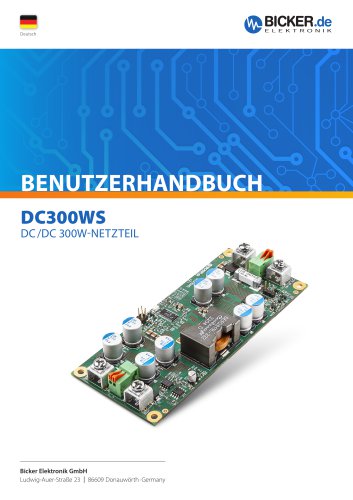 DC300WS
20 Pages
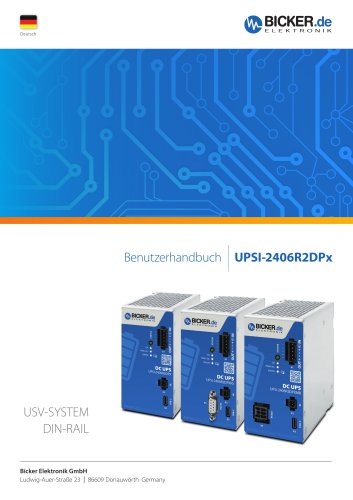 UPSI-2406R2DP2MB
45 Pages
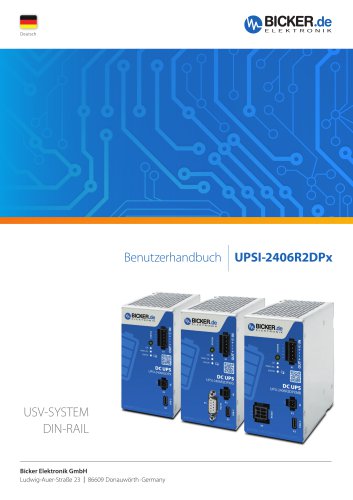 UPSI-2406R2DP3MB
45 Pages
 UPSI-2412DP3
31 Pages
 UPSI-2412DP2
31 Pages
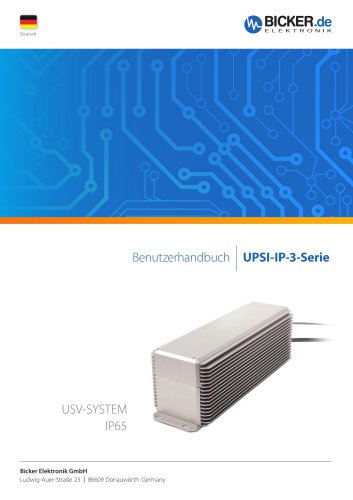 UPSI-2406R2IP-38AC+PSZ-1100
31 Pages
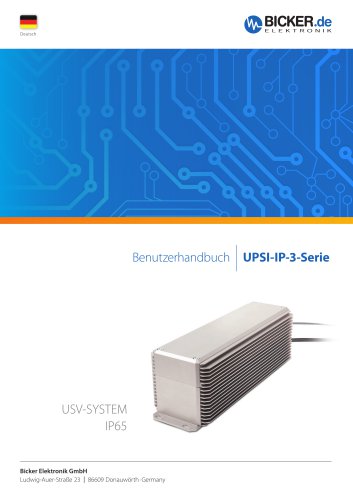 UPSI-2406R2IP-38AC
31 Pages
 UPSI-2406DP1
38 Pages
 UPSI-2406DP2
38 Pages
 UPS-1000-B1
32 Pages
 BE-DCEB5A
2 Pages
 BE-DCEB10A
2 Pages
 BP-LFP-13250S
18 Pages
 BP-LFP-10250S
18 Pages
 BP-LFP-1325S
19 Pages
 DC2412-UPSP2
9 Pages
 UPSI-2406IP-38AC
31 Pages
 BP-LFP-2725D
22 Pages
 BP-LFP-2725
22 Pages
 BP-LFP-1375D
5 Pages
 BP-LFP-1375
5 Pages
 BDCD-50xxC/T series
4 Pages
 UPSI-2412D
31 Pages
 UPSI-2406
3 Pages
 UPSI-2412
31 Pages
 BDCD-30CT SERIES
4 Pages
 BDC-30CT SERIES
4 Pages
 BDCD-10CT SERIES
4 Pages
 BDC-10CT SERIES
4 Pages
 BDCD-30VC SERIES
4 Pages
 BDC-30VC SERIES
4 Pages
 BDCD-10VC SERIES
4 Pages
 DC161W
5 Pages
 BEO-1400M SERIES
5 Pages
 BEP-520C
4 Pages
 BEO-3000MC SERIES
4 Pages
 BEO-2000MC SERIES
4 Pages
 BET-1600M SERIES
3 Pages
 BET-1500 SERIES
3 Pages
 BET-1000M SERIES
3 Pages
 BET-0900-T SERIES
6 Pages
 BET-0600M SERIES
3 Pages
 BET-0600 SERIES
3 Pages
 UPSI-2406IP-26UW
9 Pages
 UPSI-1208IP-11U
4 Pages
 IUPS-401
3 Pages
 DC2412-UPS
6 Pages
 UPSIC-2403
5 Pages
 UPSIC-1205
5 Pages
 UPSI-1208DP2
27 Pages
 UPSI-2406D
3 Pages
 UPSI-1208
3 Pages
 BES-540T
2 Pages
 BES-540C
2 Pages
 BEH-542C
3 Pages
 BEA-750H
4 Pages
 BEA-550K
4 Pages
 BEA-630
2 Pages
 BEP-530H
3 Pages
 BEP-520H
3 Pages
 BEP-510
3 Pages
 BDC-10VC SERIES
4 Pages
 DC160WS
5 Pages
 BEO-0800 SERIES
4 Pages
 DC160W
4 Pages
 DC1224
2 Pages
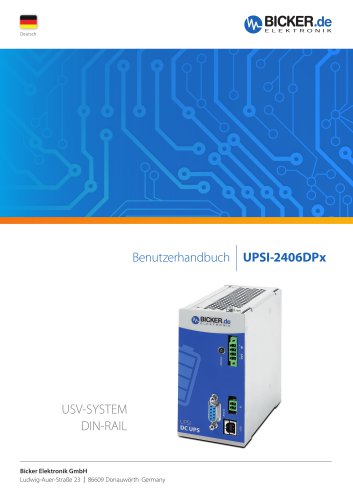
- Bicker DC power supply
- Bicker AC/DC power supply
- CE power supply
- Bicker single-output power supply
- Bicker power supply for industrial applications
- Bicker switching power supply
- DC-DC converter
- Compact power supply
- Tabletop power supply
- Power supply with overload protection
- Laboratory power supply
- Single-phase power supply
- Rack-mount power supply
- Bicker multiple-output power supply
- Electronic equipment power supply
- Bicker DC/DC power supply
- Bicker industrial UPS
- AC buffered power supply
- Industrial DC/DC converter module