

BETE Spray Nozzle Catalog

BETE Spray Nozzle Catalog
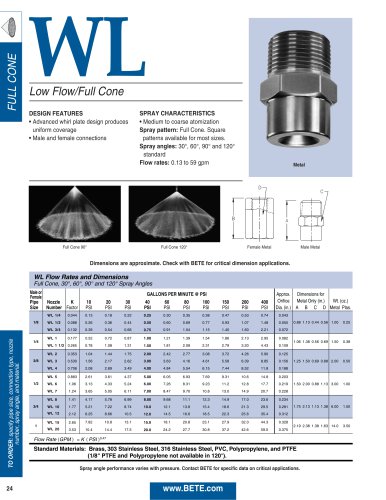
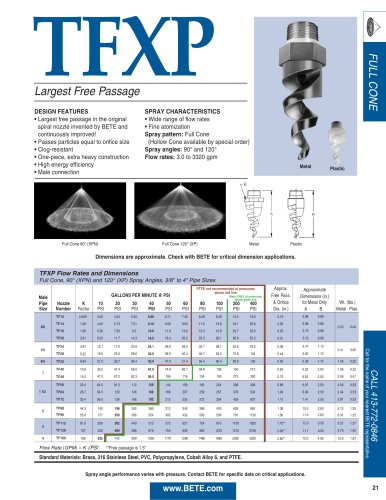
- Spray Angles: Available in 60°, 90°, and 120° for full cone nozzles, with additional options for narrow and wide angles.
- Flow Rates: Range from 2.01 to 8730 gallons per minute (GPM), depending on the nozzle type and pressure.
- Materials: Standard materials include PVC, Polypropylene, PTFE, Brass, and 316 Stainless Steel, offering high corrosion resistance.
- Connections: Available in male, female, and flanged connections, with specific models for metal alloys and plastic materials.
- Full cone nozzles are designed for uniform distribution and high flow rates, with options for narrow and wide spray angles.
- Flanged connections are available for larger models, providing high flow rates with coarse atomization.
- Special designs like the NCS and TC series offer compact sizes and extremely high flow rates, respectively.
- Full Cone: Provides a uniform spray pattern, suitable for applications requiring even distribution.
- Hollow Cone: Utilizes a tangential whirl method for atomization, ideal for circular patterns and overlapping sprays.
- For applications exceeding 300°F or specific pressure limits, consult BETE Applications Engineering.
- Specify pipe size, connection type, nozzle number, spray angle, and material when ordering.
- Dimensions are approximate; verify with BETE for critical applications.
- Spray angle performance varies with pressure; contact BETE for specific data on critical applications.
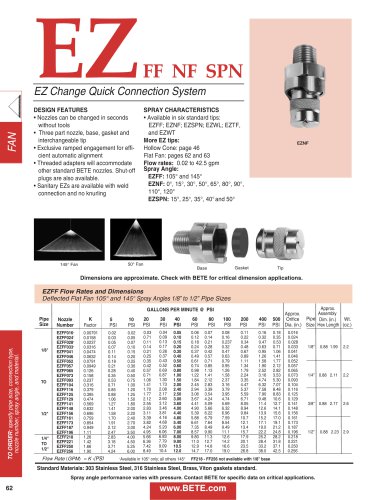
- Materials: Standard materials include Polypropylene, 302 Stainless Steel, EPDM seal, with optional Viton seal. For specific nozzles, materials like Brass, 303 Stainless Steel, 316 Stainless Steel, PVC, and PTFE are used.
- Spray Angles: Available spray angles range from 15° to 95° depending on the nozzle type.
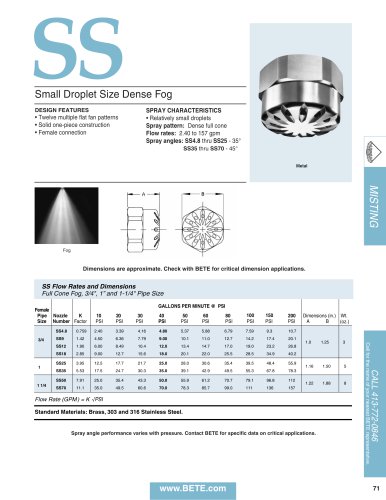
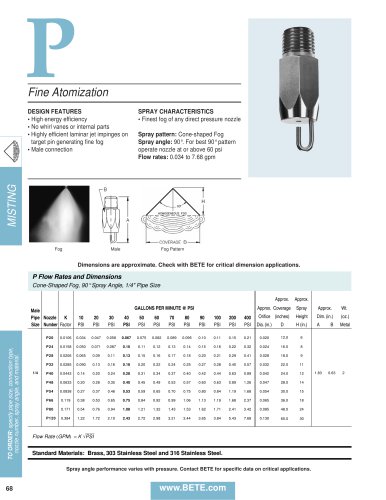
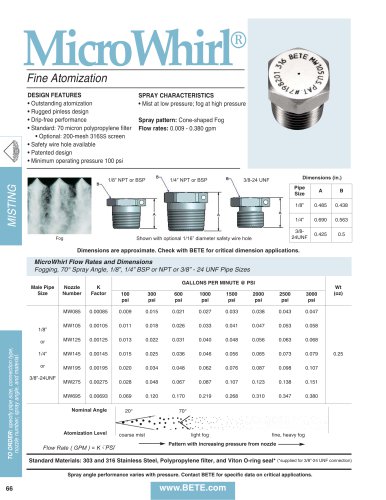
- Flow Rates: Flow rates are specified in gallons per minute (GPM) and vary with pressure, calculated using the formula Flow Rate (GPM) = K √PSI.
- Nozzles are designed for quick change and alignment without tools, featuring a "Snap-in" system for easy setup.
- High energy efficiency with no internal whirl vanes for certain models.
- Some nozzles offer a rugged pinless design for drip-free performance.
- Installation requires drilling a specific size hole in the pipe, with maximum recommended working pressures varying by pipe size and clamp type.
- Adapters are available for different pipe sizes and thread types, with options for single or double clamps.
- Spray performance varies with pressure, and specific data should be obtained from BETE for critical applications.
- Spray patterns include fan, hollow cone, and full cone, with specific nozzles designed for fine atomization and misting applications.
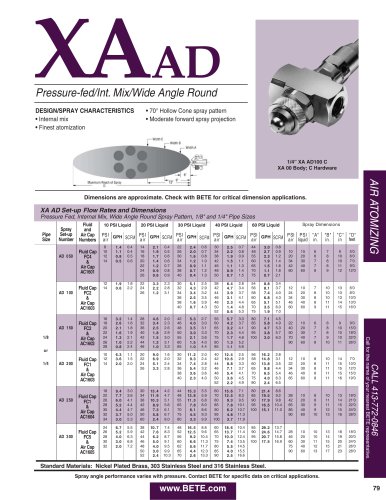
The document describes a pneumatically-controlled shut-off and clean-out system for spray nozzles. It highlights the external mix capability, allowing for the spraying of viscous materials, and notes that liquid flow rates are independent of air. Precise metering of the liquid flow rate is possible, and a removable plug is provided for the liquid recirculation port. The system includes interchangeable spray set-ups consisting of fluid and air caps, with each clean-out/shut-off needle using a different needle size.
The document provides detailed specifications for various components, including dimensions and port sizes. It specifies the use of 1/8” NPT air and liquid ports paired with 3/8-UNF 2B mounting threads, and 1/8” Rp (BSP) air and liquid ports paired with M10x1.5-6H mounting threads. The document also includes a coverage chart for variable spray patterns and pressure-fed systems, detailing spray angles and flow rates.
The spray patterns available include full cone and flat fan, with spray angles of 20°, 60°, and 90°. Flow rates range from 0.33 to 26 gpm. The document emphasizes the importance of using a metering pump or flow metering device to control liquid flow due to the sensitivity of flow rates to pressure variations.
The standard materials used are 316 stainless steel, with optional Cobalt Alloy 6 wear components. The document notes that larger sizes and flow rates are available upon request.
The document discusses the selection of tank washing nozzles based on vessel characteristics and nozzle design criteria. It provides recommendations for different tank sizes and types, highlighting the HydroWhirl® series for various applications, from small bottles to large process tanks.
For critical applications, the document advises contacting BETE for specific data on spray angle performance and other technical details. It also suggests considering vessel size, shape, and residue type when selecting nozzles for tank washing.
ATEX stands for 'ATmosphere EXplosible' and refers to the European Union directive 2014/34/EU concerning equipment and protective systems intended for use in potentially explosive atmospheres. BETE products, including Whirl S nozzles, are reviewed and approved under this directive.
- Design Features: Efficient cleaning with less water and lower pressure, sanitary surface finish, durable laser-welded stainless steel construction, and FDA compliant materials for CIP applications.
- Spray Characteristics: Self-cleaning bearings, various spray angles (360°, 90° Down, etc.), and flow rates from 1.26 to 90.9 gpm.
- Available with ATEX approval for Zone 0.
- Standard materials include 316L stainless steel for nozzles and 316 stainless steel for ball bearings.
- Optimal cleaning performance between 30-50 PSI, with a maximum operating pressure of 150 PSI.
- Design Features: PTFE construction for harsh environments, corrosion resistance, and FDA compliance for CIP applications.
- Spray Characteristics: Slow spinning for longer spray dwell time, complete 360° spray pattern, and flow rates from 4.45 to 82.4 gpm.
- Design Features: Field-serviceable, self-cleaning, high-impact jets, and available in 2 or 4 nozzle configurations.
- Spray Characteristics: 360° wash pattern, variable cycle times, and high impact cleaning with flow rates from 21.5 to 160 gpm.
- Available with ATEX approval, designed for small to medium tanks, and features high impact cleaning with flow rates from 12 to 52.4 gpm.
- Design Features: Clog-resistant design, FDA compliant 316L stainless steel, and self-draining and self-flushing capabilities.
- Spray Characteristics: Vigorous rinsing action with complete 360° coverage and flow rates from 33 to 112 gpm.
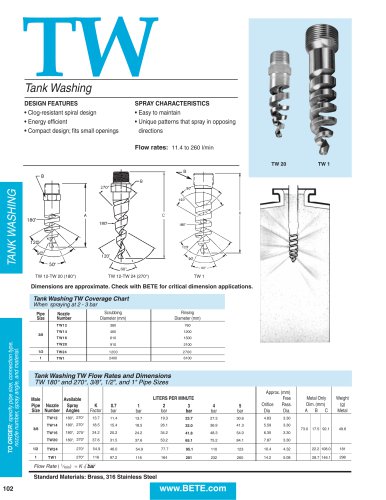
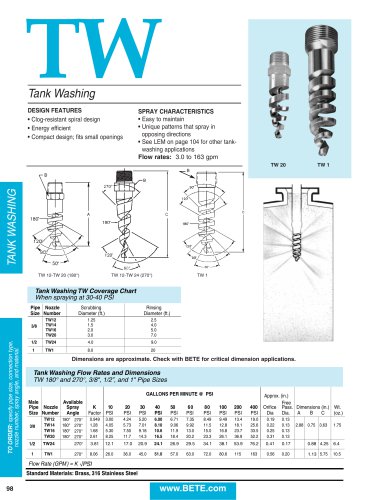
- Design Features: Clog-resistant spiral design, energy-efficient, and compact.
- Spray Characteristics: Unique spray patterns with flow rates from 3.0 to 163 gpm.
- Design Features: Clog-resistant full cone nozzles, spherical omnidirectional coverage, and flow rates from 7.52 to 80.6 gpm.
- Materials: Standard materials include 316 Stainless Steel, Brass, PVC, and PTFE. Other materials are available upon request.
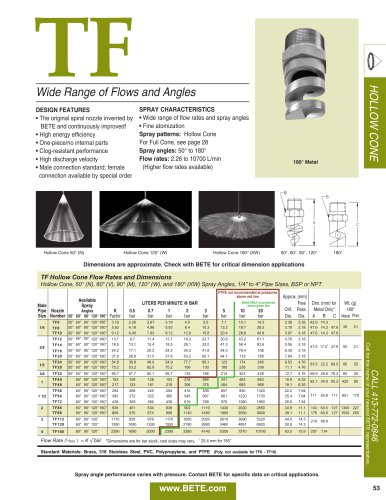
- Flow Rates: Flow rates vary across different nozzle types and are influenced by pressure (PSI). For example, LEM nozzles have flow rates ranging from 4.2 to 157 GPM, while TF29-180 nozzles range from 3.80 to 110 GPM.
- Spray Angles: Nozzles offer various spray angles, including full cone (90° and 120°), flat fan, and extra-wide angles (up to 180°).
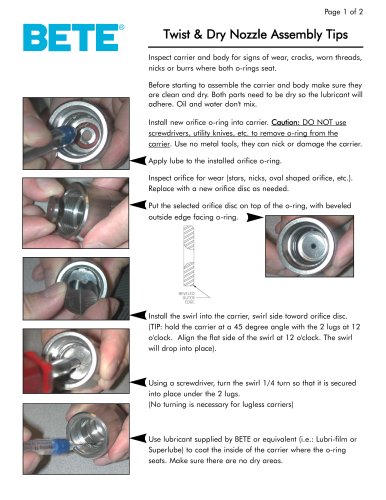
- Clog-Resistant: Many nozzles feature a clog-resistant design, such as the BETE spiral nozzles and the Twist & Dry series.
- Connection Types: Nozzles are available with male or female connections, and some models offer butt-weld options.
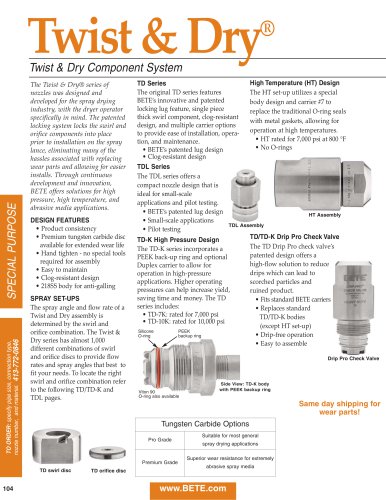
- Special Features: The Twist & Dry series includes a patented locking mechanism for easy maintenance and change-out, and is suitable for high-pressure and high-temperature applications.
- Spray Patterns: Nozzles provide various spray patterns, including spherical, omnidirectional, and hollow cone, suitable for applications like tank washing and fire protection.
- Pressure and Temperature Ratings: Nozzles are rated for different pressures and temperatures, with some models like the TD-K series handling up to 10,000 PSI and 800°F.
- Customization: BETE offers customization options for specific applications, including different swirl and orifice combinations for the Twist & Dry series.
The document provides detailed specifications for various nozzles used in the pulp and paper industry. It includes flow rates at different pressures, nozzle dimensions, and materials used, primarily 316 stainless steel. The flow rate formula is given as GPM = K (PSI)^0.48, where K is a factor specific to each nozzle.
Procedures:
Instructions for specifying spray nozzles include determining flow rate, fluid properties, and system design. The document outlines how to calculate total water flow and pressure at the pump for nozzles operating at specific pressures.
Standards and Recommendations:
Recommendations include using strainers to minimize clogging, with specific mesh sizes for different applications. The document advises on the use of reducing bushings and couplings to adapt nozzles to existing piping systems.
Design Features:
Design features of various nozzles and accessories are highlighted, such as the rugged construction of high-impact fan air nozzles and adjustable swivel joints for precise spray direction control.
Spray Characteristics:
The document describes spray patterns, droplet sizes, and the impact of fluid properties like viscosity and specific gravity on nozzle performance. It also explains the importance of spray angle and droplet size in different industrial applications.
Troubleshooting:
Common issues such as nozzle wear, clogging, and incorrect nozzle location are discussed, along with their effects on system performance.
Research and Development:
BETE's Spray Laboratory capabilities are outlined, including flow rate measurements, pressure testing, and automated drop size distribution measurement. The lab supports product R&D and customer service through advanced analysis technologies.
BETE offers advanced spray technology with capabilities for two-fluid systems up to 3000 scfm air and 2000 gpm water. The testing area measures 30’ x 50’ x 22’ high, allowing for comprehensive spray distribution analysis.
The Model 700 Video Particle Analyzer is designed to overcome limitations of laser-based instruments, providing detailed analysis of sprays with large and non-spherical droplets. It integrates a CCD video camera, microscope lens, and image processing software for accurate characterization.
The BETE Patternator uses digital video technology to analyze the volumetric distribution of liquid from nozzles. It calculates spray density and angles, ensuring accurate data collection for nozzle development.
BETE employs in-house developed software for modeling and simulating spray behavior in environments where lab duplication is not feasible. This includes high-temperature or pressure scenarios and applications like HF mitigation and dust suppression.
BETE collaborates with industries on R&D projects focusing on safety and environmental protection, providing expertise in areas such as fire control, toxic gas control, and oil spill cleanup.
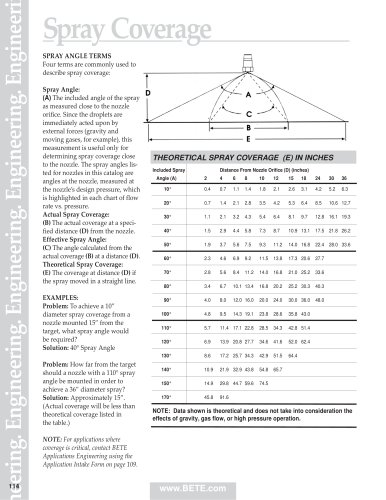
A table provides theoretical spray coverage data for various spray angles and distances, noting that actual coverage may differ due to external forces.
Tables detail the flow of water and air through Schedule 40 steel pipes, including pressure drop and velocity data for different pipe sizes and conditions.
Specifications for nominal pipe sizes, including outer diameter, wall thickness, and weight, are provided for various schedules.
- Identify the liquid being sprayed and the environmental conditions around the nozzle.
- Determine the available pressure and desired spray angle or coverage.
- Specify the desired material of construction and the purpose of the spray.
- Establish the desired flow rate, actual flow rate, and the size and connection types needed.
- Measure the distance from the nozzle to the target.
- Flow rate (Q) is calculated using the formula Q = K (PSI)x, where PSI is the pressure and K is a constant.
- Conversion data is provided for various units, such as converting gallons to liters or psi to atmospheres.
- Equations for pressure and flow rate adjustments are included, considering specific gravity and internal vessel pressure.
- Prices are FOB Greenfield, MA, with net 30-day terms for approved accounts.
- A minimum order of $50.00 is required, and a 30% restocking charge applies for returns within one year.
- Warranty covers workmanship according to industry standards, with liability limited to the product's billed value.
- Guidance is provided for selecting nozzles based on spray patterns and specific applications.
- Customers can contact BETE for assistance in choosing the right nozzle for their needs.
- Comprehensive conversion tables are provided for various units, including pressure, volume, and length.
- BETE Fog Nozzle, Inc. is located at 50 Greenfield Street, Greenfield, MA 01301.
- Contact via phone at (413) 772-0846 or email at [email protected].
Catalog excerpts

BIODIESEL • BLOWOFF NOZZLES • CLEAN-IN-PLACE NOZZLES • CLOG-RESISTANT NOZZLES COATING • CONCRETE CURING • COOLING • DISTRIBUTION • DRYING • DUST CONTROL ETCHING • EVAPORATIVE COOLING • EVAPORATIVE DISPOSAL • FIRE PROTECTION • FLUE GAS ABSORPTION • ADDITIVES • AERATION • AIR AND STEAM • AIR CONDITIONING • AIR NOZZLES DESULPHURIZATION • FOAM CONTROL • FOG NOZZLES • FOOD PROCESSING • GAS SCRUBBING HUMIDIFICATION • LUBRICATION • MIST ELIMINATOR WASH • MISTING • MIXING EDUCTORS PETROLEUM PROCESSING • POLLUTION CONTROL • PULP BLEACHING • QUENCH ROLL COOLING • SCRUBBING • SPRAY DRYING • TANK WASHING • WASTEWATER TREATMENT SPRAY NOZZLES, FABRICATIONS, & SYSTEMS FOR INDUSTRIAL APPLICATIONS INDUSTRIAL SPRAY NOZZLES 1218USA 50 Greenfield Street Greenfield, MA 01301
Open the catalog to page 1
ith thousands of different spray nozzles available in hundreds of different materials, it’s often hard to know where to start. We’ve incorporated a number of unique charts and other aids into this catalog to simplify your selection process. Nozzle Selection Guide There are many ways to select a nozzle. Which way is right for you? GPM = K (Pinlet - PVessel ) System Design PPump = PNozzle + PPipe Losses + rh This section introduces you to the types of spray patterns and the spray nozzles available in each. Vessel with internal pressure: X Conversion Data Nozzle Exponent Series x BJ 0.50 CW 0.47...
Open the catalog to page 2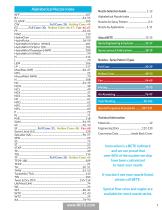
Alphabetical Nozzle Index Innovation is a BETE hallmark and we are proud that over 60% of the nozzles we ship have been customized to meet your needs. If you don’t see your nozzle listed, please call BETE. Special flow rates and angles are available for most nozzle series. 1
Open the catalog to page 3
Nozzles by Spray Pattern Full Cone Nozzles The most frequently used nozzle type in industry is the full cone nozzle. The spray emits from the nozzle in a conical shape with the liquid dispersed over the interior of the cone. When the spray intersects with a surface, a circle of spray is formed with liquid present throughout. The full cone pattern from a spiral nozzle consists of several concentric hollow cones that combine to produce a full cone effect with a smaller droplet size. The standard spiral line, available in a wide range of flows, angles, and materials. 1/8"- 4” p. 20 TFXP Same as...
Open the catalog to page 4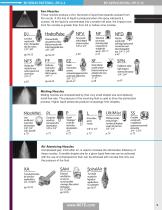
Fan Nozzles These nozzles produce a thin, flat sheet of liquid that expands outward from the nozzle. A thin line of liquid is produced when the spray intersects a surface. As the liquid is concentrated into a smaller net area, the impact force from fan nozzles is greater than from full or hollow cone nozzles. BJ-- Lowflow J nozzle with inter-changeable tips; fan spray. 1/8’’- 3/8” pp. 54,55 HydroPulse Pneumatically actuated low-flow flat fan nozzle with interchangeable tips. 1/8”- 3/8” pp. 56-59 fan nozzle featuring high impact fan or straight jet spray. 1/8”- 2” p. 61 NFD Ip Flatfan nozzle with...
Open the catalog to page 5
Tank Washing Nozzles These specialized products are customized to the task of cleaning the interior surfaces of tanks. The typical 360° spray pattern covers all internal surfaces while specialized 270° and 180° patterns focus the cleaning fluid on specific surfaces. Models range from basic fixed nozzles to advanced fluid-driven tank cleaning machines. HvdroWhirl S Slotted, rotating tank washing spray nozzle. Available % ■ with ATEX approval >■ for Zone 0. _ HvdroClaw Unique, clog-resistant design with vigorous 360 rinsing action for food-grade applications. 3/4’’ -1-1/2’ p. 103 HydroWhirl...
Open the catalog to page 6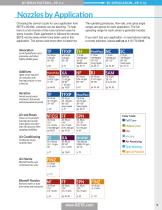
Nozzles by Application Choosing the correct nozzle for your application from BETE’s 20,000+ products can be daunting. To help, here is a list of some of the more common uses for spray nozzles. Each application is followed by several BETE nozzle series which have been used in this application. The series used most often is listed first. Scrub hydrofluoric acid, ammonia, and other highly soluble gases Apply small volumes of a solution onto moving product or into a mixture Aerate waste water treatment, fish ponds, and impoundment ponds Clean or dry product moving past nozzle; inject gases and odorants...
Open the catalog to page 7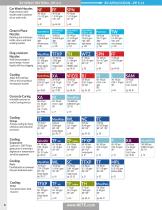
Clean in Place Nozzles Rotating and stationary bottle, drum, and tank washing nozzles HydroWhirl S Ho^dWT 10-60 psi 1.26-90.9 gpm 360° efficient clean p. 99 Clog-resistant Nozzles Wide free passage to spray lumpy, viscous liquids with less clogging Coating Apply thin coatings (wet or dry) on product moving past nozzles Concrete Curing Humidify concrete to control curing process Cooling: Evaporative Cool hot (+ 300°F) flue gases prior to entering a baghouse or temperature-sensitive equipment Cooling: Parts Cool hot parts on conveyors from pre-treatment ovens Cooling: Pond Cool pond water; heat recovery...
Open the catalog to page 8
Distribution Distribute fluids uniformly onto packing, trickle bed media, and horticultural beds; VOC stripping Drying Remove excess water after washing or rinsing Dust Control: Air-handling Ducts Suppress stone, coal and other dust in vent ducts; control paint spray carry-over Dust Control: Area Suppress dust at conveyor transfer points, dump pits, and loading hoppers Etching: Electronics Wash and rinse circuit boards and wafers Disposal: Evaporative Evaporate tailing ponds or volatile waste EZ Change/ 1/4 Turn Nozzles Quick change-out nozzle base assembly with 1/4-turn ramped engagement SpiralAir...
Open the catalog to page 9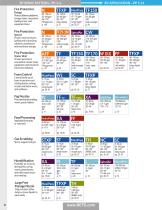
Fire Protection: Special Protect coal conveyors; fueling and vulcanizing cabinets; warehouses and munitions storage Fire Protection: Water Wall Protect personnel, evacuation muster areas, equipment, and structures from heat radiation MaxiPass TFXP
Open the catalog to page 10
Lubricate dies and moulds; roll bite in strip mills Mist Eliminator Wash Clean mist eliminators in packed or open tower scrubbers Color Code: Full Cone Tank Washing Moisten paper; mist produce; compost piles of crushed products Mixing Eductors Keep solids suspended by eduction Wetting, humidifying products on conveyor Odor Control Spray odor neutralizing agents Distribute scrubbing liquor in scrubbers or water in humidifiers Pollution Control Distribute slurry in open towers Special Purpose 0.5- 10 psi 0.5- 115 gpm used in pairs lumpy liquids p. 116
Open the catalog to page 11All BETE catalogs and technical brochures
 WL metric
1 Page
 PJ metric
1 Page
 NF
NF1 Page
 TW metric
1 Page
 TW
TW1 Page
 AFF metric
1 Page
 TF10-170
1 Page
 TF24
TF241 Page
 TF FM Approved
1 Page
 TF metric
1 Page
 MaxiPass®
2 Pages
 HydroClaw®
2 Pages
 XAAD
XAAD1 Page
 ST
ST1 Page
 XA Components & Options
1 Page
 Engineering Information
9 Pages
 Custom In-House Fabrications
2 Pages
 Line Card
2 Pages
 Bottle, Drum & Tank Washing
16 Pages
 BETE Metric Catalog
132 Pages
 LEM
LEM1 Page
 NFH
NFH1 Page
 BJH
BJH1 Page
 TurboMix
1 Page
 Twist & Dry
5 Pages
 TF29
TF291 Page
 N fire protection
1 Page
 AFF
AFF1 Page
 CLUMP
CLUMP1 Page
 HydroWhirl Orbitor
2 Pages
 HydroWhirl ® Poseidon
1 Page
 HydroWhirl S
1 Page
 SAM
SAM2 Pages
 XA Accessories
4 Pages
 XA
XA7 Pages
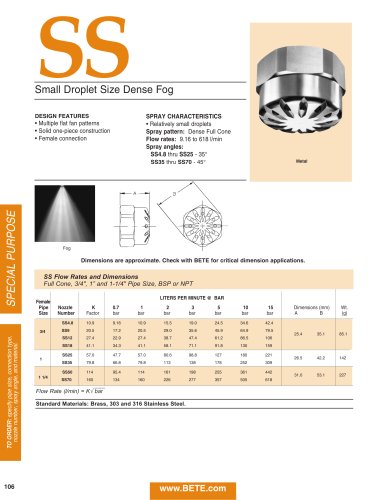
 SS
SS1 Page
 UltiMist
1 Page
 L
L1 Page
 p
p1 Page
 PJ
PJ1 Page
 MicroWhirl
1 Page
 SPN
SPN1 Page
 EZ FF NF SPN
2 Pages
 FF
FF2 Pages
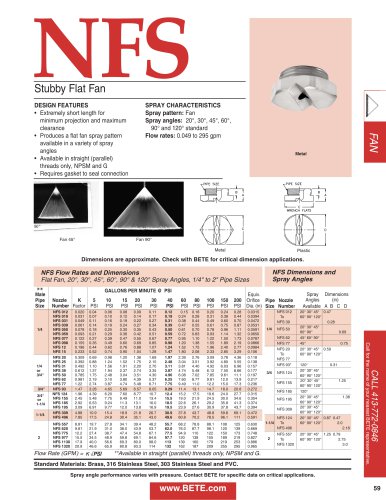 nfs
nfs1 Page
 NFD
NFD1 Page
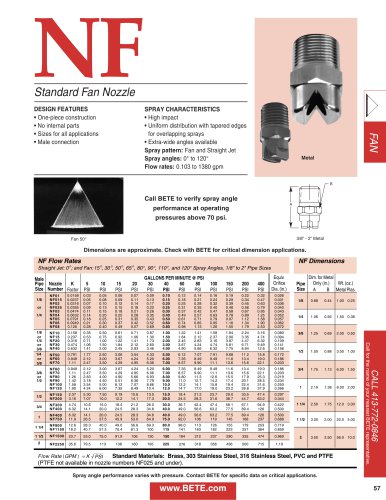 NF
NF1 Page
 NFV
NFV1 Page
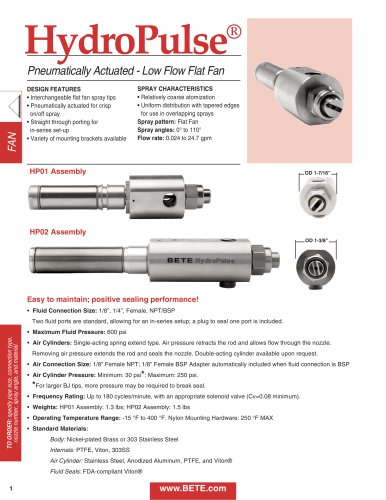 HydroPulse
4 Pages
 BJ
BJ2 Pages
 Spillback
2 Pages
 THW
THW2 Pages
 NCJ
NCJ1 Page
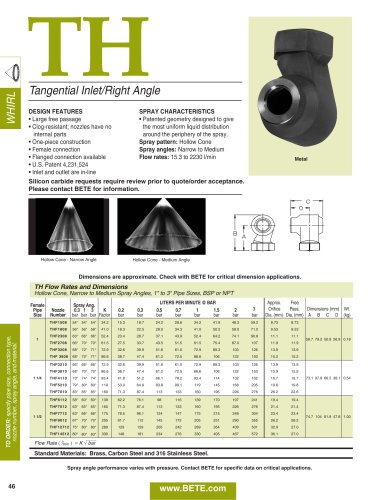
 TH
TH2 Pages
 WTX
WTX2 Pages
 WT
WT2 Pages
 TC
TC1 Page
 NCFL
NCFL1 Page
 NCK
NCK1 Page
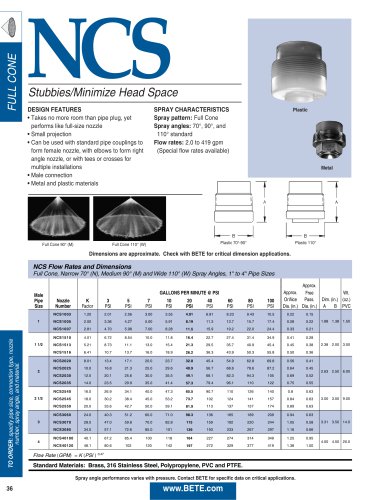 NCS
NCS1 Page
 NC
NC2 Pages
 SF
SF3 Pages
 EZFF
EZFF2 Pages
 WTZ
WTZ1 Page
 CW
CW2 Pages
 WL
WL1 Page
 STXP
STXP1 Page
 TFXP
TFXP1 Page
 Spray Coverage
1 Page
 Bete accessories
1 Page
 MATERIALS
1 Page
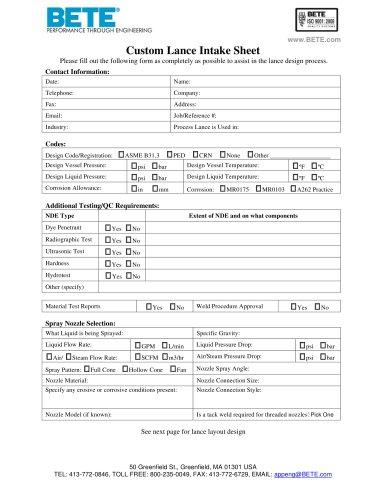 Custom Lance Intake Sheet
2 Pages
 Pollution Control
8 Pages
 Food Industry
8 Pages
 Fire Protection
8 Pages
 DUR O LOK®
6 Pages
 Chemical Processing
8 Pages
 Spray Nozzle Catalogs
127 Pages
 MaxiPass ® L
1 Page
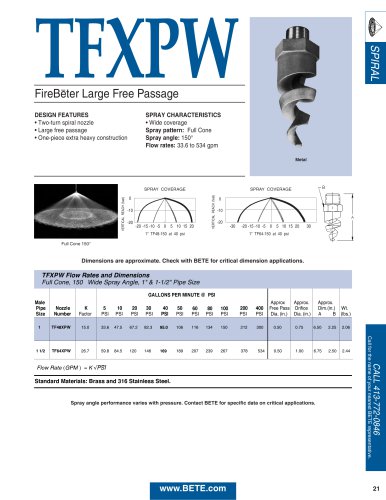 TFXPW
TFXPW1 Page
 N
N2 Pages
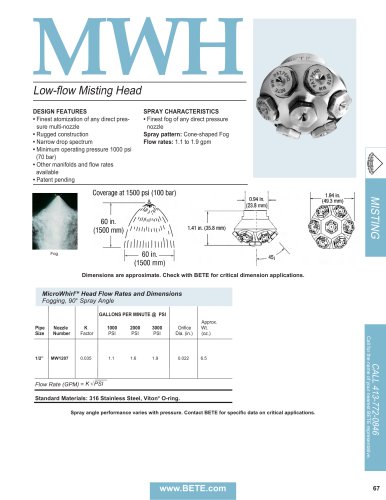 MicroWhirlTM Head (MWH)
1 Page
 MaxiPassTM (MP)
2 Pages
 LP
LP1 Page
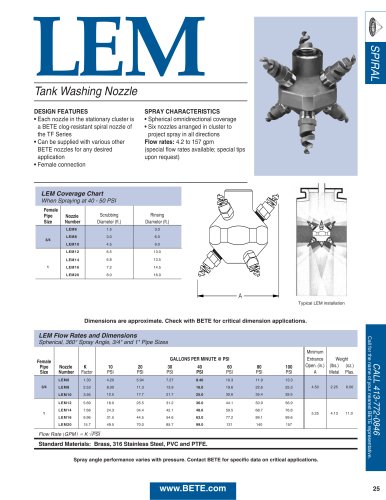 LEM
LEM1 Page
 IS
IS1 Page
 FluidBed
1 Page
 Spray Drying
11 Pages
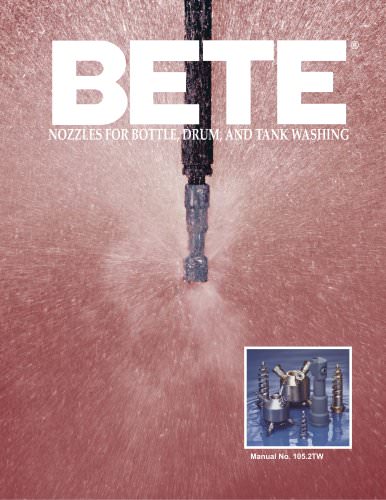 Bottle, Drum & Tank Washing
16 Pages
 TD/TD-K
4 Pages
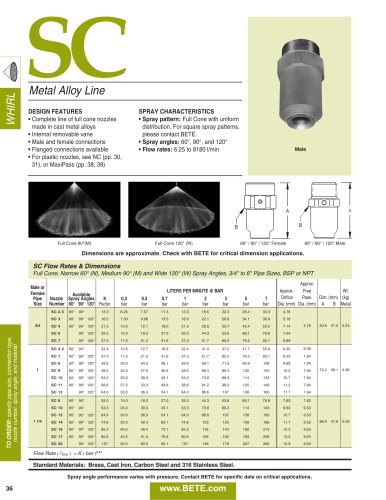 SC
SC2 Pages
 FINZTM
1 Page


Archived catalogs
 SpiralAir
2 Pages
 SpiralAirTM
2 Pages
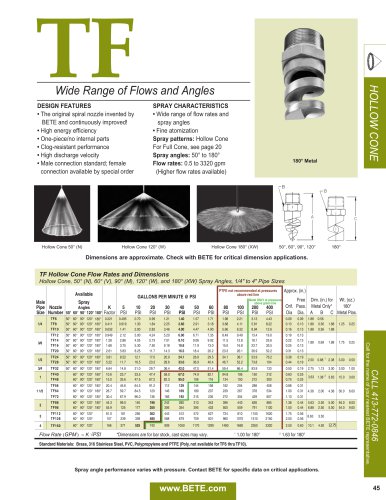 TF_2021
1 Page
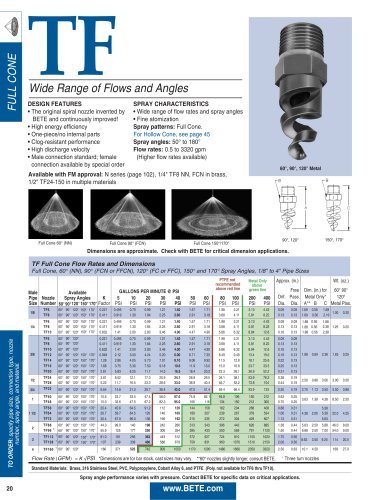
 TF
TF1 Page
 TW
TW1 Page
 N Fire Protection
2 Pages
 Spray dry manual
25 Pages
- Liquid nozzle
- Stainless steel nozzle
- Metal nozzle
- Cleaning nozzle
- Multi-jet nozzle
- Screw-in single nozzle
- Cooling nozzle
- Industrial tip
- Flat tip
- Brass atomizing nozzle
- Plastic nozzle
- Nozzle for the chemical industry
- Full-cone nozzle
- Nozzle for the food industry
- Water nozzle
- Nozzle for the steel industry
- 90° atomizing nozzle